Kirjailija
David Wilkinson
Kirjat ja teokset yhdessä paikassa: 37 kirjaa, julkaisuja vuosilta 1967-2026, suosituimpien joukossa Microworlds. Vertaile teosten hintoja ja tarkista saatavuus suomalaisista kirjakaupoista.
37 kirjaa
Kirjojen julkaisuhaarukka 1967-2026.
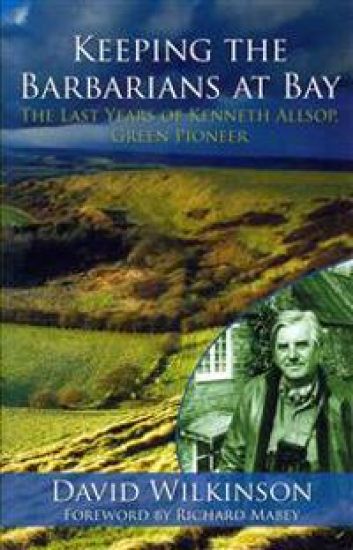
Kenneth Allsop was a writer, journalist and broadcaster who in the 1960s and early 70s became one of Britain's first television celebrities. Voted the 'fifth most handsome man in the world', he enjoyed the high life of fast cars, jazz and smart London parties, moving among the nation's glitterati from the arts, media and politics. But he was also an accomplished naturalist and a passionate conservationist who fought fiercely to hold back mounting threats to Britain's wildlife and landscapes. He played a key role in raising the public's concern for the environment long before the advent of the UK's now-powerful green movement. Keeping the Barbarians at Bay focuses on the last few years of Allsop's short life, when he escaped London to live in a seventeenth- century watermill in the secret, crumpled landscape of West Dorset. The book describes how the threat of oil and gas exploration in this protected area of outstanding natural beauty forced him to become an environmental activist, and how his grassroots campaigning led him to the BBC's first environmentalist TV series Down to Earth, and to a radical 'green' column in The Sunday Times. Not surprisingly, he made powerful enemies in government and big business, at a time when there were few other environmental champions to lend him support. Using his unpublished diaries and papers, Keeping the Barbarians at Bay reveals the inside story of Allsop's struggles on three fronts: with 'the barbarians'; with the constant physical pain from his amputated right leg; and with his despair at the huge environmental challenges facing the planet. In the end, they were battles he could not win, and in May 1973 he took his own life at the tragically early age of 53.

Science, Religion, and the Search for Extraterrestrial Intelligence
David Wilkinson
Oxford University Press
2013
sidottu
If the discovery of life elsewhere in the universe is just around the corner, what would be the consequences for religion? Would it represent another major conflict between science and religion, even leading to the death of faith? Some would suggest that the discovery of any suggestion of extraterrestrial life would have a greater impact than even the Copernican and Darwinian revolutions. It is now over 50 years since the first modern scientific papers were published on the search for extraterrestrial intelligence (SETI). Yet the religious implications of this search and possible discovery have never been systematically addressed in the scientific or theological arena. SETI is now entering its most important era of scientific development. New observation techniques are leading to the discovery of extra-solar planets daily, and the Kepler mission has already collected over 1000 planetary candidates. This deluge of data is transforming the scientific and popular view of the existence of extraterrestrial intelligence. Earth-like planets outside of our solar system can now be identified and searched for signs of life. Now is a crucial time to assess the scientific and theological questions behind this search. This book sets out the scientific arguments undergirding SETI, with particular attention to the uncertainties in arguments and the strength of the data already assembled. It assesses not only the discovery of planets but other areas such as the Fermi paradox, the origin and evolution of intelligent life, and current SETI strategies. In all of this it reflects on how these questions are shaped by history and pop culture and their relationship with religion, especially Christian theology. It is argued that theologians need to take seriously SETI and to examine some central doctrines such as creation, incarnation, revelation, and salvation in the light of the possibility of extraterrestrial life.
Edexcel GCE History AS Unit 2 B1 Britain, 1830-85: Representation and Reform
David Wilkinson; Martin Collier; Rosemary Rees
Pearson Education, Oxford
2011
pokkari
Written by experienced examiners and teachers, and tailored to the fresh Edexcel specification, this book presents an active, engaging approach that brings History alive in the classroom. It features exam tips, activities and sources in every chapter that give students the confidence to tackle various questions which come up in the exam.

The Fear Course Handbook of How to Do a Job Interview without Nerves or Anxiety
David Wilkinson
Lulu.com
2010
pokkari
Many people suffer from nerves and anxiety before and during job interviews. 2 out of 3 people fail the interview even before they have answered the first question because of they are too nervous. In this clear and concise book, David Wilkinson a global expert in developing emotional resilience, explains why people get nervous and shows you have you can deal with it quickly and easily. Some of the things you will learn in this book: / What confident people do that nervous people don't but could, easily. / The 5 things people eat and drink that actually makes them more nervous. / The ONE big mistake nervous people make that is an instant fail. / What to do when your mind goes blank during the interview. This is a practical and easy to follow handbook which includes a series of free video and audio tutorials and exercises.

Does matter matter? The scientific picture of the end of the physical Universe has undergone dramatic changes since the turn of the 21st century, with its future characterized by accelerated expansion and futility. Yet Christian theology has been largely silent on this, despite the interest in eschatology in popular culture and in theology itself. What can Christian theology learn from and contribute to the scientific picture of the future of the Universe? Can the biblical narratives of creation and new creation have a fruitful dialogue with scientific discoveries? David Wilkinson shows what a fruitful dialogue this can be. Critiquing the folk eschatology of the Left Behind series, the misguided faith of the scientific optimists and the lack of scientific engagement of the theologians of hope, Wilkinson argues for a rediscovery of the theological theme of new creation and the centrality of bodily resurrection.
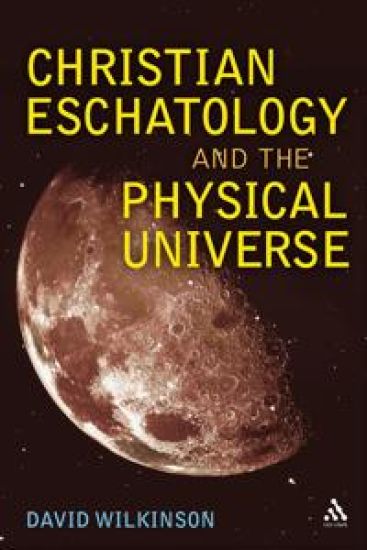
Does matter matter? The scientific picture of the end of the physical Universe has undergone dramatic changes since the turn of the 21st century, with its future characterized by accelerated expansion and futility. Yet Christian theology has been largely silent on this, despite the interest in eschatology in popular culture and in theology itself. What can Christian theology learn from and contribute to the scientific picture of the future of the Universe? Can the biblical narratives of creation and new creation have a fruitful dialogue with scientific discoveries? David Wilkinson shows what a fruitful dialogue this can be. Critiquing the folk eschatology of the Left Behind series, the misguided faith of the scientific optimists and the lack of scientific engagement of the theologians of hope, Wilkinson argues for a rediscovery of the theological theme of new creation and the centrality of bodily resurrection.

To do justice to the postgraduate journey as experienced by the students, quotations and anecdotes from the author's own research ... are drawn upon. These anecdotes provide vivid insights into the postgraduate experience, thereby livening up the text and providing some solace to those facing similar issues in their postgraduate existence' - Education and Training Journal For anyone embarking on postgraduate study, this is an indispensable guide. Packed with hands-on advice and examples from students themselves, David Wilkinson provides: Up-to-date information on developments in postgraduate studyGuidance on where and how to applyAdvice on constructing effective research proposals, with examples of successful submissionsHelp with developing an academic writing style and advice on how to get published. While each consecutive chapter develops and builds upon its predecessor, the book has been designed to be easy to 'dip into' to help resolve a problem or examine an issue of relevance to a particular stage of the process. Detailed yet highly accessible, The Essential Guide to Postgraduate Study is a 'must-have' resource for prospective postgraduates, current postgraduates and anyone interested in better understanding postgraduate study in UK universities and colleges. SAGE Study Skills are essential study guides for students of all levels. From how to write great essays and succeeding at university, to writing your undergraduate dissertation and doing postgraduate research, SAGE Study Skills help you get the best from your time at university. Visit the SAGE Study Skills hub for tips, resources and videos on study success!

To do justice to the postgraduate journey as experienced by the students, quotations and anecdotes from the author's own research ... are drawn upon. These anecdotes provide vivid insights into the postgraduate experience, thereby livening up the text and providing some solace to those facing similar issues in their postgraduate existence' - Education and Training Journal For anyone embarking on postgraduate study, this is an indispensable guide. Packed with hands-on advice and examples from students themselves, David Wilkinson provides: Up-to-date information on developments in postgraduate studyGuidance on where and how to applyAdvice on constructing effective research proposals, with examples of successful submissionsHelp with developing an academic writing style and advice on how to get published. While each consecutive chapter develops and builds upon its predecessor, the book has been designed to be easy to 'dip into' to help resolve a problem or examine an issue of relevance to a particular stage of the process. Detailed yet highly accessible, The Essential Guide to Postgraduate Study is a 'must-have' resource for prospective postgraduates, current postgraduates and anyone interested in better understanding postgraduate study in UK universities and colleges. SAGE Study Skills are essential study guides for students of all levels. From how to write great essays and succeeding at university, to writing your undergraduate dissertation and doing postgraduate research, SAGE Study Skills help you get the best from your time at university. Visit the SAGE Study Skills hub for tips, resources and videos on study success!
Clear, accessible and practical, this guide introduces the first-time researcher to the various instruments used in social research. It assesses a broad range of research instruments - from the well-established to the innovative - enabling readers to decide which are particularly well suited to their research.The book covers:questionnairesinterviewscontent analysisfocus groupsobservationresearching the things people say and do.This book is particularly suitable for work-based and undergraduate researchers in education, social policy and social work, nursing and business administration. It draws numerous examples from actual research projects, which readers can adapt for their own purposes. Written in a fresh and jargon-free style, the book assumes no prior knowledge and is firmly rooted in the authors' own extensive research experience.Using Research Instruments is the ideal companion volume to The Researcher's Toolkit. Together they offer a superb practical introduction to conducting a social research project.
Leading change
Margaret Attwood; Mike Pedler; Sue Pritchard; David Wilkinson
Policy Press
2003
nidottu
There is continuing government pressure on public services to 'reform' and change. Expectations of new forms and standards of delivery, joined-up practice and the re-connection of services to users are high. Unfortunately, many policy makers have become dangerously reliant on mechanistic top-down audit and inspection regimes as the means of implementation. This book sets out to redress the balance. It argues powerfully that whole systems approaches are required to lead the changes towards the demands for new service configurations, partnership working and local and neighbourhood governance. The book outlines the theory behind whole systems development and gives good practice guidance on how to effectively develop 'systems' to improve joined-up working.

This is a journey through the Bible, which is an exploratory walk rather than a motorway dash. The large number and diversity of biblical passages dealing with the theme of creation underlines its central importance to the biblical message. As a theologian (whose focus is the Bible) and as an eminent astrophysicist (whose subject is the visible universe) David Wilkinson is well placed to try to capture some of the richness of the biblical portrayal of creation. The key to this portrait, believes David Wilkinson, is to see Father, Son, and Spirit in the beginning, the sustaining, and the new beginning of creation, giving life and love in a generosity beyond our imaginings.
This textbook provides a concise introduction for students with little or no legal background, to the role of law in environmental protection. It describes and explains law and legal systems, the concept of the environment, sources of environmental law and some of the techniques used in environmental law. Interdisciplinary in approach, the book explores some of the major connections between law and the disciplines of ethics, science, economics and politics.Environment and Law offers a greater understanding of international and national environmental law and has case-studies from all over the world, including examples from UK, US and Australian law.
This textbook provides a concise introduction for students with little or no legal background, to the role of law in environmental protection. It describes and explains law and legal systems, the concept of the environment, sources of environmental law and some of the techniques used in environmental law. Interdisciplinary in approach, the book explores some of the major connections between law and the disciplines of ethics, science, economics and politics.Environment and Law offers a greater understanding of international and national environmental law and has case-studies from all over the world, including examples from UK, US and Australian law.
Do we owe our duties to future generations? Do animals have rights? Should nature be respected for its own sake or only as a resource for human use? These questions and others are explored in the book, which takes a fresh approach by exploring environmental law in the context of ethical ideas. Written in an accessible style and including many case studies, Environmental Law and Ethics is a concise text not only for students of law and related courses but also for all who are interested in environmental matters.

This important and timely report addresses the critical issues of implementation of the newly emerging and long-term public service agenda. The authors draw upon a unique range of research, practice and theory from the fields of community development, regeneration projects, public and private sector management and organisation development, as well as public and social policy. The authors identify six key issues to be addressed: developing evidence-based approaches to change - using the research; recovering from addiction to failing ways of working; taking community involvement seriously; getting beyond zero-sum power games and establishing trust; 'Best Value': the making or breaking of holistic government and joined-up action; real change takes time. Implementing holistic government describes what needs to happen to move beyond the policy and management rhetoric of partnership and consultation to real joined-up action on the ground. Central to this is the creation of empowered front-line professional teams working in partnership with local communities for sustainable quality of life improvement as experienced by local people. The report concludes with policy recommendations, giving clear direction and support to the translation of rhetoric to reality on the ground.