Kirjojen hintavertailu. Mukana 12 595 353 kirjaa ja 12 kauppaa.

Kirjailija

David Wragg

Kirjat ja teokset yhdessä paikassa: 37 kirjaa, julkaisuja vuosilta 2003-2026, suosituimpien joukossa Swordfish. Vertaile teosten hintoja ja tarkista saatavuus suomalaisista kirjakaupoista.

37 kirjaa

Kirjojen julkaisuhaarukka 2003-2026.

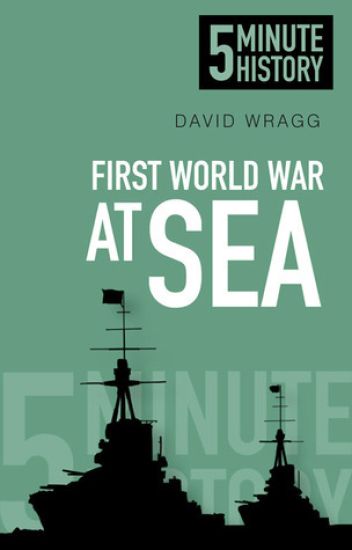
First World War at Sea: 5 Minute History

First World War at Sea: 5 Minute History

David Wragg

The History Press Ltd
2014
nidottu
How much can you really find out about the War at Sea during the First World War in five minutes? This handy little history book will surpass all your expectations and leave you well versed on all you wish to know, and maybe even a little bit more… Which was stronger, the German or British navy? What was the biggest battle? Who were the heroes? Who led the navies? And how successful were they? Jam-packed with facts, stats and first-hand accounts of the action, all woven together in an accessible way by an expert in the field, this 5 Minute History is a valuable addition to anyone’s bookshelf, ready to be delved into at a moment’s notice.
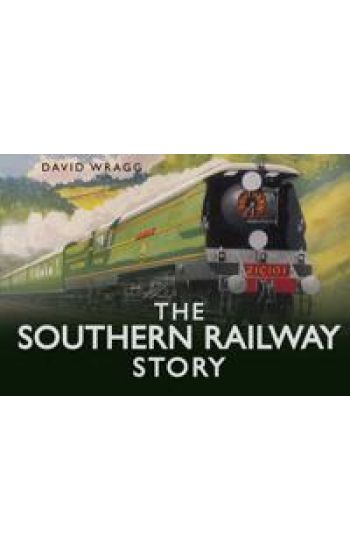
The Southern Railway Story

The Southern Railway Story

David Wragg

The History Press Ltd
2013
sidottu
At the forefront of innovation and development in the rail world, the Southern Railway was the only main-line railway to embrace electrification wholeheartedly, creating what was at the time the world’s largest electric suburban network. It was also the only railway to use passenger train ferries, allowing its sleeping car service between London and Paris to operate as a true through service, and its ‘Golden Arrow’ all-Pullman day express even had its own luxury Channel ferry. These achievements would have been noteworthy at any time, but were set against the challenging background of worldwide depression. With the aid of stunning colour photographs, The Southern Railway Story explores this remarkable passenger-traffic-driven railway from its commuter trains, via its international express railway, to its role as a holiday railway serving many of the most popular seaside resorts.
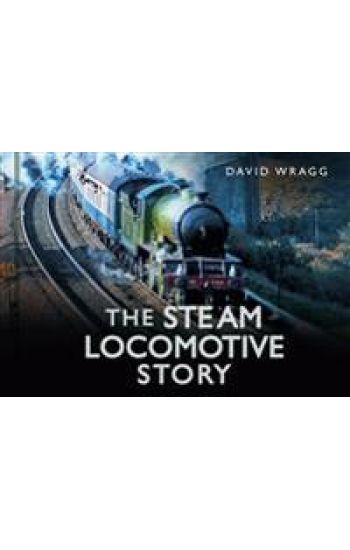
The Steam Locomotive Story

The Steam Locomotive Story

David Wragg

The History Press Ltd
2013
sidottu
The steam locomotive was a British invention and even today, the world speed record for steam remains with a British locomotive, Mallard. Steam’s first significant contribution to British industry was through powering pumping engines for mines. When steam was applied to the railways, the ‘railway age’ began. The steam locomotive went through several distinct phases during its long life, which came to an end on regular service in the late 1960s. The early phase was followed by the trend for large single driving wheels, then compound locomotives with connected driving wheels once steel became strong enough for the connecting rods. Further developments included tank engines that could run equally well forwards and backwards; the 4-6-0 and 4-6-2 expresses; the passion for speed records and streamlining; and the standardisation years of British Railways. This insightful, fully illustrated story book follows the history of the steam locomotive and will delight all those interested in the steam age.
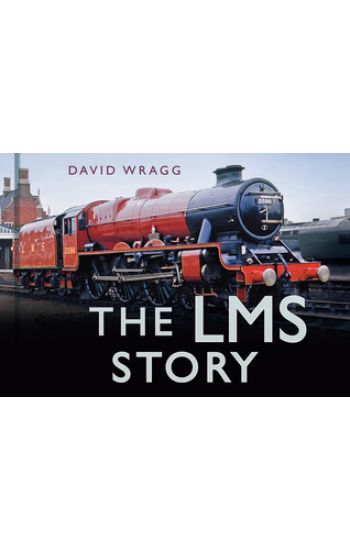
The LMS Story

The LMS Story

David Wragg

The History Press Ltd
2013
sidottu
The London, Midland & Scottish Railway (LMS) claimed to be the largest private enterprise concern in the British Empire. It was Britain’s largest steam railway and the only one to operate in England, Scotland, Wales and Northern Ireland, as well as having two short stretches of line in the Irish Republic. It was the world’s largest owner of railway hotels and the world’s largest railway shipping operator. Mainly a steam railway, it had a significant electric service out of Euston in London, and on Merseyside and Manchester. One of the leaders in diesel shunting locomotives, the company was a pioneer of using mechanical handling equipment, including large coaling towers. The LMS was mainly a freight railway, but it was still able to boast the best railway carriages, even on suburban services, where there was more legroom than was offered by other companies. Full of little-known facts, illustrated throughout and including a useful timeline, The LMS Story is the latest addition to this successful series.
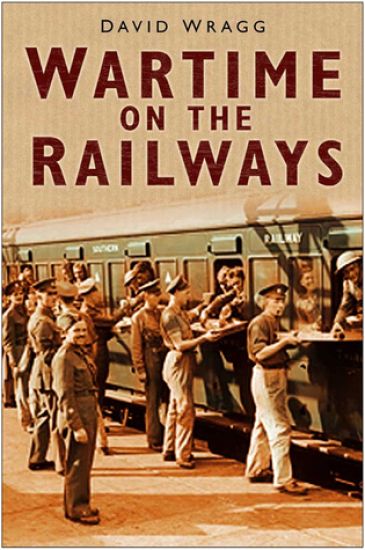
Wartime on the Railways

Wartime on the Railways

David Wragg

The History Press Ltd
2012
nidottu
Presenting an account of the part played by Britain's railways during the Second World War, this book deals with operational matters and the impact of enemy action on railways. It also looks at financial arrangements, the part played by railway workshops in producing equipment for the military, and the wartime experience of the railways' ships.
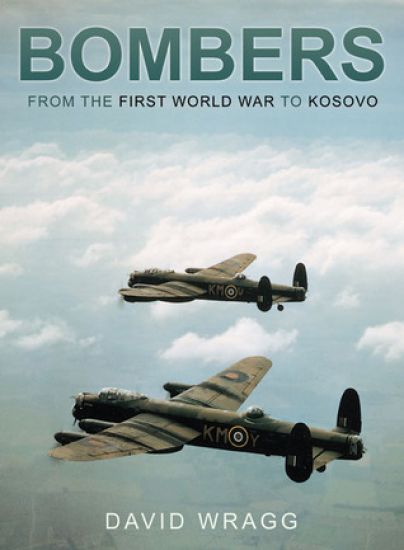
Bombers

Bombers

David Wragg

The History Press Ltd
2009
nidottu
The role of the bomber has proved to be on of the most controversial aspects of twentieth-century warfare. Bombers tells the story of the bomber with a blend of narrative and personal accounts, recording the history of the principle bombing raids and the skill and courage of those who flew them. David Wragg begins with a brief overview of the origins of the concept of aerial bombardment, which astonishingly go back several thousand years. He then describes the early raids of the First World War and the use of the bomber between the wars by the Germans in the Spanish Civil War, the Italians in Abyssinia and by the Japanese in China. The Second World War marked the massive deployment of the bomber by the main combatants as a major tactical and strategic weapon and, bringing this in-depth study up to date, Wragg examines the United States controversial campaign of extensive bombing in Vietnam during the 1960s and 70s. He also discusses whether, with the growing use of cruise missiles, the manned bomber may soon be the first element of air power to be made redundant in this age of high technology. Fully illustrated with a wide selection of photographs, Bombers will appeal to all with an interest in this key weapon of twentieth-century warfare.
Fisher

Fisher

David Wragg

The History Press Ltd
2009
sidottu
*'Jacky' Fisher (1841-1920) was a man with a mission: to prepare the Royal Navy that he loved so much and that had been his life for war. **He saw war in Europe as inevitable and incredibly predicted accurately the date when war would break out. An enthusiast for change, Fisher knew that the Royal Navy was fast losing its superiority over the Germans, with a massive reserve of old and hopelessly antiquated ships held ready in case of war, but aptly described by Fisher as 'unable to fight or run away'. Instead, he set out to impose on the Royal Navy his philosophy of the all-big-gun battleship, the 'dreadnought', while also recognising that the future of warfare at sea lay in underwater weapons and in the air. In *Fisher: The Admiral who Reinvented the Royal Navy, David Wragg examines Fisher's life and work, his ambitions and plans, his relationships with those around him, and the legacy he bequeathed to the Royal Navy. The book will be invaluable to those interested in maritime history and strategy, and especially that of the First World War and the plans that were made for it.
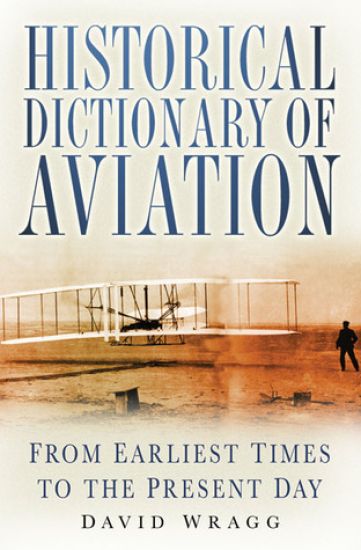
Historical Dictionary of Aviation

Historical Dictionary of Aviation

David Wragg

The History Press Ltd
2008
sidottu
Aviation expert David Wragg has written the definitive reference work on the history of aviation. International in scope, the dictionary has over 4,000 entries, covering all aspects of aviation terminology, past and present. It defines terms specific to both military and civil aviation and includes proper names of civil and military aircraft, airlines, air forces, manufacturers and periodicals. Historical Dictionary of Aviation provides a quick and easy reference for the aviation enthusiast and professional, but also for those, such as journalists, politicians and civil servants, who need to understand key aviation concepts quickly.
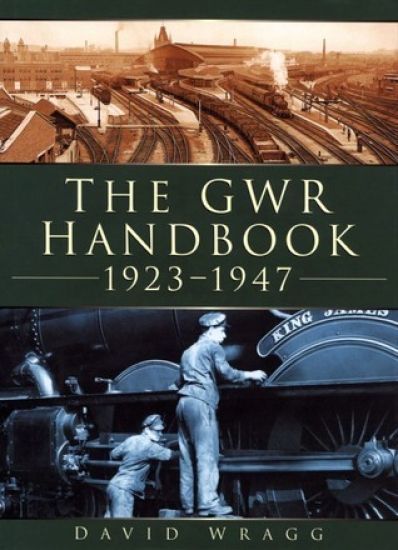
The GWR Handbook 1923-1947

The GWR Handbook 1923-1947

David Wragg

Sutton Publishing Ltd
2007
sidottu
Uniquely among Britain's railways, the Great Western Railway retained its identity from the time of its incorporation in 1835 until nationalisation in 1948. This was one of the great railways, so much so that for some enthusiasts it was the railway, even attracting such epithets as 'God's Wonderful Railway' among the more dedicated. Even so, the amalgamations of 1923 saw the company absorb many smaller concerns, so that the post-grouping GWR was in some respects a different railway from that had grown up during the nineteenth and early twentieth centuries. The grouping saw the GWR absorb some significant concerns with strong, albeit local, networks. Fortunately the GWR dominated these companies to the extent that it was able to impose its will and identity on them, so that it was spared the infighting that so marred the new London Midland Scottish, or the regionalisation that left the London and North Eastern adrift, and simply did not paper over the cracks with some token changes as happened on the Southern. The GWR had suffered from an uneven performance during the early years of its history, and only really became the prestigious organisation that so many people came to love during the early twentieth century, setting speed records including the first, albeit unofficial, one of more than 100mph with the locomotive City of Truro. At one stage between the wars the GWR operated the world's fastest regular service with the express Cheltenham Flyer, while attempting to improve the efficiency and economics of the quieter branch lines with diesel railcars. Typically, it celebrated its centenary with special wide-bodied 'Centenary Riviera' carriages. "The Great Western Railway Handbook 1923-1947" looks at the history and achievements of one of the great railway companies, if not the greatest. For many, the GWR was synonymous with holidays by the sea in the West Country, but it was originally formed to link London and Bristol. The area and extent of its operations was large, extending as far north as Merseyside, providing most of the railway services in Wales, as well as being the main line to Cardiff, Bristol, Cornwall and, often forgotten today, Birmingham. The book begins with a brief history of the GWR before the grouping, and a survey of the other companies, such as the Cardiff Railway and the Taff Vale Railway, that joined the GWR in 1923. It also looks at the leadership of the company. The post-grouping GWR's history is given, with reference information on its locomotives, named expresses, rolling stock, depots and major termini, including the role of Birmingham as the interchange point, and bottleneck, for cross-country expresses , as well as the extensive ventures in shipping and ports, in bus and air services. Other features are covered in chapters on accidents, freight operations, diesel railcars, operations during the Second World War, and then on nationalisation. The book concludes with a chapter looking at what might have been, based on the GWR's own Last Look Forward, post-war plans for the widespread introduction of diesel locomotives and reconstruction. The book includes photographs and diagrams illustrating the GWR's equipment and some railway stations, its network, shipping and air services, bus operations, including Western National, some comparative timetables showing progress between 1923 and 1938 (the last year of true peacetime operation), as well as lists of locomotives.
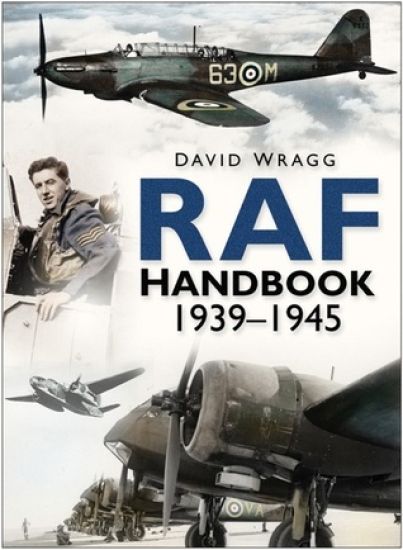
RAF Handbook 1939-1945

RAF Handbook 1939-1945

David Wragg

The History Press Ltd
2007
sidottu
It opens with a brief history of the service, followed by a chapter that reviews its situation on the outbreak of war. The chapters that follow look at the structure of the RAF, from the Air Ministry and Chief of the Air Staff down to squadron level, to include each of the Commands, including Transport Command (a creation of the war years). The main aircraft types used are listed, as well as a full listing of squadrons and airfields in the British Isles. The training of personnel, and such matters as uniforms, rank insignia, medals and life on a typical airfield, are also covered. The main battles or campaigns in which the service was involved are also described.
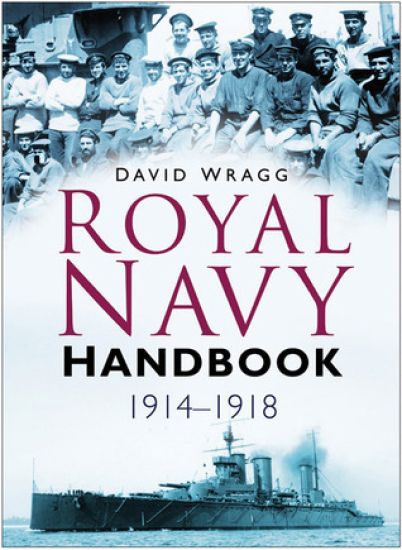
Royal Navy Handbook 1914-1918

Royal Navy Handbook 1914-1918

David Wragg

The History Press Ltd
2006
nidottu
In 1914, the Royal Navy was the largest in the world, as the 'two power standard' meant that it had to be equal to the combined strength of any two other fleets. Yet, the Royal Navy had also suffered from almost a century without war. This handbook tells the story of how the 'Senior Service' adapted to the demands of war.
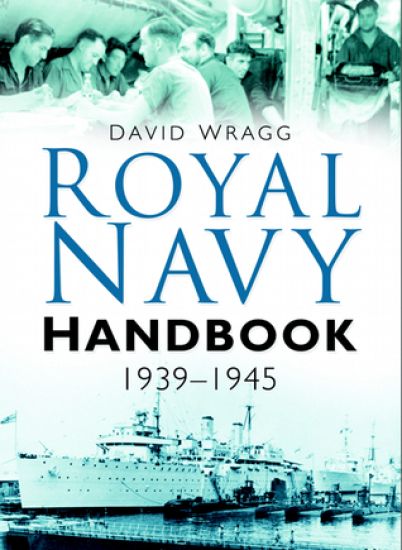
Royal Navy Handbook 1939-1945

Royal Navy Handbook 1939-1945

David Wragg

The History Press Ltd
2005
sidottu
Overstretched from the start of the Second World War in 1939, the Royal Navy acquired First World War surplus destroyers from the United States Navy and embarked on a massive programme of construction, building and buying aircraft carriers, escort carriers and frigates and corvettes, building up a powerful submarine arm and, almost from scratch, re-creating the naval air arm taken from it in 1918.The service had to learn fast. It soon became clear that the Germans would not provide an opportunity for a major battleship to battleship fleet action along the lines of Jutland, but that submarine warfare and surface raiders were to be just as effective at undermining the British war effort. The Royal Navy was expected to be active in the North Atlantic and in British waters, and then after the Soviet Union was invaded by Germany, it had to protect the Arctic convoys.Meanwhile, it also had to keep control of the Mediterranean, alone after the fall of France, supporting ground forces in North Africa and then in Greece, send convoys to Malta and disrupt the Axis supply lines both in the Mediterranean and off the coast of Norway, and then it had to face the Japanese in the Far East. By the war's end the Royal Navy had grown from its pre-war strength of 129,000 to 863,000 men. Its fleet had also grown from 12 to 61 battleships and cruisers, seven to 59 aircraft carriers, and 100 to 846 destroyers, by 1945.
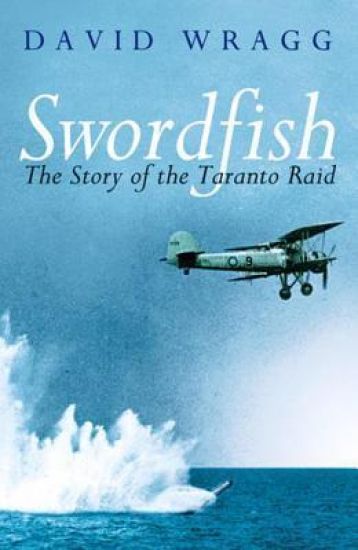
Swordfish

Swordfish

David Wragg

Cassell Military
2004
pokkari
The daring British air raid that inspired the Japanese attack on Pearl Harbor.In November 1940 Britain was isolated in its stand against Nazi Germany and its ally, Italy. The country could not afford to lose control of the Mediterranean, but the Royal Navy was already overstretched by the U-boat war and the threat of invasion. Italy's fleet of modern battleships presented a grave threat to our communications with Egypt and the Suez Canal.On the night of 11 November 1940, 42 members of the Fleet Air Arm took off in 21 obsolete 'Swordfish' biplanes, launched from HMS Illustrious. Their target: the Italian fleet anchorage at Taranto. Pressing home their attack in the face of intense anti-aircraft fire and searchlights, they torpedoed and sank three battleships. Incredibly, all but two of the biplanes survived. The Italian fleet was crippled and the world took note that Britain was far from defeated. No-one was more impressed than the Japanese, who noted how a fleet in harbour could be demolished by air attack.In this new account of the Royal Navy's most daring operation of the Second World War, David Wragg draws on British and Italian records as well as interviews with the aircrew, to tell the full story of a night that changed the course of the war.
Signal Failure

Signal Failure

David Wragg

The History Press Ltd
2004
nidottu
Signal Failure is a history of the relationship between railways and government in the United Kingdom. It is intended for both railway enthusiasts and professionals. Setting the relationship against the growth of the railways, the book looks at the way in which it developed.