Kirjojen hintavertailu. Mukana 12 595 353 kirjaa ja 12 kauppaa.

Kirjailija

David Wright

Kirjat ja teokset yhdessä paikassa: 112 kirjaa, julkaisuja vuosilta 1973-2026, suosituimpien joukossa Philip's RGS Children's School Atlas. Vertaile teosten hintoja ja tarkista saatavuus suomalaisista kirjakaupoista.

112 kirjaa

Kirjojen julkaisuhaarukka 1973-2026.

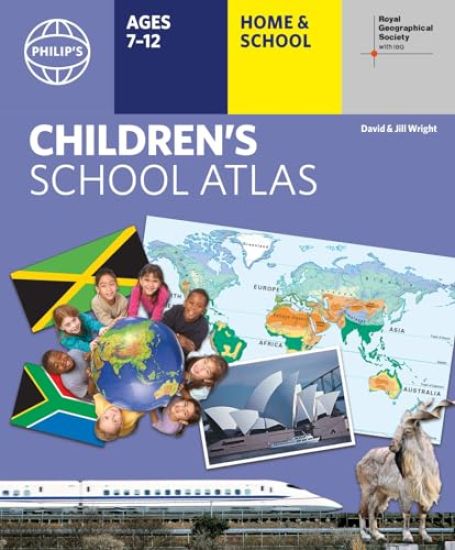
Philip's RGS Children's  School Atlas

Philip's RGS Children's School Atlas

David Wright; Jill Wright

Octopus Publishing Group
2024
nidottu
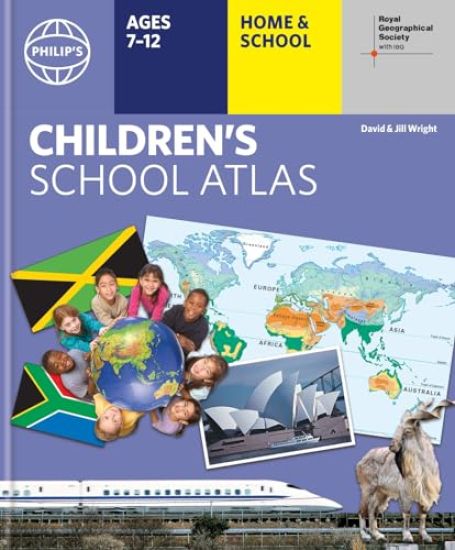
"This is such a great book for primary school age children and a little beyond for finding out about the world, its countries and people" customer review- Philip's atlas, designed to use at home and at school with guidance for parents and teachers- Clear maps and fascinating facts bring geography to life for readers aged 7-12- Published by Philip's in association with the Royal Geographical Society- Quizzes, activity ideas and puzzles to make learning fun- Past winner of the Geographical Association's award for making a significant contribution to geographyThe atlas is organized spread by spread in the classic sequence: first Europe, then its land neighbour Asia, followed by Africa, Australia and Oceania, North America and South America. Illustrated with captivating full-colour photographs and packed with fact boxes, curiosities, flags, stamps and quiz questions, Philip's RGS Children's Atlas is both fun to use and easy to understand.Now in its 17th edition, Philip's RGS Children's Atlas is a past winner of the Geographical Association's award for making a significant contribution to geography. The atlas was judged "an excellent 'all round' children's atlas with simple yet well-designed maps, well-illustrated with colour photographs. It links places to issues, events and real people, giving a clear sense of place."
Philip's RGS Children's  School Atlas

Philip's RGS Children's School Atlas

David Wright; Jill Wright

Octopus Publishing Group
2024
sidottu
"This is such a great book for primary school age children and a little beyond for finding out about the world, its countries and people" customer review- Philip's atlas, designed specially to use at home and at school with guidance for parents and teachers- Clear maps and fascinating facts bring geography to life for readers aged 7-12- Published by Philip's in association with the Royal Geographical Society- Quizzes, activity ideas and puzzles to make learning fun- Past winner of the Geographical Association's award for making a significant contribution to geographyThe atlas is organized spread by spread in the classic sequence: first Europe, then its land neighbour Asia, followed by Africa, Australia and Oceania, North America and South America. Illustrated with captivating full-colour photographs and packed with fact boxes, curiosities, flags, stamps and quiz questions, Philip's RGS Children's Atlas is both fun to use and easy to understand.Now in its 17th edition, Philip's RGS Children's Atlas is a past winner of the Geographical Association's award for making a significant contribution to geography. The atlas was judged "an excellent 'all round' children's atlas with simple yet well-designed maps, well-illustrated with colour photographs. It links places to issues, events and real people, giving a clear sense of place."
Philip's RGS Infant School Atlas

Philip's RGS Infant School Atlas

David Wright; Rachel Noonan

Octopus Publishing Group
2024
sidottu
Written for 5 to 7 year-old this atlas is ideal for teaching Key Stage 1, helping to cover geography, history, science, citizenship and literacy requirements- Written by experts Professor David Wright and Rachel Noonan- Published in association with the Royal Geographical Society- 50 pages of clear, child-friendly maps showing our world today- Countries of the world brought to life with flags, illustrations and photos- Bold text, simple words and short sentences to encourage reading skills- Starts with the Earth as a Planet then zooms into each of the world's regions with maps and illustrations- Numbered balloons on each map link to photos of a real placeFully revised and updated, the atlas is for children aged 5-7 in the early stages of reading, with simple text to explain what is happening on the maps and illustrations - all compatible with National Curriculum Key Stage 1.Clear, child-friendly maps are combined with vibrant photographs and facts about the world. Guidance is given at the beginning of the atlas on how to use the maps, encouraging the early development of map skills. Each colourful spread is illustrated with photographs and packed with fact boxes, curiosities, flags, stamps and simple quiz questions. Philip's RGS Infant School Atlas is both fun to use and easy to understand. The text is simple and uncomplicated to encourage early reading skills.
Philip's RGS Children's School Atlas

Philip's RGS Children's School Atlas

David Wright; Jill Wright;

Philip's
2021
sidottu
"This is such a great book for primary school age children and a little beyond for finding out about the world, its countries and people" Amazon customer review- Philip's atlas, designed specially to use at home and at school with guidance for parents and teachers- Clear maps and fascinating facts bring geography to life for readers aged 7-12- Published by Philip's the UK's leading school atlas publisher, in association with the Royal Geographical Society- Quizzes, activity ideas and puzzles to make learning fun- Past winner of the Geographical Association's award for making a significant contribution to geographyThe atlas is organized spread by spread in the classic sequence: first Europe, then its land neighbour Asia, followed by Africa, Australia and Oceania, North America and South America.Illustrated with captivating full-colour photographs and packed with fact boxes, curiosities, flags, stamps and quiz questions, Philip's RGS Children's Atlas is both fun to use and easy to understand.Now in its 16th edition, Philip's RGS Children's Atlas is a past winner of the Geographical Association's award for making a significant contribution to geography. The atlas was judged "an excellent 'all round' children's atlas with simple yet well-designed maps, well-illustrated with colour photographs. It links places to issues, events and real people, giving a clear sense of place."
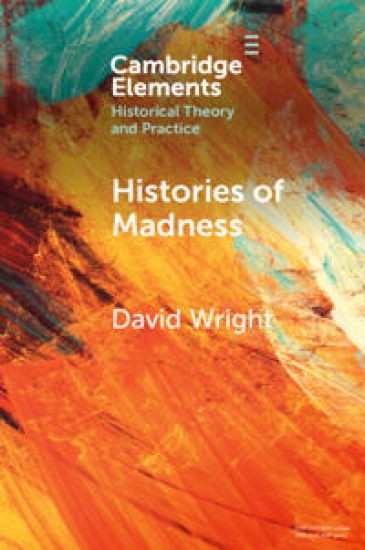
Histories of Madness

Histories of Madness

David Wright

Cambridge University Press
2026
pokkari
This Element's contribution explores the historiography of madness in the Modern era, including landmark publications in the overlapping fields of the history of psychiatry and the history of lunatic asylums. As this examination of almost 200 academic works will demonstrate, the field is vast and highly contested, with researchers sometimes disagreeing about the basic terms of analysis. Nevertheless, from Foucault to Fanon, from Goffman to Gilman, these debates about social and medical responses to madness have inspired some of the most influential academic scholarship of the twentieth century. This title is also available as Open Access on Cambridge Core.
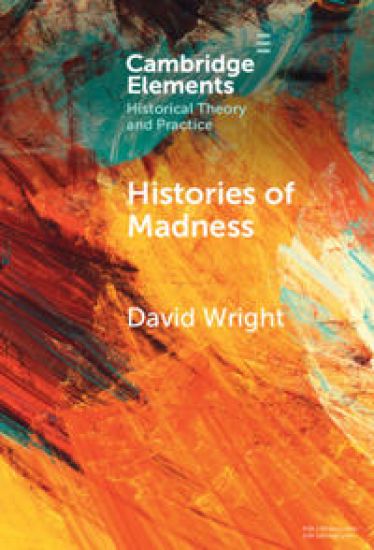
Histories of Madness

Histories of Madness

David Wright

Cambridge University Press
2026
sidottu
This Element's contribution explores the historiography of madness in the Modern era, including landmark publications in the overlapping fields of the history of psychiatry and the history of lunatic asylums. As this examination of almost 200 academic works will demonstrate, the field is vast and highly contested, with researchers sometimes disagreeing about the basic terms of analysis. Nevertheless, from Foucault to Fanon, from Goffman to Gilman, these debates about social and medical responses to madness have inspired some of the most influential academic scholarship of the twentieth century. This title is also available as Open Access on Cambridge Core.
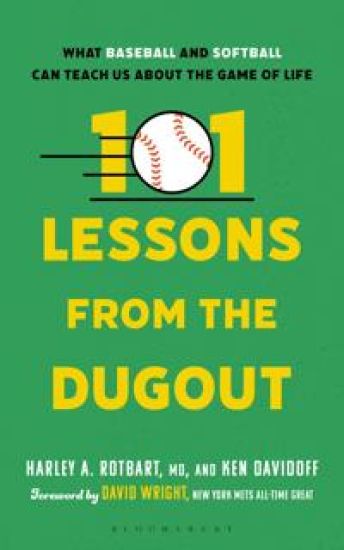
101 Lessons from the Dugout

101 Lessons from the Dugout

Harley A. Rotbart; Ken Davidoff; David Wright

BLOOMSBURY PUBLISHING PLC
2026
nidottu
Decoding baseball’s hidden messages for finding success in the game of life. Every player or fan of baseball and softball thinks they know the game—and they do, at least the rules and the strategy. But take a deeper look, and you’ll see there is so much more to be learned beyond the strikeouts, walks, base stealing, and double plays. Hidden behind the game’s fundamentals are subtle real-world messages and meanings that help lead to success off the field just as much as on it. In 101 Lessons from the Dugout, famed baseball writer and insider Ken Davidoff and renowned parenting expert and writer Dr. Harley Rotbart decode these messages in brief snippets for young ballplayers and fans. Each lesson contains an individual feature of the game followed by a pearl of wisdom or two to inspire readers. These lessons show that picking the right pitch to swing at is the ultimate exercise of good judgment; that a runner leading off first base demonstrates the balancing of risk and reward; and that the self-discipline of tagging up is true impulse control. Every pitch, hit, and play on the baseball and softball diamond is its own life lesson. From homework and humility, to punctuality and perseverance, to responsibility and resilience, 101 Lessons from the Dugout offers a game plan for happiness and success in the major leagues of school, friendship, and life.
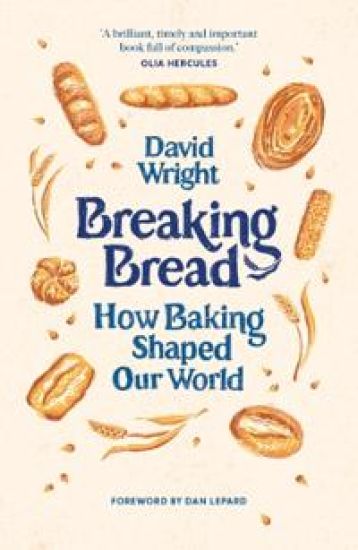
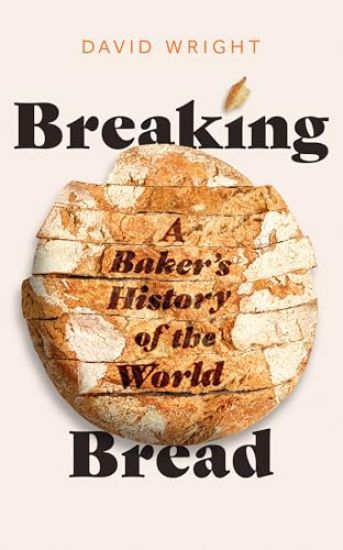
Breaking Bread

Breaking Bread

David Wright

Quarto Publishing Plc
2026
pokkari
‘An amazing book.’ Dan Lepard ‘The rich and fascinating story of bread.’ Lily Vanilli ‘A brilliant, timely and important book full of compassion.’ Olia Hercules ‘A fascinating exploration of our universal love of bread. David traces the past, present and future of bread through his personal lens as a third generation baker.’ Edd Kimber In Breaking Bread, third generation baker, food writer and presenter David Wright examines the universal questions about bread and baking. About the people who make and shape the bread we buy and the difficulties that social and cultural change, food fads and health directives have had, and are having, on the baking industry. After his family bakery sadly closed its doors after seventy-five years, Wright asks if the the closure of the bakery underlines the very idea that bread is a dying foodstuff. Is bread good or bad? And what does the future hold for bread? Bread is an essential part of our story, our health, our very being. Every civilisation has a form of bread, and how we create, make and bake it, how we sell it and buy it, our food security, our access to it, affects everything: our physical and mental well-being, the ingredients, the seeds, the very earth we grow our grains in, the water we use and how we treat and sustain these natural resources, impact on the very health and future of our planet. Chapters include: 1 Why Bread? – Creating, making, baking 2: The Wheel of Life – A loaf’s cycle 3: Frankenloaf – Science and the perfect loaf 4: Sicker by the Slice – A marriage not made in heaven 5: Big Bread – Industrial vs artisan bakeries 6: The Breadline – The economics of crust 7: Flour Power – The politics of bread 8: Bloody Bread – The costs of conquest 9: Our Daily Bread – What the gods want 10: Breaking bread - A once ropey baker looks to the future Breaking Bread contains interviews and expert contributions from Olia Hercules - Food Writer, Dan Lepard - Baker and Writer, Felicity Spector - Writer and Baker, Kateryna Kalyuzhna – Baker, Brad Leone - Food Personality, Chris Cowie – Philosopher, Zara Mohammed - Religious Leader, William Kendall - Food Producer, Andy Cato/George Lamb – Wildfarmed, Daisy Terry - Dusty Knuckle, Ollie Hornsey-Pennell - Hylsten Bakery, Tim Williams - Regenerative Farmer, Matt Burgess – Chef, Martha Delacey - Teacher and Writer, Karl De Smedt - Sourdough Librarian, Vanessa Kimbell – Baker, Chris Young - Real Bread Campaign, Ben MacKinnon - Baker E5, Ben Glazer - Coombeshead Bakery, Andrew Gilespy - Fresh Flour, OJ Borg - Radio 2 DJ and Presenter, Christopher Tan - Baker and Writer, Martin Bricknell - War Studies Professor KCL, Wing Mon Cheung - Cereal Bakery
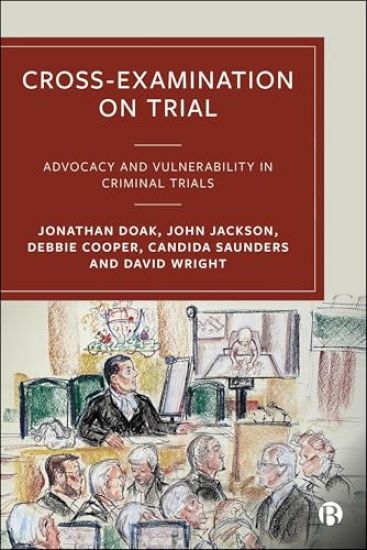
Cross-Examination on Trial

Cross-Examination on Trial

Jonathan Doak; John Jackson; Debbie Cooper; Candida Saunders; David Wright

Bristol University Press
2025
sidottu
Amid growing public concern about the negative effect cross-examination has on vulnerable witnesses, this book examines the effect of recent reforms to the practice across the different jurisdictions of the UK and Ireland. Drawing on observations and transcripts of trials and interviews with judges, advocates and intermediaries, the book provides an evaluation of cross-examination in trials involving vulnerable witnesses and the extent to which reforms are producing meaningful change. The book’s analysis sheds new light on the significance of cross-examination in criminal trials and provides evidence-based solutions for further changes to enable vulnerable witnesses to give their best evidence to the court.
Breaking Bread

Breaking Bread

David Wright

Quarto Publishing Plc
2025
sidottu
‘An amazing book.’ Dan Lepard‘The rich and fascinating story of bread.’ Lily Vanilli‘A brilliant, timely and important book full of compassion.’ Olia Hercules‘A fascinating exploration of our universal love of bread. David traces the past, present and future of bread through his personal lens as a third generation baker.’ Edd KimberIn Breaking Bread, third generation baker, food writer and presenter David Wright examines the universal questions about bread and baking. About the people who make and shape the bread we buy and the difficulties that social and cultural change, food fads and health directives have had, and are having, on the baking industry. After his family bakery sadly closed its doors after seventy-five years, Wright asks if the the closure of the bakery underlines the very idea that bread is a dying foodstuff. Is bread good or bad? And what does the future hold for bread?Bread is an essential part of our story, our health, our very being. Every civilisation has a form of bread, and how we create, make and bake it, how we sell it and buy it, our food security, our access to it, affects everything: our physical and mental well-being, the ingredients, the seeds, the very earth we grow our grains in, the water we use and how we treat and sustain these natural resources, impact on the very health and future of our planet.Chapters include:1 Why Bread? – Creating, making, baking2: The Wheel of Life – A loaf’s cycle3: Frankenloaf – Science and the perfect loaf4: Sicker by the Slice – A marriage not made in heaven5: Big Bread – Industrial vs artisan bakeries6: The Breadline – The economics of crust7: Flour Power – The politics of bread8: Bloody Bread – The costs of conquest9: Our Daily Bread – What the gods want10: Breaking bread - A once ropey baker looks to the futureBreaking Bread contains interviews and expert contributions from Olia Hercules - Food Writer, Dan Lepard - Baker and Writer, Felicity Spector - Writer and Baker, Kateryna Kalyuzhna – Baker, Brad Leone - Food Personality, Chris Cowie – Philosopher, Zara Mohammed - Religious Leader, William Kendall - Food Producer, Andy Cato/George Lamb – Wildfarmed, Daisy Terry - Dusty Knuckle, Ollie Hornsey-Pennell - Hylsten Bakery, Tim Williams - Regenerative Farmer, Matt Burgess – Chef, Martha Delacey - Teacher and Writer, Karl De Smedt - Sourdough Librarian, Vanessa Kimbell – Baker, Chris Young - Real Bread Campaign, Ben MacKinnon - Baker E5, Ben Glazer - Coombeshead Bakery, Andrew Gilespy - Fresh Flour, OJ Borg - Radio 2 DJ and Presenter, Christopher Tan - Baker and Writer, Martin Bricknell - War Studies Professor KCL, Wing Mon Cheung - Cereal Bakery
Corpus Approaches to Discourse in Forensic and Legal Contexts
This book is the first of its kind to bridge the gap between corpus linguistics and forensic linguistics, illustrating the value of applying corpus linguistic data, tools, and methods in the analysis of language in the law, evidence, crime, and justice.The volume begins by taking stock of the use of corpus linguistics in the field of forensic and legal linguistics over its roughly thirty-year history as a foundation for critically reflecting on the current state-of play within the discipline. Wright uses this discussion as a jumping-off point from which to demonstrate the opportunities and challenges of using corpora and corpus methods to analyse language in legal and forensic contexts and offers possible solutions to collecting and analysing types of data that are typically not in the public domain. The five analysis chapters that follow apply corpus method to both established and emerging areas of forensic and legal linguistics, summarized in a concluding chapter which also looks ahead to future directions for the interface of the two fields.This book will be key reading for graduate students and researchers in forensic linguistics and corpus linguistics methods as well as scholars working across disciplines interested in the intersection between language and the law.
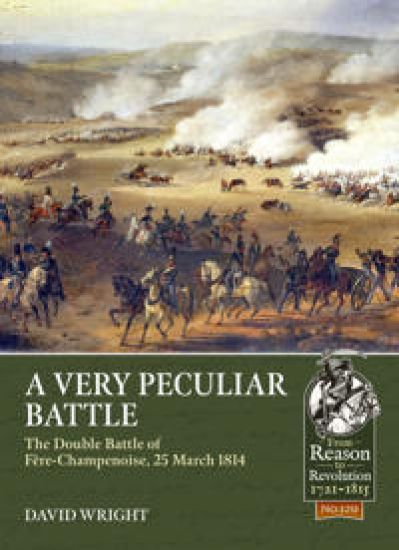
A Very Peculiar Battle

A Very Peculiar Battle

David Wright

HELION COMPANY
2024
pokkari
A Very Peculiar Battle tells the story of a unique battle in the Revolutionary and Napoleonic Wars. F re-Champenoise was two separate battles that merged together. In one, a force of Russian, W rttemberg, and Austrian cavalry and horse artillery defeated a larger French force of infantry, cavalry and artillery, opening the way to Paris. In the other, Russian cavalry and horse artillery destroyed Napol on's last supply column.F re-Champenoise was a far more significant battle than is usually portrayed. Napol on, after a string of victories in February 1814, had been defeated by superior numbers, first by Feldmarschall Bl cher at Laon (9-10 March), then by Feldmarschall Schwarzenberg at Arcis-sur-Aube (20-21 March). Napol on then gambled on a manoeuvre sur les derri res, moving onto Schwarzenberg's line of communications and intending to join with troops from his border fortresses and Lyon to force a battle on ground of his choosing.The allies started to follow, but Emperor Alexander of Russia made a crucial decision on March 24 for the allied armies to ignore Napol on and head for Paris. The next day, allied cavalry and horse artillery led by the Crown Prince of W rttemberg defeated a larger force of the corps of Mar chaux Marmont and Mortier, the last formed French troops barring the way to the capital. This enabled Schwarzenberg's and Bl cher's armies to combine, defeat the last defenders of Paris, and force the city's surrender before Napol on could return, allowing the allies to negotiate the end of the campaign without the Empereur being able to participate.At the same time, a convoy of ammunition and supplies, escorted by the two weak Gardes nationaux divisions of G n raux de division Pacthod and Amey, and trying to find Mar chal Mortier, moved into the path of the advancing Russo-Prussian army. After a heroic retreat, attacked by Russian cavalry and horse artillery, the two divisions were forced to surrender, losing all their vehicles and guns.The battle was unique in the Revolutionary and Napoleonic Wars. It was two separate battles that merged into one, as both defeated French forces retreated towards the town of F re-Champenoise, one from the east and the other from the northeast. Four different armies were involved: the main battle between units from the allies' Hauptarmee and the French Arm e de l'Aisne and the secondary one between units from the allies' Schlesische Armee and a convoy from Mar chal Macdonald's XI Corps d'Arm e, part of Napol on's Grande Arm e.Both were encounter battles in that all four armies involved were unaware of the presence of their opponent until they met. In both battles, the allied forces consisted entirely of cavalry and horse artillery, while the French forces contained predominantly infantry and foot artillery. A French force of ligne and garde units panicked, while a force of ill-trained Gardes nationaux fought stubbornly until overwhelmed. During the main battle, a short, violent storm had a devastating effect on the French, while the arrival of the secondary battle prevented the main from being an overwhelming success.
Bonfire of the Sanities

Bonfire of the Sanities

David Wright

Advantage Media Group
2024
sidottu
The year 2020 brought about dramatic changes that have impacted the U.S. and the entire world, affecting different areas of our lives from financial markets, freedoms, fuels, and the future. The retirement landscape in particular is continuously evolving, and retirement portfolios must be managed effectively to avoid losses and recognize opportunities.Investors can no longer rely solely on computer-simulated allocations or robo-advisors that use algorithms to direct allocations. The current economic environment requires ongoing monitoring of changes to an investor's needs and the external environment.In Bonfire of the Sanities, author and retirement advisor David Wright outlines the unfolding economic landscape and the increasing regulatory changes to teach you how toidentify the various paths available for retirement investments,implement risk-limiting tools to protect yourself from sudden surprises,recognize new initiatives or regulations early and take advantage of them,control what you can and actively watch your finances, andfind the correct professional to oversee retirement portfolios or implement risk-limiting tools to take advantage of high-potential investments while protecting your accounts.Investors must be vigilant to recognize shifts, more so now than ever before, and actively manage their portfolios to avoid losses and recognize opportunities.
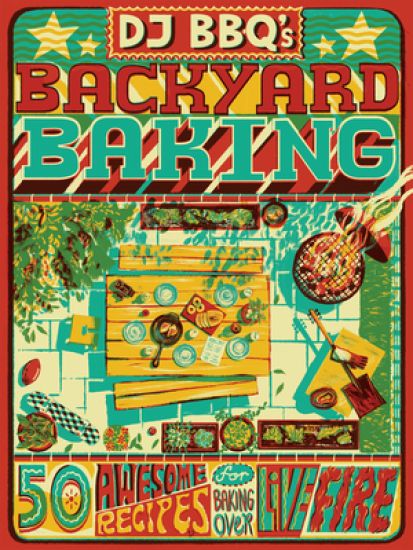
DJ BBQ's Backyard Baking

DJ BBQ's Backyard Baking

Christian Stevenson (DJ BBQ); Chris Taylor; David Wright

QUADRILLE PUBLISHING LTD
2023
sidottu
60 awesome recipes for baking over live fire from the legendary DJ BBQ team. DJ BBQ's Backyard Baking will take your live fire skills and backyard set-up to the next level, covering everything you ever wanted to know about baking on your BBQ. The standard kettle BBQ is essentially an oven, so why not use it to its potential and get baking? Bake the best ever brioche buns so you can make the ultimate cheeseburger; whip up some rye crumpets to go alongside some amazing pastrami; enjoy a god-tier bacon sandwich using your very own live fire sourdough loaf; throw an epic pizza party for all your friends; and finish off with some sweet treats like smoky chocolate brownies. When it comes to backyard baking the possibilities are endless – put your skills to the test with next instalment from the DJ BBQ team. It's DJ BBQ's Backyard Baking, and it's AWESOME.
The Digital Role-Playing Game and Technical Communication

The Digital Role-Playing Game and Technical Communication

Daniel Reardon; David Wright

BLOOMSBURY PUBLISHING PLC
2022
nidottu
With annual gross sales surpassing 100 billion U.S. dollars each of the last two years, the digital games industry may one day challenge theatrical-release movies as the highest-grossing entertainment media in the world. In their examination of the tremendous cultural influence of digital games, Daniel Reardon and David Wright analyze three companies that have shaped the industry: Bethesda, located in Rockville, Maryland, USA; BioWare in Edmonton, Alberta, Canada; and CD Projekt Red in Warsaw, Poland. Each company has used social media and technical content in the games to promote players’ belief that players control the companies’ game narratives. The result has been at times explosive, as empowered players often attempted to co-op the creative processes of games through discussion board forum demands, fund-raising campaigns to persuade companies to change or add game content, and modifications (“modding”) of the games through fan-created downloads. The result has changed the way we understand the interactive nature of digital games and the power of fan culture to shape those games.
Solarnomics

Solarnomics

David Wright

TAYLOR FRANCIS LTD
2022
nidottu
Solar power has come of age. Not only has it become one of the key alternatives to fossil fuels, it can now be deployed in a way that makes a viable business with a financial profit. This book shows industry professionals and students how to do just that.Solarnomics describes the economics of building and operating a solar power plant today and provides a window into a future in which several technologies collaborate, and in which all participants in the electricity grid become smarter at scheduling both the supply and demand for electric power to give humanity a future that is sustainable, both environmentally and economically. The book shows how to estimate costs and revenues, how to tweak the design of a project to improve profitability, how to calculate return on investment, how to assess and deal with risk, how to raise capital, how to combine solar with batteries to make a hybrid microgrid, and how to be prepared for future developments in the evolving smart electricity grid. Solarnomics will enable professionals in the solar industry to assess the potential profitability of a proposed solar project, and it will enable students to add an extra dimension to their understanding of sustainability.