Kirjojen hintavertailu. Mukana 12 595 353 kirjaa ja 12 kauppaa.

Kirjailija

David Zhang

Kirjat ja teokset yhdessä paikassa: 36 kirjaa, julkaisuja vuosilta 2006-2026, suosituimpien joukossa Advanced Fingerprint Recognition: From 3D Shape to Ridge Detail. Vertaile teosten hintoja ja tarkista saatavuus suomalaisista kirjakaupoista.

36 kirjaa

Kirjojen julkaisuhaarukka 2006-2026.

Advanced Palmprint Authentication

Advanced Palmprint Authentication

David Zhang; Dandan Fan; Xu Liang; Bob Zhang

Springer Nature Switzerland AG
2025
sidottu
This book presents a comprehensive exploration of palmprint recognition, synthesizing over a decade of research in contact-based, contactless, 3D, and multispectral systems. As one of the earliest approaches in biometrics, contact-based palmprint systems have evolved significantly, achieving greater portability and accuracy, even when handling large-scale datasets. In contrast, contactless systems, which allow users to position their palms near the camera without physical contact, offer a hygienic, user-friendly alternative that has quickly gained popularity in various applications. Additionally, the advancement of 3D palmprint recognition and the introduction of cutting-edge sensors, such as line-scan and multicamera systems, have further enhanced the accuracy and reliability of these systems. This book is structured into 13 chapters, divided into three key sections. The first part delves into contact-based systems, emphasizing their growing efficiency and performance in both small devices and large-scale scenarios. The second part provides in-depth coverage of contactless systems, detailing essential processes like palmprint acquisition, ROI localization, feature extraction, and matching techniques. The third section examines the latest developments in multiple sensing systems, focusing on 3D and multispectral recognition. Targeted at researchers and engineers in biometrics, particularly those specializing in palmprint recognition, this book offers valuable insights and practical algorithms for enhancing system performance. It is also an excellent resource for readers with a broader interest in biometric technologies, offering a rich understanding of the latest trends and innovations in the field.
Advanced Fingerprint Recognition: From 3D Shape to Ridge Detail

Advanced Fingerprint Recognition: From 3D Shape to Ridge Detail

Feng Liu; Qijun Zhao; David Zhang

Springer Verlag, Singapore
2021
nidottu
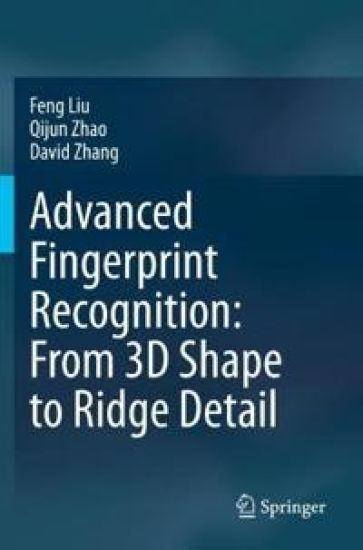
Fingerprints are among the most widely used biometric modalities and have been successfully applied in various scenarios. For example, in forensics, fingerprints serve as important legal evidence; and in civilian applications, fingerprints are used for access and attendance control as well as other identity services. Thanks to advances in three-dimensional (3D) and high-resolution imaging technology, it is now feasible to capture 3D or high-resolution fingerprints to provide extra information and go beyond the traditional features such as global ridge patterns and local ridge singularities used in conventional fingerprint recognition tasks. This book presents the state of the art in the acquisition and analysis of 3D and high-resolution fingerprints. Based on the authors’ research, this book focuses on advanced fingerprint recognition using 3D fingerprint features (i.e., finger shape, level 0 features) or high-resolution fingerprint features (i.e., ridge detail, level 3 features). It is a valuable resource for researchers, professionals and graduate students working in the field of computer vision, pattern recognition, security/biometrics practice, as well as interdisciplinary researchers.
Advanced Fingerprint Recognition: From 3D Shape to Ridge Detail

Advanced Fingerprint Recognition: From 3D Shape to Ridge Detail

Feng Liu; Qijun Zhao; David Zhang

Springer Verlag, Singapore
2020
sidottu
Fingerprints are among the most widely used biometric modalities and have been successfully applied in various scenarios. For example, in forensics, fingerprints serve as important legal evidence; and in civilian applications, fingerprints are used for access and attendance control as well as other identity services. Thanks to advances in three-dimensional (3D) and high-resolution imaging technology, it is now feasible to capture 3D or high-resolution fingerprints to provide extra information and go beyond the traditional features such as global ridge patterns and local ridge singularities used in conventional fingerprint recognition tasks. This book presents the state of the art in the acquisition and analysis of 3D and high-resolution fingerprints. Based on the authors’ research, this book focuses on advanced fingerprint recognition using 3D fingerprint features (i.e., finger shape, level 0 features) or high-resolution fingerprint features (i.e., ridge detail, level 3 features). It is a valuable resource for researchers, professionals and graduate students working in the field of computer vision, pattern recognition, security/biometrics practice, as well as interdisciplinary researchers.
Electronic Nose: Algorithmic Challenges

Electronic Nose: Algorithmic Challenges

Lei Zhang; Fengchun Tian; David Zhang

Springer Verlag, Singapore
2019
nidottu
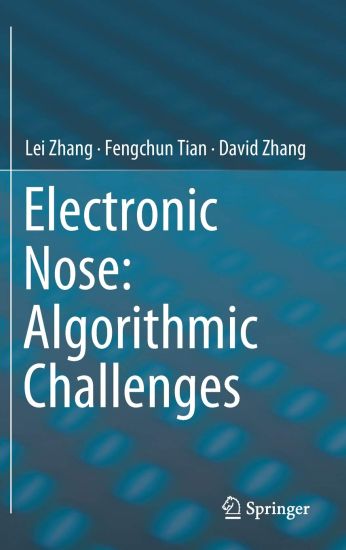
This book presents the key technology of electronic noses, and systematically describes how e-noses can be used to automatically analyse odours. Appealing to readers from the fields of artificial intelligence, computer science, electrical engineering, electronics, and instrumentation science, it addresses three main areas: First, readers will learn how to apply machine learning, pattern recognition and signal processing algorithms to real perception tasks. Second, they will be shown how to make their algorithms match their systems once the algorithms don’t work because of the limitation of hardware resources. Third, readers will learn how to make schemes and solutions when the acquired data from their systems is not stable due to the fundamental issues affecting perceptron devices (e.g. sensors). In brief, the book presents and discusses the key technologies and new algorithmic challenges in electronic noses and artificial olfaction. The goal is to promote the industrial application of electronic nose technology in environmental detection, medical diagnosis, food quality control, explosive detection, etc. and to highlight the scientific advances in artificial olfaction and artificial intelligence. The book offers a good reference guide for newcomers to the topic of electronic noses, because it refers to the basic principles and algorithms. At the same time, it clearly presents the key challenges – such as long-term drift, signal uniqueness, and disturbance – and effective and efficient solutions, making it equally valuable for researchers engaged in the science and engineering of sensors, instruments, chemometrics, etc.
Electronic Nose: Algorithmic Challenges

Electronic Nose: Algorithmic Challenges

Lei Zhang; Fengchun Tian; David Zhang

Springer Verlag, Singapore
2018
sidottu
This book presents the key technology of electronic noses, and systematically describes how e-noses can be used to automatically analyse odours. Appealing to readers from the fields of artificial intelligence, computer science, electrical engineering, electronics, and instrumentation science, it addresses three main areas: First, readers will learn how to apply machine learning, pattern recognition and signal processing algorithms to real perception tasks. Second, they will be shown how to make their algorithms match their systems once the algorithms don’t work because of the limitation of hardware resources. Third, readers will learn how to make schemes and solutions when the acquired data from their systems is not stable due to the fundamental issues affecting perceptron devices (e.g. sensors). In brief, the book presents and discusses the key technologies and new algorithmic challenges in electronic noses and artificial olfaction. The goal is to promote the industrial application of electronic nose technology in environmental detection, medical diagnosis, food quality control, explosive detection, etc. and to highlight the scientific advances in artificial olfaction and artificial intelligence. The book offers a good reference guide for newcomers to the topic of electronic noses, because it refers to the basic principles and algorithms. At the same time, it clearly presents the key challenges – such as long-term drift, signal uniqueness, and disturbance – and effective and efficient solutions, making it equally valuable for researchers engaged in the science and engineering of sensors, instruments, chemometrics, etc.
Tongue Image Analysis

Tongue Image Analysis

David Zhang; Hongzhi Zhang; Bob Zhang

Springer Verlag, Singapore
2018
nidottu
This is the first book offering a systematic description of tongue image analysis and processing technologies and their typical applications in computerized tongue diagnostic (CTD) systems. It features the most current research findings in all aspects of tongue image acquisition, preprocessing, classification, and diagnostic support methodologies, from theoretical and algorithmic problems to prototype design and development of CTD systems. The book begins with a very in-depth description of CTD on a need-to-know basis which includes an overview of CTD systems and traditional Chinese medicine (TCM) in order to provide the information on the context and background of tongue image analysis. The core part then introduces algorithms as well as their implementation methods, at a know-how level, including image segmentation methods, chromatic correction, and classification of tongue images. Some clinical applications based on these methods are presented for the show-how purpose in the CTD research field. Case studies highlight different techniques that have been adopted to assist the visual inspection of appendicitis, diabetes, and other common diseases. Experimental results under different challenging clinical circumstances have demonstrated the superior performance of these techniques. In this book, the principles of tongue image analysis are illustrated with plentiful graphs, tables, and practical experiments to provide insights into some of the problems. In this way, readers can easily find a quick and systematic way through the complicated theories and they can later even extend their studies to special topics of interest. This book will be of benefit to researchers, professionals, and graduate students working in the field of computer vision, pattern recognition, clinical practice, and TCM, as well as those involved in interdisciplinary research.
Discriminative Learning in Biometrics

Discriminative Learning in Biometrics

David Zhang; Yong Xu; Wangmeng Zuo

Springer Verlag, Singapore
2018
nidottu
This monograph describes the latest advances in discriminative learning methods for biometric recognition. Specifically, it focuses on three representative categories of methods: sparse representation-based classification, metric learning, and discriminative feature representation, together with their applications in palmprint authentication, face recognition and multi-biometrics. The ideas, algorithms, experimental evaluation and underlying rationales are also provided for a better understanding of these methods. Lastly, it discusses several promising research directions in the field of discriminative biometric recognition.
Computer Models for Facial Beauty Analysis

Computer Models for Facial Beauty Analysis

David Zhang; Fangmei Chen; Yong Xu

Springer International Publishing AG
2018
nidottu
This book covers the key advances in computerized facial beauty analysis, with an emphasis on data-driven research and the results of quantitative experiments. It takes a big step toward practical facial beauty analysis, proposes more reliable and stable facial features for beauty analysis and designs new models, methods, algorithms and schemes while implementing a facial beauty analysis and beautification system. This book also tests some previous putative rules and models for facial beauty analysis by using computationally efficient mathematical models and algorithms, especially large scale database-based and repeatable experiments.The first section of this book provides an overview of facial beauty analysis. The base of facial beauty analysis, i.e., facial beauty features, is presented in part two. Part three describes hypotheses on facial beauty, while part four defines data-driven facial beauty analysis models. This book concludes with the authors explaining how toimplement their new facial beauty analysis system.This book is designed for researchers, professionals and post graduate students working in the field of facial beauty analysis, computer vision, human-machine interface, pattern recognition and biometrics. Those involved in interdisciplinary fields with also find the contents useful. The ideas, means and conclusions for beauty analysis are valuable for researchers and the system design and implementation can be used as models for practitioners and engineers.
Tongue Image Analysis

Tongue Image Analysis

David Zhang; Hongzhi Zhang; Bob Zhang

Springer Verlag, Singapore
2017
sidottu
This is the first book offering a systematic description of tongue image analysis and processing technologies and their typical applications in computerized tongue diagnostic (CTD) systems. It features the most current research findings in all aspects of tongue image acquisition, preprocessing, classification, and diagnostic support methodologies, from theoretical and algorithmic problems to prototype design and development of CTD systems. The book begins with a very in-depth description of CTD on a need-to-know basis which includes an overview of CTD systems and traditional Chinese medicine (TCM) in order to provide the information on the context and background of tongue image analysis. The core part then introduces algorithms as well as their implementation methods, at a know-how level, including image segmentation methods, chromatic correction, and classification of tongue images. Some clinical applications based on these methods are presented for the show-how purpose in the CTD research field. Case studies highlight different techniques that have been adopted to assist the visual inspection of appendicitis, diabetes, and other common diseases. Experimental results under different challenging clinical circumstances have demonstrated the superior performance of these techniques. In this book, the principles of tongue image analysis are illustrated with plentiful graphs, tables, and practical experiments to provide insights into some of the problems. In this way, readers can easily find a quick and systematic way through the complicated theories and they can later even extend their studies to special topics of interest. This book will be of benefit to researchers, professionals, and graduate students working in the field of computer vision, pattern recognition, clinical practice, and TCM, as well as those involved in interdisciplinary research.
Discriminative Learning in Biometrics

Discriminative Learning in Biometrics

David Zhang; Yong Xu; Wangmeng Zuo

Springer Verlag, Singapore
2016
sidottu
This monograph describes the latest advances in discriminative learning methods for biometric recognition. Specifically, it focuses on three representative categories of methods: sparse representation-based classification, metric learning, and discriminative feature representation, together with their applications in palmprint authentication, face recognition and multi-biometrics. The ideas, algorithms, experimental evaluation and underlying rationales are also provided for a better understanding of these methods. Lastly, it discusses several promising research directions in the field of discriminative biometric recognition.
Computer Models for Facial Beauty Analysis

Computer Models for Facial Beauty Analysis

David Zhang; Fangmei Chen; Yong Xu

Springer International Publishing AG
2016
sidottu
This book covers the key advances in computerized facial beauty analysis, with an emphasis on data-driven research and the results of quantitative experiments. It takes a big step toward practical facial beauty analysis, proposes more reliable and stable facial features for beauty analysis and designs new models, methods, algorithms and schemes while implementing a facial beauty analysis and beautification system. This book also tests some previous putative rules and models for facial beauty analysis by using computationally efficient mathematical models and algorithms, especially large scale database-based and repeatable experiments.The first section of this book provides an overview of facial beauty analysis. The base of facial beauty analysis, i.e., facial beauty features, is presented in part two. Part three describes hypotheses on facial beauty, while part four defines data-driven facial beauty analysis models. This book concludes with the authors explaining how toimplement their new facial beauty analysis system.This book is designed for researchers, professionals and post graduate students working in the field of facial beauty analysis, computer vision, human-machine interface, pattern recognition and biometrics. Those involved in interdisciplinary fields with also find the contents useful. The ideas, means and conclusions for beauty analysis are valuable for researchers and the system design and implementation can be used as models for practitioners and engineers.
All the Lives You Can Change: Effective Altruism for Christians

All the Lives You Can Change: Effective Altruism for Christians

Dominic Roser; David Zhang; J. D. Bauman

William B. Eerdmans Publishing Company
2026
nidottu
Learn how to go beyond good intentions and create real change in the world. In a world full of seemingly intractable problems, many Christians wonder if their efforts make any real difference--or if they're just throwing money and time into a void. All the Lives You Can Change directly addresses this question, pointing Christians to impactful opportunities for loving their neighbors. It encourages readers to go beyond conventional philanthropy, symbolic actions, and feel-good volunteering and to discover surprising tools from effective altruism--an evidence-based approach to doing the most good. Drawing on Scripture, years of nonprofit management experience, and research from experts at Oxford, the authors equip followers of Christ to turn compassion into meaningful, measurable change. This book offers practical tools to: Prioritize needs: Identify where money and energy most impactfully solve pressing, neglected global issues--taking Jesus's radical command to love your neighbor seriously. Give smarter: Leverage proven, evidence-backed strategies to achieve results hundreds of times greater per dollar than traditional charity. Develop powerful careers: Clarify one's calling and pursue careers that don't just feel meaningful but genuinely glorify God and significantly improve the world. Full of eye-opening case studies, sharp biblical insights, and candid advice, All the Lives You Can Change is a roadmap for a life that makes a difference. Professionals short on purpose, church leaders eager to mobilize their congregations into meaningful action, and students uncertain about the future will all learn how to move past good intentions and into genuine, world-changing outcomes that radically transform the lives of the world's most vulnerable people.
Advanced Medical Biometrics

Advanced Medical Biometrics

David Zhang; Chaoxun Guo; Bob Zhang

WORLD SCIENTIFIC PUBLISHING CO PTE LTD
2026
sidottu
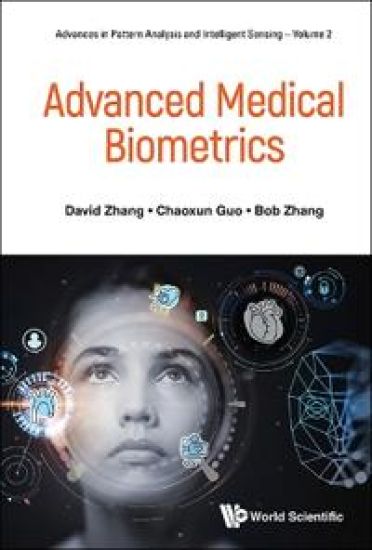
In brief, this book provides the advanced sensing technologies including multi-sensor collaborative sensing for pulse signal acquisition, sensor array design for breath odor perception, and voice signal acquisition. Besides, this book summarizes the advances about pulse feature extraction with improved Gabor function, odor feature extraction based on de-convolution methods. This book also presents the latest recognition methods including evolutionary ensemble model to handle the imbalance problem, multi-feature complementary methods for face image, tongue images, and pulse analysis. Multi-modal hybrid fusion and self-adaptive score fusion for disease classification are proposed and proved effective for medical biometrics.Medical biometrics achieves disease detection and health monitor by sensing and recognizing multi-modal body surface information. It is believed that body surface information, e.g., face, tongue, breath odor, voice, and wrist pulse, is one of the most important biometric features that contains rich pathological information and can be used for health assessments or disease detection. Focusing on the latest progresses in medical biometrics, this book systematically presents advanced signal acquisition techniques, feature extraction methods, and recognition algorithms.Both researchers and engineers in pattern recognition and medical diagnosis will benefit from this book as it offers comprehensive understanding of the advanced signal acquisition techniques, related feature extraction methods, and state-of-the-art analysis methods.
Advanced Randomized Neural Networks For Pattern Analysis

Advanced Randomized Neural Networks For Pattern Analysis

Chenglong Zhang; Shifei Ding; Yang Wang; David Zhang

WORLD SCIENTIFIC PUBLISHING CO PTE LTD
2025
sidottu
This book is the culmination of our research in the recent decade on randomized neural networks with data-dependent supervision mechanisms. Traditional randomized neural networks mainly focused on constructing various deep neural networks with data independent random weights, ignoring the impact of the number of nodes and scope of parameters on the universal approximation property (UAP) of randomized neural networks. Comprising of 15 chapters, Advanced Randomized Neural Networks for Pattern Analysis introduces systematic solutions for advanced data-dependent stochastic configuration networks, namely algorithms that assign random parameters and construct network structures incrementally. The book is segmented into three major sections — neural networks optimization, robust data analysis, and deep fusion learning — that feature the successful performance of advanced randomized neural networks in various pattern analysis problems. We anticipate that both researchers and engineers in the field of artificial neural networks, particularly pattern recognition and medical diagnosis, will find this book and the associated algorithms useful, and we hope that anyone with an interest in the related research field will find the book enjoyable and informative.
???????

???????

David Zhang

Dixie W Publishing Corporation
2025
pokkari
这是一本别具一格的音乐家的诗歌选集。雨子-张祥雨(David Zhang),是著名的北美华裔作曲家。他移民北美三十多年来,除了创作并成功上演了大批经典性的音乐作品,还同步创作了八百多首各类题材,不同风格的诗歌。这本《雨子诗选四百首》包含了155幅由雨子和新海共同制作的精美的挥毫诗配画。其中有大量的为艺术精英,文学名家制作的个人艺术名片。雨子的诗歌如同他的音乐作品一样,做到了思想性和艺术性的完美结合。其思想性洋溢着对世界局势的忧心和对世界和平之讴歌;对人类之大爱。对祖国和所在国的关爱;对社会精英的赞美和对亲朋好友的深情。雨子的诗如同他的音乐作品一样,无论是古典诗还是现代诗,都有着鲜明的节奏和韵律。深入浅出,朗朗上口。紧扣读者的心弦,使人难以忘怀。请敞开您的胸怀,拥抱雨子音乐性的诗歌世界吧!
Advanced Multimedia: Algorithms, Systems and Applications
Including state-of-the-art research advancement and practical case studies in biometrics, Advanced Multimedia: Algorithms, Systems and Applications explores the fundamentals of multimedia, advanced topics in multimedia, and applications of multimedia systems. Authors Jane You and David Zhang define powerful methods for effective and efficient multimedia computing that integrate different data streams within a single platform to provide more comprehensive and intuitive information for a variety of applications. The text also combines techniques for data mining and data warehousing to speed up query processing.
Information Fusion

Information Fusion

Jinxing Li; Bob Zhang; David Zhang

SPRINGER VERLAG, SINGAPORE
2023
nidottu
In the big data era, increasing information can be extracted from the same source object or scene. For instance, a person can be verified based on their fingerprint, palm print, or iris information, and a given image can be represented by various types of features, including its texture, color, shape, etc. These multiple types of data extracted from a single object are called multi-view, multi-modal or multi-feature data. Many works have demonstrated that the utilization of all available information at multiple abstraction levels (measurements, features, decisions) helps to obtain more complex, reliable and accurate information and to maximize performance in a range of applications.This book provides an overview of information fusion technologies, state-of-the-art techniques and their applications. It covers a variety of essential information fusion methods based on different techniques, including sparse/collaborative representation, kernel strategy,Bayesian models, metric learning, weight/classifier methods, and deep learning. The typical applications of these proposed fusion approaches are also presented, including image classification, domain adaptation, disease detection, image restoration, etc. This book will benefit all researchers, professionals and graduate students in the fields of computer vision, pattern recognition, biometrics applications, etc. Furthermore, it offers a valuable resource for interdisciplinary research.
Information Fusion

Information Fusion

Jinxing Li; Bob Zhang; David Zhang

SPRINGER VERLAG, SINGAPORE
2022
sidottu
In the big data era, increasing information can be extracted from the same source object or scene. For instance, a person can be verified based on their fingerprint, palm print, or iris information, and a given image can be represented by various types of features, including its texture, color, shape, etc. These multiple types of data extracted from a single object are called multi-view, multi-modal or multi-feature data. Many works have demonstrated that the utilization of all available information at multiple abstraction levels (measurements, features, decisions) helps to obtain more complex, reliable and accurate information and to maximize performance in a range of applications.This book provides an overview of information fusion technologies, state-of-the-art techniques and their applications. It covers a variety of essential information fusion methods based on different techniques, including sparse/collaborative representation, kernel strategy,Bayesian models, metric learning, weight/classifier methods, and deep learning. The typical applications of these proposed fusion approaches are also presented, including image classification, domain adaptation, disease detection, image restoration, etc. This book will benefit all researchers, professionals and graduate students in the fields of computer vision, pattern recognition, biometrics applications, etc. Furthermore, it offers a valuable resource for interdisciplinary research.