Kirjojen hintavertailu. Mukana 12 657 676 kirjaa ja 12 kauppaa.
Kirjailija
David Zimmerman
Kirjat ja teokset yhdessä paikassa: 12 kirjaa, julkaisuja vuosilta 2002-2025, suosituimpien joukossa Britain's Shield. Vertaile teosten hintoja ja tarkista saatavuus suomalaisista kirjakaupoista.
Över mitt ögas dag av David Zimmerman är en långdikt i två delar där förflutet och framtid ständigt graviterar mot och konfronteras med ett lika oförmöget som rasande “nu”. Genom lyriska diktsegment och bearbetade fragment ur Vilhelm Ekelunds översättningar av antika gravepigram manar Zimmerman fram en vredgad men likväl stillsam klagosång: Nej / inga klockor märker ut / döda längre För allt är onödigt, en avsägelse Över mitt ögas dag är en del av det kollaborativa text- och ljudverket med samma titel, ett samarbete med tonsättaren Lisa Stenberg. I bokform ges dikten ut i sin helhet och innehåller nedladdningskod till det gemensamma ljudverket. De första 100 exemplaren kommer med ett unikt screentryckt omslag.
"Vidrörd öppnarsig varelsen i gliporoch en värld strilarmot hjärtstammen.Blicken man är i serhjälplöst in i de andra.”Hur ska vi vara tillsammans? Hur ska vi hitta vårt fäste i tiden? Ark talar med en stark materiell melankoli som samtidigt verkar i ett ljus. Här finns ett samhälle och en familj, en far och ett barn. Här finns naturen som blåser och lyser och människor vars ansikten befinner sig utanför dem själva, bredvid varandra.
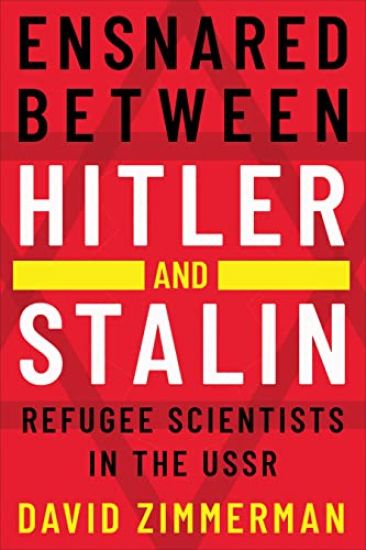
In the 1930s, hundreds of scientists and scholars fled Hitler’s Germany. Many found safety, but some made the disastrous decision to seek refuge in Stalin’s Soviet Union. The vast majority of these refugee scholars were arrested, murdered, or forced to flee the Soviet Union during the Great Terror. Many of the survivors then found themselves embroiled in the Holocaust. Ensnared between Hitler and Stalin explores the forced migration of these displaced academics from Nazi Germany to the Soviet Union. The book follows the lives of thirty-six scholars through some of the most tumultuous events of the twentieth century. It reveals that not only did they endure the chaos that engulfed central Europe in the decades before Hitler came to power, but they were also caught up in two of the greatest mass murders in history. David Zimmerman examines how those fleeing Hitler in their quests for safe harbour faced hardship and grave danger, including arrest, torture, and execution by the Soviet state. Drawing on German, Russian, and English sources, Ensnared between Hitler and Stalin illustrates the complex paths taken by refugee scholars in flight.
A collection of essays and poems exploring the concept of infinite time and the way it resonates through the emotional, material and spiritual architecture of our own most finite lives. Texts enacting mythic re-contextualisations, light polluted suburbias, embodied divinity as well as still life depictions of human kindness during intense isolation; each and all inhabiting their own specific instant of endlessness. Featuring work by: David Zimmermann Lyra Koli Ruby Nilsson Johannes Heldén Snejanka Mihaylova
Ljus och strålning rör sig kring en sjuk fars upplösning i världen. Den utspelar sig under en vår och en sommar, främst mellan fadern och hans son. Ingen av dem lyckas formulera sig inför döden och det meningsförfall som inträffar när en central del av ens liv ringas in, angrips och raderas. Aprils livsvilja och sjukdomens dödsvilja är delar av samma natur.
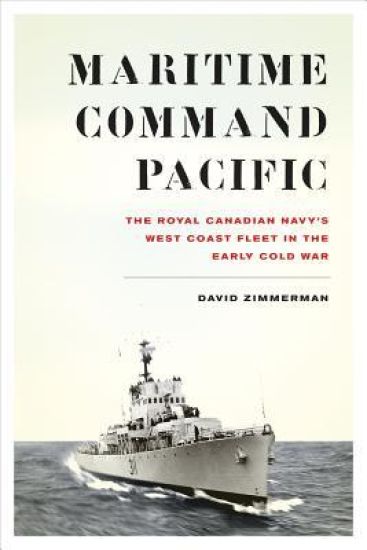
The Royal Canadian Navy crews that sailed the Atlantic during the early Cold War held a contemptuous view of their West Coast brethren, likening the Pacific fleet to a "yacht club" where sailors enjoyed a life of leisurely service on a tranquil sea. As Maritime Command Pacific demonstrates, nothing could be further from the truth. The first comprehensive history of the Pacific fleet from 1945 to 1965, it begins by exploring how Maritime Command Pacific (MARCAP) weathered postwar downsizing only to face rapid expansion in the wake of the Korean War. As Cold War tensions mounted, the fleet worked closely with the US Navy to defend the west coast of North America from potential threats. Over the course of this twenty-year period, MARCAP's warships were just as active as their counterparts in the Atlantic; and their crews contended with drifting Japanese mines, joint US-Canadian training exercises, and the threat of Soviet submarines – all while patrolling a rugged coastline known, in part, as the "Graveyard of the Pacific."
The Royal Canadian Navy crews that sailed the Atlantic during the early Cold War held a contemptuous view of their West Coast brethren, likening the Pacific fleet to a "yacht club" where sailors enjoyed a life of leisurely service on a tranquil sea. As Maritime Command Pacific demonstrates, nothing could be further from the truth. The first comprehensive history of the Pacific fleet from 1945 to 1965, it begins by exploring how Maritime Command Pacific (MARCAP) weathered postwar downsizing only to face rapid expansion in the wake of the Korean War. As Cold War tensions mounted, the fleet worked closely with the US Navy to defend the west coast of North America from potential threats. Over the course of this twenty-year period, MARCAP's warships were just as active as their counterparts in the Atlantic; and their crews contended with drifting Japanese mines, joint US-Canadian training exercises, and the threat of Soviet submarines – all while patrolling a rugged coastline known, in part, as the "Graveyard of the Pacific."
Michael Vinings, a pastor in transition from performance and attraction orientation to a missional, people focused approach is a man that is learning. His learning centers around seven shifts that he finds he must make to satisfy the deepest longings of his heart in relation to his original intent to enter ministry - to see lives change and develop in the way of Jesus.Go along with Michael as he recognizes, reflects, realigns and refocuses his work with his convictions and values.
The individual bravery and skill of the Battle of Britain pilots and the fighting qualities of their aircraft would have been in vain if they had not been part of a highly complex and sophisticated air defence system based on radar. The development of the system in just five years is one of the most remarkable scientific and technological accomplishments of the twentieth century. The creation of the radar defences has been somewhat overlooked over the years. Many of the studies of radar have focused on the development of the technology, with little attention given to the creation of the much larger system for integrating radar into the nation's air defences. This work relates the development of radar with the diplomatic and air policy concerns of the period. David Zimmerman shows how a small group of scientists, engineers, airmen and politicians accomplished this technological miracle. He also reappraises Churchill's role, showing that his influence was more often than not counter-productive to the development of effective air defences.
2010 is not only the seventieth anniversary of the legendary Battle of Britain, it is also the seventieth anniversary of another fi nest hour - that of Radar. The bravery and skill of British pilots in the Second World War, and the fighting capability of their aircraft, would have been in vain had they not been part of a highly complex and sophisticated air defence system based on radar. The development of this system in just five years is one of the most remarkable scientific and technological accomplishments of the twentieth century. Despite this, the creation of radar defence has been somewhat overlooked. Many of the studies on radar have focused on the development of the technology, with little attention given to the creation of the much larger system for integrating it into the nation's air defences. Britain's Shield relates the development of radar with the diplomatic and air policy concerns of the period. It shows how a small group of scientists, engineers, airmen and politicians accomplished this technological miracle, and offers a revisionist appraisal of Churchill's role, showing that his influence was, more often than not, counter-productive to the development of effective air defences.
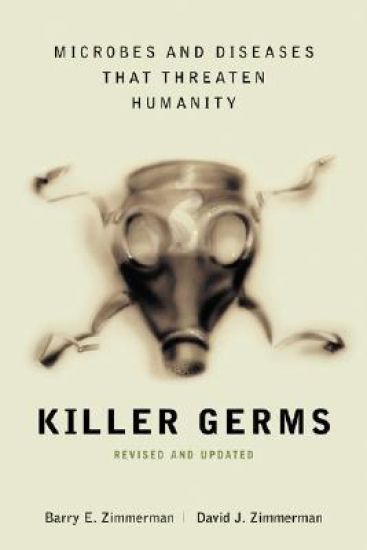
Discover the unseen assassins that plague humanity. Until recently, most of us went about our daily lives with a false sense of public health security. Epidemics were a thing of the past, the AIDS crisis had diminished, and an annual vaccination kept the flu at bay. Then, in late 2001, all of those illusions of public health safety were suddenly shattered. A litany of terrifying images and events became all to familiar, from federal agents surreally swathed in biohazard suits to the daily evacuation of major government buildings for anthrax decontamination. The lethal power of microscopic organisms - no longer confined to the lab - permeated our collective psyches, forcing us to confront the serious threat posed by killer germs.This updated edition of Barry and David Zimmerman's classic on the subject offers a riveting retrospective of the havoc-wreaking microbes of the past as well as an engrossing exploration of emerging threats, including a new chapter on bioterrorism. In these pages, you'll discover: what makes smallpox the most potentially devastating of all bioweapons, and how prepared we are to fight it; why tuberculosis - already responsible for 2 billion deaths - is on the rise in the United States, Canada, and Europe; how antibiotic overload might one day turn a simple paper cut or skinned knee into a source of fatal infection; and why virologists fear that an easily transmissible, highly virulent superflu - strong enough to rival the strain that killed millions in 1918 - is imminent. From the bygone bubonic plague to the modern nightmare of Ebola, "Killer Germs" offers a fascinating examination of the horrors humanity has faced and the actions required to provide hope for the future.
'Socket' tells the gripping tale of Ronald Percy, an international aid worker who travels to Ethiopia to assist with an irrigation project for the African Development Organization. Upon arrival, he is unable to locate his agents or company representatives, and soon finds himself enmeshed in a web of bureaucracy and state corruption. 'Socket' was selected as the Grand Winner from over 400 entries in the 2001 International 3-Day Novel-Writing Contest. " The language is vivid and economical, and the plot charges ahead with relentless momentum." - Broken Pencil "The story is so tightly written that you can't put it down." - Giest Magazine Winner 2001 3-Day Novel-Writing Contest