Kirjojen hintavertailu. Mukana 12 595 353 kirjaa ja 12 kauppaa.

Kirjailija

Davide Sangiorgi

Kirjat ja teokset yhdessä paikassa: 2 kirjaa, julkaisuja vuosilta 2003-2011, suosituimpien joukossa Introduction to Bisimulation and Coinduction. Vertaile teosten hintoja ja tarkista saatavuus suomalaisista kirjakaupoista.

2 kirjaa

Kirjojen julkaisuhaarukka 2003-2011.

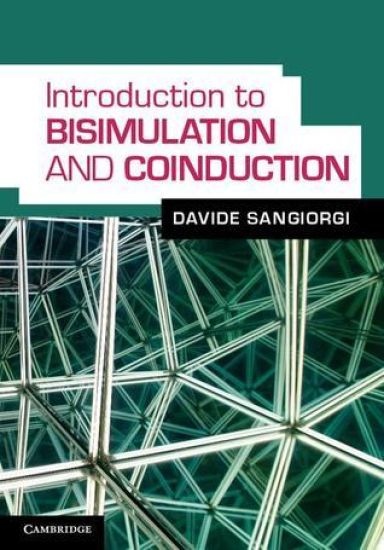
Introduction to Bisimulation and Coinduction

Introduction to Bisimulation and Coinduction

Davide Sangiorgi

Cambridge University Press
2011
sidottu
Induction is a pervasive tool in computer science and mathematics for defining objects and reasoning on them. Coinduction is the dual of induction and as such it brings in quite different tools. Today, it is widely used in computer science, but also in other fields, including artificial intelligence, cognitive science, mathematics, modal logics, philosophy and physics. The best known instance of coinduction is bisimulation, mainly employed to define and prove equalities among potentially infinite objects: processes, streams, non-well-founded sets, etc. This book presents bisimulation and coinduction: the fundamental concepts and techniques and the duality with induction. Each chapter contains exercises and selected solutions, enabling students to connect theory with practice. A special emphasis is placed on bisimulation as a behavioural equivalence for processes. Thus the book serves as an introduction to models for expressing processes (such as process calculi) and to the associated techniques of operational and algebraic analysis.
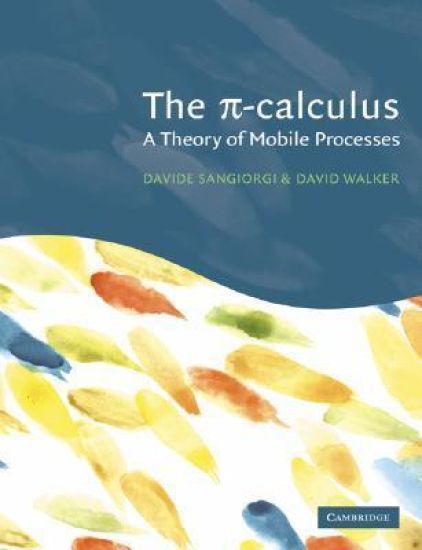
The Pi-Calculus

The Pi-Calculus

Davide Sangiorgi; David Walker

Cambridge University Press
2003
pokkari
Mobile systems, whose components communicate and change their structure, now pervade the informational world and the wider world of which it is a part. The science of mobile systems is as yet immature, however. This book presents the pi-calculus, a theory of mobile systems. The pi-calculus provides a conceptual framework for understanding mobility, and mathematical tools for expressing systems and reasoning about their behaviours. The book serves both as a reference for the theory and as an extended demonstration of how to use pi-calculus to describe systems and analyse their properties. It covers the basic theory of pi-calculus, typed pi-calculi, higher-order processes, the relationship between pi-calculus and lambda-calculus, and applications of pi-calculus to object-oriented design and programming. The book is written at the graduate level, assuming no prior acquaintance with the subject, and is intended for computer scientists interested in mobile systems.