Kirjojen hintavertailu. Mukana 12 548 268 kirjaa ja 12 kauppaa.

Kirjailija

Davinder L. Bhowmik

Kirjat ja teokset yhdessä paikassa: 2 kirjaa, julkaisuja vuosilta 2008-2012, suosituimpien joukossa Writing Okinawa. Vertaile teosten hintoja ja tarkista saatavuus suomalaisista kirjakaupoista.

2 kirjaa

Kirjojen julkaisuhaarukka 2008-2012.

Writing Okinawa

Writing Okinawa

Davinder L. Bhowmik

Routledge
2012
nidottu
Writing Okinawa is the first comprehensive study in English of Okinawan fiction, from it’s emergence in the early twentieth-century through its most recent permutations. It provides readings of major authors and texts set against a carefully researched presentation of the region’s political and social history; at the same time, it thoughtfully engages with current critical perspective with perspectives on subaltern identity, colonialism, and post-colonialism, and the nature of "regional," "minority," and "minor" literatures. Is Okinawan fiction, replete with geographically specific themes such as language loss, identity, and war, a regional literature, distinct among Japanese letters for flourishes of local color that offer a reprieve for the urban-weary, or a minority literature that serves as a site for creative resistance and cultural renewal? This question drives the book’s argument, making it interpretative rather than merely descriptive. Not only does the book provide a critical introduction to the major works of Okinawan literature, it also argues that Okinawa’s writers consciously exploit, to good effect the overlap that exists between regional and minority literature. In so doing, they produce a rich body of work, a great deal of which challenges the notion of a unified nation that seamlessly rises from a single language and culture.
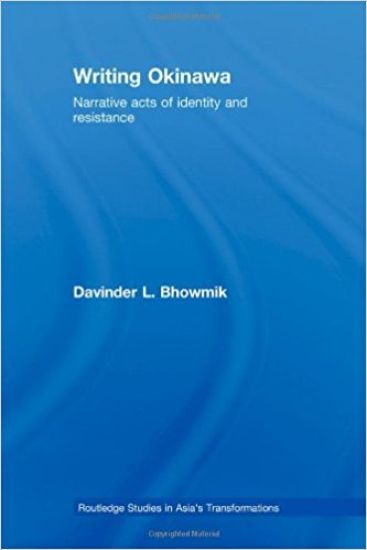
Writing Okinawa

Writing Okinawa

Davinder L. Bhowmik

Routledge
2008
sidottu
Writing Okinawa is the first comprehensive study in English of Okinawan fiction, from it’s emergence in the early twentieth-century through its most recent permutations. It provides readings of major authors and texts set against a carefully researched presentation of the region’s political and social history; at the same time, it thoughtfully engages with current critical perspective with perspectives on subaltern identity, colonialism, and post-colonialism, and the nature of "regional," "minority," and "minor" literatures. Is Okinawan fiction, replete with geographically specific themes such as language loss, identity, and war, a regional literature, distinct among Japanese letters for flourishes of local color that offer a reprieve for the urban-weary, or a minority literature that serves as a site for creative resistance and cultural renewal? This question drives the book’s argument, making it interpretative rather than merely descriptive. Not only does the book provide a critical introduction to the major works of Okinawan literature, it also argues that Okinawa’s writers consciously exploit, to good effect the overlap that exists between regional and minority literature. In so doing, they produce a rich body of work, a great deal of which challenges the notion of a unified nation that seamlessly rises from a single language and culture.