Kirjojen hintavertailu. Mukana 12 390 323 kirjaa ja 12 kauppaa.

Kirjailija

Dean E. Arnold

Kirjat ja teokset yhdessä paikassa: 8 kirjaa, julkaisuja vuosilta 1988-2026, suosituimpien joukossa Maya Blue. Vertaile teosten hintoja ja tarkista saatavuus suomalaisista kirjakaupoista.

Mukana myös kirjoitusasut: Dean E Arnold

8 kirjaa

Kirjojen julkaisuhaarukka 1988-2026.

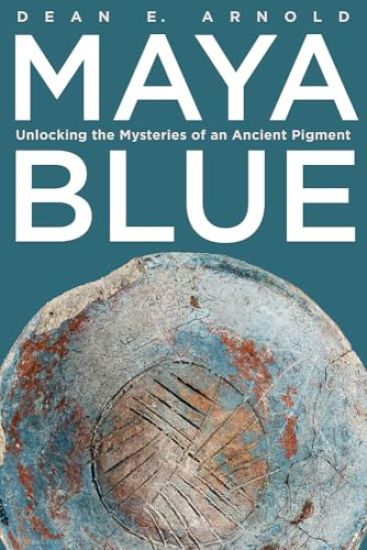
Maya Blue

Maya Blue

Dean E Arnold

University Press of Colorado
2026
nidottu
One of the great technological achievements of the ancient Maya, Maya Blue is one the world's most unusual ancient pigments. In Maya Blue, Dean E. Arnold offers a comprehensive history of its study for almost a century, filled with personal anecdotes drawn from his decades of work uncovering the Maya knowledge of its constituents, its ancient sources, and how it was made--including previously unknown methods.
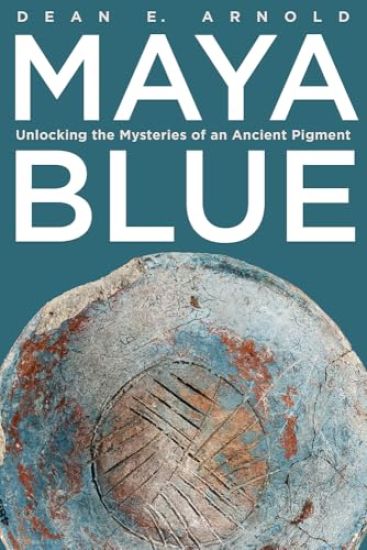
Maya Blue

Maya Blue

Dean E. Arnold

University Press of Colorado
2024
sidottu
One of the great technological achievements of the ancient Maya, Maya Blue is one the world’s most unusual ancient pigments. In Maya Blue, Dean E. Arnold offers a comprehensive history of its study for almost a century, filled with personal anecdotes drawn from his decades of work uncovering the Maya knowledge of its constituents, its ancient sources, and how it was made—including previously unknown methods. The book presents a fresh holistic perspective that documents these discoveries and the scientific process that led to them and provides testable hypotheses about how the pigment and the technology used to make it moved throughout Mesoamerica. Combining the organic dye indigo and the inorganic clay mineral palygorskite in a highly stable chemical hybrid that, unlike indigo, resists attacks by acids, alkalines, and organic solvents and endures without fading, Maya Blue has a rich blue color that has survived for centuries in one of the world’s harshest climates. First used at the site of Calakmul in the tropical forest of southern Mexico during the Late Preclassic period, the Maya’s abiding hue diffused across Mesoamerica over a period of 1,700 years. It appears on Maya pottery, sculpture, murals, and codices and carries multiple meanings, standing as a symbol for cultural cornerstones from sacrifice to the rain god Chaak. It was discovered in 1931 at Chichén Itzá, and its composition was a mystery for more than three decades, but questions about its source, how and why it achieved such stability, and how and why the Maya made the pigment remained for years. In Maya Blue, Arnold summarizes ethnographic, archaeological, chemical, and material science research over the last century from an anthropological perspective. This thorough, engaging, and accessible book chronicles the history of this pigment as no work has done before.
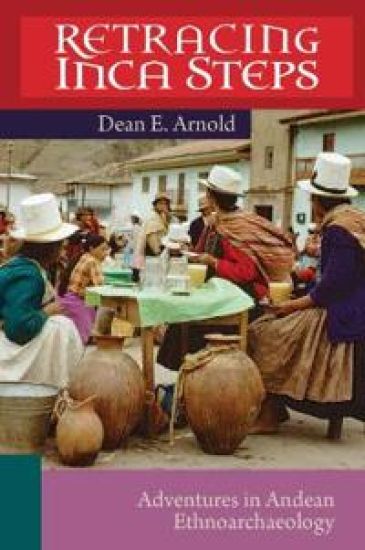
Retracing Inca Steps

Retracing Inca Steps

Dean E. Arnold

University of Utah Press,U.S.
2021
nidottu
Dean Arnold takes readers on a journey into the Andes, recounting the adventures of his 1960s research in the village of Quinua, Peru. Arnold's quest to understand how contemporary pottery production reflected current Quinua society as well as its ancient Inca and pre-Inca past is one of the earliest studies in what later became known as ethnoarchaeology. This first-person narrative reveals the challenges of living and working in another culture and the many obstacles one can encounter while doing field research. Arnold shares how his feelings of frustration and perceived failure led him to refocus his project, a shift that ultimately led to an entirely new perspective on pottery production in the Andes. Masterfully weaving details about Peru's geography, ecology, history, prehistory, and culture into his story, he chronicles his change from small-town Midwesterner to a person of much broader vision, newly aware of his North American views and values. Retracing Inca Steps is an excellent read for the lay person wishing to learn about the environment, prehistory, history, and culture of Peru as well as for students wanting to know more about the joys and rigors of fieldwork.
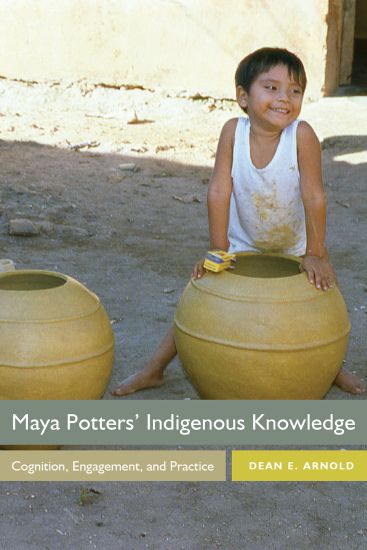
Maya Potters' Indigenous Knowledge

Maya Potters' Indigenous Knowledge

Dean E. Arnold

University Press of Colorado
2020
nidottu
Based on fieldwork and reflection over a period of almost fifty years, Maya Potters’ Indigenous Knowledge utilizes engagement theory to describe the indigenous knowledge of traditional Maya potters in Ticul, Yucatán, Mexico. In this heavily illustrated narrative account, Dean E. Arnold examines craftspeople’s knowledge and skills, their engagement with their natural and social environments, the raw materials they use for their craft, and their process for making pottery. Following Lambros Malafouris, Tim Ingold, and Colin Renfrew, Arnold argues that potters’ indigenous knowledge is not just in their minds but extends to their engagement with the environment, raw materials, and the pottery-making process itself and is recursively affected by visual and tactile feedback. Pottery is not just an expression of a mental template but also involves the interaction of cognitive categories, embodied muscular patterns, and the engagement of those categories and skills with the production process. Indigenous knowledge is thus a product of the interaction of mind and material, of mental categories and action, and of cognition and sensory engagement—the interaction of both human and material agency. Engagement theory has become an important theoretical approach and “indigenous knowledge” (as cultural heritage) is the focus of much current research in anthropology, archaeology, and cultural resource management. While Dean Arnold’s previous work has been significant in ceramic ethnoarchaeology, Maya Potters' Indigenous Knowledge goes further, providing new evidence and opening up different concepts and approaches to understanding practical processes. It will be of interest to a wide variety of researchers in Maya studies, material culture, material sciences, ceramic ecology, and ethnoarchaeology.
The Evolution of Ceramic Production Organization in a Maya Community
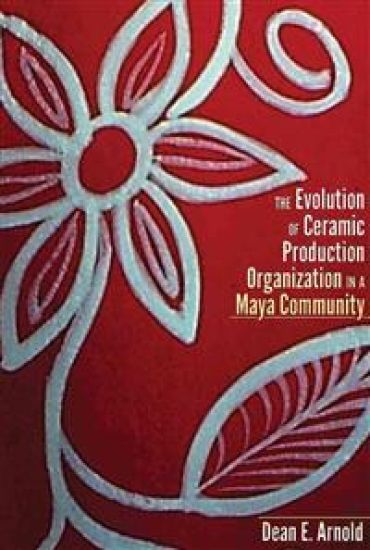
In The Evolution of Ceramic Production Organization in a Maya Community, Dean E. Arnold continues his unique approach to ceramic ethnoarchaeology, tracing the history of potters in Ticul, Yucatán, and their production space over a period of more than four decades. This follow-up to his 2008 work Social Change and the Evolution of Ceramic Production and Distribution uses narrative to trace the changes in production personnel and their spatial organization through the changes in production organization in Ticul. Although several kinds of production units developed, households were the most persistent units of production in spite of massive social change and the reorientation of pottery production to the tourist market. Entrepreneurial workshops, government-sponsored workshops, and workshops attached to tourist hotels developed more recently but were short-lived, whereas pottery-making households extended deep into the nineteenth century. Through this continuity and change, intermittent crafting, multi-crafting, and potters' increased management of economic risk also factored into the development of the production organization in Ticul. Illustrated with more than 100 images of production units, The Evolution of Ceramic Production Organization in a Maya Community is an important contribution to the understanding of ceramic production. Scholars with interests in craft specialization, craft production, and demography, as well as specialists in Mesoamerican archaeology, anthropology, history, and economy, will find this volume especially useful.
Social Change and the Evolution of Ceramic Production and Distribution in a Maya Community
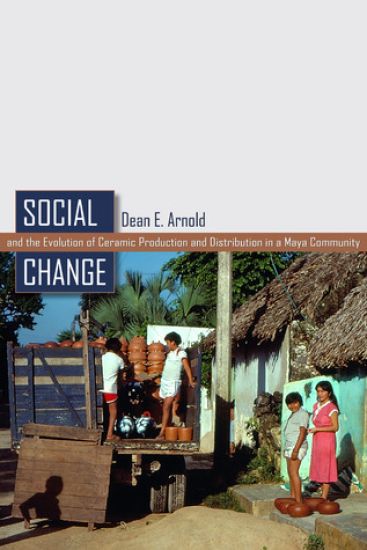
How and why do ceramics and their production change through time? Social Change and the Evolution of Ceramic Production and Distribution in a Maya Community is a unique ethno-archaeological study that attempts to answer these questions by tracing social change among potters and changes in the production and distribution of their pottery in a the Mexican community of Ticul between 1965 and 1997. Dean E. Arnold made ten visits to Ticul, Yucatan, Mexico, witnessing the changes in transportation infrastructure, the use of piped water, and the development of tourist resorts. Even in this context of social change and changes in the demand for pottery, most of the potters in 1997 came from the families that had made pottery in 1965. This book traces changes and continuities in that population of potters, in the demand and distribution of pottery, and in the procurement of clay and temper, paste composition, forming, and firing. In this volume, Arnold bridges the gap between archaeology and ethnography, using his analysis of contemporary ceramic production and distribution to generate new theoretical explanations for archaeologists working with pottery from antiquity. When the descriptions and explanations of Arnold’s findings in Ticul are placed in the context of the literature on craft specialization, a number of insights can be applied to the archaeological record that confirm, contradict, and nuance generalizations concerning the evolution of ceramic specialization. This book will be of special interest to anthropologists, archaeologists, and ethnographers.
Ecology and Ceramic Production in an Andean Community

Ecology and Ceramic Production in an Andean Community

Dean E. Arnold

Cambridge University Press
2003
pokkari
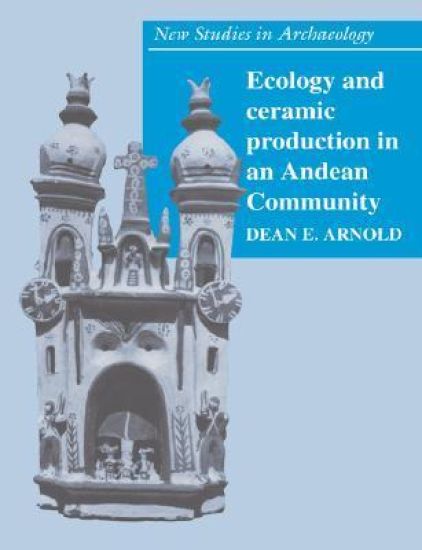
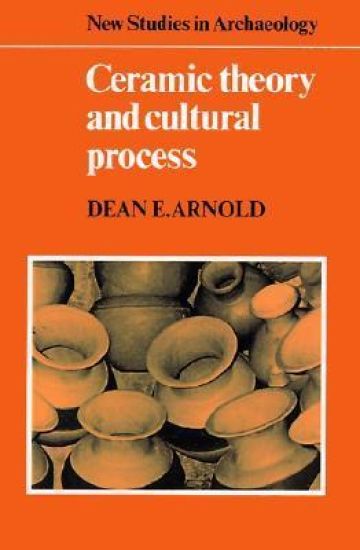
Following the theoretical perspective of his earlier book, Ceramic Theory and Cultural Process (1985), Dean Arnold’s ethnoarchaeological study explores the relationships of ceramic production to society and its environment in the Peruvian Andes. The book traces these contemporary linkages through the production, decoration, and use of pottery and relates them to the analysis and interpretation of ancient ceramic production. Utilizing an ecological approach within a single community, Arnold expands the scope of previous ceramic theory by focusing on the population as the unit of analysis in production and decoration.