Kirjojen hintavertailu. Mukana 12 152 606 kirjaa ja 12 kauppaa.

Kirjailija

Debi Unger

Kirjat ja teokset yhdessä paikassa: 3 kirjaa, julkaisuja vuosilta 1998-2016, suosituimpien joukossa George Marshall. Vertaile teosten hintoja ja tarkista saatavuus suomalaisista kirjakaupoista.

3 kirjaa

Kirjojen julkaisuhaarukka 1998-2016.

George Marshall

George Marshall

Debi Unger; Irwin Unger; Stanley Hirshson

HarperPerennial
2016
nidottu
"Elegant and iconoclastic ...refreshing ...persuasive."-NEW YORK TIMES BOOK REVIEW Here is the first biography to offer a complete picture of the life of George C. Marshall, chief of staff of the U.S. Army from 1939 to 1945 and the military leader who actually ran World War II for America as he oversaw all personnel and logistics. Following Marshall from his childhood in western Pennsylvania and his training at the Virginia Military Institute to his role during and after World War II and his death in 1959 at the age of seventy-eight, this biography casts light on the inspiration he took from historical role models, such as George Washington and Robert E. Lee, and his relationships with military brass, the Washington political establishment, and world leaders, from Harry Truman to Chiang Kai-shek. It also explores Marshall's triumphs and defeats during World War II, and his contributions through two critical years of the emerging Cold War-including the transformative Marshall Plan, which saved Western Europe from Soviet domination, and his failed attempt to unite China's Nationalists and Communists. Based on exhaustive research and filled with rich detail, George Marshall is sure to be hailed as the definitive work on one of the most influential figures in American history. "A grand but judicious biography of a fascinating man."-Evan Thomas, author of Ike's Bluff
The Guggenheims

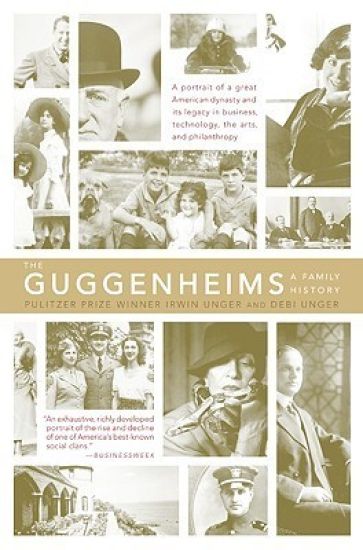
The Guggenheims

Debi Unger; Irwin Unger

HarperPerennial
2005
nidottu
A portrait of a great American dynasty and its legacy in business, technology, the arts, and philanthropyMeyer Guggenheim, a Swiss immigrant, founded a great American business dynasty. At their peak in the early twentieth century, the Guggenheims were reckoned among America's wealthiest, and the richest Jewish family in the world after the Rothschilds. They belonged to Our Crowd, that tight social circle of New York Jewish plutocrats, but unlike the others -- primarily merchants and financiers -- they made their money by extracting and refining copper, silver, lead, tin, and gold.The secret of their success, the patriarch believed, was their unity, and in the early years Meyer's seven sons, under the leadership of Daniel, worked as one to expand their growing mining and smelting empire. Family solidarity eventually decayed (along with their Jewish faith), but even more damaging was the paucity of male heirs as Meyer and the original set of brothers passed from the scene.In the third generation, Harry Guggenheim, Daniel's son, took over leadership and made the family a force in aviation, publishing, and horse-racing. He desperately sought a successor but tragically failed and was forced to watch as the great Guggenheim business enterprise crumbled.Meanwhile, "Guggenheim" came to mean art more than industry. In the mid-twentieth century, led by Meyer's son Solomon and Solomon's niece Peggy, the Guggenheims became the agents of modernism in the visual arts. Peggy, in America during the war years, midwifed the school of abstract expressionism, which brought art leadership to New York City. Solomon's museum has been innovative in spreading the riches of Western art around the world. After the generation of Harry and Peggy, the family has continued to produce many accomplished members, such as publisher Roger Straus II and archaeologist Iris Love.In The Guggenheims, through meticulous research and absorbing prose, Irwin Unger, the winner of a Pulitzer Prize in history, and his wife, Debi Unger, convey a unique and remarkable story -- epic in its scope -- of one family's amazing rise to prominence.
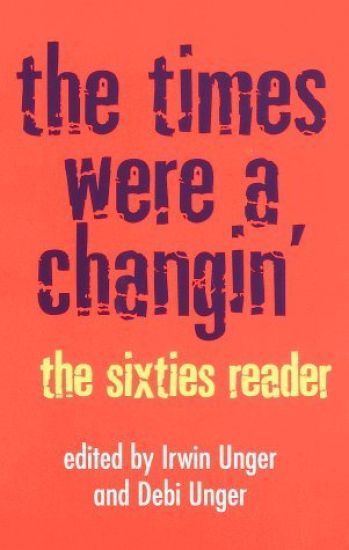
The Times Were a Changin'

The Times Were a Changin'

Debi Unger; Irwin Unger

Random House USA Inc
1998
pokkari
This is a must-have anthology of the milestone speeches, manifestos, court decisions, and groundbreaking journalism of the Sixties. No other period in American history has been more liberating, more confusing, more unforgettable, and had a more direct impact on the way we navigated the profound changes that swept over the country in the following three decades. From Betty Friedan to Barry Goldwater, from the formidable presence of the Kennedy brothers to the unimaginable influence of Woodstock, Pulitzer prize-winning author Irwin Unger and journalist Debi Unger present the complexities of a volatile and tumultuous decade, while explaining how and why each significant event took place and how it shifted the country's consciousness. From the antiwar movement to the moon race, from the burgeoning counterculture to the Warren and Berger courts, and from the civil rights movement to the 1968 presidential campaign, The Times Were a Changin' will tantalize and confound readers, while inspiring and enraging them as well. The Ungers provide us with a better understanding of the strategy and maneuvering of the 1960s war games--from the Bay of Pigs to the Tet Offensive. And the pieces they have chosen help us define the current of social intolerance that plagues our country to this day. Balancing the controversial issues of the times with an even hand, the Ungers give equal time to William F. Buckley and Abbie Hoffman, Barry Goldwater and Hubert Humphrey, the Black Panthers and Martin Luther King, Jr., compiling an anthology that supplies rhyme and reason to a decade that never ceases to amaze us, endless in its capacity to be explored and understood.