Kirjojen hintavertailu. Mukana 12 152 606 kirjaa ja 12 kauppaa.

Kirjailija

Deborah Anna Logan

Kirjat ja teokset yhdessä paikassa: 3 kirjaa, julkaisuja vuosilta 2002-2017, suosituimpien joukossa Harriet Martineau. Vertaile teosten hintoja ja tarkista saatavuus suomalaisista kirjakaupoista.

3 kirjaa

Kirjojen julkaisuhaarukka 2002-2017.

The Indian Ladies' Magazine, 1901–1938

The Indian Ladies' Magazine, 1901–1938

Deborah Anna Logan

Lehigh University Press
2017
sidottu
This book examines the varied influences and accomplishments of the Indian Ladies’ Magazine, the first Indian magazine established and edited by an Indian woman—Kamala Satthianadhan—in English, written by women, for women. Influences include Victorian, Edwardian, and Modern literature and culture as well as traditional Indian literature and culture during the late colonial, pre-independence period. More than a literary journal, this publication also addressed social reforms, from “ladies’ philanthropy” to “women’s mission to women”; the emergence of Indian “identity politics” in response to the nationalist and independence movements; the Indian Woman Question in the context of female education debates and shifting concepts of “womanliness”; cultural exchanges recorded by Indian travelers to America; and the emergence of Indian nationalism, between World Wars I and II, leading to independence. This publication recorded and participated in the most pivotal moment in modern Indian history and did so by appealing to both the conservative and progressive socio-political urges marking the era.
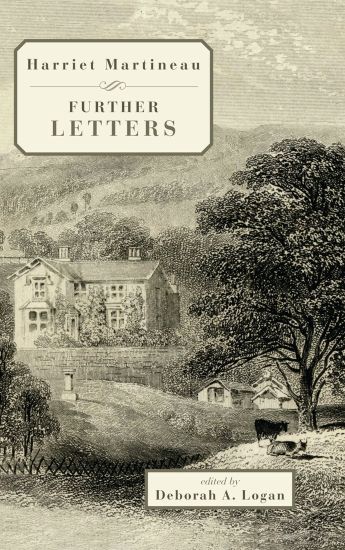
Harriet Martineau

Harriet Martineau

Deborah Anna Logan

Lehigh University Press
2011
sidottu
Harriet Martineau (1802–1876) is one of the most prolific and well-connected Victorian writers to have fallen off the literary map in the century following her death. During a career spanning half a century, Martineau wrote over fifty didactic-fiction tales, about forty books, and well over two thousand periodical articles. Emphasizing the pervasiveness of her literary influence, most of her books underwent multiple editions and translations, while her periodicals writing placed her at the forefront of the mass-media reading public. But it is her correspondence that best illustrates the breadth and depth of her sociocultural and intellectual contributions. In 1843, Martineau notoriously asserted control over her letters by insisting that her correspondents destroy or return them or else forfeit the epistolary relationship. Just as notoriously, an astonishing number of correspondents quietly refused to comply, resulting in more than two thousand extant pieces of correspondence. The materials in Harriet Martineau: Further Letters range from the 1820s through 1870s and include both private and professional correspondence, from brief notes to long discourses, addressing topics from domestic minutiae and personal health to national and international affairs. A key strength of this collection is its eclecticism, best seen in the letters to some of the most significant people in her life—Maria Weston Chapman, Jane Welsh Carlyle, James Martineau, Elizabeth Jesser Reid, and Henry Atkinson—the originals of which have been destroyed, lost, or are otherwise unavailable. Contextualizing as prolific and well-connected an individual as Harriet Martineau contributes directly to broader scholarship on the Victorian era, its prominent players, and the issues with which they grappled. Martineau was an interdisciplinary thinker and writer long before the term acquired its present popular currency—another factor accounting both for her posthumous unfashionability and her present renaissance.
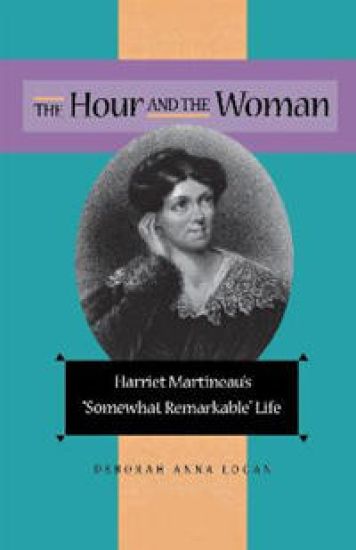
The Hour and the Woman

The Hour and the Woman

Deborah Anna Logan

Northern Illinois University Press
2002
sidottu
A British journalist and pioneering reformer, Harriet Martineau reigned at the forefront of debates over social and political issues during the Victorian era. The Hour and the Woman chronicles the "somewhat remarkable" life of one of history's most influential, yet overlooked, women writers. At a time when women were valued primarily for appearance, social class, and marital status, Martineau-plain, poor, and single-fought against the odds to win recognition as a writer. Her first professional triumph came in the 1830s when she published a multivolume work on political economy. International fame and literary reputation followed, launching a career that would span the next thirty-five years and plunge Martineau into heated reform efforts on both sides of the Atlantic. Martineau strove to use her personal and political influence for good by staunchly supporting the causes in which she believed. Her fight for the eradication of slavery strengthened the abolitionist movement in the years before the American Civil War, and her advocacy of temperance and women's rights lent crucial assistance to those causes. Many of Martineau's contemporary female writers, including Elizabeth Barrett Browning and Harriet Beecher Stowe, supported her in these endeavors and encouraged her through long-lasting correspondence. The most comprehensive Martineau history to date, The Hour and the Woman offers a unique view of one of the nineteenth century's most complex and fascinating women.