Kirjailija
Deborah Cameron
Kirjat ja teokset yhdessä paikassa: 30 kirjaa, julkaisuja vuosilta 1989-2025, suosituimpien joukossa Feminism. Vertaile teosten hintoja ja tarkista saatavuus suomalaisista kirjakaupoista.
30 kirjaa
Kirjojen julkaisuhaarukka 1989-2025.
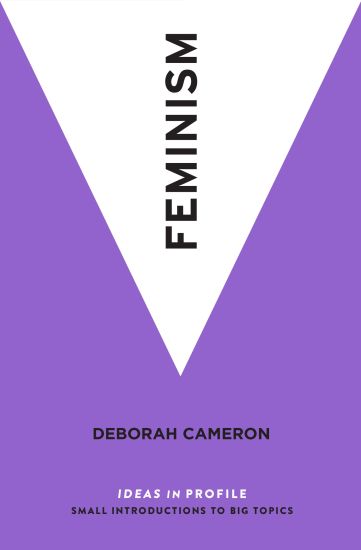
'Feminism' wrote Marie Shear in 1986, 'is the radical notion that women are people'. But, simple and powerful though this definition is, feminism is not a single, clear narrative. It doesn't begin with a specific event at a particular moment in time, it can't be identified with any one political organization or movement, and it isn't defined by the contributions of a handful of great thinkers. Here, Professor Deborah Cameron unpicks the various strands that constitute one of history's most important intellectual and political movements. In her clear and incisive account, she discusses oppression, sexuality, violence, academic theory and practical activism, shows how feminism can be a way of viewing the world and provides an overview of its history. In an era of #metoo, pay gap scandals and online harrassment, it's impossible to deny that gender inequality is a fact of life. And as long as that continues to be true, we will need to understand and engage with the ideas and history of the feminist movement.
In Verbal Hygiene, Deborah Cameron takes a serious look at popular attitudes towards language and examines the practices by which people attempt to regulate its use. Instead of dismissing the practice of ‘verbal hygiene’, as a misguided and pernicious exercise, she argues that popular discourse about language values – good and bad, right and wrong – serves an important function for those engaged in it. A series of case studies deal with specific examples of verbal hygiene: the regulation of ‘style’ by editors, the teaching of English grammar in schools, the movements for and against so-called ‘politically correct’ language and the advice given to women on how they can speak more effectively. This Routledge Linguistics Classic includes a new foreword which looks at how the issues covered in the case studies have developed over time and a new afterword which discusses new concerns which have emerged in the last 15 years, from the regimentation of language in the workplace to panics about immigration and terrorism, which are expressed in linguistic terms. Addressed to linguists, to professional language-users of all kinds, and to anyone interested in language and culture, Verbal Hygiene calls for legitimate concerns about language and value to be discussed, by experts and lay-speakers alike, in a rational and critical spirit.
The term dogwhistle, meaning a political message with a hidden or coded meaning, only entered mainstream usage in the mid-1990s, but today it seems to be everywhere. Accusations of dogwhistling fly in every political direction, and the meaning of the term has broadened to encompass an ever-expanding range of words, images, actions and objects. This book investigates the rise of the dogwhistle as a key cultural and political reference point, arguing that it’s a sign of our political times. It’s related both to the polarized nature of politics in the era of populism, culture wars and online echo-chambers, and to the preoccupation of radical activists on both sides of the traditional left/right divide with controlling language as a way of remaking culture. Their political aims are different, but their tactics are more similar than they might appear. As well as examining how these tactics have recently been used and looking at the arguments they now regularly prompt in public settings from social media to courts of law, this book by linguist Deborah Cameron considers some of the theoretical questions they raise about the way communication works and the effects it is capable of producing. It asks why contemporary radical movements put so much emphasis on words and symbols—and whether their faith in the power of language is justified.
In this vitally important and engaging text, leading feminist linguist Deborah Cameron explores the role of language and discourse in perpetuating sexism and misogyny in the twenty-first century. Covering how the linguistic expression of prejudice against women has evolved during the last fifty years, the author of the blog Language: A feminist guide pays attention both to the persistence of familiar problems, such as the dominance of men in many interactional settings, and to the emergence of new challenges such as the global rise of misogynist extremism online. The book provides students and general readers with an up-to-date survey of ideas, debates and research on a wide range of key topics, including sexist attitudes to women’s speech, verbal sexual harassment in public spaces offline and online, biases in vocabulary and grammar, the discourse of the online "manosphere" and the way violence against women is reported by the news media. Moreover, the author outlines the efforts activists have made to change sexist and misogynist language, asking what has been achieved so far, and how a new generation is addressing current concerns. Accessible, non-technical and informed by scholarship from a wide range of disciplines from linguistics and anthropology to history, media studies and sociology, this text is essential reading for courses on language and gender in English language, linguistics, women’s and gender studies, media and communication studies.
Researching Language
Deborah Cameron; Elizabeth Frazer; Penelope Harvey; M. B. H. Rampton; Kay Richardson
Routledge
2020
nidottu
Originally published in 1992. This book discusses the possibilities of developing the research process in social science so that it benefits the subjects as well as the researcher. The authors distinguish between ‘ethical’, ‘advocate’ and ‘empowering’ approaches to the relationship between researcher and researched, linking these to different ideas about the nature of knowledge, action, language, and social relations. They then use a series of empirical case studies to explore the possibilities for ‘empowering research’. The book is the product of dialogue between researchers from a range of disciplines (anthropology, cultural studies, sociology and linguistics) and is for those working across the social sciences. Through combination of philosophical discussion, methodological recommendation and case-study illustration, it provides guidance that is practical without being simplistic.
Feminism: A Brief Introduction to the Ideas, Debates, and Politics of the Movement
Deborah Cameron
University of Chicago Press
2019
nidottu
Beneath the nonstop cacophony of voices across social media, online forums, and news outlets lie the stubborn facts at the heart of the everyday struggles of women today: more than a third of single moms live in poverty; the United States sees more maternal deaths than anywhere else in the developed world; one in five women will be raped in her lifetime; and women still make eighty cents for every dollar earned by a man. Between these brutal statistics and the ill-informed, often contentious public debate stand millions of women who feel alienated, disaffected, or just plain worn out. In the era of #MeToo, Trump, and online harassment, innovative progressive feminist voices are more essential than ever. With her latest book, Deborah Cameron considers feminism from all sides--as an idea, as a theoretical approach, and as a political movement. Written in the succinct, sharp style that has made Cameron's feminist linguistics blog so popular, this short book lays out past and present debates on seven key topics: domination, rights, work, femininity, sex, culture, and the future. Feminism emphasizes the diversity of feminist thought, including queer, women-of-color, and trans perspectives. Cameron's clear and incisive account untangles the often confusing strands of one of history's most important intellectual and political movements. Broad in scope but refreshingly concise, this book is perfect for anyone who needs a straightforward primer on the complex history of feminism, a nuanced explanation of key issues and debates, or strategic thinking about the questions facing activists today.
Researching Language
Deborah Cameron; Elizabeth Frazer; Penelope Harvey; M. B. H. Rampton; Kay Richardson
Routledge
2018
sidottu
Originally published in 1992. This book discusses the possibilities of developing the research process in social science so that it benefits the subjects as well as the researcher. The authors distinguish between ‘ethical’, ‘advocate’ and ‘empowering’ approaches to the relationship between researcher and researched, linking these to different ideas about the nature of knowledge, action, language, and social relations. They then use a series of empirical case studies to explore the possibilities for ‘empowering research’. The book is the product of dialogue between researchers from a range of disciplines (anthropology, cultural studies, sociology and linguistics) and is for those working across the social sciences. Through combination of philosophical discussion, methodological recommendation and case-study illustration, it provides guidance that is practical without being simplistic.
This collection of essays presents a picture of research on women and language in Britain. The contributors cover a range of British speech communities, linguistic events and settings using approaches from sociolinguistics and discourse analysis.
Gender, Power and Political Speech explores the influence of gender on political speech by analyzing the performances of three female party leaders who took part in televised debates during the 2015 UK General Election campaign. The analysis considers similarities and differences between the women and their male colleagues, as well as between the women themselves; it also discusses the way gender - and its relationship to language - was taken up as an issue in media coverage of the campaign.
An outstanding introduction to discourse analysis of written language in an age that is more and more characterized by multilingual, digital, and generically hybrid texts. In an accessible style, Working with Written Discourse illustrates how these texts can be analyzed employing a wide variety of approaches that are critical, multidisciplinary, and productive. - Professor Jaffer Sheyholislami, Carleton University "Comprehensive and up-to-the-minute in its discussion of areas like multimodality and the new media, without overlooking ‘older’ media and more conventional writing. I will recommend it highly to students at all levels." - Dr Mark Sebba, Lancaster University Addressing the practicalities of research, and embracing the complexity and variety of written forms of language, this book: grounds readers in a broad range of concepts, debates and relevant methodsfocuses on both theoretical questions and the ‘how to’ of analysisis loaded with practical activities and advice on the design and execution of researchhighlights computer-mediated communication and new media discourse, from text messages and tweets to mobile phone novels and online encyclopedias draws on data from international and multilingual communities. The perfect companion to Deborah Cameron's best-selling Working with Spoken Discourse, this book equips readers with practical and conceptual tools to ask questions about written discourse, and to analyse the huge variety of texts that make up our linguistic landscape. It is the essential guide for students of discourse analysis in linguistics, media and communication studies, and for social researchers across the social sciences.
Popular assumptions about gender and communication - famously summed up in the title of the massively influential 1992 bestseller Men Are From Mars, Women Are From Venus - can have unforeseen but far-reaching consequences in many spheres of life, from attitudes to the phenomenon of 'date-rape' to expectations of achievement at school, and potential discrimination in the work-place. In this wide-ranging and thoroughly readable book, Deborah Cameron, Rupert Murdoch Professor of Language and Communication at Oxford University and author of a number of leading texts in the field of language and gender studies, draws on over 30 years of scientific research to explain what we really know and to demonstrate how this is often very different from the accounts we are familiar with from recent popular writing. Ambitious in scope and exceptionally accessible, The Myth of Mars and Venus tells it like it is: widely accepted attitudes from the past and from other cultures are at heart related to assumptions about language and the place of men and women in society; and there is as much similarity and variation within each gender as between men and women, often associated with social roles and relationships. The author goes on to consider the influence of Darwinian theories of natural selection and the notion that girls and boys are socialized during childhood into different ways of using language, before addressing problems of 'miscommunication' surrounding, for example, sex and consent to sex, and women's relative lack of success in work and politics. Arguing that what linguistic differences there are between men and women are driven by the need to construct and project personal meaning and identity, Cameron concludes that we have an urgent need to think about gender in more complex ways than the prevailing myths and stereotypes allow. A compelling and insightful read for anyone with an interest in communication, language, and the sexes.
Popular assumptions about gender and communication - famously summed up in the title of the massively influential 1992 bestseller 'Men Are From Mars, Women Are From Venus' - can have unforeseen but far-reaching consequences in many spheres of life, from attitudes to the phenomenon of 'date-rape' to expectations of achievement at school, and potential discrimination in the work-place. In this wide-ranging and thoroughly readable book, Deborah Cameron, Rupert Murdoch Professor of Language and Communication at Oxford University and author of a number of leading texts in the field of language and gender studies, draws on over 30 years of scientific research to explain what we really know and to demonstrate how this is often very different from the accounts we are familiar with from recent popular writing. Ambitious in scope and exceptionally accessible, The Myth of Mars and Venus tells it like it is: widely accepted attitudes from the past and from other cultures are at heart related to assumptions about language and the place of men and women in society; and there is as much similarity and variation within each gender as between men and women, often associated with social roles and relationships. The author goes on to consider the influence of Darwinian theories of natural selection and the notion that girls and boys are socialized during childhood into different ways of using language, before addressing problems of 'miscommunication' surrounding, for example, sex and consent to sex, and women's relative lack of success in work and politics. Arguing that what linguistic differences there are between men and women are driven by the need to construct and project personal meaning and identity, Cameron concludes that we have an urgent need to think about gender in more complex ways than the prevailing myths and stereotypes allow.
The Teacher's Guide to Grammar is unique in focusing directly on the aspects of grammar that teachers need to know. Assuming little or no formal linguistic education, this concise and accessible book provides the necessary background knowledge required in the classroom context. There are detailed chapters on the nuts and bolts of language: words, morphology, sentences, phrases, verbs, and clauses. Other important educational issues concerned in the teaching of English are discussed: the grammatical variation that differentiates standard and non-standard English; how grammar varies in relation to the purpose and audience of a text; and the different grammatical characteristics of different languages. Throughout, illustrations are given using examples from the real spoken and written language produced by learners. Here are the essentials every English and literacy teacher needs to know about grammar in one practical and relevant guide.
This collection of articles presents a selection of Deborah Cameron’s work on language, gender and sex in one single volume. Arranged thematically, this book covers major developments in Anglo-American feminist linguistics, and Cameron’s responses to these, spanning the last twenty years.The collection’s overarching theme is the political relationship between language and gender: four distinctly themed sections demonstrate that a variety of forces affect gender relations, and gender representations, in different times and places. Cameron examines the connections between language and the (mis)representation of reality, and the role language plays in reproducing gender inequalities. More recent articles focus on representations of men and women as communicators, as well as the impact of sexuality on gender and gender relations, an increasingly prominent area of the author’s research.This timely study brings much of Cameron’s work together for the first time, and highlights characteristics of her work with which many readers will be familiar: a combination of linguistic and feminist political orientation; and a distinct focus on conflict in gender relations. Including a new introductory essay and eleven articles, three of which are previously unpublished, with short introductions to contextualize each piece, the collection is extremely useful for students and teachers on a variety of courses including English language and linguistics, women’s studies, gender studies and communication studies.
This lively and accessible textbook looks at how we talk about sex and why we talk about it the way we do. Drawing on a wide range of examples, from personal ads to phone sex, from sado-masochistic scenes to sexual assault trials, the book provides a clear introduction to the relationship between language and sexuality. Using a broad definition of ‘sexuality’, the book encompasses not only issues surrounding sexual orientation and identity but also questions about the discursive construction of sexuality and the verbal expression of erotic desire. Cameron and Kulick contextualize their findings within current research in linguistics, anthropology and psychology, and bring together relevant theoretical debates on sexuality, gender, identity, desire, meaning and power. Topical and entertaining, this much-needed textbook will be welcomed by students and researchers in sociolinguistics, linguistic anthropology and gender/sexuality studies, as well as anyone interested in the relationship between language and sex.