Kirjailija
Deborah Chambers
Kirjat ja teokset yhdessä paikassa: 15 kirjaa, julkaisuja vuosilta 2001-2021, suosituimpien joukossa A Sociology of Family Life. Vertaile teosten hintoja ja tarkista saatavuus suomalaisista kirjakaupoista.
15 kirjaa
Kirjojen julkaisuhaarukka 2001-2021.
Family relations are undergoing dramatic changes globally and locally. At the same time, certain features of family life endure. This popular book, now in a fully updated second edition, presents a comprehensive assessment of recent research on 'family', parenting, childhood and interpersonal ties. A Sociology of Family Life queries assumptions about a disintegration of 'the family' by revealing a remarkable persistence of commitment and reciprocity across cultures, within new as well as traditional family forms. Yet, while new kinds of intimate relationships such as 'friends as family' and LGBTQ+ intimacies become commonplace, such personal relationships can still be difficult to negotiate in the face of wider structural norms. With a focus on factors such as class, gender, race, ethnicity and sexuality, this new edition highlights inequalities that influence and curb families and personal life transnationally. Alongside substantial new material on cultural and digital transformations, the book features extensive updates on issues ranging from demography, migration, ageing and government policies to reproductive technologies, employment and care. With a global focus, and blending theory with real-life examples, this insightful and engaging book will remain indispensable to students across the social sciences.

Spanning the nineteenth to twenty-first centuries, this book investigates how home is imagined, staged and experienced in western culture.Questions about meanings of ‘home’ and domestic culture are triggered by dramatic changes in values and ideals about the dwellings we live in and the dwellings we desire or dread. Deborah Chambers explores how home is idealised as a middle-class haven, managed as an investment, and signified as a status symbol and expression of personal identity. She addresses a range of public, state, commercial, popular and expert discourses about ‘home’: the heritage industry, design, exhibitions, television, social media, home mobilities and migration, smart technologies and ecological sustainability. Drawing on cross-disciplinary research including cultural history and cultural geography, the book offers a distinctive media and cultural studies approach supported by original, historically informed case studies on interior and domestic design; exhibitions of model homes; TV home interiors; ‘media home’ imaginaries; multiscreen homes; corporate visions of ‘homes of tomorrow’ and digital smart homes. A comprehensive and engaging study, this book is ideal for students and researchers of cultural studies, cultural history, media and communication studies, as well as sociology, gender studies, cultural geography and design studies.
Media technologies have played a central role in shaping ideas about home life over the last two centuries. Changing Media, Homes and Households explores the complex relationship between home, householders, families and media technologies by charting the evolution of the media-rich home, from the early twentieth century to the present. Moving beyond a narrow focus on media texts, production and audiences, Deborah Chambers investigates the physical presence of media objects in the home and their symbolic importance for home life. The book identifies the role of home-based media in altering relationships between home, leisure, work and the outside world in the context of entertainment, communication and work. It assesses whether domestic media are transforming or reinforcing traditional identities and relations of gender, generation, class and migrancy.Mediatisation theory is employed to assess the domestication of media and media saturation of home life in the context of wider global changes. The author also develops the concept of media imaginaries to explain the role of public discourses in shaping changing meanings, values and uses of domestic media. Framed within these approaches, four chapters also provide in-depth case studies of the processes involved in media’s home adoption: early television design, family-centred video gaming, the domestication of tablet computers, and the shift from "smart homes" to today’s "connected" homes.This is an ideal text for students and researchers interested in media and cultural studies, communication, and sociology.
Pampa
White Deer Land Museum; Anne Davidson; Deborah Chambers
Arcadia Publishing Library Editions
2010
sidottu
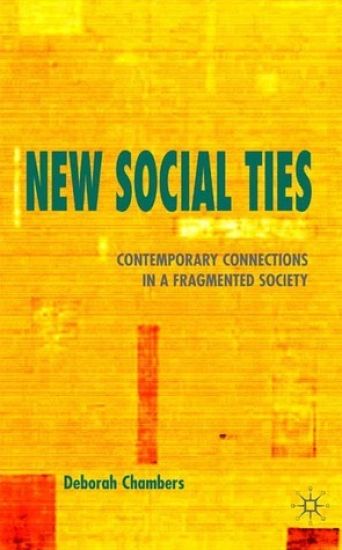
Deborah Chambers draws on the metaphor of friendship as a strategy for exploring contemporary changes in informal social ties. She traces the shift from fixed and permanent ties of family, neighbourhood and community to fluid and transient ties typified by computer mediated communication.
Women and Journalism offers a rich and comprehensive analysis of the roles, status and experiences of women journalists in the United States and Britain.Drawing on a variety of sources and dealing with a host of women journalists ranging from nineteenth century pioneers to Martha Gellhorn, Kate Adie and Veronica Guerin, the authors investigate the challenges women have faced in their struggle to establish reputations as professionals.This book provides an account of the gendered structuring of journalism in print, radio and television and speculates about women's still-emerging role in online journalism. Their accomplishments as war correspondents are tracked to the present, including a study of the role they played post-September 11th.
The Practice of Cultural Studies
Richard Johnson; Deborah Chambers; Parvati Raghuram; Estella Tincknell
SAGE Publications Inc
2004
sidottu
`This is a tour de force… It combines luminous discussion of the core conceptual issues of cultural studies, with a hard-headed, practical sense of how research in the field gets done. The result is a seriously smart, comprehensive survey of the whole terrain of cultural studies itself. This is a book on methods which readers will be able to make their own; and which -- uniquely in the genre -- will keep them buzzing' - Bill Schwarz, Queen Mary University of London 'The Practice of Cultural Studies is an original introduction to the field. It offers a sophisticated "how-to" guide to doing research in cultural studies. From the difficulties of formulating a problem to the unique articulations of specific methodologies in cultural studies, students will find this book both useful and challenging' - Professor Lawrence Grossberg, University of North Carolina What is distinctive about cultural research? How does one do Cultural Studies? Unlike many other disciplines, cultural studies has not been explict about the nature of its practice. This book aims to redress the balance in favour of those who are studying culture by providing a comprehensive guide to researching and writing. Based on the methods course at Nottingham Trent and addressed to advanced undergraduates, Masters Level students and those just commencing a PhD, this book aims to provide an overview of specific research traditions in cultural studies, whilst also situating those traditions in their historical context. The Practice of Cultural Studies: · Identifies the main methods of researching culture · Demonstrates how theory can inform and enable the practice of research · Explores the ways in which research practices and methods both produce and are produced by knowledge · Looks at the implications of the 'cultural turn' for disciplines other than cultural studies The Practice of Cultural Studies will be an essential text for students of cultural studies and a useful guide to others studying culture in a range of disciplinary contexts across the humanities and social sciences.
Women and Journalism offers a rich and comprehensive analysis of the roles, status and experiences of women journalists in the United States and Britain.Drawing on a variety of sources and dealing with a host of women journalists ranging from nineteenth century pioneers to Martha Gellhorn, Kate Adie and Veronica Guerin, the authors investigate the challenges women have faced in their struggle to establish reputations as professionals.This book provides an account of the gendered structuring of journalism in print, radio and television and speculates about women's still-emerging role in online journalism. Their accomplishments as war correspondents are tracked to the present, including a study of the role they played post-September 11th.
The Practice of Cultural Studies
Richard Johnson; Deborah Chambers; Parvati Raghuram; Estella Tincknell
SAGE Publications Inc
2004
nidottu
`This is a tour de force… It combines luminous discussion of the core conceptual issues of cultural studies, with a hard-headed, practical sense of how research in the field gets done. The result is a seriously smart, comprehensive survey of the whole terrain of cultural studies itself. This is a book on methods which readers will be able to make their own; and which -- uniquely in the genre -- will keep them buzzing' - Bill Schwarz, Queen Mary University of London 'The Practice of Cultural Studies is an original introduction to the field. It offers a sophisticated "how-to" guide to doing research in cultural studies. From the difficulties of formulating a problem to the unique articulations of specific methodologies in cultural studies, students will find this book both useful and challenging' - Professor Lawrence Grossberg, University of North Carolina What is distinctive about cultural research? How does one do Cultural Studies? Unlike many other disciplines, cultural studies has not been explict about the nature of its practice. This book aims to redress the balance in favour of those who are studying culture by providing a comprehensive guide to researching and writing. Based on the methods course at Nottingham Trent and addressed to advanced undergraduates, Masters Level students and those just commencing a PhD, this book aims to provide an overview of specific research traditions in cultural studies, whilst also situating those traditions in their historical context. The Practice of Cultural Studies: · Identifies the main methods of researching culture · Demonstrates how theory can inform and enable the practice of research · Explores the ways in which research practices and methods both produce and are produced by knowledge · Looks at the implications of the 'cultural turn' for disciplines other than cultural studies The Practice of Cultural Studies will be an essential text for students of cultural studies and a useful guide to others studying culture in a range of disciplinary contexts across the humanities and social sciences.
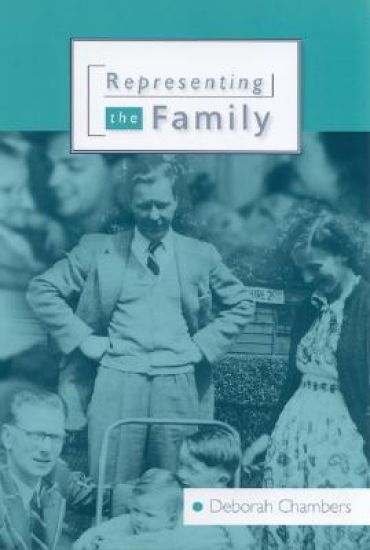
Looking at how the family is represented by the media, and by scrutinizing the manner in which it is regulated, this book uncovers the ways in which academic research and welfare policy have colluded with political rhetoric and the popular media to re-invent a mythical ideal family. Representing the Family: combines perspectives from a range of theories including media and cultural studies, sociology, and social history to show how certain types of family life are pathologised; highlights the discrepancies between contemporary representations of the `ideal' family and lived experience; compares the British experience with that of the United States and Australia. Representing the Family provides a rich and an engaging illustration of the ways in which the media produce meaning. It also demonstrates the ways in which critical social issues are played out across a range of discursive sites - academia, politics, and public policy.