Kirjojen hintavertailu. Mukana 12 595 353 kirjaa ja 12 kauppaa.

Kirjailija

Deborah E. Lipstadt

Kirjat ja teokset yhdessä paikassa: 10 kirjaa, julkaisuja vuosilta 1993-2023, suosituimpien joukossa Extracted. Vertaile teosten hintoja ja tarkista saatavuus suomalaisista kirjakaupoista.

10 kirjaa

Kirjojen julkaisuhaarukka 1993-2023.

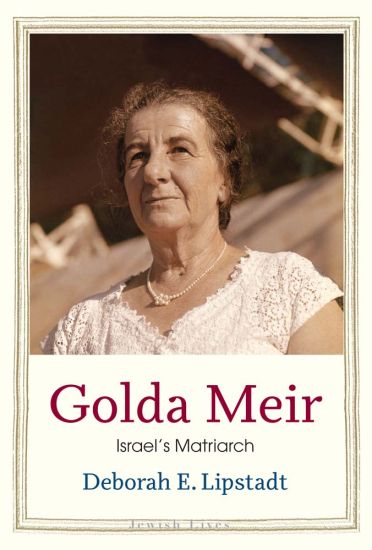
Golda Meir

Golda Meir

Deborah E. Lipstadt

YALE UNIVERSITY PRESS
2023
sidottu
A balanced biography of Golda Meir, who was both adored and abhorred, from award-winning author Deborah E. Lipstadt “Comprehensive. . . . Always thoughtful. . . . A nuanced account of a leader whose influence endures in the Middle East.”—Kirkus Review Golda Meir (1898–1978) was the first and only woman to serve as prime minister of Israel. She was born in Kiev into a childhood of poverty, hunger, and antisemitism. When she was five, her father left to find work in America, and a year later the family settled in Milwaukee, Wisconsin. As a teenager she became devoted to Labor Zionism, giving street-corner speeches, and her family’s home became a destination for Zionist emissaries. Her love for Labor Zionism was so fervent that her boyfriend, Morris Meyerson (her future husband), was often in competition with her dedication to the cause. Zionism prevailed. In 1921, Golda left America for Palestine with Morris and her sister Sheyna. Though the reality of living in Palestine was far from the dream of Zionism, Meir settled on the kibbutz Merhavia and was swiftly appointed to the Histadrut (the General Organization of Hebrew Workers in Palestine). As an ally of the Zionist David Ben-Gurion, Meir played an important role in the Yishuv, the pre-state Jewish community in Palestine; proved an almost singular ability to connect and fundraise with diaspora Jewry, particularly Americans; and served in three pivotal positions following Israel’s independence: labor secretary of the newly formed state, foreign minister, and Israel’s fourth prime minister. In tracing the life of Golda Meir, acclaimed author Deborah E. Lipstadt explores the history of the Yishuv and Jewish state from the 1920s through the 1973 Yom Kippur War, all while highlighting the contradictions and complexities of a person who was only the third woman to serve as a head of state in the twentieth century.
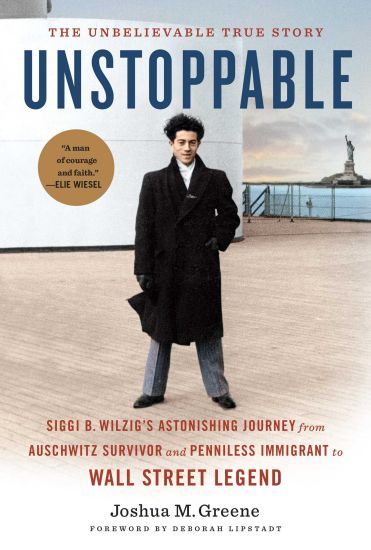
Unstoppable

Unstoppable

Joshua Greene; Deborah E. Lipstadt

Insight Editions
2021
nidottu
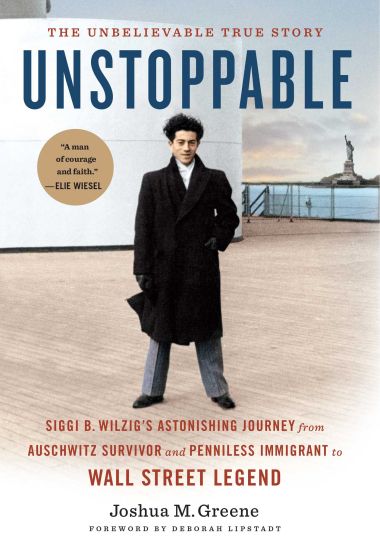
Winner of Best of Los Angeles Award "Best Holocaust Book - 2021" “A must-read that hopefully will be adapted for the screen. Greene lets Wilzig’s effervescent spirit shine through, and his story will appear to a wide variety of readers.” - Library Journal Unstoppable is the ultimate immigrant story and an epic David-and-Goliath adventure. While American teens were socializing in ice cream parlors, Siggi was suffering beatings by Nazi hoodlums for being a Jew and was soon deported along with his family to the darkest place the world has ever known: Auschwitz. Siggi used his wits to stay alive, pretending to have trade skills the Nazis could exploit to run the camp. After two death marches and near starvation, he was liberated from camp Mauthausen and went to work for the US Army hunting Nazis, a service that earned him a visa to America. On arrival, he made three vows: to never go hungry again, to support the Jewish people, and to speak out against injustice. He earned his first dollar shoveling snow after a fierce blizzard. His next job was laboring in toxic sweatshops. From these humble beginnings, he became President, Chairman and CEO of a New York Stock Exchange-listed oil company and grew a full-service commercial bank to more than $4 billion in assets. Siggi’s ascent from the darkest of yesterdays to the brightest of tomorrows holds sway over the imagination in this riveting narrative of grit, cunning, luck, and the determination to live life to the fullest.
Unstoppable

Unstoppable

Joshua Greene; Deborah E. Lipstadt

Insight Editions
2021
sidottu
Unstoppable recounts the fascinating life of Siggi Wilzig, who survived the hell of Hitler and Auschwitz to become one of the biggest success stories in post-World War II American business--a true embodiment of the American Dream. At a time of national division, this testament to the triumph of the human spirit over horrific tragedy through fortitude and faith offers an inspiring message that will both resonate with readers today and offer enormous hope for a better future. Unstoppable is the story of an American hero--a man who survived the hell of Auschwitz to become one of the most successful, mesmerizing, and outrageous personalities in postwar America. Siggi Wilzig was a force of nature: a Holocaust survivor who arrived in New York penniless and without formal education at just twenty one years old yet went on to build a $4 billion oil-and-banking empire. This is the ultimate immigrant story, an epic rags-to-riches adventure that follows Siggi from starvation on death marches to dinner at the White House--a story that starts in Auschwitz and ends with one of the most lucrative bank sales in Wall Street history. A survivor's saga in a category of its own, Unstoppable does not dwell on tragedy, but instead celebrates Siggi's ingenuity, hope, resolve and message: no matter how cruel or unjust the world may be, humans can overcome the past to achieve a bright future.
Extracted

Extracted

S. Perry Brickman; Deborah E. Lipstadt

Morgan James Publishing llc
2019
pokkari
For half a century, S Perry Brickman harbored a deep and personally painful secret… On a late summer day in 2006, Brickman and his wife attended an exhibit on the history of Jewish life at Emory University and were astonished to come face-to-face with documents that strongly suggested that Brickman and many others had been failed out of Emory’s dental school because they were Jewish. They decided to embark on an uncharted path to uncover the truth. With no initial allies and plenty of resistance, Brickman awoke each morning determined to continue extracting evidence hidden in deep and previously unmined archives. While the overt discrimination was displayed in charts and graphs, the names of the victims were scrupulously withheld. The ability of the perpetrators to silence all opposition and the willingness of the Jewish community to submit to the establishment were deeply troubling as Brickman continued to dig deeper into the issue. Extracted brings to light the human element of the rampant antisemitism that affected the dental profession in twentieth-century America—the personal tragedies, the faces, and the individual stories of shame and humiliation. After five years of identifying, interviewing, and recording the victims, Brickman was finally permitted to present his documentary to Emory officials and ask for redemption for the stain she had made.
Antisemitism: Here and Now

Antisemitism: Here and Now

Deborah E. Lipstadt

Schocken Books
2019
sidottu
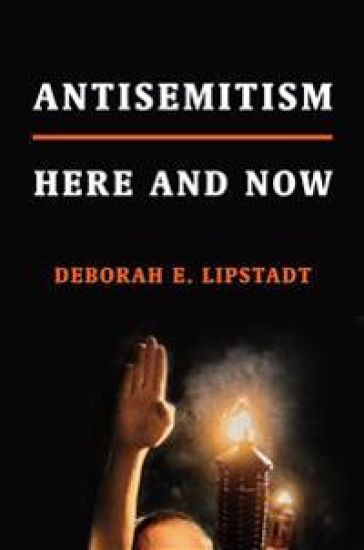
The award-winning author of The Eichmann Trial and Denial: Holocaust History on Trial gives us a penetrating and provocative analysis of the hate that will not die, focusing on its current, virulent incarnations on both the political right and left, and on what can be done about it. When newsreels depicting the depredations of the Holocaust were shown in movie theaters to a horrified American public immediately after World War II, it was believed that the antisemitism that was part of the fabric of American culture in the 1920s and 1930s was finally going to be laid to rest. In the ensuing decades, Gregory Peck received an Academy Award for playing a journalist who passed as a Jew to blow the lid off genteel Jew hatred, clauses restricting where Jews could live were declared illegal, the KKK was pretty much litigated out of existence, and Joe Lieberman came within five electoral votes of becoming America's first Jewish vice president. And then the unthinkable began to happen. Over the last decade, there has been a noticeable uptick in antisemitic rhetoric and incidents by left-wing groups targeting Jewish students and Jewish organizations on American college campuses. Jews in countries throughout Europe have been attacked by terrorists. And the re-emergence of the white nationalist movement in America, complete with Nazi slogans and imagery, has brought to mind the fascist displays of the 1930s. Where is all this hatred coming from? Is there any significant difference between left-wing and right-wing antisemitism? What role has the anti-Zionist movement played? And what can be done to combat this latest manifestation of an ancient hatred? In a series of letters to an imagined college student and imagined colleague, both of whom are perplexed by this resurgence, Deborah Lipstadt gives us her own superbly reasoned, brilliantly argued, and sure-to-be-controversial responses to these troubling questions.
Denial

Denial

Deborah E. Lipstadt

ECCO Press
2017
nidottu
In her acclaimed 1993 book Denying the Holocaust, Deborah Lipstadt called David Irving, a prolific writer of books on World War II, "one of the most dangerous spokespersons for Holocaust denial." The following year, after Lipstadt's book was published in the United Kingdom, Irving filed a libel suit against Lipstadt and her publisher. She prepared her defense with the help of a first-rate team of solicitors, historians, and experts, and a dramatic trial unfolded. Denial, previously published as History on Trial, is Lipstadt's riveting, blow-by-blow account of this singular legal battle, which resulted in a formal denunciation of a Holocaust denier that crippled the movement for years to come. Lipstadt's victory was proclaimed on the front page of major news- papers around the world, such as The Times (UK), which declared that 'history has had its day in court and scored a crushing victory.'"
Holocaust

Holocaust

Deborah E. Lipstadt

Rutgers University Press
2016
nidottu
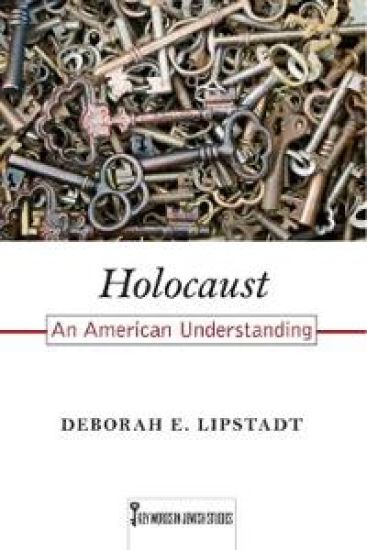
Immediately after World War II, there was little discussion of the Holocaust, but today the word has grown into a potent political and moral symbol, recognized by all. In Holocaust: An American Understanding, renowned historian Deborah E. Lipstadt explores this striking evolution in Holocaust consciousness, revealing how a broad array of Americans—from students in middle schools to presidents of the United States—tried to make sense of this inexplicable disaster, and how they came to use the Holocaust as a lens to interpret their own history. Lipstadt weaves a powerful narrative that touches on events as varied as the civil rights movement, Vietnam, Stonewall, and the women’s movement, as well as controversies over Bitburg, the Rwandan genocide, and the bombing of Kosovo. Drawing upon extensive research on politics, popular culture, student protests, religious debates and various strains of Zionist ideologies, Lipstadt traces how the Holocaust became integral to the fabric of American life. Even popular culture, including such films as Dr. Strangelove and such books as John Hershey’s The Wall, was influenced by and in turn influenced thinking about the Holocaust. Equally important, the book shows how Americans used the Holocaust to make sense of what was happening in the United States. Many Americans saw the civil rights movement in light of Nazi oppression, for example, while others feared that American soldiers in Vietnam were destroying a people identified by the government as the enemy. Lipstadt demonstrates that the Holocaust became not just a tragedy to be understood but also a tool for interpreting America and its place in the world. Ultimately Holocaust: An American Understanding tells us as much about America in the years since the end of World War II as it does about the Holocaust itself.
Holocaust

Holocaust

Deborah E. Lipstadt

Rutgers University Press
2016
sidottu
Immediately after World War II, there was little discussion of the Holocaust, but today the word has grown into a potent political and moral symbol, recognized by all. In Holocaust: An American Understanding, renowned historian Deborah E. Lipstadt explores this striking evolution in Holocaust consciousness, revealing how a broad array of Americans—from students in middle schools to presidents of the United States—tried to make sense of this inexplicable disaster, and how they came to use the Holocaust as a lens to interpret their own history. Lipstadt weaves a powerful narrative that touches on events as varied as the civil rights movement, Vietnam, Stonewall, and the women’s movement, as well as controversies over Bitburg, the Rwandan genocide, and the bombing of Kosovo. Drawing upon extensive research on politics, popular culture, student protests, religious debates and various strains of Zionist ideologies, Lipstadt traces how the Holocaust became integral to the fabric of American life. Even popular culture, including such films as Dr. Strangelove and such books as John Hershey’s The Wall, was influenced by and in turn influenced thinking about the Holocaust. Equally important, the book shows how Americans used the Holocaust to make sense of what was happening in the United States. Many Americans saw the civil rights movement in light of Nazi oppression, for example, while others feared that American soldiers in Vietnam were destroying a people identified by the government as the enemy. Lipstadt demonstrates that the Holocaust became not just a tragedy to be understood but also a tool for interpreting America and its place in the world. Ultimately Holocaust: An American Understanding tells us as much about America in the years since the end of World War II as it does about the Holocaust itself.
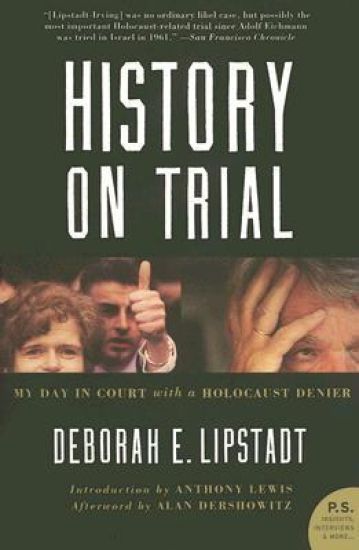
History on Trial

History on Trial

Deborah E. Lipstadt

HarperPerennial
2006
nidottu
A chronicle of the author's five-year legal battle with writer David Irving, a prolific supporter of holocaust denial, describes how the author, along with a team of solicitors, historians, and experts, defended against Irving's libel suit while exposing his distortions of history. Reprint. 15,000 first printing.
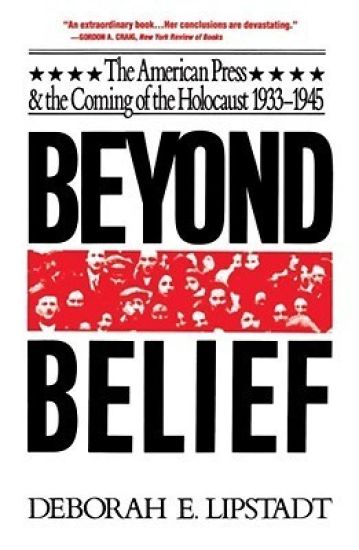
Beyond Belief

Beyond Belief

Deborah E. Lipstadt

Touchstone
1993
pokkari
This most complete study to date of American press reactions to the Holocaust sets forth in abundant detail how the press nationwide played down or even ignored reports of Jewish persecutions over a twelve-year period.