Kirjojen hintavertailu. Mukana 12 250 859 kirjaa ja 12 kauppaa.

Kirjailija

Debra L. Schultz

Kirjat ja teokset yhdessä paikassa: 3 kirjaa, julkaisuja vuosilta 2001-2025, suosituimpien joukossa Going South. Vertaile teosten hintoja ja tarkista saatavuus suomalaisista kirjakaupoista.

3 kirjaa

Kirjojen julkaisuhaarukka 2001-2025.

No One Ever Asked

No One Ever Asked

Arnold Rochvarg; Debra L. Schultz

UNIVERSITY OF MISSOURI PRESS
2025
sidottu
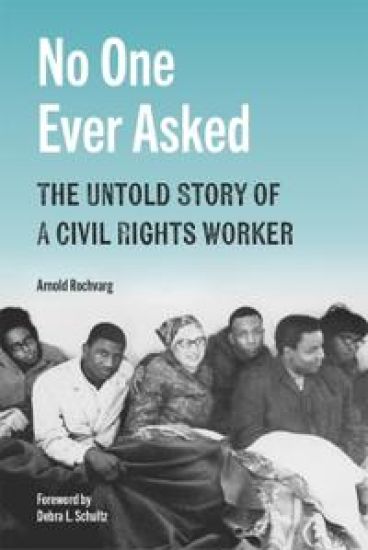
This engaging work by legal scholar Arnold Rochvarg presents a narrative history of the mid-1960s civil rights movement centered around the experiences of a white woman from Philadelphia, Pennsylvania, who quit college to join the movement and became involved with many of the important events and persons of the day. Rochvarg, the cousin of the woman around whom the narrative revolves, had for over fifty years been intrigued by the mystery surrounding the seven-year disappearance of his cousin Iris during the 1960s. Once he finally approached her about her rumored involvement in the civil rights movement, she generously shared her experiences with him and arranged for him to meet others with whom she had worked. His book corroborates and enhances the stories he was told through traditional research based on primary and secondary sources. More than a review of significant events of the mid-1960s, No One Ever Asked is also the story of the challenges and sacrifices of young civil rights workers both Black and white, young persons who not only faced violence and personal harm, but in many cases became estranged from their families because of their involvement in the movement. Rochvarg approaches history from the “bottom-up,” focusing on persons whose stories have never been told but have something to add to an understanding of the history of the movement. Many of them, even sixty years later, have never shared their stories because, as in the case of the central character of this book, no one ever asked them.
Going South

Going South

Debra L. Schultz; Blanche Wiesen Cook

New York University Press
2002
pokkari
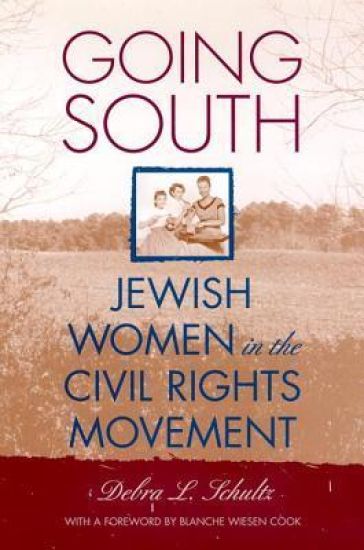
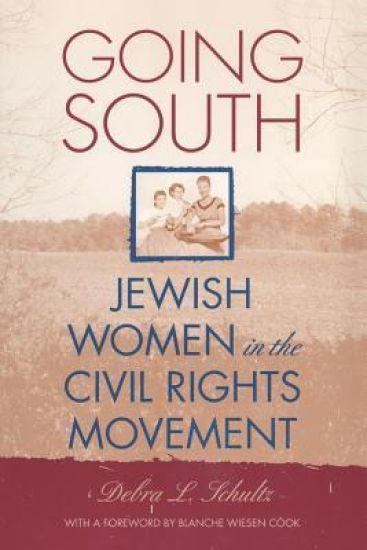
The story of a group of Jewish women who risked their bodies to fight racism Many people today know that the 1964 murder in Mississippi of two Jewish men—Mickey Schwerner and Andrew Goodman—and their Black colleague, James Chaney, marked one of the most wrenching episodes of the civil rights movement. Yet very few realize that Andrew Goodman had been in Mississippi for one day when he was killed; Rita Schwerner, Mickey's wife, had been organizing in Mississippi for six difficult months. Organized around a rich blend of oral histories, Going South followsa group of Jewish women—come of age in the shadow of the Holocaust and deeply committed to social justice—who put their bodies and lives on the line to fight racism. Actively rejecting the post-war idyll of suburban, Jewish, middle-class life, these women were deeply influenced by Jewish notions of morality and social justice. Many thus perceived the call of the movement as positively irresistible. Representing a link between the sensibilities of the early civil rights era and contemporary efforts to move beyond the limits of identity politics, the book provides a resource for all who are interested in anti-racism, the civil rights movement, social justice, Jewish activism and radical women's traditions.
Going South

Going South

Debra L. Schultz; Blanche Wiesen Cook

New York University Press
2001
sidottu
The story of a group of Jewish women who risked their bodies to fight racism Many people today know that the 1964 murder in Mississippi of two Jewish men—Mickey Schwerner and Andrew Goodman—and their Black colleague, James Chaney, marked one of the most wrenching episodes of the civil rights movement. Yet very few realize that Andrew Goodman had been in Mississippi for one day when he was killed; Rita Schwerner, Mickey's wife, had been organizing in Mississippi for six difficult months. Organized around a rich blend of oral histories, Going South followsa group of Jewish women—come of age in the shadow of the Holocaust and deeply committed to social justice—who put their bodies and lives on the line to fight racism. Actively rejecting the post-war idyll of suburban, Jewish, middle-class life, these women were deeply influenced by Jewish notions of morality and social justice. Many thus perceived the call of the movement as positively irresistible. Representing a link between the sensibilities of the early civil rights era and contemporary efforts to move beyond the limits of identity politics, the book provides a resource for all who are interested in anti-racism, the civil rights movement, social justice, Jewish activism and radical women's traditions.