Kirjojen hintavertailu. Mukana 12 595 353 kirjaa ja 12 kauppaa.

Kirjailija

Debra Myhill

Kirjat ja teokset yhdessä paikassa: 9 kirjaa, julkaisuja vuosilta 2005-2022, suosituimpien joukossa No Nonsense Grammar. Vertaile teosten hintoja ja tarkista saatavuus suomalaisista kirjakaupoista.

9 kirjaa

Kirjojen julkaisuhaarukka 2005-2022.

Understanding Literacy and Disadvantage

Understanding Literacy and Disadvantage

Debra Myhill; Annabel Watson; Ruth Newman; Clare Dowdall

SAGE PUBLICATIONS LTD
2022
sidottu
Addressing literacy and disadvantage requires high-quality teaching, first and foremost: there are no quick fixes, simplistic solutions or silver bullets. Both research and professional evidence from schools have revealed a strong association between social disadvantage and achievement in literacy: in fact, it has been a concern for over 70 years. Yet, many trainee teachers, and teachers in general, feel ill-equipped to deal with the issue. This book supports trainee teachers to explore the complex relationships between literacy achievement and social background. It offers practical strategies for teaching and supports trainee teachers to understand that: *children’s individual backgrounds need to be valued and drawn upon; *deficit descriptions of disadvantaged children and low expectations must be avoided and challenged; *schools, teachers and classrooms must provider rich literacy environments for learning.
Understanding Literacy and Disadvantage

Understanding Literacy and Disadvantage

Debra Myhill; Annabel Watson; Ruth Newman; Clare Dowdall

SAGE PUBLICATIONS LTD
2022
nidottu
Addressing literacy and disadvantage requires high-quality teaching, first and foremost: there are no quick fixes, simplistic solutions or silver bullets. Both research and professional evidence from schools have revealed a strong association between social disadvantage and achievement in literacy: in fact, it has been a concern for over 70 years. Yet, many trainee teachers, and teachers in general, feel ill-equipped to deal with the issue. This book supports trainee teachers to explore the complex relationships between literacy achievement and social background. It offers practical strategies for teaching and supports trainee teachers to understand that: *children’s individual backgrounds need to be valued and drawn upon; *deficit descriptions of disadvantaged children and low expectations must be avoided and challenged; *schools, teachers and classrooms must provider rich literacy environments for learning.
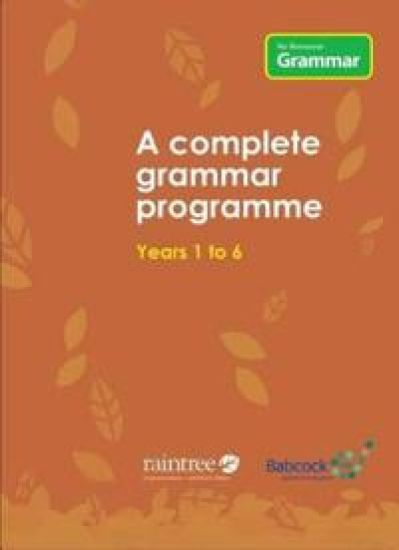
No Nonsense Grammar

No Nonsense Grammar

Debra Myhill

Raintree
2016
nidottu
No Nonsense Grammar is a new complete grammar programme designed to meet the needs of the new National Curriculum in a manageable way. Written by the Babcock LDP Primary Literacy team, the programme is easy to use, flexible and comprehensive, providing sufficient guidance to implement an effective grammar teaching programme from Year 1 to Year 6. Each box includes: * 3 teacher books (KS1, Lower KS2 and Upper KS2) - box includes two copies of each. * A copy of Babcock's unique Sentence Toolkit to help your students get to grips with the building blocks of grammar. * USB stick containing editable versions of all the activities and resources, video guidance from the lead author on how to use the programme in your school, and 26 Raintree PDF eBooks for use as exemplar texts in your grammar teaching. THIS PRODUCT IS VATABLE.
Essential Primary Grammar

Essential Primary Grammar

Debra Myhill; Susan Jones; Helen Lines; Annabel Watson

Open University Press
2016
nidottu
Essential Primary Grammar is an invaluable resource to ensure that you are firmly equipped to teach grammar. It helps you get to grips with your knowledge of grammar for the national curriculum - including the spelling, punctuation and grammar test - as well as providing you with some tried and tested ways to teach grammar. Underpinned by a series of research studies which have investigated the teaching of grammar, it will support you in how to teach grammar in creative and meaningful ways whilst supporting you in developing your own fundamental knowledge of grammar. Uniquely, the book takes a systematic step-by-step approach to explain the grammatical terminology specified in the national curriculum. It also illustrates how you might develop children’s grammatical knowledge by offering a range of practical activities which are rich, meaningful and support children’s development as confident and curious language investigators.Key features include:• Easy-to-read chapters which systematically focus on grammatical subject knowledge at word, phrase and clause level• Guidance in each chapter addressing typical grammar problems or misconceptions, and some grammar jokes• Inspiring suggestions for teaching activities to help children develop grammatical knowledge in meaningful learning contexts• Reference to authentic children’s books to illuminate the grammatical explanations and suggested teaching activities• Ideas on how high quality talk about grammar and texts can be fostered in the classroom“This book gives an excellent research evidence based approach that puts the teaching of grammar firmly onto a book rich curriculum that not only enhances subject knowledge but also awakens an interest in the grammar.”Jo Tregenza, Senior Teaching Fellow and head of initial teacher training at The University of Sussex, UK“Myhill et al manage to tackle some of the trickiest aspects of grammar with clarity and a lightness of touch that ensures the reader never feels they have been taken too far into the depths of linguistics. Every primary teacher needs a copy in their bag!”Rebecca Cosgrave: Primary English Adviser Babcock LDP“This is extremely practical, explaining grammatical concepts in clear and helpful terms, and offering a range of engaging teaching activities for the classroom.”Marcello Giovanelli, Assistant Professor in English Education, University of Nottingham, UK
Writing Voices

Writing Voices

Teresa Cremin; Debra Myhill

Routledge
2011
nidottu
The perspectives of children, teachers and professional writers are often absent in the pedagogy of writing. Highly Commended for the UKLA Academic Book Award 2013, Writing Voices: Creating Communities of Writers responds to such silent voices and offers a text which not only stretches across primary and secondary practice, but also gives expression to these voices, making a new and significant contribution to understanding what it means to be a writer.Drawing upon recent research projects undertaken by the authors and others in the international research community, this fascinating text considers the nature of composing and the experience of being a writer. In the process it: explores the role of talk, creativity, autonomy, metacognition, writing as design and the shaping influence of literature and other texts; examines young people’s composing processes and attitudes to writing; considers teachers’ identities as writers and what can be learnt when teachers engage reflectively in writing; shares a range of professional writers’ practices, processes and perspectives; gives prominence to examples of writing from children, teachers, student teachers and professional writers alongside their reflective commentaries. This thought-provoking text offers theoretical insights and practical directions for developing the teaching and learning of writing. It is an invaluable read for all teachers and trainees, as well as teacher educators, researchers and anyone with an interest in the pedagogy of writing.
Writing Voices

Writing Voices

Teresa Cremin; Debra Myhill

Routledge
2011
sidottu
The perspectives of children, teachers and professional writers are often absent in the pedagogy of writing. Highly Commended for the UKLA Academic Book Award 2013, Writing Voices: Creating Communities of Writers responds to such silent voices and offers a text which not only stretches across primary and secondary practice, but also gives expression to these voices, making a new and significant contribution to understanding what it means to be a writer.Drawing upon recent research projects undertaken by the authors and others in the international research community, this fascinating text considers the nature of composing and the experience of being a writer. In the process it: explores the role of talk, creativity, autonomy, metacognition, writing as design and the shaping influence of literature and other texts; examines young people’s composing processes and attitudes to writing; considers teachers’ identities as writers and what can be learnt when teachers engage reflectively in writing; shares a range of professional writers’ practices, processes and perspectives; gives prominence to examples of writing from children, teachers, student teachers and professional writers alongside their reflective commentaries. This thought-provoking text offers theoretical insights and practical directions for developing the teaching and learning of writing. It is an invaluable read for all teachers and trainees, as well as teacher educators, researchers and anyone with an interest in the pedagogy of writing.
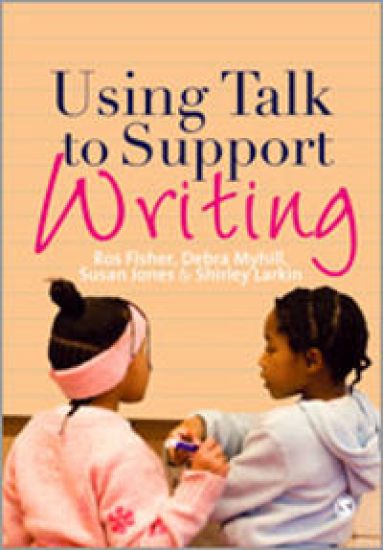
Using Talk to Support Writing

Using Talk to Support Writing

Ros Fisher; Susan J. Jones; Shirley Larkin; Debra Myhill

SAGE Publications Ltd
2010
sidottu
Using Talk to Support Writing presents a new and innovative approach to the teaching of early writing. The authors discuss both theoretical and practical issues around using talk in the classroom to support children as they learn to write. Set within the context of national concern for achievement in the development of writing ability, it addresses the gap in understanding early teaching and focuses on the exploration of how talk and writing interface. This includes: - Numerous examples of teaching and activities for using talk to support writing - Using extensive data from classrooms; video and audio recordings, and transcripts of children's talk - Exploring three aspects of talk when used to support writing: talk for idea generation; talk for oral rehearsal and talk for reflection. This book is for students on Primary ITT courses, particularly for English specialists. Students on M-level English and literacy courses will also find it useful.
Using Talk to Support Writing

Using Talk to Support Writing

Ros Fisher; Susan J. Jones; Shirley Larkin; Debra Myhill

SAGE Publications Ltd
2010
nidottu
Using Talk to Support Writing presents a new and innovative approach to the teaching of early writing. The authors discuss both theoretical and practical issues around using talk in the classroom to support children as they learn to write. Set within the context of national concern for achievement in the development of writing ability, it addresses the gap in understanding early teaching and focuses on the exploration of how talk and writing interface. This includes: - Numerous examples of teaching and activities for using talk to support writing - Using extensive data from classrooms; video and audio recordings, and transcripts of children's talk - Exploring three aspects of talk when used to support writing: talk for idea generation; talk for oral rehearsal and talk for reflection. This book is for students on Primary ITT courses, particularly for English specialists. Students on M-level English and literacy courses will also find it useful.
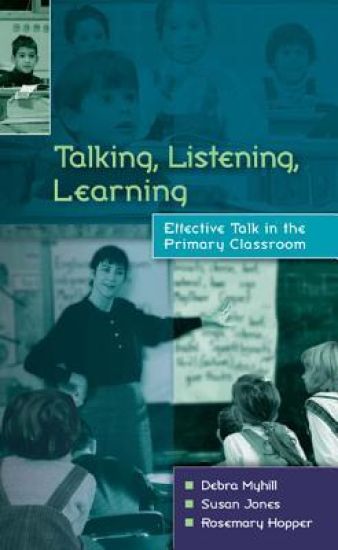
Talking, Listening, Learning

Talking, Listening, Learning

Debra Myhill; Susan Jones; Rosemary Hopper

Open University Press
2005
nidottu
This book looks at an issue which is at the heart of every classroom – the role that talk plays in children’s learning. Drawing on a substantial research base, the book provides useful suggestions to facilitate successful talk between teachers and children to improve learning and raise standards.Through analysing the talk that goes on in primary school classrooms, the book examines the process of talk and learning in detail and shows how teachers’ questions, instructions and statements can support and extend children’s learning. It highlights the central influence of teacher talk on developing children’s learning and looks at international perspectives in the field, including the work of Shirley Brice Heath, Douglas Barnes, Gordon Wells, Neil Mercer and Robin Alexander. This innovative book provides ideas, techniques, and practical suggestions for making classroom talk effective. It is key reading for student and qualified teachers who are interested in improving learning by generating higher levels of participation and interactive talk in their classrooms.