Kirjojen hintavertailu. Mukana 12 592 961 kirjaa ja 12 kauppaa.

Kirjailija

Deepak Nayyar

Kirjat ja teokset yhdessä paikassa: 14 kirjaa, julkaisuja vuosilta 1977-2022, suosituimpien joukossa Employment, Growth and Development. Vertaile teosten hintoja ja tarkista saatavuus suomalaisista kirjakaupoista.

14 kirjaa

Kirjojen julkaisuhaarukka 1977-2022.

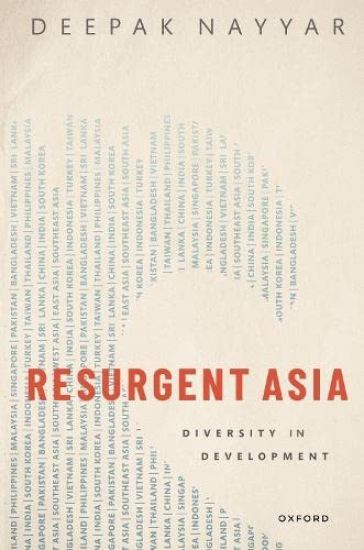
Resurgent Asia

Resurgent Asia

Deepak Nayyar

Oxford University Press
2022
nidottu
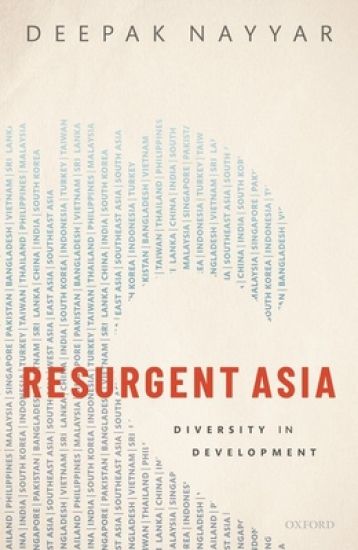
Gunnar Myrdal published his magnum opus Asian Drama, in 1968, to conclude that Asia's development prospects were gloomy. Since then, contrary to Myrdal's expectations, Asia has been transformed beyond recognition, the development of nations and living standards of people revolutionized. These transformations have been uneven across countries and unequal among people. Yet, Asia's economic progress in this short timespan has been remarkable and almost unprecedented in history. Resurgent Asia provides an analytical narrative of Asia's incredible economic development, situated in the wider context of historical, political, and social factors. It also provides an economic analysis of underlying factors that assisted Asia's growth and the critical issues in the process of development. Resurgent Asia studies not only the sub-regions East, Southeast, South, and West Asia, but also the major countries - China, India, South Korea, Indonesia, Turkey, Thailand, Philippines, Malaysia, Singapore, Pakistan, Bangladesh, Vietnam, and Sri Lanka - which account for more than four-fifths of Asia's population and income.
Resurgent Asia

Resurgent Asia

Deepak Nayyar

Oxford University Press
2019
sidottu
Gunnar Myrdal published his magnum opus Asian Drama, in 1968, to conclude that Asia's development prospects were gloomy. Since then, contrary to Myrdal's expectations Asia has been transformed beyond recognition, the development of nations and living standards of people revolutionized. These transformations have been uneven across countries and unequal among people. Yet, Asia's economic progress in this short timespan has been remarkable and almost unprecedented in history. Resurgent Asia provides an analytical narrative of Asia's incredible economic development, situated in the wider context of historical, political, and social factors. It also provides an economic analysis of underlying factors that assisted Asia's growth and the critical issues in the process of development. Resurgent Asia studies not only the sub-regions East, Southeast, South, and West Asia, but also the major countries - China, India, South Korea, Indonesia, Turkey, Thailand, Philippines, Malaysia, Singapore, Pakistan, Bangladesh, Vietnam, and Sri Lanka- which account for more than four-fifths of Asia's population and income.
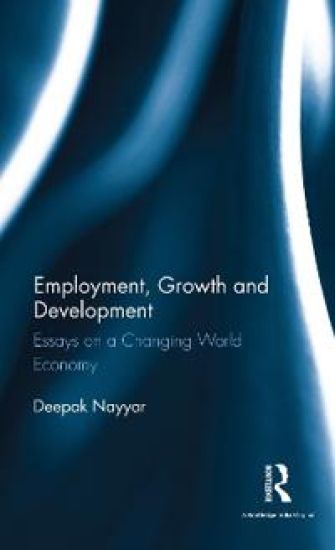
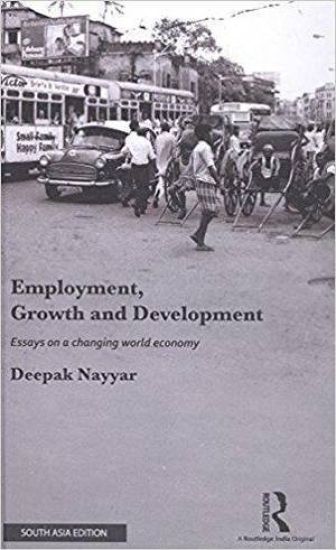
Employment, Growth and Development

Employment, Growth and Development

Deepak Nayyar

Routledge India
2019
nidottu
This book examines the critical themes of employment, growth and development to focus on challenges and opportunities, both old and new, in the contemporary world economy. The essential theme that runs through the book is that there is a strong relationship not only between employment and growth, but also between employment and development, where the causation runs in both directions. The author shows how employment transforms economic growth into meaningful development by providing livelihoods and incomes to people. While the book is primarily concerned with developing countries, it considers industrialized countries as points of reference or comparison, since the latter are a large part of an interdependent world, in which problems faced by the two sets of countries are frequently connected and sometimes common. The ten essays in this volume also provide a macroeconomic analysis of development problems situated in the wider context of a changing world economy, exploring possible solutions, to understand the implications for countries and for people.A timely collection by an eminent economist, this book will be useful to teachers, students and researchers in economics, especially those interested in macroeconomics, political economy and development studies.
Employment, Growth and Development

Employment, Growth and Development

Deepak Nayyar

Routledge India
2016
sidottu
This book examines the critical themes of employment, growth and development to focus on challenges and opportunities, both old and new, in the contemporary world economy. The essential theme that runs through the book is that there is a strong relationship not only between employment and growth, but also between employment and development, where the causation runs in both directions. The author shows how employment transforms economic growth into meaningful development by providing livelihoods and incomes to people. While the book is primarily concerned with developing countries, it considers industrialized countries as points of reference or comparison, since the latter are a large part of an interdependent world, in which problems faced by the two sets of countries are frequently connected and sometimes common. The ten essays in this volume also provide a macroeconomic analysis of development problems situated in the wider context of a changing world economy, exploring possible solutions, to understand the implications for countries and for people.A timely collection by an eminent economist, this book will be useful to teachers, students and researchers in economics, especially those interested in macroeconomics, political economy and development studies.
Catch Up

Catch Up

Deepak Nayyar

Oxford University Press
2016
nidottu
Catch Up analyzes the evolution of developing countries in the world economy from a long-term historical perspective, from the onset of the second millennium but with a focus on the second half of the twentieth century and the first decade of the twenty-first century. It is perhaps among the first to address this theme on such a wide canvas that spans both time and space. In doing so, it highlights the dominance of what are now developing countries and it traces their decline and fall from 1820 to 1950. The six decades since 1950 have witnessed an increase in the share of developing countries not only in world population and world income, but also in international trade, international investment, industrial production, and manufactured exports which gathered momentum after 1980. This book explores the factors underlying this fall and rise, to discuss the on-going catch up in the world economy driven by industrialization and economic growth. Their impressive performance, disaggregated analysis shows, is characterized by uneven development. There is an exclusion of countries and people from the process. The catch up is concentrated in a few countries. Growth has often not been transformed into meaningful development that improves the wellbeing of people. Yet, the beginnings of a shift in the balance of power in the world economy are discernible. But developing countries can sustain this rise only if they can transform themselves into inclusive societies where economic growth, human development, and social progress move in tandem. Their past could then be a pointer to their future.
Catch Up

Catch Up

Deepak Nayyar

Oxford University Press
2013
sidottu
Catch Up analyzes the evolution of developing countries in the world economy from a long-term historical perspective, from the onset of the second millennium but with a focus on the second half of the twentieth century and the first decade of the twenty-first century. It is perhaps among the first to address this theme on such a wide canvas that spans both time and space. In doing so, it highlights the dominance of what are now developing countries and it traces their decline and fall from 1820 to 1950. The six decades since 1950 have witnessed an increase in the share of developing countries not only in world population and world income, but also in international trade, international investment, industrial production, and manufactured exports which gathered momentum after 1980. This book explores the factors underlying this fall and rise, to discuss the on-going catch up in the world economy driven by industrialization and economic growth. Their impressive performance, disaggregated analysis shows, is characterized by uneven development. There is an exclusion of countries and people from the process. The catch up is concentrated in a few countries. Growth has often not been transformed into meaningful development that improves the wellbeing of people. Yet, the beginnings of a shift in the balance of power in the world economy are discernible. But developing countries can sustain this rise only if they can transform themselves into inclusive societies where economic growth, human development, and social progress move in tandem. Their past could then be a pointer to their future.
Liberalization and Development

Liberalization and Development

Deepak Nayyar

OUP India
2012
nidottu
This collection of fifteen essays by eminent economist Deepak Nayyar provides an unusual blend of theory and policy, of applied research and empirical work, and of the world economy and India. It explores a wide range of themes-from macroeconomics and industrialization, to development in the changed context shaped by liberalization. This paperback edition includes a new Preface that focuses on developments since 2008 when the book was first published. The essays in the volume are grouped in four thematic clusters. The first part is on economic theory contextualized in developing countries. It relates macroeconomic theory and policy to the institutional setting and explores alternative perspectives for developing countries. The second part is on development, in a world that has been transformed by markets and globalization. It analyses the implications of this transformation in retrospect and prospect. The third part is on industrialization. It begins with the international context to consider the debate on industrialization in India which is relevant for other late-industrializers. The fourth part is on liberalization with a focus on India. It evaluates the Indian experience with stabilization, adjustment, and reform, which is then situated in its wider political and historical context.
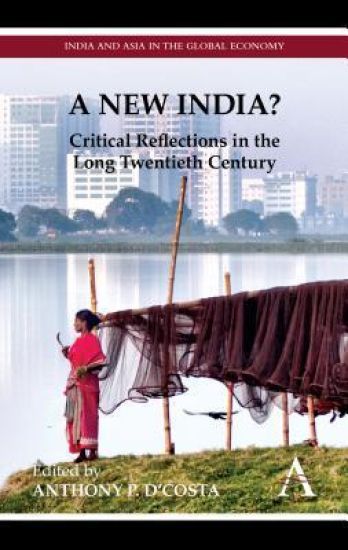
A New India?

A New India?

Deepak Nayyar

Anthem Press
2012
nidottu
This volume critically examines the notion of a ‘new’ India by acknowledging that India is changing remarkably and by indicating that in the overzealous enthusiasm about the new India, there is collective amnesia about the other, older India. The book argues that the increasing consolidation of capitalist markets of commodity production and consumption has unleashed not only economic growth and social change, but has also introduced new contradictions associated with market dynamics in the material and social as well as intellectual spheres.
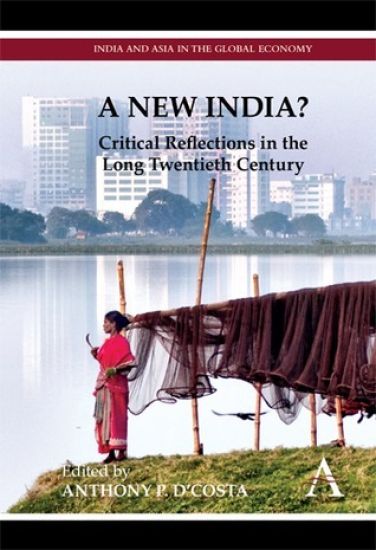
A New India?

A New India?

Deepak Nayyar

Anthem Press
2010
sidottu
This volume critically examines the notion of a ‘new’ India by acknowledging that India is changing remarkably and by indicating that in the overzealous enthusiasm about the new India, there is collective amnesia about the other, older India. The book argues that the increasing consolidation of capitalist markets of commodity production and consumption has unleashed not only economic growth and social change, but has also introduced new contradictions associated with market dynamics in the material and social as well as intellectual spheres.
India's Exports and Export Policies in the 1960's

India's Exports and Export Policies in the 1960's

Deepak Nayyar

Cambridge University Press
2007
pokkari
This book examines India's export performance and export policies in the 1960s. The author analyses the causal factors underlying the trends in exports and evaluates the government policies which affected them. This authoritative work will be of interest to all those concerned with Indian economic problems, international trade and development economics.
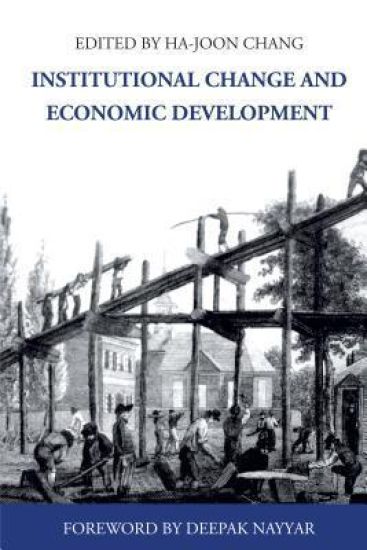
Institutional Change and Economic Development
‘Institutional Change and Economic Development’ discusses not just theoretical issues but a diverse range of real-life institutions – political, bureaucratic, fiscal, financial, corporate, legal, social and industrial – in the context of dozens of countries across time and space, spanning Britain, Switzerland and the USA in the past to Botswana, Brazil, and China today.
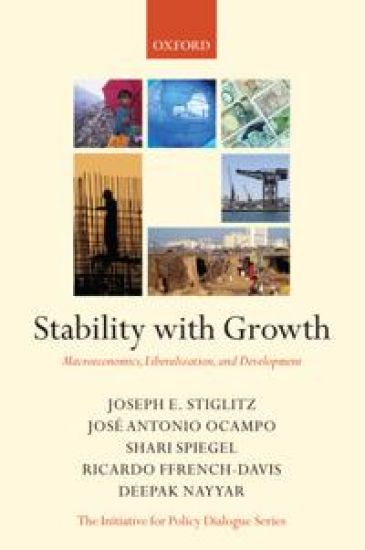
Stability with Growth

Stability with Growth

Joseph Stiglitz; José Antonio Ocampo; Shari Spiegel; Ricardo Ffrench-Davis; Deepak Nayyar

Oxford University Press
2006
nidottu
There is growing dissatisfaction with the economic policies advocated by the IMF and other international financial institutions - policies that have often resulted in stagnating growth, crises, and recessions for client countries. This book presents an alternative to "Washington Consensus" neo-liberal economic policies by showing that both macro-economic and liberalization policy must be sensitive to the particular circumstances of developing countries. One-size-fits-all policy prescriptions are likely to fail given the vast differences between countries. This book discusses how alternative approaches to economic policy can better serve developing countries both in ordinary times and in times of crisis.