Kirjojen hintavertailu. Mukana 12 595 353 kirjaa ja 12 kauppaa.

Kirjailija

Dénes Bernád

Kirjat ja teokset yhdessä paikassa: 6 kirjaa, julkaisuja vuosilta 2003-2025, suosituimpien joukossa Bulgarian Fighter Colours 1919-1948. Vertaile teosten hintoja ja tarkista saatavuus suomalaisista kirjakaupoista.

Mukana myös kirjoitusasut: Denes Bernad, Dénes Bérnad

6 kirjaa

Kirjojen julkaisuhaarukka 2003-2025.

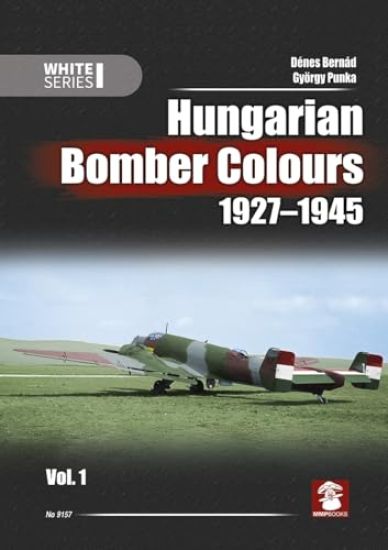
Hungarian Bomber Colours 1927-1945 vol. 1

Hungarian Bomber Colours 1927-1945 vol. 1

Denes Bernad; Gyorgy Punka

Wydawnictwo STRATUS, Artur Juszczak
2025
sidottu
The Hungarian Bomber Force – Part 1 is a comprehensive study of the development and operations of Hungary’s bomber aviation from its early beginnings through the end of World War II. The book covers aircraft types, unit structure, and missions, focusing on both domestic developments and foreign influences shaping the Royal Hungarian Air Force. It includes rare archival photographs, detailed colour profiles, and thoroughly researched historical context that sheds light on this often-overlooked aspect of Central European military aviation. A valuable resource for aviation historians, researchers, and modellers interested in lesser-known air forces of the Second World War.
Magyar Warriors Vol 2: The History of the Royal Hungarian Armed Forces 1919-1945
The Hungarian armed forces (known as the Honv ds g) were built up from the 1920s, their expansion gaining momentum once Hungary became free of the strict post-First World War Trianon treaty limitations in August 1938. Politically, Hungary was looking for a strong ally, who would help it to recover at least some of the territories containing sizeable Magyar ethnic populations that had been lost after the First World War. Initially, in the mid-1930s, Italy gave political assistance and supplied military materiel; then - on the eve of the Second World War - Germany also lent some support. In November 1938, Hungary managed to peacefully recover a chunk of its former territory from Czechoslovakia, followed by the Sub-Carpathian area during a brief border war in March 1939, and then the northern part of Transylvania from Rumania in August 1940. Later, in April 1941, the Bachka region and parts of Baranya were also taken back from the dismembered Yugoslavia, in a swift military action. The rub is that Hungary was sucked into the cauldron of the Eastern Front, and soon the Honv ds (Hungarian soldiers) found themselves deep in Soviet territory, outgunned and outnumbered by the Red Army. Later on, from August 1944, the beleaguered Honv ds g had to fight in defense of its own territory. Alongside tiny Croatia, Hungary remained the last German ally up to the bitter end, and paid the price accordingly. This comprehensive reference, to be published in three volumes - the fruit of over twenty years of meticulous research - strives to provide a complete picture of the Hungarian armed forces between the years 1919 and 1945. Volume 1 (published in 2015) presents a brief history of the Magyars up until the end of the Second World War, as well as the building of the armed forces, and details the armored formations and their equipment. Volume 2 covers in great details the activity of the air force (Chapter 4), the river flotilla (Chapter 5), as well as the combat operations of the Honv ds g (Chapter 6). The final volume will contain type sheets of every weapon and vehicle used by the Army, as well as all aircraft types in service with the Air Force. The discussed topics are described in great details, and illustrated with over 500 photographs, several maps and many tables.
Bulgarian Fighter Colours 1919-1948

Bulgarian Fighter Colours 1919-1948

Dénes Bernád

Mushroom Model Publications
2020
sidottu
Bulgaria is arguably the historically most underrated Axis ally that actually fought the Allies during World War 2. Despite remaining outside the main battleground of the war, the Eastern Front, this Balkan country did take its fair share of warfare, particularly due to the combat activity of its fighter air force against the armada of US bombers and their fighter escorts, in 1943 and 1944. Then, following an about-face in early September 1944, the Bulgarians combatted their former ally, the Germans. This notable air activity is largely unknown outside Bulgaria, and is not very much popularized even within the country, despite fully deserving the utmost attention.This two-volume book describes and illustrates all the fighter and fighter trainer aircraft used by the Bulgarian armed forces before, during, and shortly after WW 2. These aircraft were procured from the following countries: Germany, Poland and Czechoslovakia. Emphasis is placed on the most potent German fighter types, the Messerschmitt Bf 109E and G, as well as the top-notch fighter type of France, the Dewoitine D.520. However, rare, exotic models, including the sole locally built prototype that fits the definition, the DAR-5, are also included. The camouflage and markings, as well as the military coding system of these large variety of aircraft types are described in great details. Fully illustrated with many rare photos, most of them seen for the first time in print. Mutinously detailed colour profiles of many representative aircraft type are included as well. Summing up, this lavishly illustrated, full-colour two-volume book, spanning across over 600 pages, is the reference work of the fighter and fighter trainer aircraft, as well as the pilots who flew for the Royal Bulgarian Air Force prior to, during, and shortly after World War 2.
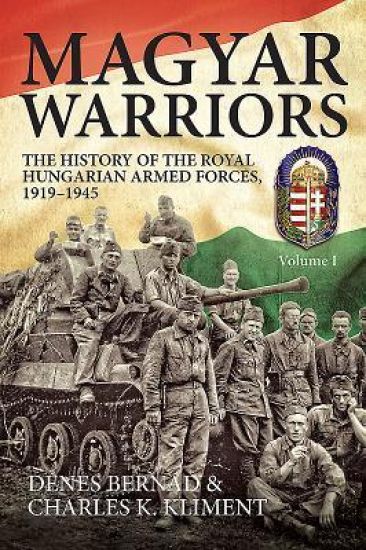
Magyar Warriors, Volume 1

Magyar Warriors, Volume 1

Dénes Bernád

Helion Company
2019
nidottu
The Hungarian armed forces (known as the Honvédség) were built up in the 1930s, their expansion gaining momentum once Hungary became free of the strict post-WWI Trianon treaty limitations in August 1938. Politically, Hungary was looking for a strong ally, who would help it to recover at least some of the territories containing sizeable Magyar ethnic populations that had been lost after the First World War. Initially, in the mid-1930s, Italy gave political assistance and supplied military matériel, then - on the eve of WWII - Germany also lent support. In November 1938, Hungary managed to peacefully recover a chunk of its former territory from Czechoslovakia, followed by the Sub-Carpathian area during a brief border war in March 1939, then the northern part of Transylvania from Rumania in August 1940. Later, in April 1941, the Bachka region and parts of Baranya were also taken back from the dismembered Yugoslavia, in a swift military action. The rub was that Hungary was sucked into the cauldron of the Eastern front, and soon the Honvéds (Hungarian soldiers) found themselves deep in Soviet territory, outgunned and outnumbered by the Red Army. Later on, from August 1944, the beleaguered Honvédség had to fight against the mighty Soviet army in defense of its own territory. Alongside tiny Croatia, Hungary remained the last German ally up to the bitter end. This comprehensive reference, to be published in three volumes, and the fruit of over twenty years of meticulous research, strives to provide a complete picture of the Hungarian armed forces between the years 1919-1945. It starts with a brief history of the Magyars, describes the political situation in Hungary before and during WWII, the building of the armed forces, the growth of domestic arms manufacturers, the organization of the armed forces units and how they changed during the war. The various campaigns of the war are described in great detail, illustrated with many photographs and maps. This, the first volume, contains approximately 550 photographs, many previously unpublished, as well as numerous tables and maps of the various campaigns. The authors drew on official Hungarian and German archives, and a multitude of private sources, both from individuals living in Hungary and Hungarian émigrés from the Western Diaspora. The result of this herculean effort is a three-volume series destined to be the reference work on the topic, a must for people fascinated by military history, or generally interested in the 1100-year-long rich history of Hungary and its Magyar Warriors.
Magyar Warriors Volume 1

Magyar Warriors Volume 1

Dénes Bernád; Charles K. Kliment

Helion Company
2014
sidottu
The Hungarian armed forces, known as the Honvédség, were built up in the 1930s, their expansion gaining momentum once Hungary became free of the strict post- World War I Trianon treaty limitations in August 1938. Politically, Hungary was looking for a strong ally, who would help it to recover at least some of the territories that had been lost after the First World War. Initially, in the mid-1930s, Italy gave political assistance and supplied military matériel, then, on the eve of World War II, Germany also lent support. In November 1938, Hungary managed to peacefully recover a chunk of its former territory from Czechoslovakia, followed by the Sub-Carpathian area and the northern part of Transylvania from Rumania in August 1940. Later, in April 1941, the Bachka region and parts of Baranya were also taken back from the dismembered Yugoslavia, in a swift military action. The rub was that Hungary was sucked into the cauldron of the Eastern front, and soon the Honvéds found themselves deep in Soviet territory, outgunned and outnumbered. From August 1944, the beleaguered Honvédség had to fight against the mighty Soviet army in defense of its own territory. However, alongside tiny Croatia, Hungary remained the last German ally up to the bitter end. This comprehensive reference, to be published in two volumes, and the fruit of over twenty years of meticulous research by Hungarian historian Dénes Bernád, and AFV expert Charles K. Kliment, strives to provide a complete picture of the Hungarian armed forces between the years 1919–1945. It describes the political situation in Hungary before and during World War II, the building of the armed forces, the growth of domestic arms manufacturers and the organisation of the armed forces units and how they changed during the war. The various campaigns of the war are described in great detail, illustrated with many photographs, colour plates and maps.
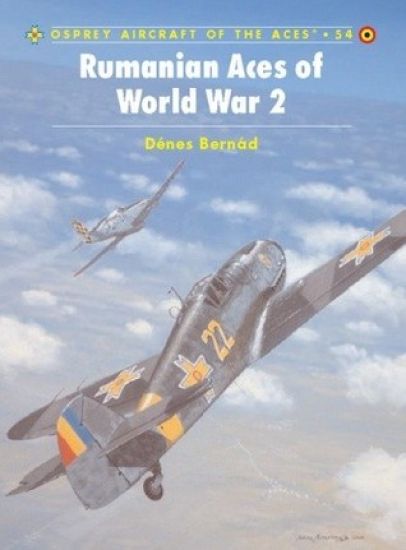
Rumanian Aces of World War 2

Rumanian Aces of World War 2

Dénes Bérnad

Osprey Publishing
2003
nidottu
First seeing action in the wake of the German invasion of the USSR in June 1941, the Royal Romanian Air Force had been allied to the Luftwaffe since the Romanian government signed a Tripartite Pact with Germany and Italy in November 1940. This book reveals how, despite suffering heavy losses to the numerically superior Russian forces, the Romanians inflicted even greater casualties on the communists. Locked in bitter conflict with the Soviets until September 1944, when the Red Army poured across the Romanian frontier and forced an armistice, the modest fighter force claimed 1500+ kills using primarily Bf 109's, Fs and Gs.