Kirjojen hintavertailu. Mukana 12 390 323 kirjaa ja 12 kauppaa.

Kirjailija

Denise Duhamel

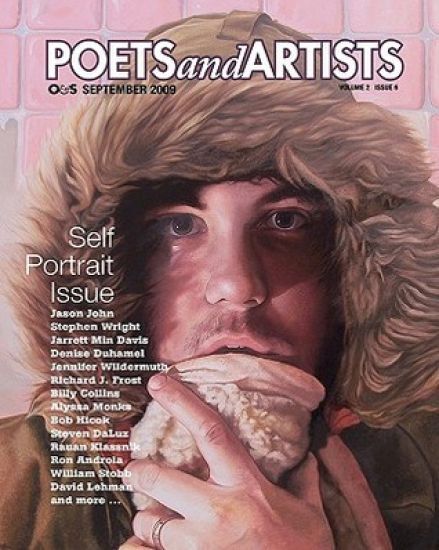
Kirjat ja teokset yhdessä paikassa: 14 kirjaa, julkaisuja vuosilta 2001-2025, suosituimpien joukossa Poets and Artists (O&S, Sept. 2009): Self Portrait Issue. Vertaile teosten hintoja ja tarkista saatavuus suomalaisista kirjakaupoista.

14 kirjaa

Kirjojen julkaisuhaarukka 2001-2025.

Tilt / Beautiful People

Tilt / Beautiful People

Denise Duhamel; Maureen Seaton; Aaron Smith

Michigan Publishing Services
2025
nidottu
Tilt / Beautiful People brings to life two innovative poetry books integrated into one. In Tilt, Denise Duhamel and Maureen Seaton (1947-2023) write through climate change, Maureen’s illness, and the pandemic with their signature wit and poignancy. Their feminist curiosity leads them to poems about gender identity, marriage equality, and the complexities of national politics. Assembled shortly before Maureen’s death, the poems in Tilt tell the story of a friendship rooted in collaborative artistic play. The title of the book gives a nod to the earth’s tilt, which gives us seasons, but also hints that the poems were written at full tilt, these poets hyperaware they only had so much time left to write with one another. Beautiful People was written back and forth over the course of several months by poets Maureen Seaton and Aaron Smith. Bold and inventive, it moves from sonnets and sestinas to prose poems and so much more. While its center is a love for poetry and art and laughter, the poets also grapple with mortality, sadness, and what it means to be alive on a broken but beautiful planet. Through their literary friendship, they put a mirror to all our lovely faces.
Tilt / Beautiful People

Tilt / Beautiful People

Denise Duhamel; Maureen Seaton; Aaron Smith

Michigan Publishing Services
2025
sidottu
Tilt / Beautiful People brings to life two innovative poetry books integrated into one. In Tilt, Denise Duhamel and Maureen Seaton (1947-2023) write through climate change, Maureen’s illness, and the pandemic with their signature wit and poignancy. Their feminist curiosity leads them to poems about gender identity, marriage equality, and the complexities of national politics. Assembled shortly before Maureen’s death, the poems in Tilt tell the story of a friendship rooted in collaborative artistic play. The title of the book gives a nod to the earth’s tilt, which gives us seasons, but also hints that the poems were written at full tilt, these poets hyperaware they only had so much time left to write with one another.Beautiful People was written back and forth over the course of several months by poets Maureen Seaton and Aaron Smith. Bold and inventive, it moves from sonnets and sestinas to prose poems and so much more. While its center is a love for poetry and art and laughter, the poets also grapple with mortality, sadness, and what it means to be alive on a broken but beautiful planet. Through their literary friendship, they put a mirror to all our lovely faces.
The Latest

The Latest

Denise Duhamel; Julie M Marie Wade

Small Harbor Publishing
2025
pokkari
In The Latest: 20 Ghazals for 2020, Denise Duhamel and Julie Marie Wade exchange verses in dialogue throughout a fraught year. The pandemic, the U.S. election, gun violence, and the loss of feminist icons Ruth Bader Ginsburg and Helen Reddy forefront a series of collaborations in which the two poets face isolation together. These couplets mirror their two voices, just as the recursions of this ancient poetic form mirror our recent, lonely, and global routine. The Latest is a project of resilience, writing through "the dark days" with humor and hope.
Pink Lady

Pink Lady

Denise Duhamel

UNIVERSITY OF PITTSBURGH PRESS
2025
nidottu
When her mother agrees to enter a Rhode Island nursing home in December of 2019, Denise Duhamel promises she’ll visit at least once a month. By March of 2020, everyone is in lockdown. The elegies in Pink Lady explore the resiliency of her elderly mother and nurses on the frontline, as well as the personal and universally experienced anxieties faced during pandemic policies. With focus, obsession, and even humor, Duhamel chronicles the separation of a mother and daughter, documenting the power of imagination, the aging body, and the limits of caregiving.
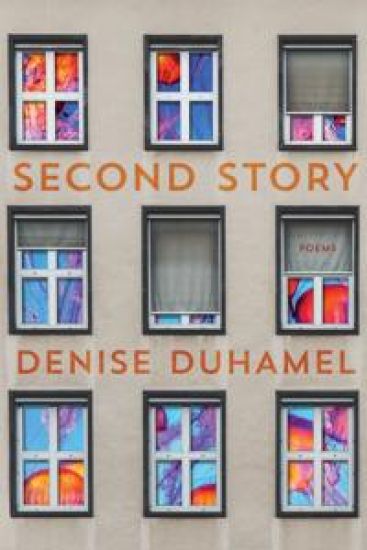
Second Story

Second Story

Denise Duhamel

University of Pittsburgh Press
2021
nidottu
When her Florida apartment is damaged by the ferocity of Hurricane Irma, Duhamel turns to Dante and terza rima, reconstructing the form into the long poem "Terza Irma." Throughout the book she investigates our near-catastrophic ecological and political moment, hyperaware of her own complicity, resistance, and agency. She writes odes to her favorite uncle - who was "green" before it was a hashtag - and Mother Nature via a retro margarine commercial. She writes letters to her failing memory as well as to America's amnesia. With fear of the water below and a burglar who enters through her second story window, she bravely faces the story under the story, the second story we often neglect to tell.
Scald

Scald

Denise Duhamel

University of Pittsburgh Press
2017
nidottu
When her "smart" phone keeps asking her to autocorrect her name to Denise Richards, Denise Duhamel begins a journey that takes on celebrity, sex, reproduction, and religion with her characteristic wit and insight. The poems in Scald engage feminism in two ways—committing to and battling with—various principles and beliefs. Duhamel wrestles with foremothers and visionaries Shulamith Firestone, Andrea Dworkin, and Mary Daly as well as with pop culture figures such as Helen Reddy, Cyndi Lauper, and Bikini Kill. In dialogue with artists and writers such as Catherine Opie, Susan Faludi, and Eve Ensler, Duhamel tries to understand our cultural moment. While Duhamel's Scald can burn, she has more importantly taken on the role of the ancient Scandinavian "Skald," one who pays tribute to heroic deeds. In Duhamel's case, her heroes are also heroines.
Blowout

Blowout

Denise Duhamel

University of Pittsburgh Press
2013
nidottu
Finalist, National Book Critics Circle Award.In Blowout, Denise Duhamel asks the same question that Frankie Lyman & the Teenagers asked back in 1954—"Why Do Fools Fall in Love?" Duhamel's poems readily admit that she is a love-struck fool, but also embrace the "crazy wisdom" of the Fool of the Tarot deck and the fool as entertainer or jester. From a kindergarten crush to a failed marriage and beyond, Duhamel explores the nature of romantic love and her own limitations. She also examines love through music, film, and history—Michelle and Barak Obama's inauguration and Cleopatra's ancient sex toy. Duhamel chronicles the perilous cruelties of love gone awry, but also reminds us of the compassion and transcendence in the aftermath. In "Having a Diet Coke with You," she asserts that "love poems are the most difficult poems to write / because each poem contains its opposite its loss / and that no matter how fierce the love of a couple / one of them will leave the other / if not through betrayal / then through death." Yet, in Blowout, Duhamel fiercely and foolishly embraces the poetry of love.
237 More Reasons To Have Sex

237 More Reasons To Have Sex

Denise Duhamel; Sandy McIntosh

Otoliths
2011
pokkari
"Originally, I thought that we exhaustively compiled the list, but now I found that there should be some added..." wrote Cindy Meston, co-author of "Why Humans Have Sex," in the Archives of Sexual Behavior (Volume 36, Number 4, August 2007). Denise Duhamel and Sandy McIntosh have done just that in this delightful compendium that adds 237 more reasons. It's an exhaustive list, but it still doesn't exhaust all the possibilities. So be warned, you'll want to find some more.
Ka-Ching!

Ka-Ching!

Denise Duhamel

University of Pittsburgh Press
2009
nidottu
Ka-Ching! is a book of poems that explores America’s obsession with money. It also includes a crown of sonnets about e-bay, sestinas on the subjects of Sean Penn and the main characters of fairytales, a pantoum that riffs on a childhood riddle, and a villanelle inspired by bathroom grafitti.
Queen for a Day

Queen for a Day

Denise Duhamel

University of Pittsburgh Press
2001
nidottu
There’s no predicting a Denise Duhamel poem, except that it might be about something you’ve never seen in a poem before: Mr. Donut, Rodney King, or nude beaches; Gertrude Stein, phone sex, or the Girl Scouts. Poems from The Woman with Two Vaginas, a book that was censored when it first appeared, are based on Inuit folklore. How the Sky Fell offers revisionist fairy tales, and the poems from Kinky are inspired by Barbie dolls. In her new work, Duhamel suffers postmodern angst when using the “therapeutic I.” Denise Duhamel has startled readers of American poetry with work that pirouettes on a tightrope above the personal and the political, the spoken word and the page, the irreverent and the sacred. Queen for a Day showcases poems from her five previous collections, along with new work.