Kirjojen hintavertailu. Mukana 12 595 353 kirjaa ja 12 kauppaa.

Kirjailija

Dennis C. Daley

Kirjat ja teokset yhdessä paikassa: 8 kirjaa, julkaisuja vuosilta 2006-2019, suosituimpien joukossa Relapse Prevention Counseling: Clinical Strategies to Guide Addiction Recovery and Reduce Relapse. Vertaile teosten hintoja ja tarkista saatavuus suomalaisista kirjakaupoista.

8 kirjaa

Kirjojen julkaisuhaarukka 2006-2019.

Managing Your Substance Use Disorder

Managing Your Substance Use Disorder

Dennis C. Daley; Antoine B. Douaihy

Oxford University Press Inc
2019
nidottu
Managing Your Substance Use Disorder: Client Workbook is an interactive recovery guide that engages readers who have a substance use disorder in an active process of learning strategies to manage the daily challenges of sobriety and recovery and to reduce the risk of lapse and relapse. Designed to accompany Managing Substance Use Disorder: Practitioner Guide, this Workbook provides detailed information about substances of use, reader-friendly checklists, and engaging activities in order to personalize the reader's recovery plan. The book then reviews current trends in substance use and disorders, causes and effects of these disorders, substance related disorders, treatment approaches (medications and psychosocial), mutual support programs, and the impact of substance use on the family and concerned significant others, and integrates the best scientifically-supported interventions with the authors' extensive experiences as scientist-clinicians. This Workbook addresses the most common challenges faced by individuals with substance use disorders, such as managing cravings, resisting social pressures to use, coping with negative emotions and moods, building a social support network, involving family or concerned significant others, and reducing lapse and relapse risk.
Managing Substance Use Disorder

Managing Substance Use Disorder

Dennis C. Daley; Antoine B. Douaihy

Oxford University Press Inc
2019
nidottu
Managing Substance Use Disorder: Your Substance Use Disorder: Client Workbook Practitioner Guide provides practical and empirically-based strategies for addressing and stopping substance use, and for changing daily lifestyle and behaviors that contribute to continued use. Healthcare practitioners in medical, psychiatric, addiction, and social services settings will find comprehensive information on substance use disorders, current trends, DSM-5 substance related disorders, and causes and effects of these disorders. Designed to accompany Managing Your Substance Use Disorder: Client Workbook, this manualized guide provides a detailed description of screening and assessment strategies and treatment approaches (medications and psychosocial), integrating evidenced-based interventions with the authors' extensive clinical experiences. Mutual support programs and the impact on the family and concerned significant others are also discussed, as are the most common challenges faced by individuals with a substance use disorder, such as managing cravings, resisting social pressures to use substances, coping with negative emotions and moods, building a social support network, involving family or concerned significant others, and reducing relapse risk. This expanded third edition also includes a new chapter on the management of co-occurring psychiatric disorders.
A Family Guide to Coping with Substance Use Disorders

A Family Guide to Coping with Substance Use Disorders

Dennis C. Daley; Antoine Douaihy

Oxford University Press Inc
2019
nidottu
The potentially devastating impact of substance use disorders (SUDs) on family and concerned significant others has been well-documented, but there is hope. Loved ones can learn strategies to help them cope with the impact of SUDs, and these strategies will in turn help them to support recovery efforts. Family-friendly and accessible, A Family Guide to Coping with Substance Use Disorders provides readers with important information on substance use, symptoms, causes, effects, and treatment. Written by experts in the field of addiction medicine, this book enables readers to understand substance use disorders from the perspective of their affected loved one, and provides a positive perspective emphasizing that recovery is certainly possible. Using real-world examples, the book illustrates how SUDs can impact family units and family members, including children, and then provides practical strategies for supporting a loved one with a SUD and for addressing its impact on readers' own thoughts, behaviors, and emotional states. Helpful resources and links are provided, enabling readers to gain access to information and organizations that support families in recovery.
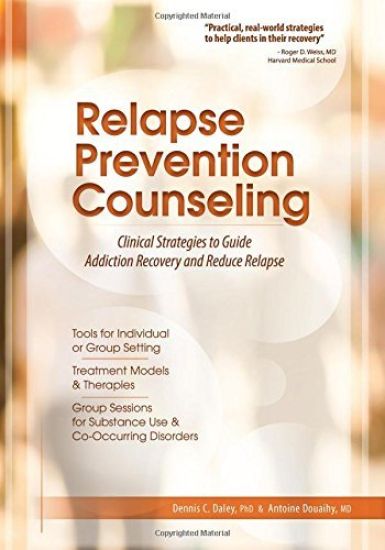
Relapse Prevention Counseling: Clinical Strategies to Guide Addiction Recovery and Reduce Relapse
Written specifically for clinicians, this comprehensive book makes it easy for you to implement strategies proven to reduce relapse and help your client recover from substance use disorder (SUDs). Each chapter will lead you step-by-step through valuable resources for treatment such as: -Tools for individual group and family sessions -Treatment models and therapies -Counseling strategies for co-occurring disorders -12 group exercises for SUDs -Tips for teaching clients to identify craving triggers to prevent relapse -Best practices for medication-assisted treatment -Emotion management techniques -Using motivation to make lifestyle changes -8 group exercises for co-occurring disorders
Addiction and Mood Disorders: A Guide for Clients and Families

Addiction and Mood Disorders: A Guide for Clients and Families

Dennis C. Daley

Oxford University Press Inc
2006
nidottu
Millions of individuals diagnosed with severe mental illness also suffer from an equally powerful substance use disorder. If you or someone you love has been diagnosed with dual disorders, this book can help. Addiction and Mood Disorders: A Guide for Clients and Families is designed primarily to educate individuals with dual disorders and their families about mood and addictive use disorders. It not only gives a message of hope, but also provides practical suggestions on ways to manage these disorders. The author provides guidelines and strategies for recovery from dual disorders based on, and adapted from various treatments that have proven effective for addiction, mood disorders, or both. This book is filled with case examples that show growth and positive change, as well as the difficulties many individuals struggling with a dual diagnosis face. Advocating a recovery model in which the affected individual takes responsibility for getting the most out of professional treatment and self-help programs, this book shows that being an active participant is the key to getting the most out of your recovery. This book is for use not only by those individuals who suffer from addiction and mental illness, but also by their family, friends, and other members of their support system. Professionals who work with these individuals will find this book to be a useful guide in their clinical work as well.
Addiction and Mood Disorders

Addiction and Mood Disorders

Dennis C. Daley; Antoine Douaihy

Oxford University Press Inc
2006
sidottu
One in three people with depression, and six out of ten people with bipolar disorder experience alcohol or drug abuse or dependency during their lifetime. Addiction and Mood Disorders: A Guide for Clients and Families is designed primarily to educate these individuals with dual disorders and their families about mood and addictive use disorders. It not only gives a message of hope, but also provides practical suggestions on ways to manage these disorders. The author provides guidelines and strategies for recovery from dual disorders based on, and adapted from various treatments that have proven effective for addiction, mood disorders, or both. This book is filled with case examples that show growth and positive change, as well as the difficulties many individuals struggling with a dual diagnosis face. Advocating a "recovery" model in which the affected individual takes responsibility for getting the most out of professional treatment and self-help programs, this book shows that being an active participant is the key to getting the most out of your recovery.
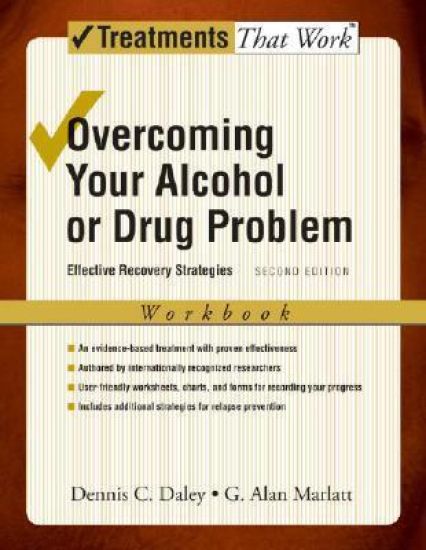
Overcoming Your Alcohol or Drug Problem

Overcoming Your Alcohol or Drug Problem

Dennis C. Daley; G. Alan Marlatt

Oxford University Press Inc
2006
nidottu
A substance abuse problem exists when one experiences any type of difficulty related to using alcohol, tobacco, or other drugs including illicit street drugs or prescribed drugs such as painkillers or tranquilisers. The difficulty can be in any area of life: medical or physical, psychological, family, interpersonal, social, academic, occupational, legal, financial, or spiritual. The expanded new edition of this successful Workbook provides the reader with practical information and skills to help them understand and change a drug or alcohol problem. Designed to be used in conjunction with counselling or therapy, it focuses on special issues involved in stopping substance abuse and in changing behaviours or aspects of one's lifestyle that keep the substance use problem active. The information presented is derived from a wealth of research studies, and discusses the most effective recovery strategies from the examination of cognitive-behavioural treatment, coping skills training, and relapse prevention. In addition to addressing substance use problems, the recovery process, the relapse process, types of professional treatments available, and self-help groups, this expanded edition also includes a new chapter on the management of a co-occuring psychiatric disorder.
Overcoming Your Alcohol or Drug Problem

Overcoming Your Alcohol or Drug Problem

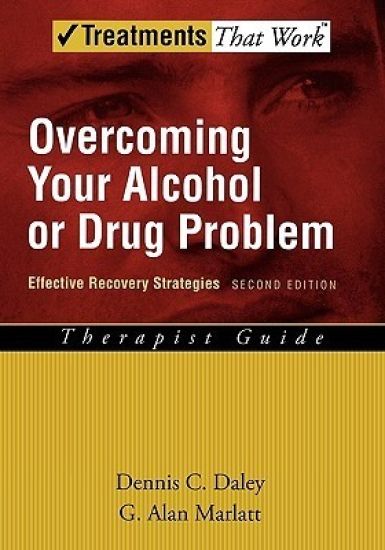
Dennis C. Daley; G. Alan Marlatt

Oxford University Press Inc
2006
nidottu
This expanded edition of this successful Therapist Guide provides an evidence-based treatment protocol for all types of substance use disorders. Designed to be used with the accompanying Workbook, this guide provides clinicians with valuable strategies for working with clients with substance use disorders. The treatment outlined focuses on specific issues involved in both stopping substance abuse and changing behaviours or lifestyle aspects that contribute to continued substance abuse. In addition to addressing professional approaches/attitudes toward the substance abusing client, assessment, psychosocial and pharmacotherapeutic treatment, and self-help programs, this expanded edition also includes a new chapter on the management of a co-occurring psychiatric disorder.