Kirjojen hintavertailu. Mukana 12 298 984 kirjaa ja 12 kauppaa.

Kirjailija

Dennis J. Schmidt

Kirjat ja teokset yhdessä paikassa: 7 kirjaa, julkaisuja vuosilta 1990-2019, suosituimpien joukossa On Germans and Other Greeks. Vertaile teosten hintoja ja tarkista saatavuus suomalaisista kirjakaupoista.

7 kirjaa

Kirjojen julkaisuhaarukka 1990-2019.

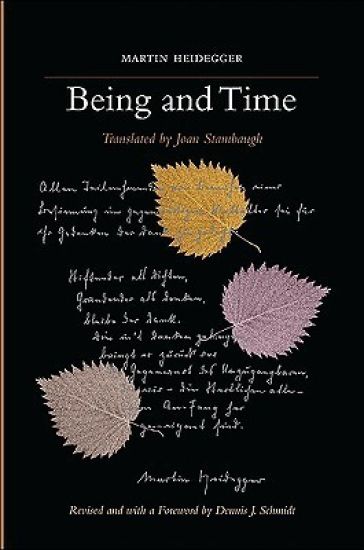
Being and Time

Being and Time

Martin Heidegger; Dennis J. Schmidt

State University of New York Press
2010
pokkari
The publication in 1927 of Martin Heidegger's magnum opus, Being and Time, signaled an intellectual event of the first order and had an impact in fields far beyond that of philosophy proper. Being and Time has long been recognized as a landmark work of the twentieth century for its original analyses of the character of philosophic inquiry and the relation of the possibility of such inquiry to the human situation. Still provocative and much disputed, Heidegger's text has been taken as the inspiration for a variety of innovative movements in fields ranging from psychoanalysis, literary theory, existentialism, ethics, hermeneutics, and theology. A work that disturbs the traditions of philosophizing that it inherits, Being and Time raises questions about the end of philosophy and the possibilities for thinking liberated from the presumptions of metaphysics.The Stambaugh translation captures the vitality of the language and thinking animating Heidegger's original text. It is also the most comprehensive edition insofar as it includes the marginal notes made by Heidegger in his own copy of Being and Time, and takes account of the many changes that he made in the final German edition of 1976. The revisions to the original translation correct some ambiguities and problems that have become apparent since the translation appeared fifteen years ago. Bracketed German words have also been liberally inserted both to clarify and highlight words and connections that are difficult to translate, and to link this translation more closely to the German text.
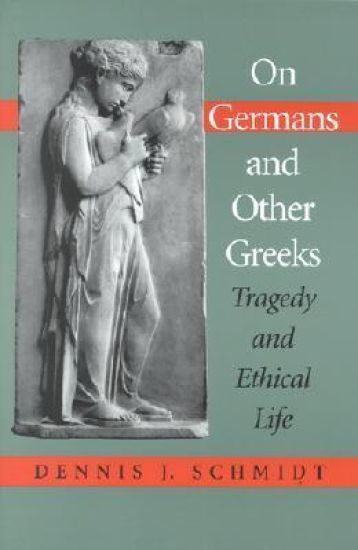
On Germans and Other Greeks

On Germans and Other Greeks

Dennis J. Schmidt

Indiana University Press
2001
pokkari
On Germans and Other Greeks Tragedy and Ethical Life Dennis J. Schmidt What Greek tragedy and German philosophy reveal about the meaning of art for ethical life. "Schmidt's investigation of tragedy is a highly significant, powerful work, one with far-reaching consequences. It bears on our understanding of the role of the arts and of philosophical thinking in our culture." —Rodolphe Gasché In this illuminating work, Dennis J. Schmidt examines tragedy as one of the highest forms of human expression for both the ancients and the moderns. While uncovering the specifically Greek nature of tragedy as an exploration of how to live an ethical life, Schmidt's elegant and penetrating readings of Greek texts show that it was the beauty of Greek tragic art that led Kant and other German thinkers to appreciate the relationship between tragedy and ethics. The Germans, however, gave this relationship a distinctly German interpretation. Through the Greeks, the Germans reflected on the enigmas of ethical life and asked innovative questions about how to live an ethical life outside of the typical assumptions and restrictions of traditional Western metaphysics. Schmidt's engagements with Schelling, Hegel, Hölderlin, Nietzsche, and Heidegger show how German philosophical appropriations of Greek tragedy conceived of ethics as moving beyond the struggle between good and evil toward the discovery of community truths. Enlisting a wide range of literary and philosophical texts, some translated into English for the first time, Schmidt reveals that contemporary notions of tragedy, art, ethics, and truth are intimately linked to the Greeks. Dennis J. Schmidt is Professor of Philosophy at Villanova University. He is author of The Ubiquity of the Finite and translator of Ernst Bloch's Natural Law and Human Dignity. Studies in Continental Thought—John Sallis, general editorMay 2001 432 pages, 6 1/8 x 9 1/4, bibl., index cloth0-253-33868-9$49.95 L / £38.00 paper0-253-21443-2$24.95 s / £18.95
The Ubiquity of the Finite

The Ubiquity of the Finite

Dennis J. Schmidt

MIT Press
1990
pokkari
What are the assumptions and tasks hidden in contemporary calls to "overcome" the metaphysical tradition? Reflecting upon the internal contradictions of the notions of "tradition" and "finiteness," Dennis J. Schmidt offers novel insights into how philosophy must relate to its traditions if it is to retain a vital sense of the plurality of "edges" that constitute its finiteness. He does this through a close examination of issues found in the work of Hegel and Heidegger, two philosophers who made the ideas of both tradition and finiteness the center of their concern. Schmidt begins by asking how Heidegger can claim to have destroyed metaphysics despite Hegel's claim to have perfected its possibilities. Systematically following the development of Heidegger's critique of Hegel, Schmidt generates a dialogue between them. The topic of that dialogue is the nature of finiteness as it is articulated in time, nothing, the dialectical and hermeneutical circles, and in the notions of experience, work, technology, history, and preSocratic thought.Beginning with Heidegger's critique of Hegel in Being and Time, Schmidt's strategy is to disclose the complexities of philosophical discourse about the finite by drawing out the proximities between Hegel and Heidegger. The dialogue that results presents novel portraits of both philosophers. It also reveals that Heidegger's early, unacknowledged failure to separate himself from the Hegelian dialectic is the motive behind many of the turns and decisions of his later career. In concluding, Schmidt offers an interpretation of the wider significance of the results of that dialogue, and connects his study to other contemporary discussions of postmodernism. He expands upon the idea of the plurality of edges opened by finiteness, arguing that philosophy only understands its own past and future once it recognizes the meaning of its own finiteness.The Ubiquity of the Finite is included in the series Studies in Contemporary German Social Thought, edited by Thomas McCarthy.
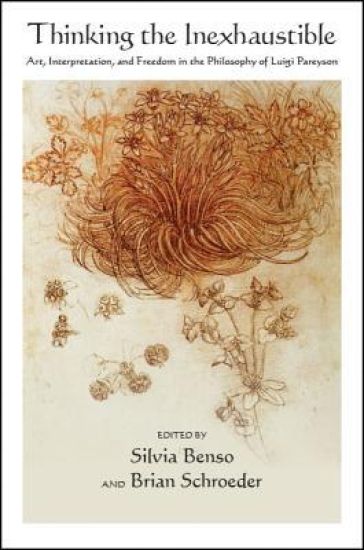
Thinking the Inexhaustible

Thinking the Inexhaustible

Dennis J. Schmidt

State University of New York Press
2019
pokkari
Essays address the major themes of Pareyson's hermeneutic philosophy in the context of his existentialist approach to personhood.What if the inexhaustible were the only mode of self-revelation of truth? The question of the inexhaustibility of truth, and its relation to being and interpretation, is the challenge posed by the philosophy of the prominent Italian thinker Luigi Pareyson (1918–1991). Art, the interpretation of truth, and the theory of being as the ontology of both inexhaustibility and freedom constitute the main themes of Pareyson's distinctive form of philosophical hermeneutics, which develops also on the basis of another fundamental concept, that of personhood understood in the radically existentialist sense of the human being. In Thinking the Inexhaustible, Silvia Benso and Brian Schroeder bring together essays devoted to Pareyson's hermeneutic philosophy by important international scholars, including well-known Italian thinkers Umberto Eco and Gianni Vattimo, who were both students of Pareyson. Pareyson's philosophy of inexhaustibility unfolds in conversation with major figures in Western intellectual history-from Croce to Valéry, Dostoevsky, and Berdyaev; from Kant to Fichte, Hegel, and German romanticism; and from Pascal to Schelling, Kierkegaard, Marcel, Jaspers, and Heidegger.
Thinking the Inexhaustible

Thinking the Inexhaustible

Dennis J. Schmidt

State University of New York Press
2018
sidottu
Essays address the major themes of Pareyson's hermeneutic philosophy in the context of his existentialist approach to personhood.What if the inexhaustible were the only mode of self-revelation of truth? The question of the inexhaustibility of truth, and its relation to being and interpretation, is the challenge posed by the philosophy of the prominent Italian thinker Luigi Pareyson (1918–1991). Art, the interpretation of truth, and the theory of being as the ontology of both inexhaustibility and freedom constitute the main themes of Pareyson's distinctive form of philosophical hermeneutics, which develops also on the basis of another fundamental concept, that of personhood understood in the radically existentialist sense of the human being. In Thinking the Inexhaustible, Silvia Benso and Brian Schroeder bring together essays devoted to Pareyson's hermeneutic philosophy by important international scholars, including well-known Italian thinkers Umberto Eco and Gianni Vattimo, who were both students of Pareyson. Pareyson's philosophy of inexhaustibility unfolds in conversation with major figures in Western intellectual history-from Croce to Valéry, Dostoevsky, and Berdyaev; from Kant to Fichte, Hegel, and German romanticism; and from Pascal to Schelling, Kierkegaard, Marcel, Jaspers, and Heidegger.
Being and Time

Being and Time

Martin Heidegger; Dennis J. Schmidt

State University of New York Press
2010
sidottu
The publication in 1927 of Martin Heidegger's magnum opus, Being and Time, signaled an intellectual event of the first order and had an impact in fields far beyond that of philosophy proper. Being and Time has long been recognized as a landmark work of the twentieth century for its original analyses of the character of philosophic inquiry and the relation of the possibility of such inquiry to the human situation. Still provocative and much disputed, Heidegger's text has been taken as the inspiration for a variety of innovative movements in fields ranging from psychoanalysis, literary theory, existentialism, ethics, hermeneutics, and theology. A work that disturbs the traditions of philosophizing that it inherits, Being and Time raises questions about the end of philosophy and the possibilities for thinking liberated from the presumptions of metaphysics.The Stambaugh translation captures the vitality of the language and thinking animating Heidegger's original text. It is also the most comprehensive edition insofar as it includes the marginal notes made by Heidegger in his own copy of Being and Time, and takes account of the many changes that he made in the final German edition of 1976. The revisions to the original translation correct some ambiguities and problems that have become apparent since the translation appeared fifteen years ago. Bracketed German words have also been liberally inserted both to clarify and highlight words and connections that are difficult to translate, and to link this translation more closely to the German text.
Lyrical and Ethical Subjects

Lyrical and Ethical Subjects

Dennis J. Schmidt

State University of New York Press
2005
pokkari
A wide-ranging attempt to develop a theory of ethical life from a hermeneutic understanding of language.Dennis J. Schmidt develops a hermeneutic theory of language that forms the starting point for thinking through the concerns of ethical life. Working from texts by Homer, Plato, Kant, Nietzsche, Heidegger, and Gadamer, this volume explores some of the ways in which we experience the fringes of language, and highlights the relation of both freedom and history to such experience. The book is also guided by the conviction that such reflections upon the limits of language can open up something decisive for the effort to address the enigmas and challenges of judgment in the realm of ethical life. Taking seriously Kant's claim in the Third Critique that aesthetic experience opens up a basis for judging that is other than that found in the language of the concept, Schmidt pursues this claim by addressing the relation of language to poetry, to music, to silence, to script, to sign language, and to painting-those experiences of language which set themselves apart from the concept. Out of the treatment of these experiences of language at its limits, the author argues that we find an opening upon the realm of ethical life that is truly beyond the calculus of good and evil. What results is an experience of radical freedom, an experience that precedes anything like a notion of freedom finding its explanation in the agency of a subject. It is here that we find the contours of what Heidegger once described as "original ethics," and experience something of the sources of ethical life.