Kirjailija
Dennis Patrick Slattery
Kirjat ja teokset yhdessä paikassa: 27 kirjaa, julkaisuja vuosilta 1999-2025, suosituimpien joukossa A Limbo of Shards. Vertaile teosten hintoja ja tarkista saatavuus suomalaisista kirjakaupoista.
27 kirjaa
Kirjojen julkaisuhaarukka 1999-2025.
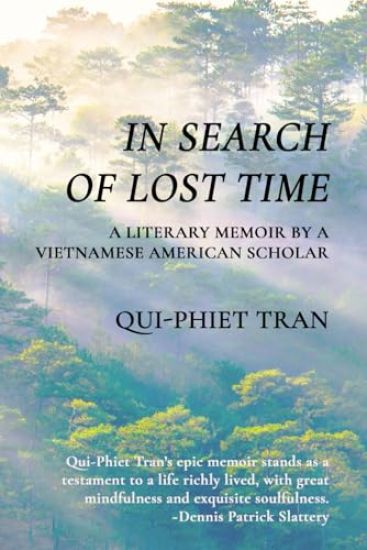
Can the past truly be recovered, or is our search for it inherently flawed?How do memory and imagination shape our understanding of history and self?What role does place play in the formation and recollection of memory?Qui-Phiet Tran's semi-autobiographical sequel to Marcel Proust's Le temps retrouv explores themes Proust left unfinished. Structured on two planes, the book presents two ways of capturing the past: a physical journey through the author's native Vietnam and an introspective search for lost time. Tran embarks on a real and imagined journey through different periods of his life and the mythical history of Vietnam, blending violent historical events with fantastical elements. Simultaneously, a circular, labyrinthine inner quest leads him into the depths of his soul, unearthing forgotten memories. As these paths converge, they weave a complex tapestry of a new past, rich in color, scent, and meaning.The theme of memory and time reaches its climax when the middle-aged protagonist revisits a beloved childhood pine forest. Exhausted halfway up the hill, like Proust's hero, he gives up his quest for lost time. Unlike Proust, however, Tran is content with his findings. He accepts the impossibility of fully recovering the past but preserves its memory through recollection and writing, choosing to bring this newfound understanding back to his life in the United States in exile.

The Practically Divine Marriage
Dennis Patrick Slattery; Geoffrey Buckley
Mandorla Books
2023
pokkari
FROM THE INTRODUCTION, BY DENNIS PATRICK SLATTERY "In all the articles, books, talks, courses, and interviews I have created, each expected something from me. My own growing awareness of the universal stories clinging to my partial, sometimes tattered plot, has dismantled barriers between myself and others. Reading and writing become generous acts of liberation from my own narrow-gauged desires and needs. In such liberation we are put in touch with a story's meaning for us now, yet always susceptible to editing to deepen an initial insight." FROM THE FOREWORD, BY ROGER C. BARNES "Still, I know Dennis, and I've learned from him. The reader of this volume will come to know and learn from him as well. What you will learn is the mystery of exploration, the exploration of an interior world of the human spirit. One will learn this world through stories and myth. Dennis is the master storyteller, and it is through stories that the myths that shape and guide us are revealed."

An Obscure Order: Reflections on Cultural Mythologies
Dennis Patrick Slattery
Mandorla Books
2020
nidottu
From the author: . A myth, I hope these essays reveal, is a manner and even a style of being present to the world's matter as well as to interior ideas and images. Behaving like a fulcrum balancing two realities-the external one I meet daily and the inner psychic world that has its own objective nature to develop and then fade as its life energy diminishes-myths are organically alive. . My own personal myth is present in the chrysalis of each of these essays. Something in the subject matter of each of them sparked my curiosity and my attraction to them, rendering them complete only when I was able to give them sufficient form to breathe on their own. Each of the thirty chapters brought me to wonder about them, to turn them around and upside-down, to see them from several perspectives, perhaps revealing their paradoxes and their ultimate purposes. The presence of myth, the energy they carry, attract my wondering about them. Seeing anew is one of the main intentions of myth; a deepened consciousness is its richest end result.
Janet Steinwedel's work with groups aims for a net increase in consciousness in the organization or community in which she is working. This is the third book in the Steinwedel Red Book Series--a series focused on the integration of Jungian psychology and executive coaching. In this book she explains her collaboration with organizations to choose a handful of leaders who will benefit from a focus on enhancing their leadership. Janet has focused on balancing the goals side of the coaching process with aspiration and inspiration in an effort to support clients on their path to individuation and wholeness. She has worked with many leaders that have been nudged out of alignment with their values and lose their passion for their work and her process is designed to bring that alignment back.In her writing she has focused on the experience of opposites including woundedness and healer, student and teacher in an effort to both deepen her personal growth and support others in their growth and development--in the movement toward wholeness. She creates safety in the group for colleagues to try new behaviors--to experiment with being in relationship. While collaboration is paramount today this relationship work is not only about the relationship with workmates, but the relationship one has with one's self.We have become a nation of strivers with a one-sided focus on greatness, she says. From one lens this is a wonderful thing, when it is out of balance it can create very dangerous leadership and consequences. The capability of observing oneself in order to be self-aware is a challenge. As soon as we try to observe our self we are no longer our self, but the self, or more correctly, the persona, we wish to be seen as. We are too often socialized to look only at our strengths and capabilities. But this is not the totality. It is not reality. It is disjointed and grandiose. And everyone suffers. Leaders who can effectively serve, guide, collaborate and be directive know their strengths and their weaknesses. They know how to build a team that supports both, providing the right balance of curiosity, experimentation and knowledge for the goals and needs of the moment. This requires, to use Jung's words, a knowledge of the times as well as a knowledge of the depths. Steinwedel sets the stage for leaders to develop by more accurately knowing their true selves through challenge to themselves and one another. They work at having empathy and compassion as well as a necessary toughness. This "emotional intelligence," popularized at the turn of the new millennium, is important to the framework of Insight Group Coaching and a natural aspect of Jungian psychology. Steinwedel presents numerous ways for leaders to develop their EQ and their engagement--modeling an approach they can take with their own employees.In his discussions about first half of life and second half of life, Jung queries, "is there perhaps a college for forty-year olds which prepares them for their coming life and its demands as the ordinary colleges introduce our young people to the knowledge of the world?" Steinwedel believes group work can be a source for that kind of development, we invite you to read this book carefully and see if you agree.
Janet Steinwedel's work with groups aims for a net increase in consciousness in the organization or community in which she is working. This is the third book in the Steinwedel Red Book Series--a series focused on the integration of Jungian psychology and executive coaching. In this book she explains her collaboration with organizations to choose a handful of leaders who will benefit from a focus on enhancing their leadership. Janet has focused on balancing the goals side of the coaching process with aspiration and inspiration in an effort to support clients on their path to individuation and wholeness. She has worked with many leaders that have been nudged out of alignment with their values and lose their passion for their work and her process is designed to bring that alignment back.In her writing she has focused on the experience of opposites including woundedness and healer, student and teacher in an effort to both deepen her personal growth and support others in their growth and development--in the movement toward wholeness. She creates safety in the group for colleagues to try new behaviors--to experiment with being in relationship. While collaboration is paramount today this relationship work is not only about the relationship with workmates, but the relationship one has with one's self.We have become a nation of strivers with a one-sided focus on greatness, she says. From one lens this is a wonderful thing, when it is out of balance it can create very dangerous leadership and consequences. The capability of observing oneself in order to be self-aware is a challenge. As soon as we try to observe our self we are no longer our self, but the self, or more correctly, the persona, we wish to be seen as. We are too often socialized to look only at our strengths and capabilities. But this is not the totality. It is not reality. It is disjointed and grandiose. And everyone suffers. Leaders who can effectively serve, guide, collaborate and be directive know their strengths and their weaknesses. They know how to build a team that supports both, providing the right balance of curiosity, experimentation and knowledge for the goals and needs of the moment. This requires, to use Jung's words, a knowledge of the times as well as a knowledge of the depths. Steinwedel sets the stage for leaders to develop by more accurately knowing their true selves through challenge to themselves and one another. They work at having empathy and compassion as well as a necessary toughness. This "emotional intelligence," popularized at the turn of the new millennium, is important to the framework of Insight Group Coaching and a natural aspect of Jungian psychology. Steinwedel presents numerous ways for leaders to develop their EQ and their engagement--modeling an approach they can take with their own employees.In his discussions about first half of life and second half of life, Jung queries, "is there perhaps a college for forty-year olds which prepares them for their coming life and its demands as the ordinary colleges introduce our young people to the knowledge of the world?" Steinwedel believes group work can be a source for that kind of development, we invite you to read this book carefully and see if you agree.

From War to Wonder: Recovering Your Personal Myth Through Homer's Odyssey
Dennis Patrick Slattery
Mandorla Books
2019
nidottu
From War to Wonder, Dennis Slattery's new book, not only explicates the beauty and power of the Odyssey, Homer's twenty-seven-hundred-year-old marvel-filled epic, it also offers a marvelous way to interact with it on a daily basis. Those who do so will be amply rewarded by finding access to the poem's myriad meanings, as well as their capacity for forging their own personal myths. Phil Cousineau, author of Once and Future Myths, and editor of The Hero's Journey: Joseph Campbell on His Life and WorkWhat a beautiful invitation this book proffers: to spend a year slowly savoring one of the great masterpieces of world literature and day-by-day discovering how it illumines and deepens your understanding of your own life. Christine Downing, author of The Goddess: Mythological Images of the Feminine and Mythopoetic Musings: 2007-2018

In this 2019 reissued collection of eighteen essays, originally inspired by the soul-deadening mandates of the "No Child Left Behind" era, Dennis Patrick Slattery and Jennifer Leigh Selig bring together master teachers who have served in the classroom for fifteen or more years, spanning elementary, high school, undergraduate, graduate, and adult education across multiple disciplines, to share their reflections on reviving the soul of learning.While the essays are historically tethered to a moment in time, one that witnesses a crisis in learning, the intention of the volume is not merely to react and critique, but rather, to imagine the present as an occasion to revive, revision, and renew the enchantment of learning.One might ask: what timeless and perennial qualities of excellence are germane to teaching and learning as they both serve the life of the imagination and further the cultivation of the soul? The answer rests in the essays themselves, repositories of wisdom by teachers with decades of experience in the classroom, whose only mandate was to speak their own truths that have informed thousands of learners young and old.

Re-Ensouling Education: Essays on the Importance of the Humanities in Schooling the Soul
Dennis Patrick Slattery; Stephen a. Aizenstat
Mandorla Books
2019
nidottu
2nd Edition: Previously published as "The Soul Does Not Specialize." This 2019 release contains a new preface by Dennis Patrick Slattery. An education in the Humanities is under attack, defunded and depreciated in academic institutions ranging from primary school through doctoral degree programs both in the United States and abroad. The emphasis is on educating students for standardized and specialized minds, at the expense of educating the whole student, which includes, as the title of this volume argues, schooling the soul. This collection brings together essays by administration, faculty, and staff from Pacifica Graduate Institute, a small educational institution located on the coast of Central California, which emphasizes the wisdom traditions in depth psychology, mythology, and the humanities. Each essay is a personal manifesto, an impassioned argument for the importance of an education in the humanities which stimulates the mind, nourishes the soul, and gives wings to the imagination.

Leaves from the World Tree: Selected Poems of Craig Deininger and Dennis Patrick Slattery
Dennis Patrick Slattery; Craig Deininger
Mandorla Books
2018
nidottu
A poem can massage us in the deepest recesses of our lives. It can call us both down into the realm of what is not visible at first glance, and through the sensate world we inhabit. These two directions form a cross, which is the crux of life itself. Dennis Patrick Slattery This volume is a testament to the imagination, and to the possibilities which can be made to exist through fortunate word-arrangements when they are generous enough to come. Craig Deininger


Bridge Work: Essays on Mythology, Literature and Psychology
Dennis Patrick Slattery
Mandorla Books
2015
nidottu
The twenty chapters in this volume are divided into Formal Essays and Cultural Essays. Both, however, explore in varying degrees the place of consilience between literature, mythology and depth psychology. The essays seek that place of analogy, or correspondence and of accord between the three bridges, the three disciplines mentioned in its subtitle. Together they amplify and extend what might best be called a psycho-poetics of myth, where mythology is understood as the mucilage or glue that holds psyche and poiesis together in one form and shape. The intention in all the essays is to invite the reader into the discussion with his/her personal myth resonating with the ideas and images present and to remember and reimagine one's own narrative through the corridors of those presented in the volume. Bridge Work then carries two meanings: it wishes to span disciplines in order to increase one's range of awareness and it wishes to create a third thing, the bridge itself, as a medium of and for expressing new insights. The hope is that the reader will come away from these twenty expressions of the relational nature of literature to psychology and mythology with a renewed sense of how interdisciplinary studies can reveal other ways of knowing not afforded the specialist inhabiting one field of thought.