Kirjojen hintavertailu. Mukana 12 155 560 kirjaa ja 12 kauppaa.

Kirjailija

Derek A. Roff

Kirjat ja teokset yhdessä paikassa: 5 kirjaa, julkaisuja vuosilta 1997-2009, suosituimpien joukossa Life History Evolution. Vertaile teosten hintoja ja tarkista saatavuus suomalaisista kirjakaupoista.

5 kirjaa

Kirjojen julkaisuhaarukka 1997-2009.

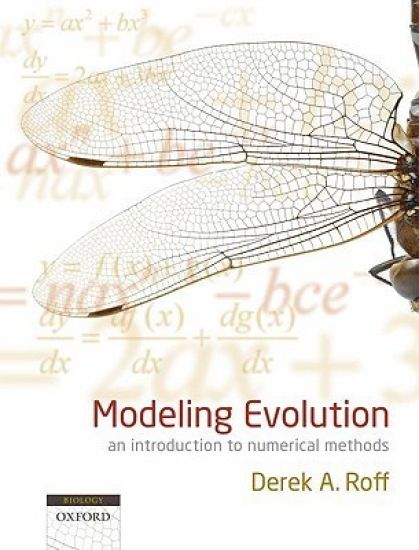
Modeling Evolution

Modeling Evolution

Derek A. Roff

Oxford University Press
2009
nidottu
Computer modeling is now an integral part of research in evolutionary biology. The advent of increased processing power in the personal computer, coupled with the availability of languages such as R, SPLUS, Mathematica, Maple, Mathcad, and MATLAB, has ensured that the development and analysis of computer models of evolution is now within the capabilities of most graduate students. However, there are two hurdles that tend to discourage students from making full use of the power of computer modeling. The first is the general problem of formulating the question and the second is its implementation using an appropriate computer language. Modeling Evolution outlines how evolutionary questions are formulated and how, in practice, they can be resolved by analytical and numerical methods (with the emphasis being on the latter). Following a general introduction to computer modeling, successive chapters describe "Fisherian" optimality models, invasibility analysis, genetic models, game theoretic models, and dynamic programming. A common chapter plan facilitates tuition and comprises an introduction (in which the general approach and methods are described) followed by a series of carefully structured scenarios that have been selected to highlight particular aspects of evolutionary modeling. Coding for each example is provided in either R or MATLAB since both of these programs are readily available and extensively used. This coding is available on the author's web site allowing easy implementation and study of the programs. Each chapter concludes with a list of exemplary papers which have been chosen on the basis of how well they explain and illustrate the techniques discussed in the chapter.
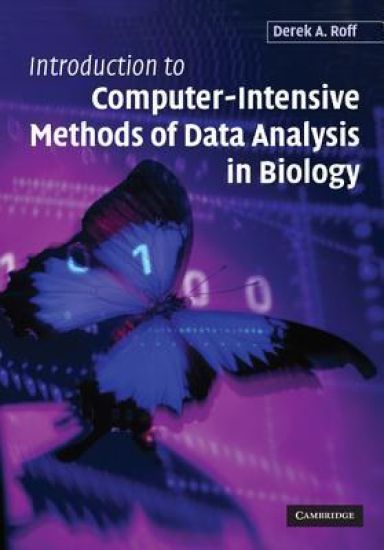
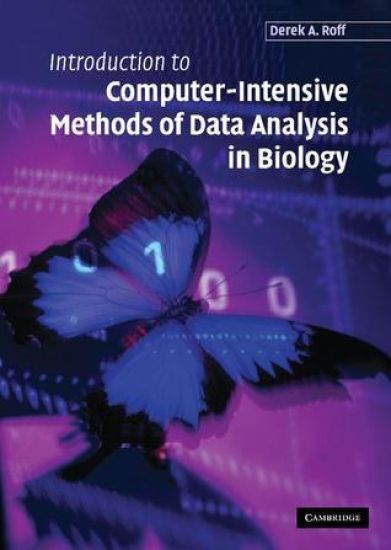
Introduction to Computer-Intensive Methods of Data Analysis in Biology
This 2006 guide to the contemporary toolbox of methods for data analysis will serve graduate students and researchers across the biological sciences. Modern computational tools, such as Maximum Likelihood, Monte Carlo and Bayesian methods, mean that data analysis no longer depends on elaborate assumptions designed to make analytical approaches tractable. These new 'computer-intensive' methods are currently not consistently available in statistical software packages and often require more detailed instructions. The purpose of this book therefore is to introduce some of the most common of these methods by providing a relatively simple description of the techniques. Examples of their application are provided throughout, using real data taken from a wide range of biological research. A series of software instructions for the statistical software package S-PLUS are provided along with problems and solutions for each chapter.
Introduction to Computer-Intensive Methods of Data Analysis in Biology
This 2006 guide to the contemporary toolbox of methods for data analysis will serve graduate students and researchers across the biological sciences. Modern computational tools, such as Maximum Likelihood, Monte Carlo and Bayesian methods, mean that data analysis no longer depends on elaborate assumptions designed to make analytical approaches tractable. These new 'computer-intensive' methods are currently not consistently available in statistical software packages and often require more detailed instructions. The purpose of this book therefore is to introduce some of the most common of these methods by providing a relatively simple description of the techniques. Examples of their application are provided throughout, using real data taken from a wide range of biological research. A series of software instructions for the statistical software package S-PLUS are provided along with problems and solutions for each chapter.
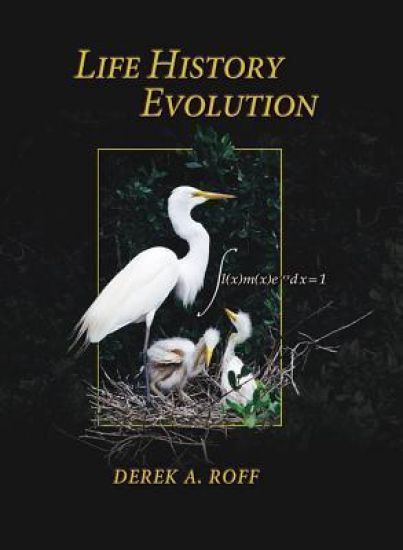
Life History Evolution

Life History Evolution

Derek A. Roff

Oxford University Press Inc
2002
nidottu
This text represents a synthetic approach to the understanding of the evolution of life history variation using the three types of environment (constant, stochastic, predictable) as the focus under which the theory is developed and tested. The theme of the book is that an understanding of evolutionary change requires analysis at both the genetic and phenotypic levels, and that the environment plays a central role in such analyses. Intended for graduate students and researchers, the book's emphasis is on assumptions and testing of models. Mathematical processes are described, but mathematical derivations are kept to a minimum. Each chapter includes a summary, and boxes provide supplementary material.
Evolutionary Quantitative Genetics

Evolutionary Quantitative Genetics

Derek A. Roff

Chapman and Hall
1997
nidottu
The impetus for this book arose out of my previous book, The Evolution of Life Histories (Roff, 1992). In that book I presented a single chapter on quanti­ tative genetic theory. However, as the book was concerned with the evolution of life histories and traits connected to this, the presence of quantitative genetic variation was an underlying theme throughout. Much of the focus was placed on optimality theory, for it is this approach that has proven to be extremely successful in the analysis of life history variation. But quantitative genetics cannot be ig­ nored, because there are some questions for which optimality approaches are inappropriate; for example, although optimality modeling can address the ques­ tion of the maintenance of phenotypic variation, it cannot say anything about genetic variation, on which further evolution clearly depends. The present book is, thus, a natural extension of the first. I have approached the problem not from the point of view of an animal or plant breeder but from that of one interested in understanding the evolution of quantitative traits in wild populations. The subject is large with a considerable body of theory: I generally present the assumptions underlying the analysis and the results, giving the relevant references for those interested in the intervening mathematics. My interest is in what quantitative genetics tells me about evolutionary processes; therefore, I have concentrated on areas of research most relevant to field studies.