Kirjojen hintavertailu. Mukana 12 595 353 kirjaa ja 12 kauppaa.
Kirjailija
Derek Haylock
Kirjat ja teokset yhdessä paikassa: 13 kirjaa, julkaisuja vuosilta 1991-2024, suosituimpien joukossa Helping Low Achievers. Vertaile teosten hintoja ja tarkista saatavuus suomalaisista kirjakaupoista.
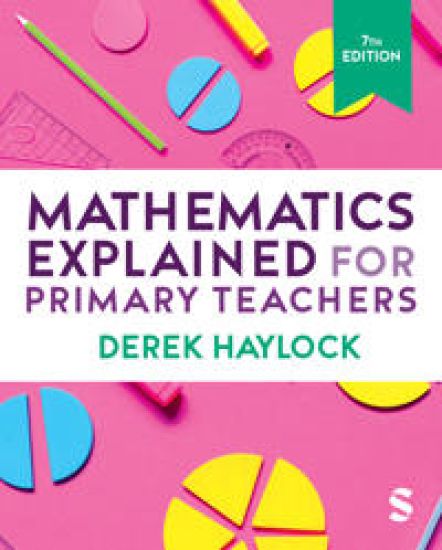
Build your confidence in the primary classroomDeepen your own mathematical subject knowledgeDiscover why generations of primary teachers have relied on Derek Haylock’s explanations of key mathematical concepts to support their understanding and strengthen their teaching This seventh edition has been fully updated to offer a broader exploration of mastery teaching, deeper connections to contemporary research and new coverage of how children learn to count. It is supported by a fantastic range of online resources including lesson plans, videos and test questions to extend your own learning.
Build your confidence in the primary classroomDeepen your own mathematical subject knowledgeDiscover why generations of primary teachers have relied on Derek Haylock’s explanations of key mathematical concepts to support their understanding and strengthen their teaching This seventh edition has been fully updated to offer a broader exploration of mastery teaching, deeper connections to contemporary research and new coverage of how children learn to count. It is supported by a fantastic range of online resources including lesson plans, videos and test questions to extend your own learning.
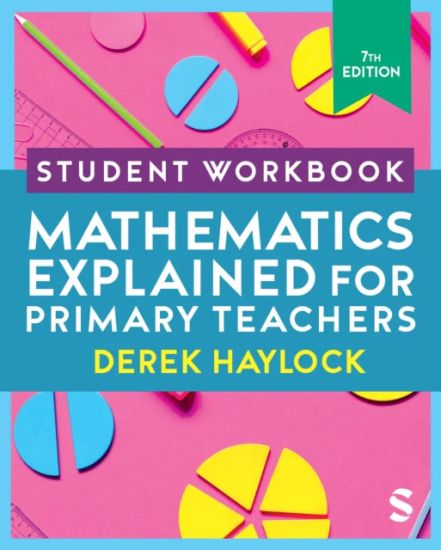
This is the perfect companion to Derek Haylock’s Mathematics Explained for Primary Teachers, 7th edition. It contains 900 questions with detailed solutions and explanatory notes. Test your knowledge of key concepts and principlesApply mathematical skills and knowledge in real-life situations and to mathematical problems and investigationsConsider how to respond to children’s errors and misunderstandings and how to evaluate different teaching approachesBe inspired to develop classroom ideas that promote understanding and mastery Use me with Haylock: Mathematics Explained for Primary Teachers, 7th edition (978-1-5296-2629-2)
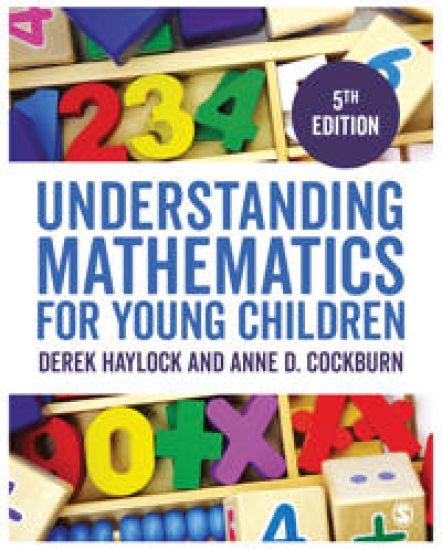
Having a deep understanding of the mathematical ideas and concepts taught in the classroom is vital as a nursery or primary school teacher. In order for children to get to grips with these concepts, trainee teachers need to be aware of how they come to interpret and understand them. Now in its 5th edition, this essential book helps trainee teachers develop their own knowledge of key mathematical ideas and concepts for the nursery and primary classroom. Now focusing specifically on ages 3-7, it also supports trainees with several age-appropriate classroom activities. As well as updates to further reading suggestions and research focuses, this revised edition includes new content on: Mastery in learning mathematicsSimple fractionsRoman numeralsMoney as a form of measurement
Having a deep understanding of the mathematical ideas and concepts taught in the classroom is vital as a nursery or primary school teacher. In order for children to get to grips with these concepts, trainee teachers need to be aware of how they come to interpret and understand them. Now in its 5th edition, this essential book helps trainee teachers develop their own knowledge of key mathematical ideas and concepts for the nursery and primary classroom. Now focusing specifically on ages 3-7, it also supports trainees with several age-appropriate classroom activities. As well as updates to further reading suggestions and research focuses, this revised edition includes new content on: Mastery in learning mathematicsSimple fractionsRoman numeralsMoney as a form of measurement
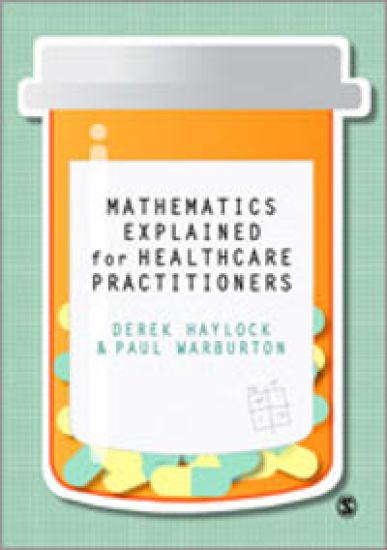
If you find mathematics a struggle, or if mathematics makes you panic - whether you're a student preparing for a calculations test, or a qualified healthcare professional - this is the book for you. Its focus is first and foremost on helping you develop a proper and lasting understanding of mathematical concepts and processes in a healthcare context, with an emphasis on developing mental strategies to reinforce your feeling for number and numerical relationships. Clear, accessible chapters take you step-by-step through specific sets of objectives, and once you feel you have fully mastered a particular mathematical process, you're encouraged to practise your skills through a range of practical examples. Each chapter also contains a 'Spot the Errors' feature designed to reflect the busy, pressurised healthcare environment. Written by Derek Haylock, a best-selling mathematics educator, and Paul Warburton, co-ordinator of the Non-Medical Prescribing programme at Edge Hill University, the book is directly linked to the NMC's competencies and will give you the confidence to perform the safe, error-free calculations required of all healthcare professionals.
If you find mathematics a struggle, or if mathematics makes you panic - whether you're a student preparing for a calculations test, or a qualified healthcare professional - this is the book for you. Its focus is first and foremost on helping you develop a proper and lasting understanding of mathematical concepts and processes in a healthcare context, with an emphasis on developing mental strategies to reinforce your feeling for number and numerical relationships. Clear, accessible chapters take you step-by-step through specific sets of objectives, and once you feel you have fully mastered a particular mathematical process, you're encouraged to practise your skills through a range of practical examples. Each chapter also contains a 'Spot the Errors' feature designed to reflect the busy, pressurised healthcare environment. Written by Derek Haylock, a best-selling mathematics educator, and Paul Warburton, co-ordinator of the Non-Medical Prescribing programme at Edge Hill University, the book is directly linked to the NMC's competencies and will give you the confidence to perform the safe, error-free calculations required of all healthcare professionals.
Covering the key principles and concepts in the teaching and learning of mathematics in primary schools, this text provides trainee and practising teachers with a quick and easy reference to what they need to know for their course, and in the classroom. The entries are arranged alphabetically, and each contains a brief definition, followed by an explanation and discussion, practical examples and annotated suggestions for further reading. Examples of the wide-ranging material include: Anxiety about mathematics; Assessment for Learning; Cognitive conflict; Concept learning; Creativity in mathematics; Differentiation; Equivalence; Explanation; Investigation; Low attainment; Making connections; Meaningful context; Mental calculation; Numeracy; Play as a context for learning mathematics; Problem-solving; Questioning; Talk.
Covering the key principles and concepts in the teaching and learning of mathematics in primary schools, this text provides trainee and practising teachers with a quick and easy reference to what they need to know for their course, and in the classroom. The entries are arranged alphabetically, and each contains a brief definition, followed by an explanation and discussion, practical examples and annotated suggestions for further reading. Examples of the wide-ranging material include: Anxiety about mathematics; Assessment for Learning; Cognitive conflict; Concept learning; Creativity in mathematics; Differentiation; Equivalence; Explanation; Investigation; Low attainment; Making connections; Meaningful context; Mental calculation; Numeracy; Play as a context for learning mathematics; Problem-solving; Questioning; Talk.
`Comprises a very helpful resource for students who are obliged to succeed in passing the QTS numeracy test in order to gain QTS. It should provide a valuable resource for students to increase their confidence as well as their competence' - Mathematics in Schools `The stated aim of this book is to help teacher-trainees prepare for the numeracy test all new entrants to the profession now have to pass. Any trainee worried about the test should find this a useful resource…. As in similar books by Derek Haylock, the mathematical content is written in a clear and accessible style' - Mike Askew, Times Educational Supplement Quotes from the author's students `The book is excellent. I think it will present students and others with a valuable resource, not only to help with the QTS test, but also for teaching. I could see myself using it on "dip-in-as-necessary" basis'. `The practice questions were really helpful for checking and consolidating learning. The material was useful for the QTS test, particularly the mental calculations. Many thanks for letting me work through your sample material. I cannot begin to tell you how much more I have learnt! This has definitely made me feel more confident about passing the QTS numeracy skills test! I have definitely demonstrated to myself from this material that my ability to complete calculations mentally has increased. I can calculate faster and with some accuracy now!' `Comprises a very helpful resource for students who are obliged to succeed in passing the QTS numeracy test in order to gain QTS. It should provide a valuable resource for students to increase their confidence as well as their competence' - Mathemtics in Schools This book is designed to help teacher-trainees prepare for the Qualified Teaching Standards numeracy test that must now be passed by all entrants to the teaching profession. The author focuses especially on weaknesses in numeracy often observed in adults, and in teacher-trainees in particular. As far as possible, this mathematics is set in the professional context of teaching, drawing on statistics and other data from individual schools, the DfEE and the Qualifications and Curriculum Agency (QCA).
`Comprises a very helpful resource for students who are obliged to succeed in passing the QTS numeracy test in order to gain QTS. It should provide a valuable resource for students to increase their confidence as well as their competence' - Mathematics in Schools `The stated aim of this book is to help teacher-trainees prepare for the numeracy test all new entrants to the profession now have to pass. Any trainee worried about the test should find this a useful resource…. As in similar books by Derek Haylock, the mathematical content is written in a clear and accessible style' - Mike Askew, Times Educational Supplement Quotes from the author's students `The book is excellent. I think it will present students and others with a valuable resource, not only to help with the QTS test, but also for teaching. I could see myself using it on "dip-in-as-necessary" basis'. `The practice questions were really helpful for checking and consolidating learning. The material was useful for the QTS test, particularly the mental calculations. Many thanks for letting me work through your sample material. I cannot begin to tell you how much more I have learnt! This has definitely made me feel more confident about passing the QTS numeracy skills test! I have definitely demonstrated to myself from this material that my ability to complete calculations mentally has increased. I can calculate faster and with some accuracy now!' `Comprises a very helpful resource for students who are obliged to succeed in passing the QTS numeracy test in order to gain QTS. It should provide a valuable resource for students to increase their confidence as well as their competence' - Mathemtics in Schools This book is designed to help teacher-trainees prepare for the Qualified Teaching Standards numeracy test that must now be passed by all entrants to the teaching profession. The author focuses especially on weaknesses in numeracy often observed in adults, and in teacher-trainees in particular. As far as possible, this mathematics is set in the professional context of teaching, drawing on statistics and other data from individual schools, the DfEE and the Qualifications and Curriculum Agency (QCA).
`This is a super, practical book on a neglected area of concern' - Times Education Supplement This book for student-teachers and teachers is concerned with the problems of teaching primary and middle school children whose attainment in mathematics compares unfavourably with that of their contemporaries. Drawing on his classroom-based research with low-attaining children in the age range of eight to 12 years years, the author discusses the factors associated with their low attainment and proposes a strategy for teaching them.