

Kirjailija
Derek Hirst
Kirjat ja teokset yhdessä paikassa: 7 kirjaa, julkaisuja vuosilta 1999-2015, suosituimpien joukossa Andrew Marvell, Orphan of the Hurricane. Vertaile teosten hintoja ja tarkista saatavuus suomalaisista kirjakaupoista.
7 kirjaa
Kirjojen julkaisuhaarukka 1999-2015.
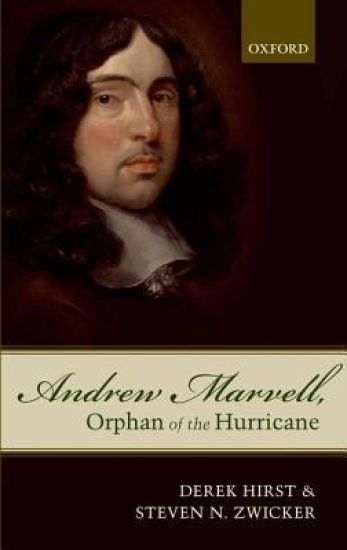
Andrew Marvell, Orphan of the Hurricane
Derek Hirst; Steven N. Zwicker
Oxford University Press
2012
sidottu
Andrew Marvell, Orphan of the Hurricane studies the poetry and polemics of one of the greatest of early modern writers, a poet of immense lyric talent and political importance. The book situates these writings and this writer within the patronage networks and political upheavals of mid seventeenth-century England. Derek Hirst and Steven Zwicker track Marvell's negotiations among personalities and events; explores his idealizations, attachments, and subversions, and speculate on the meaning of the narratives that he told of himself within his writings -- what they call his 'imagined life'. Hirst and Zwicker draw the figure of an imagined life from the repeated traces Marvell left of lyric yearning and satiric anger, and suggest how these were rooted both in the body and in the imagination. The book sheds new light on some of Marvell's most familiar poems -- 'Upon Appleton House', 'The Garden',' To His Coy Mistress', and 'Horatian Ode' -- but at its centre is an extended reading of Marvell's 'The unfortunate Lover', his least familiar and surely most mysterious lyric, and his most sustained narrative of the self. By attending to the lyric, the polemical, and the parliamentary careers together, this book offers a reading, for the first time, of Marvell and his writings as an interpretable whole.
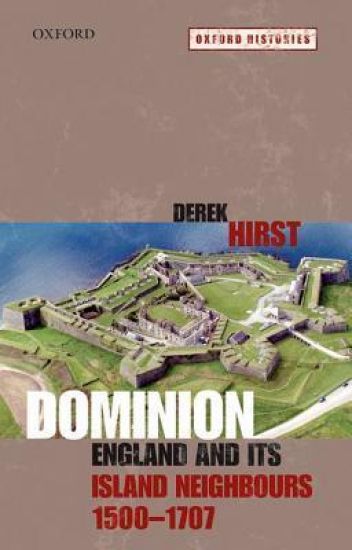
Dominion: England and its Island Neighbours c.1500-1707 is a rich narrative history of England's increasing dominance over the cluster of territories that became known as the British Isles. It brings alive a period and a geography remarkable for repeated religious wars and a long colonial struggle as well as for London's emergence as a political, economic, and cultural hub. While Dominion concentrates on English actions and purposes, it pays careful attention to interactions in Ireland, Scotland, and Wales, and to the pressures of European competition. It does so by drawing on the vibrant recent scholarship of the separate nations and considerable primary research, and also on the language of the actors, from Henry VIII and Elizabeth, Spenser and Shakespeare, to Oliver Cromwell and John Milton. Its purpose is not just to explore English understandings and ideologies, but their consequences, both creative and disruptive. The landmarks of the Tudor and Stuart centuries may be familiar: the creation of Ireland as a subordinate but fractured kingdom, the unification of Wales with England, the unstable union of the crowns of England and Scotland, the bloody conquest and reconquest of Ireland, and the formation of the United Kingdom amid fierce rivalry with France. By interweaving these strands as a single coherent story of English reactions and projections, this book opens up a new understanding of this formative period in the history of these islands - and also of its fractious legacy.

Dominion: England and its Island Neighbours c.1500-1707 is a rich narrative history of England's increasing dominance over the cluster of territories that became known as the British Isles. It brings alive a period and a geography remarkable for repeated religious wars and a long colonial struggle as well as for London's emergence as a political, economic, and cultural hub. While Dominion concentrates on English actions and purposes, it pays careful attention to interactions in Ireland, Scotland, and Wales, and to the pressures of European competition. It does so by drawing on the vibrant recent scholarship of the separate nations and considerable primary research, and also on the language of the actors, from Henry VIII and Elizabeth, Spenser and Shakespeare, to Oliver Cromwell and John Milton. Its purpose is not just to explore English understandings and ideologies, but their consequences, both creative and disruptive. The landmarks of the Tudor and Stuart centuries may be familiar: the creation of Ireland as a subordinate but fractured kingdom, the unification of Wales with England, the unstable union of the crowns of England and Scotland, the bloody conquest and reconquest of Ireland, and the formation of the United Kingdom amid fierce rivalry with France. By interweaving these strands as a single coherent story of English reactions and projections, this book opens up a new understanding of this formative period in the history of these islands - and also of its fractious legacy.
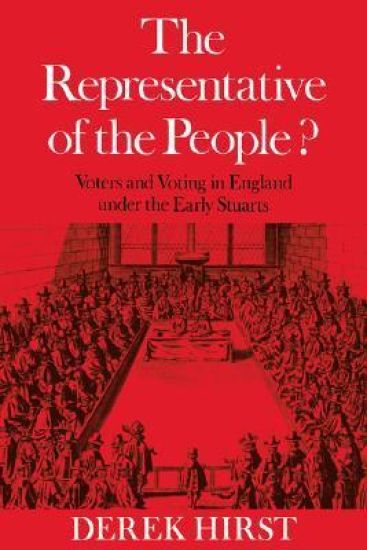
Contested elections became a fact of political life for the first time in early-17th-century England as the gentry pressed for seats in a parliament which was growing increasingly important. Dr Hirst examines politics from the point of view of the ordinary man before the Civil War. He asks what an election and being represented meant: what kind of person voted; how did he vote and why; and what might he gain by it. England was not yet shaped in the oligarchic mould that characterised it in the 18th century, and a striking feature of this period was the extent to which parliamentary politics was open to a large social group. Inflation and peasant survival on the land, and resistance to oligarchy in the boroughs (supported by the parliamentary gentry seeking popular allies for their own political battles), produced a broad rural and urban electorate. The need for votes also ensured that members were relatively responsive to, and representative of, pressures from below. In arriving at this verdict, Dr Hirst challenges the notion that politics in this period displayed a strong sense of direction. At all levels, whether in the means of control employed by the magnates, in electoral procedure, or in voting behaviour, uncertainty was manifest, for contests were unprecedented.
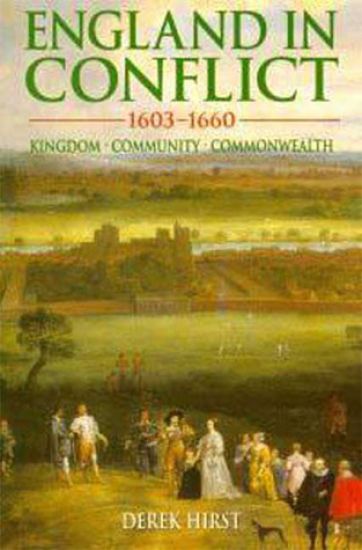
This book, by one of the foremost living historians of seventeenth-century England, is a wholesale revision of his classic "Authority and Conflict, England 1603-1658" (1986). Hirst has drawn on a decade of research that has appeared since the original book to produce a wholly fresh work. Centered around ambiguities of community in early modern England, the text enlivens debates over revisionism, puritanism, the church, and witchcraft while at the same time making sense of the complexities of crisis and continuity.