Kirjojen hintavertailu. Mukana 12 595 353 kirjaa ja 12 kauppaa.

Kirjailija

Derek Hook

Kirjat ja teokset yhdessä paikassa: 9 kirjaa, julkaisuja vuosilta 2011-2025, suosituimpien joukossa Darkest Before the Dawn. Vertaile teosten hintoja ja tarkista saatavuus suomalaisista kirjakaupoista.

9 kirjaa

Kirjojen julkaisuhaarukka 2011-2025.

Fanon, Psychoanalysis, and Critical Decolonial Psychology
This groundbreaking book examines the psychological dimension of decolonial thought in reference to foundational texts. Previously published as A Critical Psychology of the Postcolonial, this new edition foregrounds the central role of Fanon’s psychology.Highlighting the contributions of anti-colonial authors to the theorization of racism and oppression, the book demonstrates the pertinence of postcolonial and decolonial thought for critical social psychology and psychoanalysis via an investigation of a series of key topics. It explores the psychology of embodiment and racialization, resistance strategies to oppression, "extra-discursive" facets of racism, the phobogenic and sexual dimensions of anti-Blackness, and the roles of desire, fantasy, and unconscious in ideologies of racism. The book makes a distinctive contribution through discussing the work of authors drawn from anti-apartheid, psychoanalytic, and critical social theory traditions, including Steve Biko, J.M. Coetzee, Frantz Fanon, Julia Kristeva, Chabani Manganyi, and Slavoj Zizek. This second edition continues to showcase a crucial set of critical resources for an anti-racist (decolonial) agenda, and is fully updated with new discussion, references, and images, with a new chapter on desire, fantasy, and apartheid ideology to strengthen the book’s engagement with apartheid racism.This is an invaluable text not only for students of critical social psychology, psychoanalysis, and sociology, but for students enrolled in courses on race, racism, or decolonial studies. It will also appeal to postgraduates, academics, and anyone interested in psychoanalysis in relation to societal and political issues.

Fanon, Psychoanalysis, and Critical Decolonial Psychology
This groundbreaking book examines the psychological dimension of decolonial thought in reference to foundational texts. Previously published as A Critical Psychology of the Postcolonial, this new edition foregrounds the central role of Fanon’s psychology.Highlighting the contributions of anti-colonial authors to the theorization of racism and oppression, the book demonstrates the pertinence of postcolonial and decolonial thought for critical social psychology and psychoanalysis via an investigation of a series of key topics. It explores the psychology of embodiment and racialization, resistance strategies to oppression, "extra-discursive" facets of racism, the phobogenic and sexual dimensions of anti-Blackness, and the roles of desire, fantasy, and unconscious in ideologies of racism. The book makes a distinctive contribution through discussing the work of authors drawn from anti-apartheid, psychoanalytic, and critical social theory traditions, including Steve Biko, J.M. Coetzee, Frantz Fanon, Julia Kristeva, Chabani Manganyi, and Slavoj Zizek. This second edition continues to showcase a crucial set of critical resources for an anti-racist (decolonial) agenda, and is fully updated with new discussion, references, and images, with a new chapter on desire, fantasy, and apartheid ideology to strengthen the book’s engagement with apartheid racism.This is an invaluable text not only for students of critical social psychology, psychoanalysis, and sociology, but for students enrolled in courses on race, racism, or decolonial studies. It will also appeal to postgraduates, academics, and anyone interested in psychoanalysis in relation to societal and political issues.
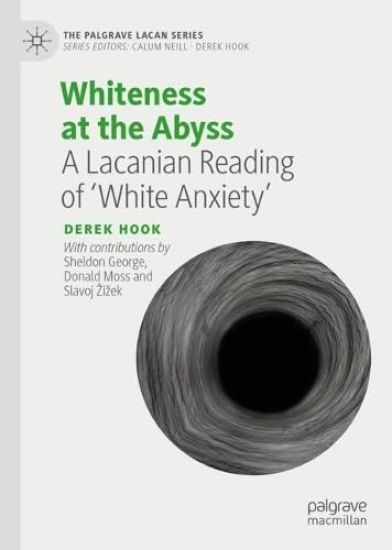
Whiteness at the Abyss

Whiteness at the Abyss

Derek Hook; Sheldon George

Springer International Publishing AG
2025
sidottu
‘Whiteness’ is an omnipresent term within research on race and racism. This book differs from existing conceptualizations by adopting a psychoanalytic line of approach and by directing its attention to a particular socio-historical instantiation of whiteness—the investments, fantasies and fears apparent within (post) apartheid South African contexts. It foregrounds the notion of ‘white anxiety’, which is conceptualized not only via notions of psychical temporality, but with reference to the dystopian visions of the future, ideas of inter-generational guilt, and fantasies of demise. To posit an imagined ‘end to whiteness’ is not, of course, an uncontroversial gesture; the closing section of the book surveys the key themes—antisemitism, white Nationalism, the trope of the race traitor—in online attacks the author was subjected to. This compelling work will appeal to all those with an interest in psychoanalytic approaches to race and racism, and to anyone working in the areas of critical race and whiteness studies.
Darkest Before the Dawn

Darkest Before the Dawn

Derek Hook; Leswin Laubscher; Robert Sobukwe

WITS UNIVERSITY PRESS
2024
sidottu
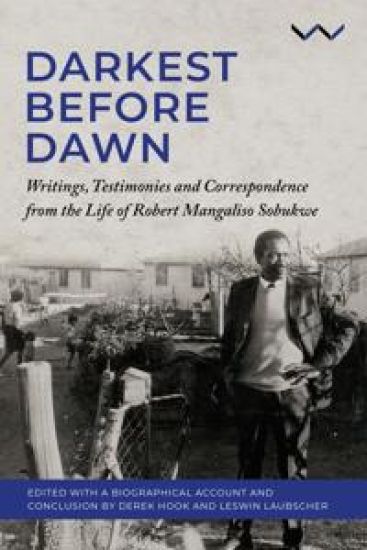
A collection of Robert Sobukwe's political writings, speeches and court testimonies supplemented by an account of his years in Kimberley following release from Robben Island. There are several accounts of Robert Sobukwe's courageous role in contesting South Africa's system of apartheid and of his incarceration on Robben Island after the Anti-Pass Campaign that led to the tragic events of Sharpeville in March 1960. Far less attention has been paid to the years the leader of the Pan-Africanist Congress spent in Kimberley, between 1969–1978, after his release from the Island. Darkest Before Dawn, the follow-up to Lie on Your Wounds: The Prison Correspondence of Robert Mangaliso Sobukwe, captures the story of the post-prison years of Sobukwe's life. This latest compilation complete with a biographical narrative by the editors and enriched with images from Sobukwe's life in this period of his life demonstrates the many challenges Sobukwe faced as well as his continued political resolve to fight for an end to apartheid. This is captured in the many meetings he had in spite of banning orders and letters he exchanged with friends and admirers, including the celebrated novelist Bessie Head whose letters to Sobukwe are published here for the first time. Sobukwe continued to meet political allies, such as Black Consciousness leader Steve Biko, he pursued a legal career and played host to international visitors. The portrait of Sobukwe that emerges is that of a highly ethical man, a figure of dignity and fortitude, and a wise elder whose commitment to the people of Africa and to the vision of Pan-Africanism who remained undeterred, despite his being forced to live, in his final years, under near impossible conditions. To do justice to Sobukwe's legacy, his intellectual contribution and his unfailing desire to pursue liberation for the African people, we need to view his biography against the backdrop of his words. Darkest Before Dawn includes a definitive collection of his political writings, speeches, unpublished court testimonies, interviews with Gail Gerhart and Joe Thloloe, and expansive annotations by the compilers. The book ends with a reflective essay which highlights the ongoing pertinence of Sobukwe's legacy.
Darkest Before the Dawn

Darkest Before the Dawn

Derek Hook; Leswin Laubscher; Robert Sobukwe

WITS UNIVERSITY PRESS
2024
pokkari
A collection of Robert Sobukwe's political writings, speeches and court testimonies supplemented by an account of his years in Kimberley following release from Robben Island. There are several accounts of Robert Sobukwe's courageous role in contesting South Africa's system of apartheid and of his incarceration on Robben Island after the Anti-Pass Campaign that led to the tragic events of Sharpeville in March 1960. Far less attention has been paid to the years the leader of the Pan-Africanist Congress spent in Kimberley, between 1969–1978, after his release from the Island. Darkest Before Dawn, the follow-up to Lie on Your Wounds: The Prison Correspondence of Robert Mangaliso Sobukwe, captures the story of the post-prison years of Sobukwe's life. This latest compilation complete with a biographical narrative by the editors and enriched with images from Sobukwe's life in this period of his life demonstrates the many challenges Sobukwe faced as well as his continued political resolve to fight for an end to apartheid. This is captured in the many meetings he had in spite of banning orders and letters he exchanged with friends and admirers, including the celebrated novelist Bessie Head whose letters to Sobukwe are published here for the first time. Sobukwe continued to meet political allies, such as Black Consciousness leader Steve Biko, he pursued a legal career and played host to international visitors. The portrait of Sobukwe that emerges is that of a highly ethical man, a figure of dignity and fortitude, and a wise elder whose commitment to the people of Africa and to the vision of Pan-Africanism who remained undeterred, despite his being forced to live, in his final years, under near impossible conditions. To do justice to Sobukwe's legacy, his intellectual contribution and his unfailing desire to pursue liberation for the African people, we need to view his biography against the backdrop of his words. Darkest Before Dawn includes a definitive collection of his political writings, speeches, unpublished court testimonies, interviews with Gail Gerhart and Joe Thloloe, and expansive annotations by the compilers. The book ends with a reflective essay which highlights the ongoing pertinence of Sobukwe's legacy.
Six Moments in Lacan

Six Moments in Lacan

Derek Hook

Routledge
2017
sidottu
Many first-time readers of Jacques Lacan come to his work via psychology, a discipline that Lacan was notoriously antagonistic toward. Six Moments in Lacan takes up the dual challenge of introducing Lacanian psychoanalysis to an audience interested in psychology, while also stressing the fundamental differences between the two disciplines. Punctuated by lively examples, Six Moments in Lacan demonstrates the distinctive value of Lacanian concepts in approaching afresh topics such as communication, identity, otherness and inter-subjectivity.Avoiding the jargon and wilful obscurity that so often accompanies expositions of Lacan’s psychoanalytic theories, this book puts Lacanian ideas to work in practical and illuminating ways. A handful of concepts, draw from distinct moments in Lacan’s teaching, are contextualized and explained, and applied to the task of exploring the ‘psychological’ and unconscious dimensions of everyday life. Notions such as the ‘big Other’, ‘full’ versus ‘empty’ speech, logical time, ‘imaginary’ and ‘symbolic’ identification, and the idea of ‘the master signifier’ are brought to life via popular cultural references. Revitalizing several Freudian and Lacanian concepts for everyday use, Six Moments in Lacan asks – and answers – a series of compelling questions: Why is it that each instance of speech implies a listener? Why is the notion of subjectivity inadequate when it comes to the ‘trans-subjective’ nature of language? Is it possible to elaborate a ‘non-psychological’ theory of identification? Why is a Lacanian approach to ‘the subject’ so at odds with models proposed by psychology?Six Moments in Lacan provides an accessible and highly engaging introduction to Lacan and Lacanian psychoanalysis, aimed at early practitioners and students in psychoanalysis, psychotherapy and those studying upper undergraduate and postgraduate level psychology.
Six Moments in Lacan

Six Moments in Lacan

Derek Hook

Routledge
2017
nidottu
Many first-time readers of Jacques Lacan come to his work via psychology, a discipline that Lacan was notoriously antagonistic toward. Six Moments in Lacan takes up the dual challenge of introducing Lacanian psychoanalysis to an audience interested in psychology, while also stressing the fundamental differences between the two disciplines. Punctuated by lively examples, Six Moments in Lacan demonstrates the distinctive value of Lacanian concepts in approaching afresh topics such as communication, identity, otherness and inter-subjectivity.Avoiding the jargon and wilful obscurity that so often accompanies expositions of Lacan’s psychoanalytic theories, this book puts Lacanian ideas to work in practical and illuminating ways. A handful of concepts, draw from distinct moments in Lacan’s teaching, are contextualized and explained, and applied to the task of exploring the ‘psychological’ and unconscious dimensions of everyday life. Notions such as the ‘big Other’, ‘full’ versus ‘empty’ speech, logical time, ‘imaginary’ and ‘symbolic’ identification, and the idea of ‘the master signifier’ are brought to life via popular cultural references. Revitalizing several Freudian and Lacanian concepts for everyday use, Six Moments in Lacan asks – and answers – a series of compelling questions: Why is it that each instance of speech implies a listener? Why is the notion of subjectivity inadequate when it comes to the ‘trans-subjective’ nature of language? Is it possible to elaborate a ‘non-psychological’ theory of identification? Why is a Lacanian approach to ‘the subject’ so at odds with models proposed by psychology?Six Moments in Lacan provides an accessible and highly engaging introduction to Lacan and Lacanian psychoanalysis, aimed at early practitioners and students in psychoanalysis, psychotherapy and those studying upper undergraduate and postgraduate level psychology.
A Critical Psychology of the Postcolonial
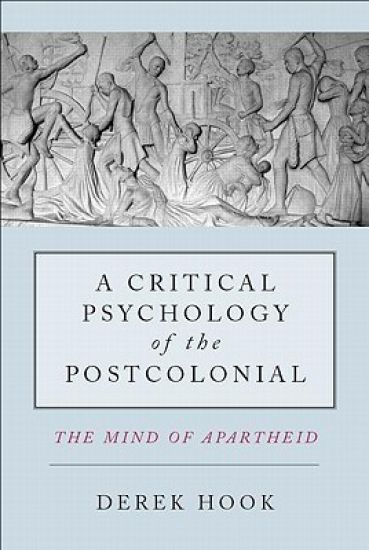
An oft-neglected element of postcolonial thought is the explicitly psychological dimension of many of its foundational texts. This unprecedented volume explores the relation between these two disciplinary domains by treating the work of a variety of anti-colonial authors as serious psychological contributions to the theorization of racism and oppression. This approach demonstrates the pertinence of postcolonial thought for critical social psychology and opens up novel perspectives on a variety of key topics in social psychology. These include: The psychology of embodiment and racializationResistance strategies to oppression'Extra-discursive’ facets of racismThe unconscious dimension of stereotypesThe intersection of psychological and symbolic modalities of powerIn addition, the book makes a distinctive contribution to the field of postcolonial studies by virtue of its eclectic combination of authors drawn from anti-apartheid, psychoanalytic and critical social theory traditions, including Homi Bhabha, Steve Biko, J.M. Coetzee, Frantz Fanon, Julia Kristeva, Chabani Manganyi and Slavoj Zizek. The South African focus serves to emphasize the ongoing historical importance of the anti-apartheid struggle for today’s globalized world.A Critical Psychology of the Postcolonial is an invaluable text for social psychology and sociology students enrolled in courses on racism or cultural studies. It will also appeal to postgraduates, academics and anyone interested in psychoanalysis in relation to societal and political issues.
A Critical Psychology of the Postcolonial
An oft-neglected element of postcolonial thought is the explicitly psychological dimension of many of its foundational texts. This unprecedented volume explores the relation between these two disciplines by treating the work of a variety of anti-colonial authors as serious psychological contributions to the theorization of racism and oppression. This approach demonstrates the pertinence of postcolonial thought for critical social psychology and opens up novel perspectives on a variety of key topics in social psychology. These include: the psychology of embodiment and racializationresistance strategies to oppression'extra-discursive’ facets of racismthe unconscious dimension of stereotypesthe intersection of psychological and symbolic modalities of power.In addition, the book makes a distinctive contribution to the field of postcolonial studies by virtue of its eclectic combination of authors drawn from anti-apartheid, psychoanalytic and critical social theory traditions, including Homi Bhabha, Steve Biko, J.M. Coetzee, Frantz Fanon, Julia Kristeva, Chabani Manganyi and Slavoj Zizek. The South African focus serves to emphasize the ongoing historical importance of the anti-apartheid struggle for today’s globalized world.A Critical Psychology of the Postcolonial is an invaluable text for social psychology and sociology students enrolled in courses on racism or cultural studies. It will also appeal to postgraduates, academics and anyone interested in psychoanalysis in relation to societal and political issues.