Kirjojen hintavertailu. Mukana 12 390 323 kirjaa ja 12 kauppaa.

Kirjailija

Derek Leebaert

Kirjat ja teokset yhdessä paikassa: 5 kirjaa, julkaisuja vuosilta 2003-2023, suosituimpien joukossa The World After the War. Vertaile teosten hintoja ja tarkista saatavuus suomalaisista kirjakaupoista.

5 kirjaa

Kirjojen julkaisuhaarukka 2003-2023.

Unlikely Heroes: Franklin Roosevelt, His Four Lieutenants, and the World They Made
"Masterful." --The Guardian "Propulsive." --The Wall Street Journal"Leebaert has done the near impossible--crafted a fresh and challenging portrait of the man and his inner circle."-- Richard Norton Smith, author of An Uncommon Man, former director of the Hoover, Eisenhower, Reagan, and Ford presidential libraries. "A fascinating and absorbing analysis of FDR's brilliantly chosen team of four courageous and creative men and women."--Susan Dunn, author of 1940: FDR, Willkie, Lindbergh, Hitler--the Election Amid the Storm, Massachusetts Professor of Humanities, Williams College. Drawing on new materials, Unlikely Heroes constructs an entirely fresh understanding of FDR and his presidency by spotlighting the powerful, equally wounded figures whom he raised up to confront the Depression, then to beat the Axis. Only four people served at the top echelon of President Franklin Roosevelt's Administration from the frightening early months of spring 1933 until he died in April 1945, on the cusp of wartime victory. These lieutenants composed the tough, constrictive, long-term core of government. They built the great institutions being raised against the Depression, implemented the New Deal, and they were pivotal to winning World War II. Yet, in their different ways, each was as wounded as the polio-stricken titan. Harry Hopkins, Harold Ickes, Frances Perkins, and Henry Wallace were also strange outsiders. Up to 1933, none would ever have been considered for high office. Still, each became a world figure, and it would have been exceedingly difficult for Roosevelt to transform the nation without them. By examining the lives of these four, a very different picture emerges of how Americans saved their democracy and rescued civilization overseas. Many of the dangers that they all overcame are troublingly like those America faces today.
The World After the War

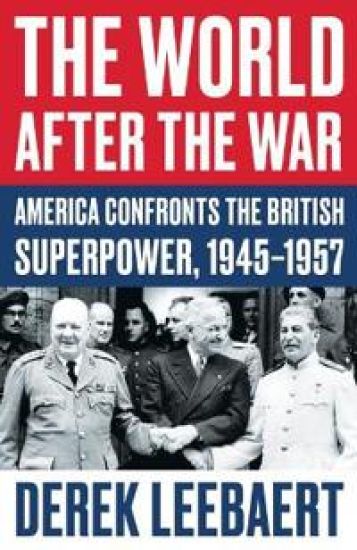
The World After the War

Derek Leebaert

Oneworld Publications
2020
nidottu
One of the great myths of the twentieth century is that after the Second World War Britain simply relinquished its power and America quickly embraced its worldwide political and military commitments. Instead the two allies improvised an uneasy, shifting partnership for twelve long years while most of western Europe lay in turmoil and Russia grew more aggressive. But in 1957 Washington issued a ‘declaration of independence’ from British authority. It was then that everything changed, and America assumed leadership of the new world order just taking shape. Derek Leebaert spins a riveting global narrative of Britain as the original superpower and shows why the Americans kept believing it to be indispensable. It’s the story of secret ties, diplomatic quarrels and military interventions that casts political giants Churchill, Truman, Eisenhower and Johnson in a new light. In a volatile world of decolonisation, a uniting Europe and the Suez Crisis, shrewd men in London were leveraging the empire’s long-established resources and influence to maintain their grip on power. The enduring notion of a special relationship, rising tensions with Russia and China, and the sources of much of the world’s turmoil can’t be understood without knowing what really occurred.
Grand Improvisation: America Confronts the British Superpower, 1945-1957
A new understanding of the post World War II era, showing what occurred when the British Empire wouldn't step aside for the rising American superpower--with global insights for today. An enduring myth of the twentieth century is that the United States rapidly became a superpower in the years after World War II, when the British Empire--the greatest in history--was too wounded to maintain a global presence. In fact, Derek Leebaert argues in Grand Improvisation, the idea that a traditionally insular United States suddenly transformed itself into the leader of the free world is illusory, as is the notion that the British colossus was compelled to retreat. The United States and the U.K. had a dozen abrasive years until Washington issued a "declaration of independence" from British influence. Only then did America explicitly assume leadership of the world order just taking shape. Leebaert's character-driven narrative shows such figures as Churchill, Truman, Eisenhower, and Kennan in an entirely new light, while unveiling players of at least equal weight on pivotal events. Little unfolded as historians believe: the Truman Doctrine and the Marshall Plan; the Korean War; America's descent into Vietnam. Instead, we see nonstop U.S. improvisation until America finally lost all caution and embraced obligations worldwide, a burden we bear today. Understanding all of this properly is vital to understanding the rise and fall of superpowers, why we're now skeptical of commitments overseas, how the Middle East plunged into disorder, why Europe is fracturing, what China intends--and the ongoing perils to the U.S. world role.
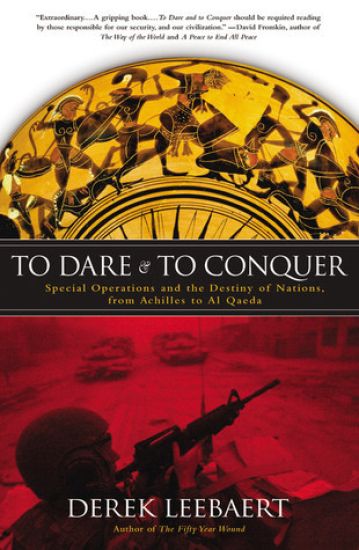
To Dare and to Conquer

To Dare and to Conquer

Derek Leebaert

Back Bay Books
2007
pokkari
In the tradition of Guns, Germs, and Steel, Leebaert tells the stories of small forces that have triumphed over vastly larger ones and changed the course of history -- from the Trojan Horse to Al Qaeda. Maps and charts.
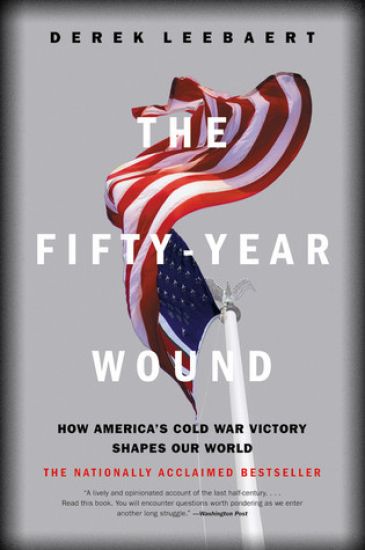
The Fifty-Year Wound

The Fifty-Year Wound

Derek Leebaert

Back Bay Books
2003
pokkari
The Fifty-Year Wound is the first cohesively integrated history of the Cold War, one replete with important lessons for today. Drawing upon literature, strategy, biography, and economics -- plus an inside perspective from the intelligence community -- Derek Leebaert explores what Americans sacrificed at the same time that they achieved the longest great-power peace since Rome fell. Why did they commit so much in wealth and opportunity with so little sustained complaint? Why did the conflict drag on for decades? What did the Cold War do to the country, and how? What was lost while victory was gained? Leebaert has uncovered an astonishing array of never-published documents and information, including major revelations about American covert operations and Soviet military activities. He has found, in the shadows of one of this century's great, epic stories, the sort of details and explanations that hit with the force of a lightning bolt and will change forever the way we think about our past.