Kirjojen hintavertailu. Mukana 12 390 323 kirjaa ja 12 kauppaa.

Kirjailija

Derek Matravers

Kirjat ja teokset yhdessä paikassa: 12 kirjaa, julkaisuja vuosilta 2000-2024, suosituimpien joukossa Introducing Philosophy of Art. Vertaile teosten hintoja ja tarkista saatavuus suomalaisista kirjakaupoista.

12 kirjaa

Kirjojen julkaisuhaarukka 2000-2024.

Stones and Lives

Stones and Lives

Helen Frowe; Derek Matravers

Oxford University Press
2024
sidottu
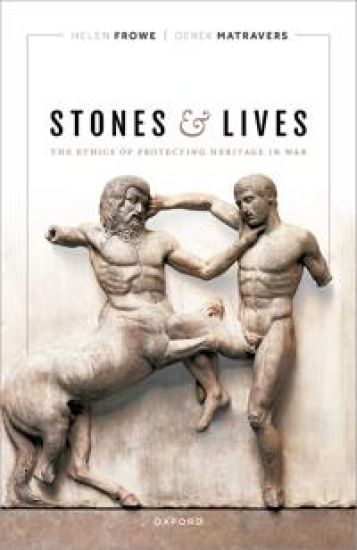
The fate of heritage in war has attracted considerable attention in recent years, due in no small part to ISIS's campaign of destruction across the Middle East and, in 2012, the International Criminal Court's first prosecution of heritage destruction as a war crime. Regular armed forces have been criticised for both failing to protect and damaging heritage sites. In response, heritage organisations urge the better implementation of existing international laws on heritage protection in war. This book argues that any such law or policy will require combatants to choose between safeguarding heritage and safeguarding other goods, including human life. It thus challenges the view, repeatedly expressed by heritage professionals, that the choice between protecting heritage and protecting lives is a false dichotomy. Existing international law not only implies such choices but also, more worryingly, gives no indication of how they should be resolved. Drawing on contemporary work on the ethics of war, this book develops an account of the permissible protection of heritage in war. It argues that heritage is not morally special; rather, heritage is one of many goods that contribute to individuals' lives going well and that we routinely trade off against each other. By drawing on these more familiar dilemmas, we can make progress on how to balance the protection of heritage against risks to human life. Amongst other things, the book considers the different ways in which heritage might contribute to individual flourishing, the role of consent in justifying the imposition of risk on combatants and civilians, the permissibility of forcefully defending heritage and what, if anything, could compensate for the loss of heritage in war.

Fiction and Narrative

Fiction and Narrative

Derek Matravers

Oxford University Press
2017
nidottu
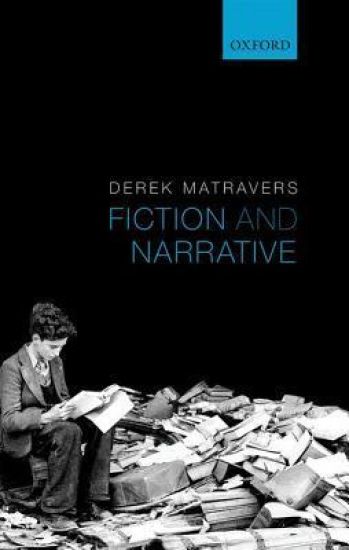
For the past twenty years there has been a virtual consensus in philosophy that there is a special link between fiction and the imagination. In particular, fiction has been defined in terms of the imagination: what it is for something to be fictional is that there is some requirement that a reader imagine it. Derek Matravers argues that this rests on a mistake; the proffered definitions of 'the imagination' do not link it with fiction but with representations more generally. In place of the flawed consensus, he offers an account of what it is to read, listen to, or watch a narrative whether that narrative is fictional or non-fictional. The view that emerges, which draws extensively on work in psychology, downgrades the divide between fiction and non-fiction and largely dispenses with the imagination. In the process, he casts new light on a succession of issues: on the 'paradox of fiction', on the issue of fictional narrators, on the problem of 'imaginative resistance', and on the nature of our engagement with film.
Empathy

Empathy

Derek Matravers

Polity Press
2017
sidottu
How can we understand another person's feelings, thoughts, words or behaviour? Through empathy, it is hoped, we might use our imaginations to shift our perspective into another person's, thereby grasping their thoughts and emotions. In this insightful new book, Derek Matravers negotiates the evolution of this fascinating concept. He explores the roots of the term in the work of David Hume and Adam Smith, its re-emergence in a new form in nineteenth-century German philosophy, and its resurgence as something different again in contemporary Anglo-American philosophy. In doing so, he explores the important role empathy, in all its forms, has played in the study of the mind, the emotions and aesthetics, and in ethics. Empathy is an ideal introduction to one of the most absorbing contemporary philosophical debates.
Empathy

Empathy

Derek Matravers

Polity Press
2017
nidottu
How can we understand another person's feelings, thoughts, words or behaviour? Through empathy, it is hoped, we might use our imaginations to shift our perspective into another person's, thereby grasping their thoughts and emotions. In this insightful new book, Derek Matravers negotiates the evolution of this fascinating concept. He explores the roots of the term in the work of David Hume and Adam Smith, its re-emergence in a new form in nineteenth-century German philosophy, and its resurgence as something different again in contemporary Anglo-American philosophy. In doing so, he explores the important role empathy, in all its forms, has played in the study of the mind, the emotions and aesthetics, and in ethics. Empathy is an ideal introduction to one of the most absorbing contemporary philosophical debates.
Figuring Out Figurative Art

Figuring Out Figurative Art

Derek Matravers; Damien Freeman

Acumen Publishing Ltd
2014
nidottu
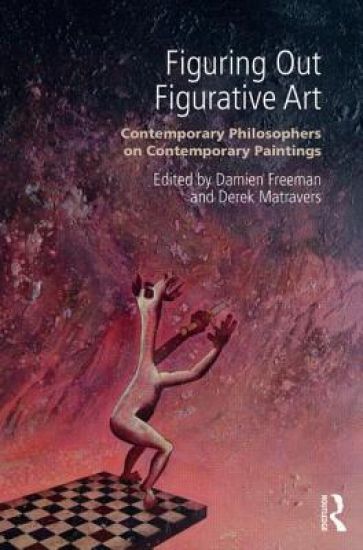
In 1797 Friedrich Schlegel wrote that "philosophy of art usually lacks one of two things: either the philosophy, or the art." This collection of essays contains both the philosophy and the art. It brings together an international team of leading philosophers to address diverse philosophical issues raised by recent works of art. Each essay engages with a specific artwork and explores the connection between the image and the philosophical content. Thirteen contemporary philosophers demonstrate how philosophy can aid interpretation of the work of ten contemporary artists, including: Jesse Prinz on John CurrinBarry C. Smith and Edward Winters on Dexter DalwoodLydia Goehr and Sam Rose on Tom de FrestonRaymond Geuss on Adrian Ghenie and Chantal JoffeHallvard Lillehammer on Paul NobleM. M. McCabe and Alexis Papazoglou on Ged QuinnNoël Carroll on Paula RegoSimon Blackburn and Jerrold Levinson on George ShawSondra Bacharach on Yue Minjun.The discussion ranges over ethical, political, psychological and religious concepts, such as irony, disgust, apathy, inequality, physiognomy and wonder, to historical experiences of war, Marx-inspired political movements and Thatcherism, and standard problems in the philosophy of art, such as expression, style, depiction and ontology of art, as well as major topics in art history, such as vanitas painting, photography, pornography, and Dadaism. Many of the contributors are distinguished in areas of philosophy other than aesthetics and are writing about art for the first time. All show how productive the engagement can be between philosophy, more generally, and art.
Figuring Out Figurative Art

Figuring Out Figurative Art

Derek Matravers; Damien Freeman

Acumen Publishing Ltd
2014
sidottu
In 1797 Friedrich Schlegel wrote that "philosophy of art usually lacks one of two things: either the philosophy, or the art." This collection of essays contains both the philosophy and the art. It brings together an international team of leading philosophers to address diverse philosophical issues raised by recent works of art. Each essay engages with a specific artwork and explores the connection between the image and the philosophical content. Thirteen contemporary philosophers demonstrate how philosophy can aid interpretation of the work of ten contemporary artists, including: Jesse Prinz on John CurrinBarry C. Smith and Edward Winters on Dexter DalwoodLydia Goehr and Sam Rose on Tom de FrestonRaymond Geuss on Adrian Ghenie and Chantal JoffeHallvard Lillehammer on Paul NobleM. M. McCabe and Alexis Papazoglou on Ged QuinnNoël Carroll on Paula RegoSimon Blackburn and Jerrold Levinson on George ShawSondra Bacharach on Yue Minjun.The discussion ranges over ethical, political, psychological and religious concepts, such as irony, disgust, apathy, inequality, physiognomy and wonder, to historical experiences of war, Marx-inspired political movements and Thatcherism, and standard problems in the philosophy of art, such as expression, style, depiction and ontology of art, as well as major topics in art history, such as vanitas painting, photography, pornography, and Dadaism. Many of the contributors are distinguished in areas of philosophy other than aesthetics and are writing about art for the first time. All show how productive the engagement can be between philosophy, more generally, and art.
Fiction and Narrative

Fiction and Narrative

Derek Matravers

Oxford University Press
2014
sidottu
For the past twenty years there has been a virtual consensus in philosophy that there is a special link between fiction and the imagination. In particular, fiction has been defined in terms of the imagination: what it is for something to be fictional is that there is some requirement that a reader imagine it. Derek Matravers argues that this rests on a mistake; the proffered definitions of 'the imagination' do not link it with fiction but with representations more generally. In place of the flawed consensus, he offers an account of what it is to read, listen to, or watch a narrative whether that narrative is fictional or non-fictional. The view that emerges, which draws extensively on work in psychology, downgrades the divide between fiction and non-fiction and largely dispenses with the imagination. In the process, he casts new light on a succession of issues: on the 'paradox of fiction', on the issue of fictional narrators, on the problem of 'imaginative resistance', and on the nature of our engagement with film.
Introducing Philosophy of Art

Introducing Philosophy of Art

Derek Matravers

Acumen Publishing Ltd
2012
nidottu
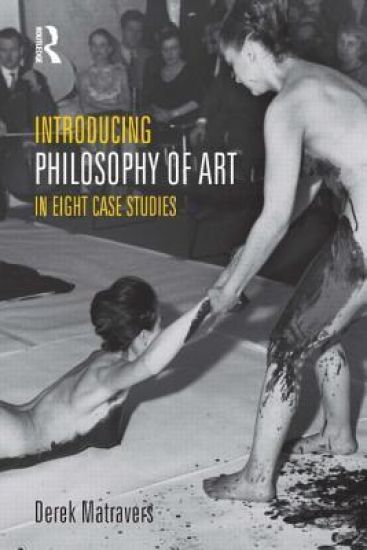
Derek Matravers introduces students to the philosophy of art through a close examination of eight famous works of twentieth-century art. Each work has been selected in order to best illustrate and illuminate a particular problem in aesthetics. Each artwork forms a basis for a single chapter and readers are introduced to such issues as artistic value, intention, interpretation, and expression through a careful analysis of the artwork. Questions considered include what does art mean in contemporary art practice? Is the artistic value of a painting the same as how much you like it? If a painting isn't of anything, then how do we understand it? Can art be immoral? By grounding abstract and theoretical discussion in real examples the book provides an excellent way into the subject for readers new to the philosophical dimension of art appreciation.
Introducing Philosophy of Art

Introducing Philosophy of Art

Derek Matravers

Acumen Publishing Ltd
2012
sidottu
Derek Matravers introduces students to the philosophy of art through a close examination of eight famous works of twentieth-century art. Each work has been selected in order to best illustrate and illuminate a particular problem in aesthetics. Each artwork forms the basis of a single chapter and readers are introduced to such issues as artistic value, intention, interpretation, and expression through a careful analysis of the artwork. Questions considered include what does art mean in contemporary art practice? Is the artistic value of a painting the same as how much you like it? If a painting isn't of anything, then how do we understand it? Can art be immoral? By grounding abstract and theoretical discussion in real examples the book provides an excellent way into the subject for readers new to the philosophical dimension of art appreciation.
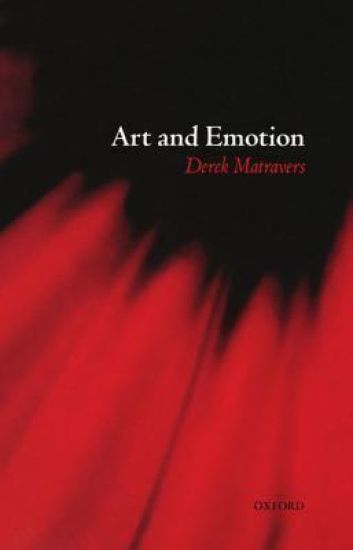
Art and Emotion

Art and Emotion

Derek Matravers

Clarendon Press
2001
nidottu
Derek Matravers examines how emotions form a bridge between our experience of art and of life. We often find that a particular poem, painting, or piece of music carries an emotional charge; and we may experience emotions towards, or on behalf of, a particular fictional character. These experiences are philosophically puzzling, for their causes seem quite different from the causes of emotion in the rest of our lives. Matravers shows that what these experiences have in common, and what links them to the expression of emotion in non-artistic cases, is the role played by feeling. He carries out a critical survey of various accounts of the nature of fiction, attacks contemporary cognitivist accounts of expression, and offers an uncompromising defence of a controversial view about musical expression: that music expresses the emotions it causes its listeners to feel.
Reading Political Philosophy

Reading Political Philosophy

Derek Matravers; Jonathan Pike; Nigel Warburton

Routledge
2001
sidottu
This clear and thorough introduction provides students with the skills necessary to understand the main thinkers, texts and arguments of political philosophy and thought. Each chapter comprises a brief overview of a major political thinker, followed by an introduction to one or more of their most influential works and an introduction to key secondary readings.Key features include:* exercises* reading notes* guides for further readingThe book introduces and assesses: Machiavelli's Prince; Hobbes' Leviathan; Locke's Second Treatise on Government; Rousseau's Social Contract; Marx and Engels' German Ideology (Part 1); Mill's On Liberty and The Subjection of Women. Reading Political Philosophy requires no previous knowledge of philosophy or politics and is ideal for newcomers to political philosophy and political thought.
Reading Political Philosophy

Reading Political Philosophy

Derek Matravers; Jonathan Pike; Nigel Warburton

Routledge
2000
nidottu
This clear and thorough introduction provides students with the skills necessary to understand the main thinkers, texts and arguments of political philosophy and thought. Each chapter comprises a brief overview of a major political thinker, followed by an introduction to one or more of their most influential works and an introduction to key secondary readings.Key features include:* exercises* reading notes* guides for further readingThe book introduces and assesses: Machiavelli's Prince; Hobbes' Leviathan; Locke's Second Treatise on Government; Rousseau's Social Contract; Marx and Engels' German Ideology (Part 1); Mill's On Liberty and The Subjection of Women. Reading Political Philosophy requires no previous knowledge of philosophy or politics and is ideal for newcomers to political philosophy and political thought.