Kirjojen hintavertailu. Mukana 12 436 735 kirjaa ja 12 kauppaa.
Kirjailija
Derek Raine
Kirjat ja teokset yhdessä paikassa: 7 kirjaa, julkaisuja vuosilta 2000-2021, suosituimpien joukossa Newtonian Mechanics. Vertaile teosten hintoja ja tarkista saatavuus suomalaisista kirjakaupoista.
Newtonian mechanics is a towering intellectual achievement that doesn’t need to be daunting. This text will walk you through introductory topics all the way to some advanced material, making it the perfect desk reference. The problem-solving aspects are fully developed, showing you how problems are approached and bringing out the ways of going about constructing a model and solution.
This introduction to the mathematical concepts used to describe fundamental physics principles is peppered with numerous examples and applications which enable the reader to master the complex mathematical concepts needed to define topics such as relativity, mechanics, and electromagnetics. Applications are included in every chapter.
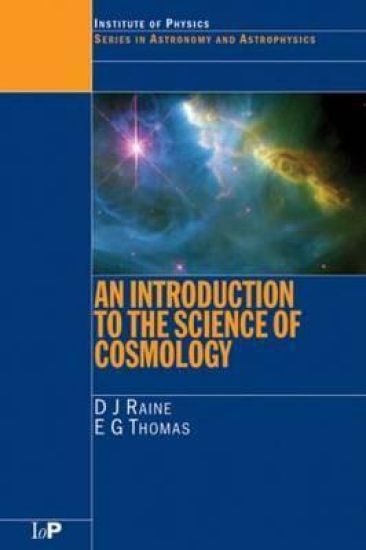
A thorough introduction to modern ideas on cosmology and on the physical basis of the general theory of relativity, An Introduction to the Science of Cosmology explores various theories and ideas in big bang cosmology, providing insight into current problems. Assuming no previous knowledge of astronomy or cosmology, this book takes you beyond introductory texts to the point where you are able to read and appreciate the scientific literature, which is broadly referenced in the book. The authors present the standard big bang theory of the universe and provide an introduction to current inflationary cosmology, emphasizing the underlying physics without excessive technical detail. The book treats cosmological models without reliance on prior knowledge of general relativity, the necessary physics being introduced in the text as required. It also covers recent observational evidence pointing to an accelerating expansion of the universe. The first several chapters provide an introduction to the topics discussed later in the book. The next few chapters introduce relativistic cosmology and the classic observational tests. One chapter gives the main results of the hot big bang theory. Next, the book presents the inflationary model and discusses the problem of the origin of structure and the correspondingly more detailed tests of relativistic models. Finally, the book considers some general issues raised by expansion and isotropy. A reference section completes the work by listing essential formulae, symbols, and physical constants. Beyond the level of many elementary books on cosmology, An Introduction to the Science of Cosmology encompasses numerous recent developments and ideas in the area. It provides more detailed coverage than many other titles available, and the inclusion of problems at the end of each chapter aids in self study and makes the book suitable for taught courses.
Newtonian mechanics is taught as part of every physics program for several reasons: it is a towering intellectual achievement; it has diverse applications; and it provides a context for teaching modelling and problem solving. This text gives equal prominence to all three missions. It therefore includes some advanced material as well as the customary introductory topics and is designed to be studied over an extended time-frame. The problem-solving aspects are developed more fully than in many other texts; showing readers how problems are approached and bringing out the ways of going about constructing a model and solution.Features:Includes some advanced material as well as the customary introductory topicsThe problem-solving aspects are developed more fully than in many other texts; showing readers how problems are approached and bringing out the methods of going about constructing a model and solution
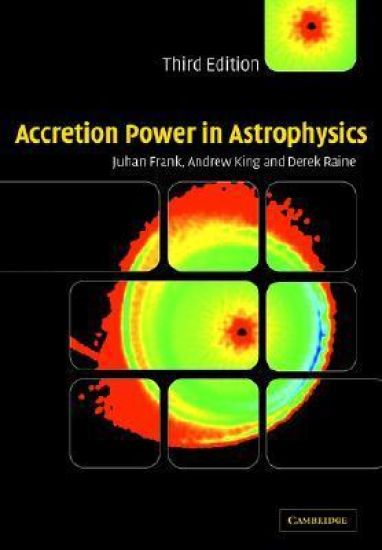
Accretion Power in Astrophysics examines accretion as a source of energy in both binary star systems containing compact objects, and in active galactic nuclei. Assuming a basic knowledge of physics, the authors describe the physical processes at work in accretion discs and other accretion flows. The first three chapters explain why accretion is a source of energy, and then present the gas dynamics and plasma concepts necessary for astrophysical applications. The next three chapters then develop accretion in stellar systems, including accretion onto compact objects. Further chapters give extensive treatment of accretion in active galactic nuclei, and describe thick accretion discs. A new chapter discusses recently discovered accretion flow solutions. The third edition is greatly expanded and thoroughly updated. New material includes a detailed treatment of disc instabilities, irradiated discs, disc warping, and general accretion flows. The treatment is suitable for advanced undergraduates, graduate students and researchers.
A thorough introduction to modern ideas on cosmology and on the physical basis of the general theory of relativity, An Introduction to the Science of Cosmology explores various theories and ideas in big bang cosmology, providing insight into current problems. Assuming no previous knowledge of astronomy or cosmology, this book takes you beyond introductory texts to the point where you are able to read and appreciate the scientific literature, which is broadly referenced in the book. The authors present the standard big bang theory of the universe and provide an introduction to current inflationary cosmology, emphasizing the underlying physics without excessive technical detail. The book treats cosmological models without reliance on prior knowledge of general relativity, the necessary physics being introduced in the text as required. It also covers recent observational evidence pointing to an accelerating expansion of the universe. The first several chapters provide an introduction to the topics discussed later in the book. The next few chapters introduce relativistic cosmology and the classic observational tests. One chapter gives the main results of the hot big bang theory. Next, the book presents the inflationary model and discusses the problem of the origin of structure and the correspondingly more detailed tests of relativistic models. Finally, the book considers some general issues raised by expansion and isotropy. A reference section completes the work by listing essential formulae, symbols, and physical constants. Beyond the level of many elementary books on cosmology, An Introduction to the Science of Cosmology encompasses numerous recent developments and ideas in the area. It provides more detailed coverage than many other titles available, and the inclusion of problems at the end of each chapter aids in self study and makes the book suitable for taught courses.
Physics to a Degree provides an extensive collection of problems suitable for self-study or tutorial and group work at the level of an undergraduate physics course. This novel set of exercises draws together the core elements of an undergraduate physics degree and provides students with the problem solving skills needed for general physics' examinations and for real-life situations encountered by the professional physicist. Topics include force, momentum, gravitation, Bernoulli's Theorem, magnetic fields, blackbody radiation, relativistic travel, mechanics near the speed of light, radioactive decay, quantum uncertainty, and much more.