Kirjojen hintavertailu. Mukana 12 152 606 kirjaa ja 12 kauppaa.

Kirjailija

Derek S. Hoff

Kirjat ja teokset yhdessä paikassa: 3 kirjaa, julkaisuja vuodelta 2012, suosituimpien joukossa Fighting Foreclosure. Vertaile teosten hintoja ja tarkista saatavuus suomalaisista kirjakaupoista.

3 kirjaa

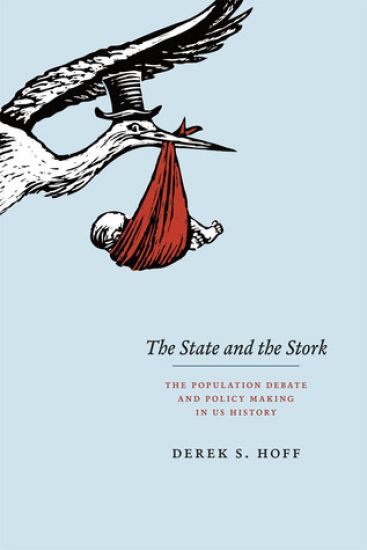
The State and the Stork

The State and the Stork

Derek S. Hoff

University of Chicago Press
2012
sidottu
From the colonial era to the present, the ever-shifting debate about America's almost uninterrupted population growth has exerted a profound influence on the evolution of politics, public policy, and economic thinking in the United States. In a remarkable shift since the 1970s, Americans have celebrated the economic virtues of population growth - but as one of the only wealthy countries experiencing significant growth in the twenty-first century, the United States now finds itself at a crossroads with policymakers unwilling or unable to address the future. From the founders' fears that crowded cities would produce corruption, luxury, and vice to the zero population growth movement of the late 1960s and the continuing emergence of the aging crisis, the debate has often been about much more than race or resource exhaustion. In "The State and the Stork", Derek S. Hoff draws on his extraordinary knowledge of the intersections of population debates and economics throughout American history to explain the many surprising ways that population ideas and anxieties have provoked a wide range of policies, connecting demographic debates and economics to unexpected policies and political developments - including the recent conservative revival. At once a fascinating history and a revelatory look at the national conversation, "The State and the Stork" could not be timelier.
Fighting Foreclosure

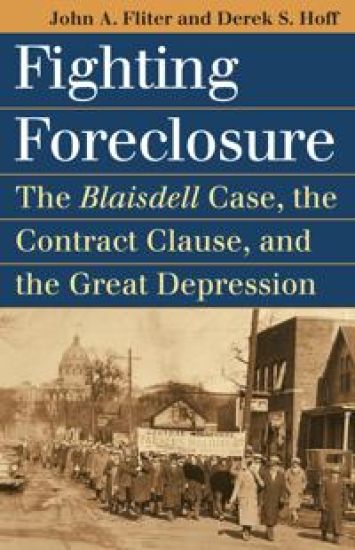
Fighting Foreclosure

John A. Fliter; Derek S. Hoff

University Press of Kansas
2012
nidottu
In the depths of the Great Depression, when foreclosure rates skyrocketed across the United States, more than two dozen states passed mortgage-extension or -adjustment laws to help farmers and homeowners keep their properties. One such statute in Minnesota led to the most important property law case of its time and still casts a long shadow upon constitutional debates and our own era’s severe economic downturn. Fighting Foreclosure marks the first book-length study of the landmark 1934 Supreme Court decision in Home Building and Loan Association v. Blaisdell, which, by a 5–4 vote, upheld the Minnesota Mortgage Moratorium Act. Blaisdell validated efforts by states to offer legislative relief to citizens struggling to keep their farms and homes. But it caused an outcry among banking interests and conservative legal theorists, who argued that these laws violated the Contract Clause of the Constitution and interfered with our free market system. In his majority opinion, Chief Justice Charles Evans Hughes argued that the reasonable and limited nature of the law and the unusual severity of the emergency it addressed placed it firmly within the “police powers” of the states to protect the health and safety of the people. In a strongly worded dissent, Justice George Sutherland argued for a consistent and strict interpretation of the Contract Clause regardless of economic exigency. John Fliter and Derek Hoff provide a concise history and analysis of not only this landmark case and the reasoning behind its sharply divided decision but also of the entire history of the Contract Clause. They trace closely the agricultural crisis, political pressures, and farmer-protest movement that produced the Minnesota law. And their study contributes to scholarly debate about the origins of the Constitutional Revolution of 1937, by which the Supreme Court accepted the New Deal, as well as to public debates about constitutional interpretation and the role that government should play in providing relief to distressed citizens. In the midst of our nation’s ongoing suffering from massive foreclosures and bankruptcies, Fighting Foreclosure also offers a potent reminder that the High Court’s decisions often revolve around lives at risk as much as abstract legal debates.
Fighting Foreclosure

Fighting Foreclosure

John A. Fliter; Derek S. Hoff

University Press of Kansas
2012
sidottu
In the depths of the Great Depression, when foreclosure rates skyrocketed across the United States, more than two dozen states passed mortgage-extension or -adjustment laws to help farmers and homeowners keep their properties. One such statute in Minnesota led to the most important property law case of its time and still casts a long shadow upon constitutional debates and our own era’s severe economic downturn. Fighting Foreclosure marks the first book-length study of the landmark 1934 Supreme Court decision in Home Building and Loan Association v. Blaisdell, which, by a 5–4 vote, upheld the Minnesota Mortgage Moratorium Act. Blaisdell validated efforts by states to offer legislative relief to citizens struggling to keep their farms and homes. But it caused an outcry among banking interests and conservative legal theorists, who argued that these laws violated the Contract Clause of the Constitution and interfered with our free market system. In his majority opinion, Chief Justice Charles Evans Hughes argued that the reasonable and limited nature of the law and the unusual severity of the emergency it addressed placed it firmly within the “police powers” of the states to protect the health and safety of the people. In a strongly worded dissent, Justice George Sutherland argued for a consistent and strict interpretation of the Contract Clause regardless of economic exigency. John Fliter and Derek Hoff provide a concise history and analysis of not only this landmark case and the reasoning behind its sharply divided decision but also of the entire history of the Contract Clause. They trace closely the agricultural crisis, political pressures, and farmer-protest movement that produced the Minnesota law. And their study contributes to scholarly debate about the origins of the Constitutional Revolution of 1937, by which the Supreme Court accepted the New Deal, as well as to public debates about constitutional interpretation and the role that government should play in providing relief to distressed citizens. In the midst of our nation’s ongoing suffering from massive foreclosures and bankruptcies, Fighting Foreclosure also offers a potent reminder that the High Court’s decisions often revolve around lives at risk as much as abstract legal debates.