Kirjojen hintavertailu. Mukana 12 390 323 kirjaa ja 12 kauppaa.

Kirjailija

Derk Pereboom

Kirjat ja teokset yhdessä paikassa: 14 kirjaa, julkaisuja vuosilta 2001-2024, suosituimpien joukossa Wrongdoing and the Moral Emotions. Vertaile teosten hintoja ja tarkista saatavuus suomalaisista kirjakaupoista.

14 kirjaa

Kirjojen julkaisuhaarukka 2001-2024.

Four Views on Free Will

Four Views on Free Will

John Martin Fischer; Robert Kane; Derk Pereboom; Manuel Vargas

JOHN WILEY SONS INC
2024
nidottu
A lively and engaging debate between four representative views on free will, completely revised and updated with new perspectives Four Views on Free Will is a robust and careful debate about free will, how it interacts with determinism and indeterminism, and whether we have it or not. Providing the most up-to-date account of four major positions in the free will debate, the second edition of this classic text presents the opposing perspectives of renowned philosophers John Martin Fischer, Robert Kane, Derk Pereboom, and Manuel Vargas. Substantially revised throughout, this new volume contains eight in-depth chapters, almost entirely rewritten for the new edition, in which the authors state their different positions on the debate, offer insights into how their views have evolved over the past fifteen years, respond to recent critical literature in the field, and interact and engage with each other in dialogue. In the first four chapters the authors defend their distinctive views about free will: libertarianism, compatibilism, hard incompatibilism, and revisionism. The subsequent four chapters consist of direct replies by each of the authors to the other three. Offering a one-of-a-kind interactive conversation about the most recent work on the subject, Four Views on Free Will, Second Edition provides a balanced and enlightening discussion on all the key concepts and conflicts in the free will debate. Part of the acclaimed Great Debates in Philosophy series, it remains essential reading for undergraduate and graduate students, lecturers and scholars in philosophy, ethics, free will, philosophy of mind, political philosophy, law, and related subjects.
Wrongdoing and the Moral Emotions

Wrongdoing and the Moral Emotions

Derk Pereboom

Oxford University Press
2023
nidottu
Wrongdoing and the Moral Emotions provides an account of how we might effectively address wrongdoing given challenges to the legitimacy of anger and retribution that arise from ethical considerations and from concerns about free will. The issue is introduced in Chapter 1. Chapter 2 asks how we might conceive of blame without retribution, and proposes an account of blame as moral protest, whose function is to secure forward-looking goals such as the moral reform of the wrongdoer and reconciliation in relationships. Chapter 3 considers whether it's possible to justify effectively dealing those who pose dangerous threats if they do not deserve to be harmed, and contends that wrongfully posing a threat is the core condition for the legitimacy of defensive harming. Chapter 4 provides an account of how to treat criminals without a retributive justification for punishment, and argues for an account in which the right of self-defense provides justification for measures such as preventative detention. Chapter 5 considers how we might forgive if wrongdoers don't basically deserve the pain of being resented, which forgiveness would then renounce, and proposes that forgiveness be conceived instead as renunciation of the stance of moral protest. Chapter 6 considers how personal relationships might function without retributive anger having a role in responding to wrongdoing, and contends that the stance of moral protest, supplemented with non-retributive emotions, is sufficient. Chapter 7 surveys the options for theistic and atheistic attitudes regarding the fate of humanity in a deterministic universe, and defends an impartial hope for humanity.
Wrongdoing and the Moral Emotions

Wrongdoing and the Moral Emotions

Derk Pereboom

Oxford University Press
2021
sidottu
Wrongdoing and the Moral Emotions provides an account of how we might effectively address wrongdoing given challenges to the legitimacy of anger and retribution that arise from ethical considerations and from concerns about free will. The issue is introduced in Chapter 1. Chapter 2 asks how we might conceive of blame without retribution, and proposes an account of blame as moral protest, whose function is to secure forward-looking goals such as the moral reform of the wrongdoer and reconciliation in relationships. Chapter 3 considers whether it's possible to justify effectively dealing those who pose dangerous threats if they do not deserve to be harmed, and contends that wrongfully posing a threat is the core condition for the legitimacy of defensive harming. Chapter 4 provides an account of how to treat criminals without a retributive justification for punishment, and argues for an account in which the right of self-defense provides justification for measures such as preventative detention. Chapter 5 considers how we might forgive if wrongdoers don't basically deserve the pain of being resented, which forgiveness would then renounce, and proposes that forgiveness be conceived instead as renunciation of the stance of moral protest. Chapter 6 considers how personal relationships might function without retributive anger having a role in responding to wrongdoing, and contends that the stance of moral protest, supplemented with non-retributive emotions, is sufficient. Chapter 7 surveys the options for theistic and atheistic attitudes regarding the fate of humanity in a deterministic universe, and defends an impartial hope for humanity.
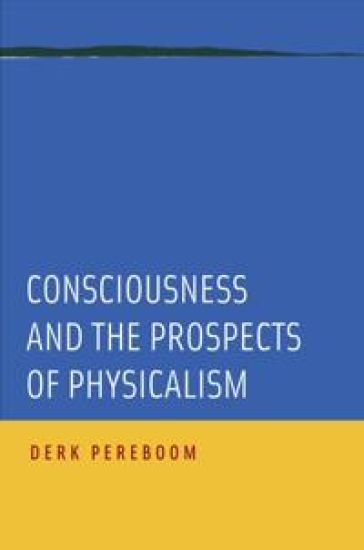
Consciousness and the Prospects of Physicalism

Consciousness and the Prospects of Physicalism

Derk Pereboom

Oxford University Press Inc
2017
nidottu
In this book, Derk Pereboom explores how physicalism might best be formulated and defended against the best anti-physicalist arguments. Two responses to the knowledge and conceivability arguments are set out and developed. The first exploits the open possibility that introspective representations fail to represent mental properties as they are in themselves; specifically, that introspection represents phenomenal properties as having certain characteristic qualitative natures, which these properties might actually lack. The second response draws on the proposal that currently unknown fundamental intrinsic properties provide categorical bases for known physical properties and would also yield an account of consciousness. While there are non-physicalist versions of this position, some are amenable to physicalism. The book's third theme is a defense of a nonreductive account of physicalism. The type of nonreductivism endorsed departs from others in that it rejects all token identity claims for psychological and microphysical entities. The deepest relation between the mental and the microphysical is constitution, where this relation is not to be explicated by the notion of identity.
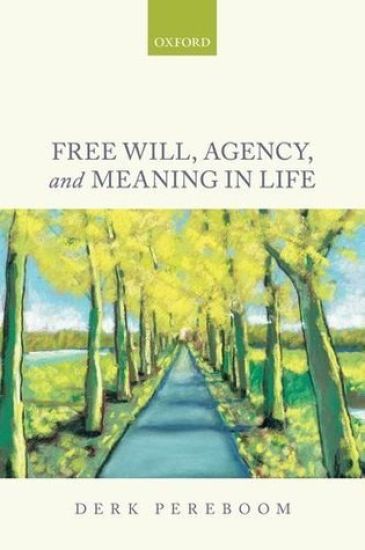
Free Will, Agency, and Meaning in Life

Free Will, Agency, and Meaning in Life

Derk Pereboom

Oxford University Press
2016
nidottu
Derk Pereboom articulates and defends an original conception of moral responsibility. He argues that if determinism were true we would not be morally responsible in the key basic-desert sense at issue in the free will debate, but that we would also lack this kind of moral responsibility if indeterminism were true and the causes of our actions were exclusively states or events. It is possible that if we were undetermined agent causes--if we as substances had the power to cause decisions without being causally determined to cause them--we would have this kind of free will. But although our being undetermined agent causes has not been ruled out as a coherent possibility, it's not credible given our best physical theories. Pereboom then contends that a conception of life without the free will required for moral responsibility in the basic-desert sense would nevertheless allow for a different, forward-looking conception of moral responsibility. He also argues that our lacking this sort of free will would not jeopardize our sense of ourselves as agents capable of rational deliberation, that it is compatible with adequate measures for dealing with crime and other threatening behavior, and that it allows for a robust sense of achievement and meaning in life. Pereboom's arguments for this position are reconfigured relative to those presented in Living without Free Will (2001), important objections to these arguments are answered, and the development of the positive view is significantly embellished.
Free Will, Agency, and Meaning in Life

Free Will, Agency, and Meaning in Life

Derk Pereboom

Oxford University Press
2014
sidottu
Derk Pereboom articulates and defends an original conception of moral responsibility. He argues that if determinism were true we would not be morally responsible in the key basic-desert sense at issue in the free will debate, but that we would also lack this kind of moral responsibility if indeterminism were true and the causes of our actions were exclusively states or events. It is possible that if we were undetermined agent-causes-if we as substances had the power to cause decisions without being causally determined to cause them-we would have this kind of free will. But although our being undetermined agent causes has not been ruled out as a coherent possibility, it's not credible given our best physical theories. Pereboom then contends that a conception of life without the free will required for moral responsibility in the basic-desert sense would nevertheless allow for a different, forward-looking conception of moral responsibility. He also argues that our lacking this sort of free will would not jeopardize our sense of ourselves as agents capable of rational deliberation, that it is compatible with adequate measures for dealing with crime and other threatening behavior, and that it allows for a robust sense of achievement and meaning in life. Pereboom's arguments for this position are reconfigured relative to those presented in Living without Free Will (2001), important objections to these arguments are answered, and the development of the positive view is significantly embellished.
Consciousness and the Prospects of Physicalism

Consciousness and the Prospects of Physicalism

Derk Pereboom

Oxford University Press Inc
2011
sidottu
In this book, Derk Pereboom explores how physicalism might best be formulated and defended against the best anti-physicalist arguments. Two responses to the knowledge and conceivability arguments are set out and developed. The first exploits the open possibility that introspective representations fail to represent mental properties as they are in themselves; specifically, that introspection represents phenomenal properties as having certain characteristic qualitative natures, which these properties might actually lack. The second response draws on the proposal that currently unknown fundamental intrinsic properties provide categorical bases for known physical properties and would also yield an account of consciousness. While there are non-physicalist versions of this position, some are amenable to physicalism. The book's third theme is a defense of a nonreductive account of physicalism. The type of nonreductivism endorsed departs from others in that it rejects all token identity claims for psychological and microphysical entities. The deepest relation between the mental and the microphysical is constitution, where this relation is not to be explicated by the notion of identity.
Living without Free Will

Living without Free Will

Derk Pereboom

Cambridge University Press
2006
pokkari
Most people assume that, even though some degenerative or criminal behavior may be caused by influences beyond our control, ordinary human actions are not similarly generated, but rather are freely chosen, and we can be praiseworthy or blameworthy for them. A less popular and more radical claim is that factors beyond our control produce all of the actions we perform. It is this hard determinist stance that Derk Pereboom articulates in Living Without Free Will. Pereboom argues that our best scientific theories have the consequence that factors beyond our control produce all of the actions we perform, and that because of this, we are not morally responsible for any of them. He seeks to defend the view that morality, meaning and value remain intact even if we are not morally responsible, and furthermore, that adopting this perspective would provide significant benefit for our lives.
Living without Free Will

Living without Free Will

Derk Pereboom

Cambridge University Press
2001
sidottu
Most people assume that, even though some degenerative or criminal behavior may be caused by influences beyond our control, ordinary human actions are not similarly generated, but rather are freely chosen, and we can be praiseworthy or blameworthy for them. A less popular and more radical claim is that factors beyond our control produce all of the actions we perform. It is this hard determinist stance that Derk Pereboom articulates in Living Without Free Will. Pereboom argues that our best scientific theories have the consequence that factors beyond our control produce all of the actions we perform, and that because of this, we are not morally responsible for any of them. He seeks to defend the view that morality, meaning, and value remain intact even if we are not morally responsible, and furthermore, that adopting this perspective would provide significant benefit for our lives.
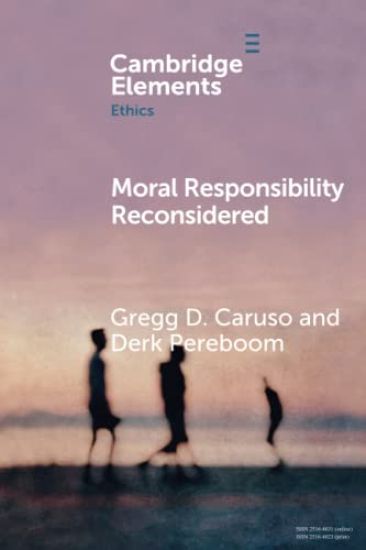
Moral Responsibility Reconsidered

Moral Responsibility Reconsidered

Gregg D. Caruso; Derk Pereboom

Cambridge University Press
2022
pokkari
This Element examines the concept of moral responsibility as it is used in contemporary philosophical debates and explores the justifiability of the moral practices associated with it, including moral praise/blame, retributive punishment, and the reactive attitudes of resentment and indignation. After identifying and discussing several different varieties of responsibility-including causal responsibility, take-charge responsibility, role responsibility, liability responsibility, and the kinds of responsibility associated with attributability, answerability, and accountability-it distinguishes between basic and non-basic desert conceptions of moral responsibility and considers a number of skeptical arguments against each. It then outlines an alternative forward-looking account of moral responsibility grounded in non-desert-invoking desiderata such as protection, reconciliation, and moral formation. It concludes by addressing concerns about the practical implications of skepticism about desert-based moral responsibility and explains how optimistic skeptics can preserve most of what we care about when it comes to our interpersonal relationships, morality, and meaning in life.
Free Will

Free Will

Derk Pereboom

Cambridge University Press
2022
pokkari
This Element provides a thorough overview of the free will debate as it currently stands. After distinguishing the main senses of the term 'free will' invoked in that debate, it proceeds to set out the prominent versions of the main positions, libertarianism, compatibilism, and free will skepticism, and then to discuss the main objections to these views. Particular attention is devoted to the controversy concerning whether the ability to do otherwise is required for moral responsibility and whether it is compatible with determinism, and to manipulation arguments against compatibilism. Two areas in which the free will debate has practical implications are discussed in detail, personal relationships and criminal justice.
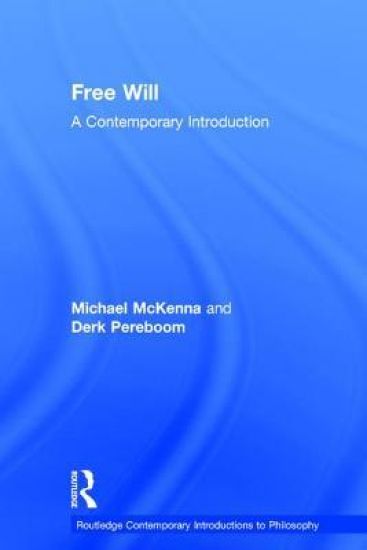
Free Will

Free Will

Michael McKenna; Derk Pereboom

Routledge
2016
sidottu
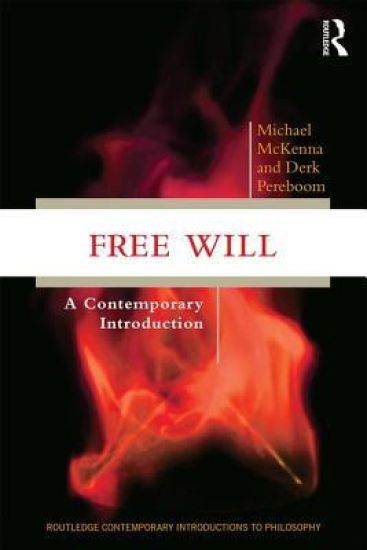
As an advanced introduction to the challenging topic of free will, this book is designed for upper-level undergraduates interested in a comprehensive first-stop into the field’s issues and debates. It is written by two of the leading participants in those debates—a compatibilist on the issue of free will and determinism (Michael McKenna) and an incompatibilist (Derk Pereboom). These two authors achieve an admirable objectivity and clarity while still illuminating the field’s complexity and key advances. Each chapter is structured to work as one week’s primary reading in a course on free will, while more advanced courses can dip into the annotated further readings, suggested at the end of each chapter. A comprehensive bibliography as well as detailed subject and author indexes are included at the back of the book.
Free Will

Free Will

Michael McKenna; Derk Pereboom

Routledge
2016
nidottu
As an advanced introduction to the challenging topic of free will, this book is designed for upper-level undergraduates interested in a comprehensive first-stop into the field’s issues and debates. It is written by two of the leading participants in those debates—a compatibilist on the issue of free will and determinism (Michael McKenna) and an incompatibilist (Derk Pereboom). These two authors achieve an admirable objectivity and clarity while still illuminating the field’s complexity and key advances. Each chapter is structured to work as one week’s primary reading in a course on free will, while more advanced courses can dip into the annotated further readings, suggested at the end of each chapter. A comprehensive bibliography as well as detailed subject and author indexes are included at the back of the book.
Four Views on Free Will

Four Views on Free Will

John Martin Fischer; Robert Kane; Derk Pereboom; Manuel Vargas

Wiley-Blackwell (an imprint of John Wiley Sons Ltd)
2007
sidottu
Focusing on the concepts and interactions of free will, moral responsibility, and determinism, this text represents the most up-to-date account of the four major positions in the free will debate. Four serious and well-known philosophers explore the opposing viewpoints of libertarianism, compatibilism, hard incompatibilism, and revisionismThe first half of the book contains each philosopher's explanation of his particular view; the second half allows them to directly respond to each other's arguments, in a lively and engaging conversationOffers the reader a one of a kind, interactive discussionForms part of the acclaimed Great Debates in Philosophy series