Kirjailija
Des Freedman
Kirjat ja teokset yhdessä paikassa: 12 kirjaa, julkaisuja vuosilta 2008-2026, suosituimpien joukossa Capitalism and the Media. Vertaile teosten hintoja ja tarkista saatavuus suomalaisista kirjakaupoista.
12 kirjaa
Kirjojen julkaisuhaarukka 2008-2026.
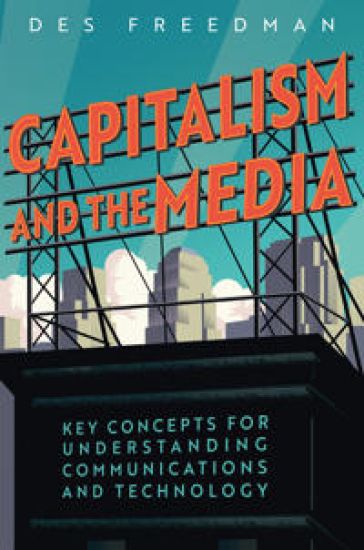
Capitalism is the most powerful, creative and destructive social system the world has ever seen. Vigorously celebrated and fiercely contested, it provides the backdrop for the pipelines and platforms that supply audiences with entertainment, information and connection. This book provides an accessible introduction to the key characteristics of capitalism and illustrates how they shape and distort our media and communications landscapes. Exploring concepts including accumulation, exploitation, ideology, oppression, commodification and colonization, the book discusses the impact of these processes on everything from our experiences online and the dynamics of algorithms, to the power of oligarchs and the media’s role in the escalating environmental crisis. At a time when technology is often heralded as either the cause or the solution to issues of polarization, disinformation and atomization, an understanding of the simultaneous resilience and fragility of capitalism is essential. Capitalism and the Media is important reading for students of media, communications, cultural studies and politics and a valuable resource for scholars and activists.
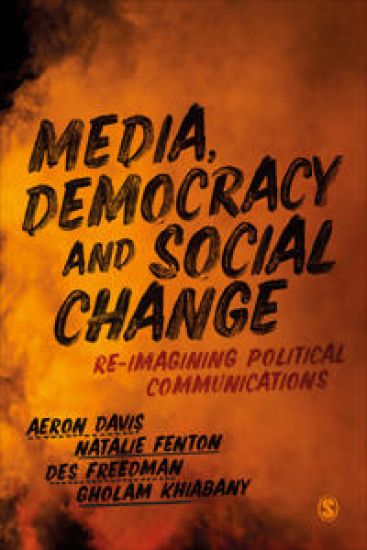
Media, Democracy and Social Change
Aeron Davis; Natalie Fenton; Des Freedman; Gholam Khiabany
SAGE Publications Ltd
2020
sidottu
When we are told so regularly that we live in a ‘post truth’ age and are surrounded by ‘fake news’, it can be tempting to think of politics as primarily mediated. Discussion and analysis of public affairs is preoccupied with the power and reach of platforms or the passion and rage of social media exchanges. As important as these issues may be, a focus on the communicative risks downgrading the political. Media, Democracy and Social Change puts politics back into political communications. It shows how within a digital media ecology, the wider context of neoliberal capitalism remains essential for understanding what political communications is, and can hope to be. Tackling broad themes of structural inequality, technological change, political realignment and social transformation, the book explores political communications as it relates to debates around the state, infrastructures, elites, populism, political parties, activism, the legacies of colonialism, and more. It is both an expert introduction to the field of political communications, and a critical intervention to help re-imagine what a democratic politics might mean in a digital age. It will be essential reading for students, researchers and activists. Aeron Davis, Natalie Fenton, Des Freedman and Gholam Khiabany all work at the Department of Media and Communication at Goldsmiths, University of London, where they teach together on the MA in Political Communications.
Media, Democracy and Social Change
Aeron Davis; Natalie Fenton; Des Freedman; Gholam Khiabany
SAGE Publications Ltd
2020
nidottu
When we are told so regularly that we live in a ‘post truth’ age and are surrounded by ‘fake news’, it can be tempting to think of politics as primarily mediated. Discussion and analysis of public affairs is preoccupied with the power and reach of platforms or the passion and rage of social media exchanges. As important as these issues may be, a focus on the communicative risks downgrading the political. Media, Democracy and Social Change puts politics back into political communications. It shows how within a digital media ecology, the wider context of neoliberal capitalism remains essential for understanding what political communications is, and can hope to be. Tackling broad themes of structural inequality, technological change, political realignment and social transformation, the book explores political communications as it relates to debates around the state, infrastructures, elites, populism, political parties, activism, the legacies of colonialism, and more. It is both an expert introduction to the field of political communications, and a critical intervention to help re-imagine what a democratic politics might mean in a digital age. It will be essential reading for students, researchers and activists. Aeron Davis, Natalie Fenton, Des Freedman and Gholam Khiabany all work at the Department of Media and Communication at Goldsmiths, University of London, where they teach together on the MA in Political Communications.
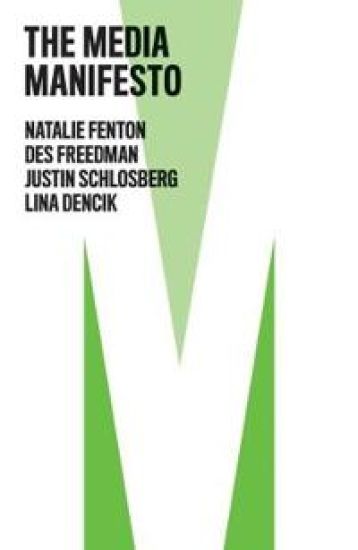
The Media Manifesto
Natalie Fenton; Des Freedman; Justin Schlosberg; Lina Dencik
Polity Press
2020
nidottu
Our media systems are in crisis. Run by unaccountable corporations and dominated by agendas and algorithms that are shrouded in mystery, these formerly trusted sources of information and entertainment have lost their way. As consumers, we have plenty of choice, but as citizens we have an abundance of misinformation and misrepresentation.In this incisive manifesto, four prominent media scholars and activists put forth a roadmap for radical reform of concentrated media power. They argue that we should put media justice, economic democracy and social equality at the heart of our scholarship and our campaigning.The Media Manifesto delivers a sharp analysis of our communications crisis and a passionate call for urgent change. It provides resources of hope for media reform movements across the globe.
The Media Manifesto
Natalie Fenton; Des Freedman; Justin Schlosberg; Lina Dencik
Polity Press
2020
sidottu
Our media systems are in crisis. Run by unaccountable corporations and dominated by agendas and algorithms that are shrouded in mystery, these formerly trusted sources of information and entertainment have lost their way. As consumers, we have plenty of choice, but as citizens we have an abundance of misinformation and misrepresentation.In this incisive manifesto, four prominent media scholars and activists put forth a roadmap for radical reform of concentrated media power. They argue that we should put media justice, economic democracy and social equality at the heart of our scholarship and our campaigning.The Media Manifesto delivers a sharp analysis of our communications crisis and a passionate call for urgent change. It provides resources of hope for media reform movements across the globe.
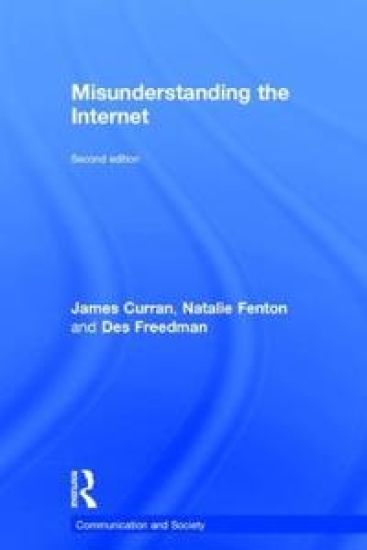
The growth of the internet has been spectacular. There are now more than 3 billion internet users across the globe, some 40 per cent of the world’s population. The internet’s meteoric rise is a phenomenon of enormous significance for the economic, political and social life of contemporary societies. However, much popular and academic writing about the internet continues to take a celebratory view, assuming that the internet’s potential will be realised in essentially positive and transformative ways. This was especially true in the euphoric moment of the mid-1990s, when many commentators wrote about the internet with awe and wonderment. While this moment may be over, its underlying technocentrism – the belief that technology determines outcomes – lingers on and, with it, a failure to understand the internet in its social, economic and political contexts.Misunderstanding the Internet is a short introduction, encompassing the history, sociology, politics and economics of the internet and its impact on society. This expanded and updated second edition is a polemical, sociologically and historically informed guide to the key claims that have been made about the online world. It aims to challenge both popular myths and existing academic orthodoxies that surround the internet.
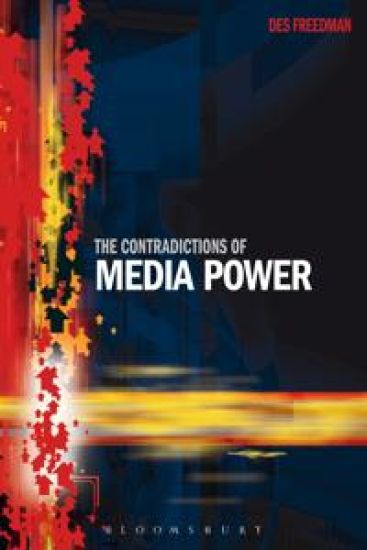
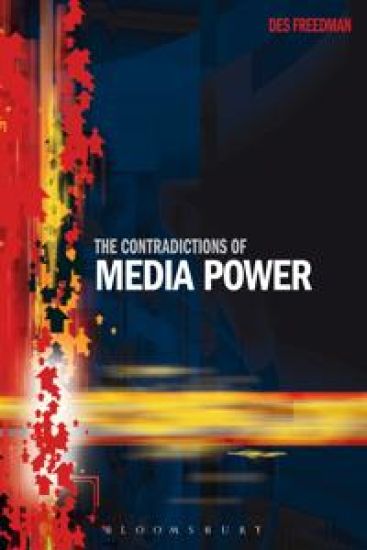
Media power is a crucial, although often taken for granted, concept. We assume, for example, that the media are 'powerful'; if they were not, why would there be so many controversies over the regulation, control and impact of communicative institutions and processes? Further, we assume that this 'power' is somehow problematic; audiences are often treated as highly susceptible to media influence and too much 'power' in the hands of one organization or individual is seen as risky and potentially dangerous. These concerns have been at the heart of recent controversies involving the relationships between media moguls and political elites, the consequences of phone hacking in the UK, and the emerging influence of social media as vital gatekeepers. Yet it is still not clear what we mean by media power or how effective it is. This book evaluates contrasting definitions of media power and looks at the key sites in which power is negotiated, concentrated and resisted - politically, technologically and economically. Combining an evaluation of both previous literature and new research, the book seeks to establish an understanding of media power which does justice to the complexities and contradictions of the contemporary social world. It will be important reading for undergraduates, postgraduates, researchers and activists alike.
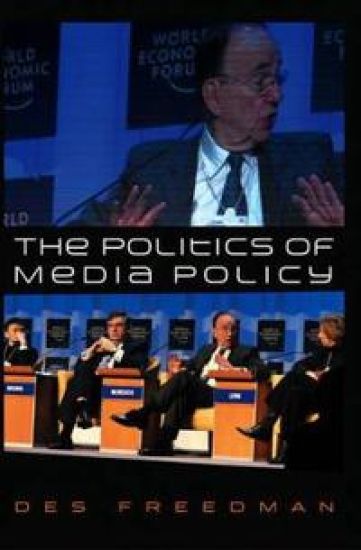
The Politics of Media Policy provides a critical perspective on the dynamics of media policy in the US and UK and offers a comprehensive guide to some of the major points of debate in the media today. While many policymakers boast of the openness and pluralism of their media systems, this book exposes the commitment to market principles that saturates the media policy environment and distorts the development and application of democratic media policies. Based on interviews with dozens of politicians, regulators, special advisers, lobbyists and campaigners, The Politics of Media Policy considers how governments, civil servants and media corporations have shaped the drawing up of rules concerning a range of issues including: Media ownership Media content Public broadcasting Digital television Copyright Trade agreements affecting the media industries. The book identifies both the institutions and the arguments that dominate the development of these crucial media policies. It will be of interest to public policy and media professionals, researchers, activists and students indeed all those determined to understand and respond to the impact of neo-liberalism on the contemporary world.