Kirjojen hintavertailu. Mukana 12 595 353 kirjaa ja 12 kauppaa.
Kirjailija
Desheng Dash Wu
Kirjat ja teokset yhdessä paikassa: 6 kirjaa, julkaisuja vuosilta 2007-2025, suosituimpien joukossa Business Analytics with R and Python. Vertaile teosten hintoja ja tarkista saatavuus suomalaisista kirjakaupoista.
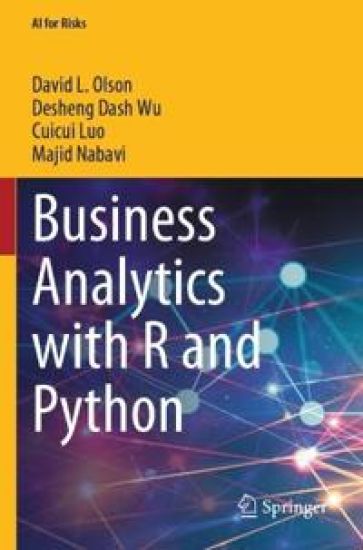
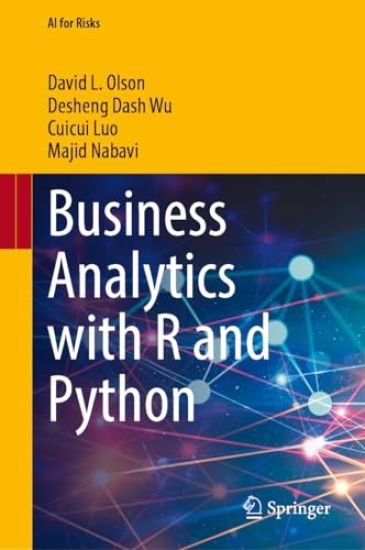
This book provides an overview of data mining methods in the field of business. Business management faces challenges in serving customers in better ways, in identifying risks, and analyzing the impact of decisions. Of the three types of analytic tools, descriptive analytics focuses on what has happened and predictive analytics extends statistical and/or artificial intelligence to provide forecasting capability. Chapter 1 provides an overview of business management problems. Chapter 2 describes how analytics and knowledge management have been used to better cope with these problems. Chapter 3 describes initial data visualization tools. Chapter 4 describes association rules and software support. Chapter 5 describes cluster analysis with software demonstration. Chapter 6 discusses time series analysis with software demonstration. Chapter 7 describes predictive classification data mining tools. Applications of the context of management are presented in Chapter 8. Chapter 9 covers prescriptive modeling in business and applications of artificial intelligence.
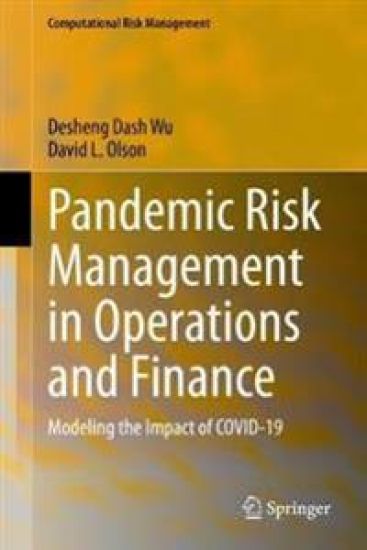
COVID-19 has spread around the world, causing tremendous structural change, and severely affecting global supply chains and financial operations. As such there is a need for analytic tools help deal with the impact of the pandemic on the world’s economies; these tools are not panaceas and certainly won’t cure the problems faced, but they offer a means to aid governments, firms, and individuals in coping with specific problems. This book provides an overview of the COVID-19 pandemic and evaluates its effect on financial and supply chain operations. It then discusses epidemic modeling, presenting sources of quantitative and text data, and describing how models are used to illustrate the pandemic impact on supply chains, macroeconomic performance on financial operations. It highlights the specific experiences of the banking system, which offers predictions of the impact on the Swedish banking sector. Further, it examines models related to pandemic planning, such as evaluation of financial contagion, debt risk analysis, and health system efficiency performance, and addresses specific models of pandemic parameters. The book demonstrates various tools using available data on the ongoing COVID-19 pandemic. While it includes some citations, it focuses on describing the methods and explaining how they work, rather than on theory. The data sets and software presented were all selected on the basis of their widespread availability to any reader with computer links.
This book is a comprehensive guide to several aspects of risk, including information systems, disaster management, supply chain and disaster management perspectives. A major portion of this book is devoted to presenting a number of operations research models that have been (or could be) applied to enterprise supply risk management, especially from the supply chain perspective. Each chapter of this book can be used as a unique module on a different topics with dedicated examples, definitions and discussion notes.This book comes at a time when the world is increasingly challenged by different forms of risk and how to manage them. Events of the 21st Century have made enterprise risk management even more critical. Risks such as suspicions surrounding top-management structures, financial and technology bubbles (especially since 2008), as well as the demonstrated risk from terrorism, such as the 9/11 attack in the U.S. as well as more recent events in France, Belgium, and other locations in Europe, have a tremendous impact on many facets of business. Businesses, in fact, exist to cope with risk in their area of specialization.
Risk is inherent in business. Without risk, there would be no motivation to conduct business. But a key principle is that organizations should accept risks that they are competent enough to deal with, and “outsource” other risks to those who are more competent to deal with them (such as insurance companies). Enterprise Risk Management (2nd Edition) approaches enterprise risk management from the perspectives of accounting, supply chains, and disaster management, in addition to the core perspective of finance. While the first edition included the perspective of information systems, the second edition views this as part of supply chain management or else focused on technological specifics. It discusses analytical tools available to assess risk, such as balanced scorecards, risk matrices, multiple criteria analysis, simulation, data envelopment analysis, and financial risk measures.
This book expands the scope of risk management beyond insurance and finance to include accounting risk, terrorism, and other issues that can threaten an organization. It approaches risk management from five perspectives: in addition to the core perspective of financial risk management, it addresses perspectives of accounting, supply chains, information systems, and disaster management. It also covers balanced scorecards, multiple criteria analysis, simulation, data envelopment analysis, and financial risk measures that help assess risk, thereby enabling a well-informed managerial decision making.The book concludes by looking at four case studies, which cover a wide range of topics. These include such practical issues as the development and implementation of a sound risk management structure; supply chain risk and enterprise resource planning systems in information systems, and disaster management.