
Kirjailija
Desmond Tutu
Kirjat ja teokset yhdessä paikassa: 72 kirjaa, julkaisuja vuosilta 1996-2026, suosituimpien joukossa Nowhere to Hide. Vertaile teosten hintoja ja tarkista saatavuus suomalaisista kirjakaupoista.
72 kirjaa
Kirjojen julkaisuhaarukka 1996-2026.
The two men spent a week discussing a single burning question: how do we find joy in the face of suffering?This book is a gift from two of the most important spiritual figures of our time.

The Book of Joy: Lasting Happiness in a Changing World
Dalai Lama; Desmond Tutu; Douglas Carlton Abrams
PENGUIN AUDIOBOOKS
2016
cd
Two great spiritual masters share their own hard-won wisdom about living with joy even in the face of adversity. The occasion was a big birthday. And it inspired two close friends to get together in Dharamsala for a talk about something very important to them. The friends were His Holiness the Dalai Lama and Archbishop Desmond Tutu. The subject was joy. Both winners of the Nobel Prize, both great spiritual masters and moral leaders of our time, they are also known for being among the most infectiously happy people on the planet. From the beginning the book was envisioned as a three-layer birthday cake: their own stories and teachings about joy, the most recent findings in the science of deep happiness, and the daily practices that anchor their own emotional and spiritual lives. Both the Dalai Lama and Archbishop Tutu have been tested by great personal and national adversity, and here they share their personal stories of struggle and renewal. Now that they are both in their eighties, they especially want to spread the core message that to have joy yourself, you must bring joy to others. Most of all, during that landmark week in Dharamsala, they demonstrated by their own exuberance, compassion, and humor how joy can be transformed from a fleeting emotion into an enduring way of life. Narration Credits: Douglas Carlton Abrams, read by the author Dalai Lama, read by Francois Chau Desmond Tutu, read by Peter Francis James
The Book of Joy: Lasting Happiness in a Changing World
Dalai Lama; Desmond Tutu; Douglas Carlton Abrams
Random House Large Print Publishing
2016
nidottu
An instant New York Times bestseller. Over 1 million copies sold Two spiritual giants. Five days. One timeless question. Nobel Peace Prize Laureates His Holiness the Dalai Lama and Archbishop Desmond Tutu have survived more than fifty years of exile and the soul-crushing violence of oppression. Despite their hardships--or, as they would say, because of them--they are two of the most joyful people on the planet. In April 2015, Archbishop Tutu traveled to the Dalai Lama's home in Dharamsala, India, to celebrate His Holiness's eightieth birthday and to create what they hoped would be a gift for others. They looked back on their long lives to answer a single burning question: How do we find joy in the face of life's inevitable suffering? They traded intimate stories, teased each other continually, and shared their spiritual practices. By the end of a week filled with laughter and punctuated with tears, these two global heroes had stared into the abyss and despair of our time and revealed how to live a life brimming with joy. This book offers us a rare opportunity to experience their astonishing and unprecedented week together, from the first embrace to the final good-bye. We get to listen as they explore the Nature of True Joy and confront each of the Obstacles of Joy--from fear, stress, and anger to grief, illness, and death. They then offer us the Eight Pillars of Joy, which provide the foundation for lasting happiness. Throughout, they include stories, wisdom, and science. Finally, they share their daily Joy Practices that anchor their own emotional and spiritual lives. The Archbishop has never claimed sainthood, and the Dalai Lama considers himself a simple monk. In this unique collaboration, they offer us the reflection of real lives filled with pain and turmoil in the midst of which they have been able to discover a level of peace, of courage, and of joy to which we can all aspire in our own lives.
The Book of Joy: Lasting Happiness in a Changing World
Dalai Lama; Desmond Tutu; Douglas Carlton Abrams
Avery Publishing Group
2016
sidottu
An instant New York Times bestseller. Over 1 million copies sold Two spiritual giants. Five days. One timeless question. Nobel Peace Prize Laureates His Holiness the Dalai Lama and Archbishop Desmond Tutu have survived more than fifty years of exile and the soul-crushing violence of oppression. Despite their hardships--or, as they would say, because of them--they are two of the most joyful people on the planet. In April 2015, Archbishop Tutu traveled to the Dalai Lama's home in Dharamsala, India, to celebrate His Holiness's eightieth birthday and to create what they hoped would be a gift for others. They looked back on their long lives to answer a single burning question: How do we find joy in the face of life's inevitable suffering? They traded intimate stories, teased each other continually, and shared their spiritual practices. By the end of a week filled with laughter and punctuated with tears, these two global heroes had stared into the abyss and despair of our time and revealed how to live a life brimming with joy. This book offers us a rare opportunity to experience their astonishing and unprecedented week together, from the first embrace to the final good-bye. We get to listen as they explore the Nature of True Joy and confront each of the Obstacles of Joy--from fear, stress, and anger to grief, illness, and death. They then offer us the Eight Pillars of Joy, which provide the foundation for lasting happiness. Throughout, they include stories, wisdom, and science. Finally, they share their daily Joy Practices that anchor their own emotional and spiritual lives. The Archbishop has never claimed sainthood, and the Dalai Lama considers himself a simple monk. In this unique collaboration, they offer us the reflection of real lives filled with pain and turmoil in the midst of which they have been able to discover a level of peace, of courage, and of joy to which we can all aspire in our own lives.
In 1948, the United Nations General Assembly proclaimed the Universal Declaration of Human Rights, stating every human being’s right of equality in dignity and right. However, notwithstanding recognition by the international community of its importance and codification in numerous national and sub-national constitutions and legislation, reinforced by various multilateral and regional human rights treaties, the right of equality continues to be unable to take complete firm hold in all regions and countries. Evidence, as presented by the insightful papers in this collection, published initially as a Special Double Issue of The International Journal of Human Rights dedicated to exploring the place of equality in Asia-Pacific societies, suggests that although progress is being made the right of equality has not yet fully materialized, both in law and in reality, in the world’s most populous region. Many factors, particularly entrenched cultural heritage and practices, the lingering effects of colonialism and newly found independence, and, above all, pervasive ignorance and prejudices, continue to impede the recognition, development and protection of equality in this region. Of course, equality, a normative right and entitlement by virtue of our humanity, has neither been fully achieved in societies outside the region. Such neo-colonial thinking in fact perpetuates and assists in the subjugation of the right of equality in the Asia-Pacific Region as a matter of relevance and concern only to Western countries. Accordingly, we hope that our discussions will also be able to shed light and generate reflections on realities outside the region as interlinked with our aim.The Editor’s book fee has been donated to the UNICEF Tsunami Fund.This book was previously published as a special issue of The International Journal of Human Rights.

Gene Robinson is bishop of the tiny, rural Episcopal Diocese of New Hampshire, but he's at the center of a storm of controversy raging in the Episcopal Church and throughout the worldwide Anglican Communion involving homosexuality, the priesthood, and the future of the Communion. This book offers an honest, thoughtful portrait of Robinson, the faith that has informed his life, and the controversy that continues to rock his Church.

A paradigm-shifting blend of science, religion, and philosophy for the agnostic, spiritual-but-not-religious, and scientifically minded reader Many people are fed up with the way traditional religion alienates them, perpetuates conflict, vilifies science, and undermines reason. Nancy Abrams--a philosopher of science, lawyer, and lifelong atheist--is among them, but she has also found freedom in imagining a higher power. In A God That Could Be Real, Abrams explores a radically new way of thinking about God. She dismantles several common assumptions about God and shows why an omniscient, omnipotent God that created the universe and plans what happens is incompatible with science--but that this doesn't preclude a God that can comfort and empower us. Moving away from traditional arguments for God, Abrams finds something worthy of the name "God" in the new science of emergence: just as a complex ant hill emerges from the collective behavior of individually clueless ants, and just as the global economy emerges from the interactions of billions of individuals' choices, God, she argues, is an "emergent phenomenon" that arises from the staggering complexity of humanity's collective aspirations and is in dialogue with every individual. This God did not create the universe--it created the meaning of the universe. It's not universal--it's planetary. It can't change the world, but it helps us change the world. A God that could be real, Abrams shows us, is what humanity needs to inspire us to collectively cooperate to protect our warming planet and create a long-term civilization.


Empty Hands is the inspiring memoir of Zulu nurse and healthcare activist Sister Abegail Ntleko. Growing up poor in a rural village with a father who didn't believe in educating girls, against seemingly insurmountable odds Sister Abegail earned her nursing degree and began work as a community nurse and educator, dedicating her life to those in need. "Her story tells us," says Desmond Tutu, who wrote the foreword to the book, "what a single person can accomplish when heart and mind work together in the service of others." Overcoming poverty and racism within the apartheid South African system, she adopted her first child at a time when it was unheard of to do so. And then she did it again and again. In forty years she has taken in and cared for hundreds of children who had nothing, saving babies--many of them orphans whose parents died of AIDS--from hospitals that were ready to give up on them and let them die. Empty Hands describes the harshness of Ntleko's circumstances with wit and wisdom in direct, beautifully understated prose and will appeal not only to activists and aid workers, but to anyone who believes in the power of the human spirit to rise above suffering and find peace, joy, and purpose. "Ntleko's story, which she tells in simple language, is inspiring and moving. She neither dwells in nor dramatizes the hardships she has faced, preferring instead to focus on 'fill ing] her hands with love and then spend ing] all that love until her] hands are empty again.' A brief, genuine, heartfelt memoir of an awe-inspiring life."--Kirkus Reviews
Kroniek Van de Waarheid En Versoeningskommissie
Piet Meiring; Desmond Tutu
Wipf Stock Publishers
2015
pokkari


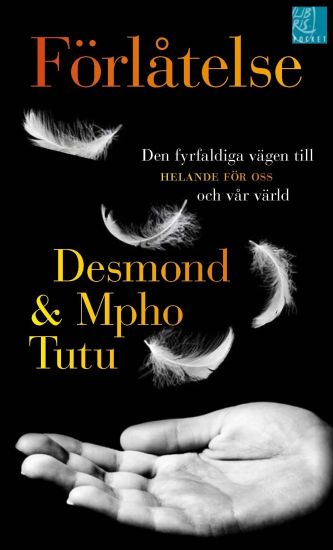
Förlåtelse : den fyrfaldiga vägen till helande för oss och vår värld
Desmond Tutu; Mpho Tutu
Libris förlag
2015
pokkari
" Jag har ofta sagt att i Sydafrika hade det inte funnits någon framtid utan förlåtelse. Vår ilska och viljan att hämnas hade kunnat förstöra allt. Det är lika sant för var och en av oss som för hela världen. "Fredspristagaren och rättviserebellen Desmond Tutu har tillsammans med sin dotter Mpho Tutu skrivit en bok om förlåtelse. Den är grundläggande, praktisk och fylld av medkänsla.Här får vi möta kvinnan som vittnade i Sydafrikas sannings- och försoningskommission om hur brutalt hennes man blev mördad, men som ändå säger: Jag vill veta vilka som mördade min man. Jag vill förlåta dem. Här får vi möta många andra som haft svårt att förlåta. Den unga kvinna som blev utsatt för övergrepp av mammans nya man, pojken som varje dag blev slagen av sin far. Hur gör man om man vill förlåta? Och kan allting verkligen förlåtas?Boken är skriven för alla som längtar efter att kunna förlåta, men även för dem som är i behov av förlåtelse. Världen behöver förlåtelse, skriver Desmond och Mpho Tutu, och alla människor kan bli en del av den.Desmond Tutu är ärkebiskop emeritus i Anglikanska kyrkan i Sydafrika och anses vara Sydafrikas mest framstående ledare, näst efter Nelson Mandela. Han blev känd motståndare till apartheid och icke-våldsförespråkare och ledde Sydafrikas sannings- och försoningskommissions sedan apartheidväldet fått ett slut. Tutu fick nobelpris 1984, och har på senare år engagerat sig för att uppmärksamma det svåra hiv/aids-läget i Afrika.Mpho Tutu är dotter till Desmond Tutu och präst inom episkopala kyrkan. Hon är grundare och direktor för the Tutu Institute for Prayer and Pilgrimage i Washington D C, USA, samt ordförande för Global Aids Alliance. År 2010 gjorde hon ett uppmärksammat besök på bokmässan i Göteborg i samband med att boken Om godhet kom ut på svenska.
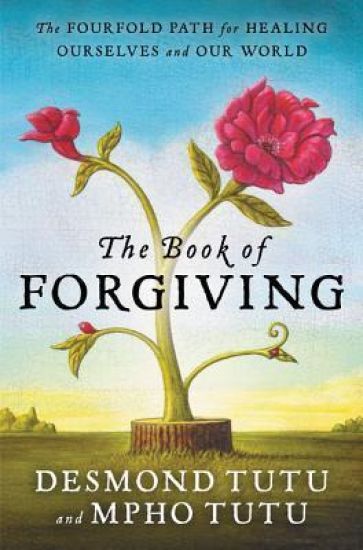
The Book of Forgiving: The Fourfold Path for Healing Ourselves and Our World
Desmond Tutu; Mpho Tutu
HarperOne
2015
nidottu
Archbishop Desmond Tutu, Nobel Peace Prize winner, Chair of The Elders, and Chair of South Africa's Truth and Reconciliation Commission, along with his daughter, the Reverend Mpho Tutu, offer a manual on the art of forgiveness--helping us to realize that we are all capable of healing and transformation.Tutu's role as the Chair of the Truth and Reconciliation Commission taught him much about forgiveness. If you asked anyone what they thought was going to happen to South Africa after apartheid, almost universally it was predicted that the country would be devastated by a comprehensive bloodbath. Yet, instead of revenge and retribution, this new nation chose to tread the difficult path of confession, forgiveness, and reconciliation.Each of us has a deep need to forgive and to be forgiven. After much reflection on the process of forgiveness, Tutu has seen that there are four important steps to healing: Admitting the wrong and acknowledging the harm; Telling one's story and witnessing the anguish; Asking for forgiveness and granting forgiveness; and renewing or releasing the relationship. Forgiveness is hard work. Sometimes it even feels like an impossible task. But it is only through walking this fourfold path that Tutu says we can free ourselves of the endless and unyielding cycle of pain and retribution. The Book of Forgiving is both a touchstone and a tool, offering Tutu's wise advice and showing the way to experience forgiveness. Ultimately, forgiving is the only means we have to heal ourselves and our aching world.
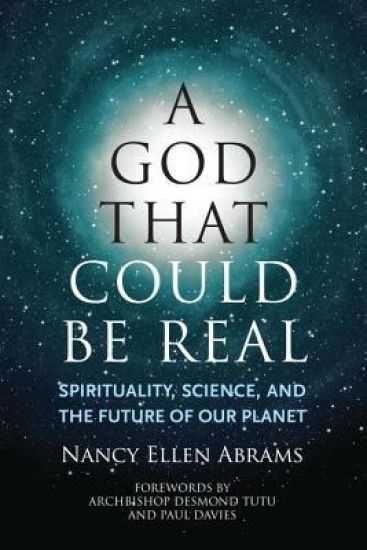
A paradigm-shifting blend of science, religion, and philosophy for agnostic, spiritual-but-not-religious, and scientifically minded readers Many people are fed up with the way traditional religion alienates them: too easily it can perpetuate conflict, vilify science, and undermine reason. Nancy Abrams, a philosopher of science, lawyer, and lifelong atheist, is among them. And yet, when she turned to the recovery community to face a personal struggle, she found that imagining a higher power gave her a new freedom. Intellectually, this was quite surprising. Meanwhile her husband, famed astrophysicist Joel Primack, was helping create a new theory of the universe based on dark matter and dark energy, and Abrams was collaborating with him on two books that put the new scientific picture into a social and political context. She wondered, "Could anything actually exist in this strange new universe that is worthy of the name 'God'" In "A God That Could Be Real," Abrams explores a radically new way of thinking about God. She dismantles several common assumptions about God and shows why an omniscient, omnipotent God that created the universe and plans what happens is incompatible with science--but that this doesn't preclude a God that can comfort and empower us. Moving away from traditional arguments for God, Abrams finds something worthy of the name "God" in the new science of emergence: just as a complex ant hill emerges from the collective behavior of individually clueless ants, and just as the global economy emerges from the interactions of billions of individuals' choices, God, she argues, is an "emergent phenomenon" that arises from the staggering complexity of humanity's collective aspirations and is in dialogue with every individual. This God did not create the universe--it created the meaning of the universe. It's not universal--it's planetary. It can't change the world, but it helps "us" change the world. A God that could be real, Abrams shows us, is what humanity needs to inspire us to collectively cooperate to protect our warming planet and create a long-term civilization.
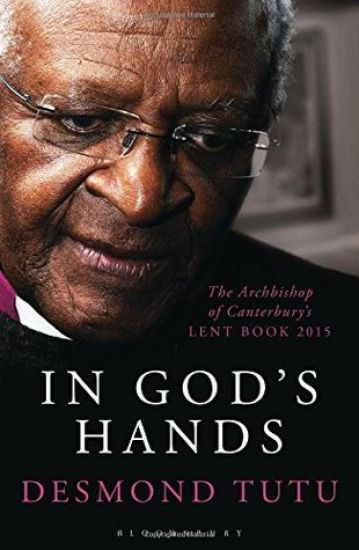
In God's Hands is the 2015 Archbishop of Canterbury's Lent Book.In this little gem of a book, Archbishop Desmond Tutu distils the wisdom forged through a childhood of poverty and apartheid, an adulthood lived in the glare of the world's media, and the long and agonising struggle for truth and reconciliation in South Africa, into the childlike simplicity which Jesus tells us characterises the Kingdom of God.Archbishop Tutu has produced a meditation on the infinite love of God and the infinite value of the human individual. Not only are we in God`s hands, he says, our names are engraved on his palms. Throughout an often turbulent life, Archbishop Tutu has fought for justice and against oppression and prejudice.As we learn in this book, what has driven him forward is an unshakeable belief that human beings are created in the image of God and are infinitely valuable. Each one of us is a God-carrier, a tabernacle, a sanctuary of the Divine Trinity. God loves us not because we are lovable but because he first loved us. And this turns our values upside down. In this sense the Gospel is the most radical thing imaginable.It is extremely moving that in this book Archbishop Tutu returns to something so simple and so profound after a life in which he has been involved in political, social and ethical issues that have seemed to be so very complex.

Let There Be Light combines the extraordinary talents of Nancy Tillman, the New York Times bestselling author of On the Night You Were Born, and Nobel Peace Prize Winner Archbishop Desmond Tutu in this retelling of the biblical story of creation. The pairing of Archbishop Tutu's lyrical text from The Children of God Storybook Bible and Tillman's wondrous illustrations bring the pages of this board book to life for readers young and old.