

Kirjailija
Dewitt Henry
Kirjat ja teokset yhdessä paikassa: 17 kirjaa, julkaisuja vuosilta 2001-2026, suosituimpien joukossa Perspectives. Vertaile teosten hintoja ja tarkista saatavuus suomalaisista kirjakaupoista.
17 kirjaa
Kirjojen julkaisuhaarukka 2001-2026.

In DeWitt Henry's flowing, essay-style poems, surprising convergences and divergences arise as his varied subjects are explored, from a post-marathon bombing house-to-house search in Watertown, Massachusetts; Henry's roles as husband, father, brother-in-law, and grandfather are proffered through a motley lens. Unmatched since Alexander Pope, these essay-poems display wit, verbal playfulness, thoughtfulness, emotion, and personal reflection across an astonishing array of subjects. His poems, deep and cleverly funny, pose unique questions that haven't been asked in poetry before, leaving the reader in a state of wonder. Literary touchstones-Macbeth, The Merchant Of Venice, Romeo And Juliet\, and Hamlet-are combined with lived experience in these poems. Each represents a journey. How delightful are these extended meditations Wisdom, wit, and learning characterize each narrative poem. Like the most captivating autobiographies, Do I Dream Or Wake? transcends its genre. The personal becomes universal through this enticing array of situations and circumstances. Discover yourself by opening it anywhere

In DeWitt Henry's flowing, essay-style poems, surprising convergences and divergences arise as his varied subjects are explored, from a post-marathon bombing house-to-house search in Watertown, Massachusetts; Henry's roles as husband, father, brother-in-law, and grandfather are proffered through a motley lens. Unmatched since Alexander Pope, these essay-poems display wit, verbal playfulness, thoughtfulness, emotion, and personal reflection across an astonishing array of subjects. His poems, deep and cleverly funny, pose unique questions that haven't been asked in poetry before, leaving the reader in a state of wonder. Literary touchstones-Macbeth, The Merchant Of Venice, Romeo And Juliet\, and Hamlet-are combined with lived experience in these poems. Each represents a journey. How delightful are these extended meditations Wisdom, wit, and learning characterize each narrative poem. Like the most captivating autobiographies, Do I Dream Or Wake? transcends its genre. The personal becomes universal through this enticing array of situations and circumstances. Discover yourself by opening it anywhere

Filled with a tight-knit ensemble cast of deeply realized characters, this earthy, beautifully nuanced story, set in suburban industrial America, reveals to us an everyday working woman as she finds her way on her own terms-through work, family, grief and love, and then-not so much finds as makes, a place for herself in the world.DeWitt Henry masterfully portrays Anna Maye gaining an inner force, which she refuses to compromise. The novel evokes in the reader a sense of the power of the heart and the will to transform one's self-and to make claims on what's rightfully one's own.Winner of the Peter Taylor Prize for the Novel.

Filled with a tight-knit ensemble cast of deeply realized characters, this earthy, beautifully nuanced story, set in suburban industrial America, reveals to us an everyday working woman as she finds her way on her own terms-through work, family, grief and love, and then-not so much finds as makes, a place for herself in the world.DeWitt Henry masterfully portrays Anna Maye gaining an inner force, which she refuses to compromise. The novel evokes in the reader a sense of the power of the heart and the will to transform one's self-and to make claims on what's rightfully one's own.Winner of the Peter Taylor Prize for the Novel.

In this stunning new collection, DeWitt Henry reckons with a past that is personal, familial, and cultural as well as the present dysfunction of American political life. His narratives and portraits are drawn and colored by candid and resonant observations. "Are scars proof of wounds / or of healing?" So asks DeWitt Henry's splendid book of poems. Profound and often profoundly, wryly funny, Trim Reckonings asks questions poems don't seem to have asked before, and leaves the reader in wonder. These are hard-won, earned, poems of passionate engagement.


Thirty-four poems transformed by DeWitt Henry from the original prose by twenty-nine classic and contemporary authors, ranging from Tolstoy to Twain, Joyce to Kinkaid, Woolf to Munro, Swift to D.H. Lawrence, Eliot to Bowen, and more. "By following instinct and trusting my impulses," the author writes, "I propose my thematic blind, which includes loneliness, grief, isolation, the patriarchal bell-jarring of women, capitalist and racist exploitation of the needy, issues of conscience and dehumanization in war, courtship, the male gaze, fantasy in love, vitality in dying, male helplessness in birthing, children defying parents, the need for 'stupidity, ' sentimental excesses, nihilism and its terrors, and grace and urgency of art itself. In short, the issues of mu life, of living, and of our times, if not all times."

Be warned The far-ranging notes and essays of Sweet Marjoram are addictive. Once I began reading, I couldn't stop. I wanted more of Henry's wit and wisdom, his dazzling, surprising juxtapositions. I wanted to see him keep making the familiar new, and the strange familiar. Whether he's writing about folly or time or food or meat or envy or appetite, Henry has a gift for making his reader see the world afresh. A delightful and highly original collection.--Margot Livesey
Dismembering the American Dream
Kate Charlton-Jones; DeWitt Henry; Monica Yates
The University of Alabama Press
2016
nidottu
Winner of the Elizabeth Agee Prize in American LiteratureSince his death in Alabama in 1992, the work of American writer Richard Yates has enjoyed a renaissance, culminating in director Sam Mendes’s adaption of the novel Revolutionary Road (starring Leonardo DiCaprio and Kate Winslet). Dismembering the American Dream is the first book-length critical study of Yates’s fiction.Kate Charlton-Jones argues that to read Yates’s tales of disordered lives is to uncover not misery, though the lives he describes are sad ones, but a profound, enriching, and humorous understanding of human weakness and vulnerability. Yates’s narratives absorb his readers so entirely, mirroring their own emotional highs and lows with such skill, that reading becomes recognition. Yates demonstrates his ability to tease powerful human drama out of the most ordinary, quotidian moments. At the same time, Yates’s fiction displays an object lesson in the art of fine prose writing, so it is no surprise that many early fans of Yates were also established writers.Charlton-Jones explores how Yates extends the realist form and investigates three main recurring themes of his fiction: observations about performative behavior, which are at the heart of all his fictions; his conception of the writer’s role in society; and how he envisages the development of social and sexual relationships. Furthermore, Charlton-Jones illustrates how Yates incorporates some of the concerns and methods of postmodernist writers but how, nevertheless, he resists their ontological challenges.Drawing on the author’s personal papers and with a foreword by DeWitt Henry and an afterword by Richard Yates’s daughter Monica, Dismembering the American Dream provides an extended critical examination of the often neglected but important work of this gifted and accomplished author.
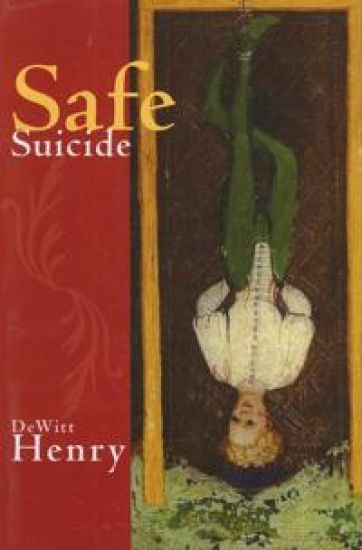
Against a background of suburban Philadelphia in the 1950s, and the family secret of his father's alcoholism, Henry comes of age as the youngest of four children. He rejects his father's course in managing the family chocolate factory, and goes on to college, becoming a writer and teacher. When Henry marries, and becomes a father himself, he is impacted by the social revolutions of the 1970s, and struggles to avoid his father's flaws. He leads a literary life in Boston, founds the literary magazine Ploughshares, and befriends novelist Richard Yates. During the 1980s, Henry suffers the deaths of his parents, infertility, rejections of his work, and setbacks in his teaching career. In the 1990s, while his daughter and adopted son are swept up into trials of adolescence and young adulthood, and as his wife grieves the deaths of friends and family, Henry confronts a spiritual abyss similar to his father's, and learns to surrender to life, to love, to aging and mortality. By turns lyrical, quirky, confessional, and experimental in form, Henry's essays build into an affirming and generous vision. While addiction, the uses of imagination, a passion for literature, and issues of heart and soul are key motifs, a bungee jump becomes Henry's central metaphor: "isn't this life? isn't this art? We live and trust in our safe suicides."
A novel of profound and humane realism, The Marriage of Anna Maye Potts tells the story of a 36-year-old Philadelphia woman whose quiet, working-class life is suddenly shaken by the death of her widowed father and by her younger sister’s takeover of the family home.Forced out of the house she has lived in for years, Anna Maye Potts proves to be a person of mettle and integrity, but only gradually does she come to realize her own strength. At the chocolate factory that employs her, she draws closer to a longtime co-worker named Louie, a man twenty years her senior. Louie has his own problems: alcoholism, a wife dying of cancer, a retarded daughter, and a penchant for adultery. His wife’s death leaves him anguished and baffled. Sharing his feelings with Anna Maye, he asks her out, and they begin to contemplate a life together.Once they are married, however, Louie is reluctant to grant Anna Maye the place in his life that his first wife had occupied. Anna Maye must then take charge, persuading Louie to bring his daughter home from the state school in which he has placed her and to commit himself to their future. Uncertainties remain, but Anna Maye has by this point achieved her own spiritual triumph.In his first novel, DeWitt Henry displays an extraordinary gift for portraying ordinary lives. His narrative touch is deft; his eye for the telling detail is unerring. The Marriage of Anna Maye Potts signals the emergence of an outstanding talent.The Author: A respected editor, essayist, and short-story writer, DeWitt Henry teaches at Emerson College in Boston and was the founding editor of the literary magazine Ploughshares, for which he received a Massachusetts Commonwealth Award. He has published five anthologies, most recently Breaking Into Print: Early Stories and Insights into Getting Published (A Ploughshares Anthology), Fathering Daughters: Reflections by Men (with James Alan McPherson), and Sorrow’s Company: Writers on Loss and Grief.