Kirjojen hintavertailu. Mukana 12 595 353 kirjaa ja 12 kauppaa.

Kirjailija

Diamond Jenness

Kirjat ja teokset yhdessä paikassa: 5 kirjaa, julkaisuja vuosilta 1977-2016, suosituimpien joukossa The Life of the Copper Eskimos. Vertaile teosten hintoja ja tarkista saatavuus suomalaisista kirjakaupoista.

5 kirjaa

Kirjojen julkaisuhaarukka 1977-2016.

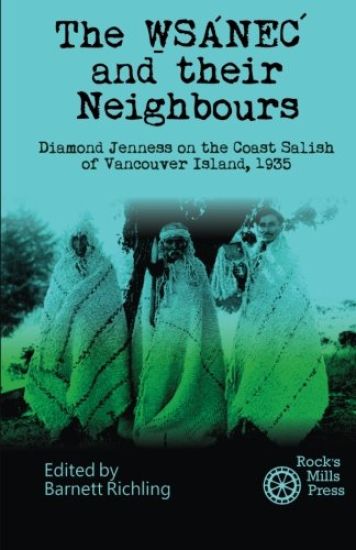
The WSANEC and Their Neighbours: Diamond Jenness on the Coast Salish of Vancouver Island, 1935
In 1935, National Museum of Canada anthropologist Diamond Jenness did several months of fieldwork with the Coast Salish peoples of southwestern Vancouver Island. His main focus was the WSANEC, then a little-known group whose reserves lay on the Saanich Peninsula, a short distance from Victoria. Here, and later in neighbouring areas, local elders shared with him their knowledge of the "old ways," a mode of living they all knew at first-hand in their younger days. Covering a wide array of subjects, everythingfrom fishing practices and marriage customs to conceptions of the natural world around them, the elders filled Jenness' notebooks with the substance of what stood to become a major contribution to the growing literature on the indigenous peoples of Canada's Pacific northwest. But when World War II intervened and he was called away to other duties, his partly-finished manuscript-The Saanich Indians of Vancouver Island-was set aside, the only of his many museum-sponsored ethnographic researches to remain unpublished in his lifetime. Now, with publication of The WSANEC and their Neighbours, the words and insights of those elders, written down eighty years ago, are available to a general readership for the first time. Drawing on Jenness' notes, editor Barnett Richling has completed the book as originally planned, supplementing the material with annotations, illustrations, and a collection of Salish myths and legends the anthropologist recorded during the same field trip. The result is a highly readable account, a blend of ethnography and oral history favouring description over analysis, and plain language over jargon. This body of WSANEC traditional knowledge comprises a valuable addition to scholarship on Coast Salish peoples, and also forms an excellent companion piece to Richling's recent edition of Jenness' Three Athapaskan Ethnographies."Richling has made a major contribution to the history of anthropology with the release of Diamond Jenness's 1935 study of the Coast Salish.... The most valuable contribution of the book are the 45 stories that follow Jenness's general ethnographic summary." --Wendy Wickwire, BC Studies"For over seventy years an important unfinished ethnographic manuscript and a stack of typed and handwritten field notes, recording the work of anthropologist Diamond Jenness with knowledgeable Coast Salish elders, languished in obscurity known only to a few specialists. Following his field work on the Saanich Peninsula, the east coast of Vancouver Island, and the Fraser Valley in 1934 and 1935, Jenness began writing. He completed nine of his sixteen planned chapters before other interests intervened. Now, thanks to the work of editor Barnett Richling and Rock's Mills Press, Jenness's manuscript, with additional material gleaned from his field notes, is made available to a wider audience.... These detailed and fascinating accounts will significantly enrich the reader's knowledge of the Indigenous history and culture of southern Vancouver Island and the Gulf Islands." --Chris Arnett, BC BookLookBarnett Richling ... has compiled Jenness's only unpublished notes with minimal editing into a book that is immediately engaging and highly readable. Jenness's narrative is packed with information about the lives of the WSANEC and five other Coast Salish bands.... With a keen ear, genuine interest in, and a high regard for Native culture, Jenness immersed himself in the WSANEC culture and formed close relationships with a dozen elders, giving him inside access to both the mundane and ritual lives of these Indigenous people.... Jenness does not impose on either his subjects or his readers his interpretations, analyses, speculations, and suppositions. He reports. Jenness simply, concisely, and thoroughly reports what he is learning in an engaging and interesting manner." --Melonie Ancheta, Native American and Indigenous Studies
Three Athapaskan Ethnographies

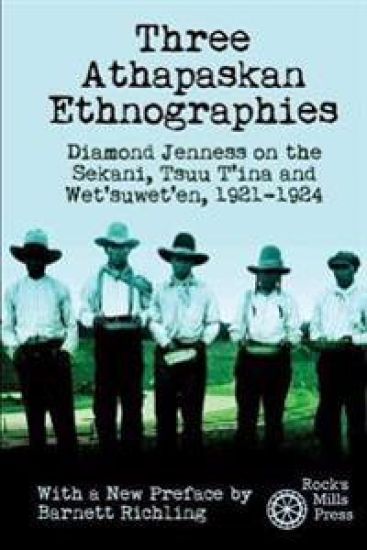
Three Athapaskan Ethnographies

Diamond Jenness; Barnett Richling

Rock's Mills Press
2015
pokkari
Available together in a single volume for the first time are Canadian anthropologist Diamond Jenness' pioneering studies of three Athapaskan nations: the prairie-dwelling Tsuu T'ina of Alberta, and the Sekani and Wet'suwet'en in British Columbia's mountainous northern interior. Based on his wide-ranging interviews with elders in the 1920s, these richly detailed and sympathetic ethnographies comprise a valuable record of the histories and cultures of indigenous communities, like myriad others across the country and around the world, struggling to preserve their autonomy and traditions in the face of relentless assimilative forces.This edition contains original black and white photography, Jenness' own drawings, and a wealth of stories collected firsthand from his informants. And in a new preface, Barnett Richling sketches the disciplinary and institutional background to early northern Athapaskan researches, and describes the local conditions Jenness met, and the methods he employed, while in the field. The work of one of Canada's most distinguished anthropologists, this trio of keenly observed and meticulously drawn accounts remains fascinating reading to this day.
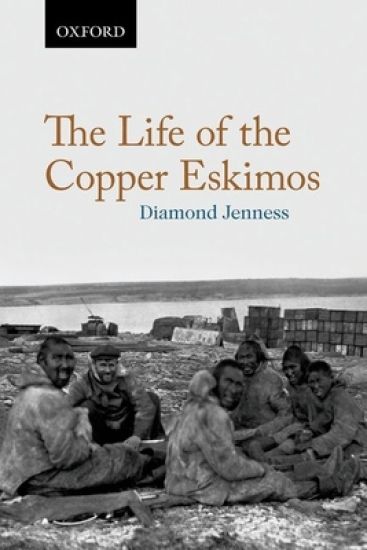
The Life of the Copper Eskimos

The Life of the Copper Eskimos

Barnett Richling; Diamond Jenness

Oxford University Press, Canada
2015
nidottu
First published in 1922, The Life of the Copper Eskimos has long been regarded as a classic of Arctic ethnography. In this groundbreaking work, pioneer anthropologist Diamond Jenness describes in vivid detail the everyday interactions, practices, customs, and beliefs of the Copper Inuit (Inuinnait) with whom he lived from 1914 to 1916 - people who were, at the time, barely touched by contacts with the Western world. Featuring a new introduction that expertly sets the stage for Jenness's observations, this exceptional volume offers modern readers a rare glimpse into a vibrant and dynamic peoples' past ways of life. The preface is written by Barnett Richling, who recently retired as Chair of the Department of Anthropology at the University of Winnipeg.
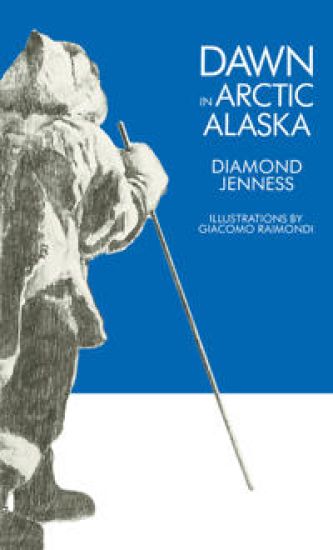
Dawn in Arctic Alaska

Dawn in Arctic Alaska

Diamond Jenness

University of Chicago Press
1984
nidottu
"The Karluk had disappeared. Whether the vessel had freed itself from the ice and steamed eastward, or whether, still imprisoned, it had been carried by the ice westward, we could not know. In any case it was gone, leaving our hunting party of six men marooned on a sandy islet surrounded by thin ice and open water. The wind finally died away, in the calm air the water rapidly froze over again, and on September 30 we crossed with our two sleds to the mainland." In 1913 a young ethnologist from New Zealand boarded a ship for the Arctic, beginning a personal journey that was to make Diamond Jenness one of the twentieth century's foremost authorities on Alaskan Eskimos. Jenness had been asked to join the Stefansson expedition, and his official duties were to collect ethnographic details on the Eskimos—their culture, technology, religion, and social organization. His account of the expedition was published as People of the Twilight in 1928, but Jenness also kept a diary of his three years among the Eskimos. He was eventually persuaded to publish it as Dawn in Arctic Alaska. Predating the genre of personal ethnographies that has become so popular and important today, Jenness's tales blend his keen observations of the Arctic and its people with his own reflections and sensory experiences. He expresses great adimiration for the customs and character of the Eskimos and great regret and disappointment over the destruction of their lifeway through contact with white men.
The Indians of Canada

The Indians of Canada

Diamond Jenness

University of Toronto Press
1977
pokkari
First published in 1932, The Indians of Canada remains the most comprehensive works available on Canada's Indians. Part one includes chapters on languages, economic conditions, food resources, hunting and fishing, dress and adornment, dwellings, travel and transportation, trade and commerce, social and political organization, social life, religion, folklore and traditions, and drama, music, and art. The second part of the book describes the tribes in different groupings: the migratory tribbes of the eastern woodlands, the plains tribes, tribes of the Pacific coast, of the Cordillera, and the Mackenzie and Yukon River basins, and finally the Eskimo.