Kirjojen hintavertailu. Mukana 12 595 353 kirjaa ja 12 kauppaa.

Kirjailija

Diana Espírito Santo

Kirjat ja teokset yhdessä paikassa: 8 kirjaa, julkaisuja vuosilta 2015-2026, suosituimpien joukossa UFOs, the Absurd, and the Limit of Anthropological Knowledge. Vertaile teosten hintoja ja tarkista saatavuus suomalaisista kirjakaupoista.

Mukana myös kirjoitusasut: Diana Espirito Santo

8 kirjaa

Kirjojen julkaisuhaarukka 2015-2026.

Not-Knowing

Not-Knowing

Diana Espírito Santo; Sergio González Varela

Cambridge University Press
2026
pokkari
Ethnographers of socio-cultural phenomena routinely face moments in the field that evoke no answers for our interlocutors, or in which answers come in entirely different forms from those anthropologists and other scholars expect. The over-emphasis on structure and meaning in social science, and anthropology in particular, has inhibited the study of a-conceptual “darker” spaces of cultural phenomena. In this book, Diana Espírito Santo and Sergio González Varela explore areas of social life often neglected by traditional ethnographers, analytically described as spaces of negation, of not-knowing, where bodies, environments and realities resist explanation or description, and where there are ultimately no answers – either for interlocutors or researchers. Examining fields as diverse as divination, parapsychology, monsterology, Brazilian capoeira, tattoo artistry, Afrofuturism, Umbanda, ufology, and Cuban Spiritism, they argue that radical uncertainty should propel novel forms of theory.

Not-Knowing

Not-Knowing

Diana Espírito Santo; Sergio González Varela

Cambridge University Press
2026
sidottu
Ethnographers of socio-cultural phenomena routinely face moments in the field that evoke no answers for our interlocutors, or in which answers come in entirely different forms from those anthropologists and other scholars expect. The over-emphasis on structure and meaning in social science, and anthropology in particular, has inhibited the study of a-conceptual “darker” spaces of cultural phenomena. In this book, Diana Espírito Santo and Sergio González Varela explore areas of social life often neglected by traditional ethnographers, analytically described as spaces of negation, of not-knowing, where bodies, environments and realities resist explanation or description, and where there are ultimately no answers – either for interlocutors or researchers. Examining fields as diverse as divination, parapsychology, monsterology, Brazilian capoeira, tattoo artistry, Afrofuturism, Umbanda, ufology, and Cuban Spiritism, they argue that radical uncertainty should propel novel forms of theory.
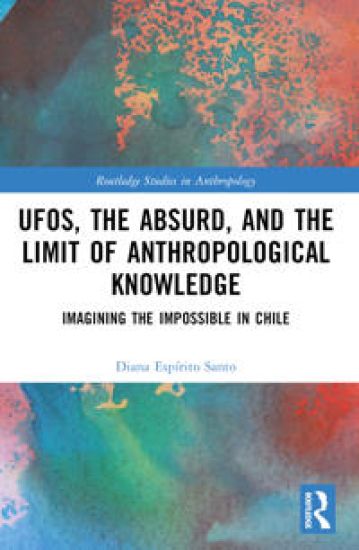
UFOs, the Absurd, and the Limit of Anthropological Knowledge
This book offers an ethnographic and conceptual analysis of contemporary UFO phenomena, focusing specifically on Chilean ufology and the ufological “absurd”, nonsensical instances for their experiencers in which there is no conceptual way out. It asks how anthropology can come to terms with what is not said, what is not known, what is in the dark, or even with what both “is” and “is not”. The work draws on three years of participant observation with empirical ufologists, amateur sky watchers, and contactees of varying kinds in Chile. The chapters mobilize three main bodies of literature to elucidate the ufological absurd: negative theology, anthropology of play and deceit, and the physics of dark matter. They explore notions of parallax, paradox, and trickster anthropology. The author takes UFO phenomena, specifically the absurd aspects, as a heuristic with which to posit a conversation between domains; a conversation which highlights darknesses, finiteness, and the limits of representation and media in anthropology, one that could perhaps signal the route to a new language. Consideration is given to how not-knowing can be a space of extreme productiveness for the discipline. The argument put forward is that only by doing an anthropology that looks outside of itself for conceptual inspiration can we come to terms with the non-representable, the un-conceptualizable, the fully paradoxical. This innovative book will be of particular interest to scholars of anthropological theory and religion.
UFOs, the Absurd, and the Limit of Anthropological Knowledge
This book offers an ethnographic and conceptual analysis of contemporary UFO phenomena, focusing specifically on Chilean ufology and the ufological “absurd”, nonsensical instances for their experiencers in which there is no conceptual way out. It asks how anthropology can come to terms with what is not said, what is not known, what is in the dark, or even with what both “is” and “is not”. The work draws on three years of participant observation with empirical ufologists, amateur sky watchers, and contactees of varying kinds in Chile. The chapters mobilize three main bodies of literature to elucidate the ufological absurd: negative theology, anthropology of play and deceit, and the physics of dark matter. They explore notions of parallax, paradox, and trickster anthropology. The author takes UFO phenomena, specifically the absurd aspects, as a heuristic with which to posit a conversation between domains; a conversation which highlights darknesses, finiteness, and the limits of representation and media in anthropology, one that could perhaps signal the route to a new language. Consideration is given to how not-knowing can be a space of extreme productiveness for the discipline. The argument put forward is that only by doing an anthropology that looks outside of itself for conceptual inspiration can we come to terms with the non-representable, the un-conceptualizable, the fully paradoxical. This innovative book will be of particular interest to scholars of anthropological theory and religion.
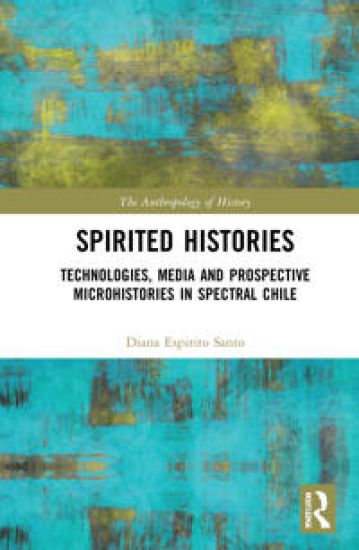
Spirited Histories

Spirited Histories

Diana Espírito Santo

TAYLOR FRANCIS LTD
2024
nidottu
Spirited Histories combines ethnography with critical theory to provide a sophisticated exploration of the intersection of haunting and the paranormal with technology, media, and history. Retrieving the past in places of trauma and death can take on many facets. One of these is an attention to hauntings, ghosts, and absences that go with the collective experience of loss and disappearance. People memorialize the dead and their stories in myriad ways. But what about the untold stories, or the forgotten, unnamed? This book explores the ways groups of Chilean paranormal investigators and ghost tour operators produce alternate histories using paranormal machinery, rather than simply theatricalizing pain. It offers a look at technologies, machines, and apparatuses – themselves imbued with a long history of supernatural and scientific expectations – and a social analysis of how certain groups of people marshal the voices of the dead to generate particular micro-histories. This fascinating volume will be of interest to a range of disciplines, including anthropology, sociology, history, religious studies, and scholars of technology and new media.
Developing the Dead

Developing the Dead

Diana Espírito Santo

University Press of Florida
2023
pokkari
Studying the relationships cultivated by mediums between the living and the dead.Based on extensive fieldwork among espiritistas and their patrons in Havana, this book makes the surprising claim that Spiritist practices are fundamentally a project of developing the self. When mediums cultivate relationships between the living and the dead, argues Diana Espírito Santo, they develop, learn, sense, dream, and connect to multiple spirits (muertos), expanding the borders of the self. This understanding of selfhood is radically different from Enlightenment ideas of an autonomous, bounded self and holds fascinating implications for prophecy, healing, and self-consciousness. Developing the Dead shows how Espiritismo's self-making process permeates all aspects of life, not only for its own practitioners but also for those of other Afro-Cuban religions.
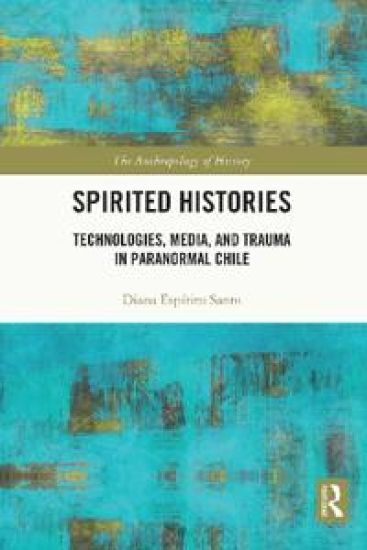
Spirited Histories

Spirited Histories

Diana Espírito Santo

TAYLOR FRANCIS LTD
2022
sidottu
Spirited Histories combines ethnography with critical theory to provide a sophisticated exploration of the intersection of haunting and the paranormal with technology, media, and history. Retrieving the past in places of trauma and death can take on many facets. One of these is an attention to hauntings, ghosts, and absences that go with the collective experience of loss and disappearance. People memorialize the dead and their stories in myriad ways. But what about the untold stories, or the forgotten, unnamed? This book explores the ways groups of Chilean paranormal investigators and ghost tour operators produce alternate histories using paranormal machinery, rather than simply theatricalizing pain. It offers a look at technologies, machines, and apparatuses – themselves imbued with a long history of supernatural and scientific expectations – and a social analysis of how certain groups of people marshal the voices of the dead to generate particular micro-histories. This fascinating volume will be of interest to a range of disciplines, including anthropology, sociology, history, religious studies, and scholars of technology and new media.
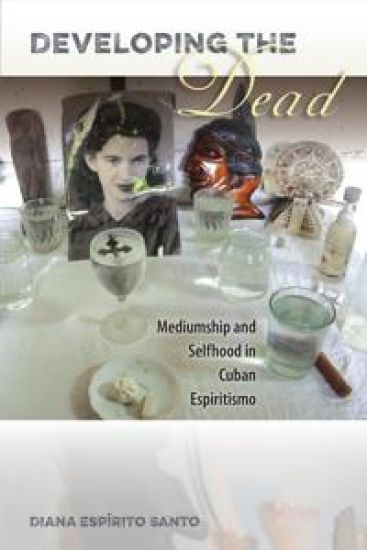
Developing the Dead

Developing the Dead

Diana Espirito Santo

University Press of Florida
2015
nidottu
Despite its powerful influence on Cuban culture, Espiritismo has often been overlooked by scholars. Developing the Dead is the first in-depth exploration of contemporary Espiritismo in Cuba. Based on extensive fieldwork among religious practitioners and their clients in Havana, this book makes the surprising claim that Spiritist practices are fundamentally a project of developing the self.When mediums cultivate relationships between the living and the dead, argues Diana Espírito Santo, they develop, learn, sense, dream, and connect to multiple spirits (muertos), expanding the borders of the self. This understanding of selfhood is radically different fromEnlightenment ideas of an autonomous, bounded self and holds fascinating implications for prophecy, healing, and self-consciousness.Developing the Dead shows how Espiritismo’s self-making process permeates all aspects of life, not only for its own practitioners but also for those of other Afro-Cuban religions.