Kirjojen hintavertailu. Mukana 12 411 439 kirjaa ja 12 kauppaa.

Kirjailija

Diane C. Fujino

Kirjat ja teokset yhdessä paikassa: 4 kirjaa, julkaisuja vuosilta 2005-2020, suosituimpien joukossa Nisei Radicals. Vertaile teosten hintoja ja tarkista saatavuus suomalaisista kirjakaupoista.

4 kirjaa

Kirjojen julkaisuhaarukka 2005-2020.

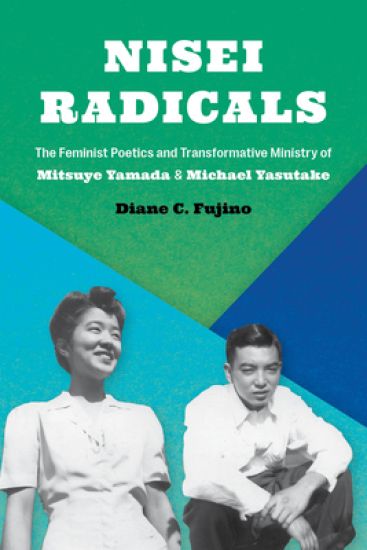
Nisei Radicals

Nisei Radicals

Diane C. Fujino

University of Washington Press
2020
pokkari
A dual biography of unruly activism that spans national and racial boundariesDemanding liberation, advocating for the oppressed, and organizing for justice, siblings Mitsuye Yamada (1923–) and Michael Yasutake (1920–2001) rebelled against respectability and assimilation, charting their own paths for what it means to be Nisei. Raised in Seattle and then forcibly removed and detained in the Minidoka concentration camp, their early lives mirrored those of many second-generation Japanese Americans. Yasutake's pacifism endured even with immense pressure to enlist during his confinement and in the years following World War II. His faith-based activism guided him in condemning imperialism and inequality, and he worked tirelessly to free political prisoners and defend human rights. Yamada became an internationally acclaimed feminist poet, professor, and activist who continues to speak out against racism and patriarchy.Weaving together the stories of two distinct but intrinsically connected political lives, Nisei Radicals examines the siblings' half century of dedication to global movements, including multicultural feminism, Puerto Rican independence, Japanese American redress, Indigenous sovereignty, and more. From displacement and invisibility to insurgent mobilization, Yamada and Yasutake rejected stereotypes and fought to dismantle systems of injustice.
Nisei Radicals

Nisei Radicals

Diane C. Fujino

University of Washington Press
2020
sidottu
A dual biography of unruly activism that spans national and racial boundariesDemanding liberation, advocating for the oppressed, and organizing for justice, siblings Mitsuye Yamada (1923–) and Michael Yasutake (1920–2001) rebelled against respectability and assimilation, charting their own paths for what it means to be Nisei. Raised in Seattle and then forcibly removed and detained in the Minidoka concentration camp, their early lives mirrored those of many second-generation Japanese Americans. Yasutake's pacifism endured even with immense pressure to enlist during his confinement and in the years following World War II. His faith-based activism guided him in condemning imperialism and inequality, and he worked tirelessly to free political prisoners and defend human rights. Yamada became an internationally acclaimed feminist poet, professor, and activist who continues to speak out against racism and patriarchy.Weaving together the stories of two distinct but intrinsically connected political lives, Nisei Radicals examines the siblings' half century of dedication to global movements, including multicultural feminism, Puerto Rican independence, Japanese American redress, Indigenous sovereignty, and more. From displacement and invisibility to insurgent mobilization, Yamada and Yasutake rejected stereotypes and fought to dismantle systems of injustice.
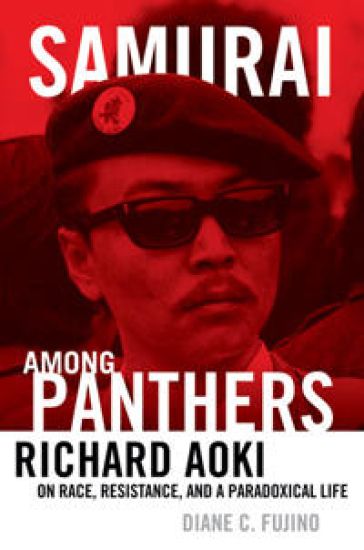
Samurai Among Panthers

Samurai Among Panthers

Diane C. Fujino

University of Minnesota Press
2012
nidottu
An iconic figure of the Asian American movement, Richard Aoki (1938–2009) was also, as the most prominent non-Black member of the Black Panther Party, a key architect of Afro-Asian solidarity in the 1960s and ’70s. His life story exposes the personal side of political activism as it illuminates the history of ethnic nationalism and radical internationalism in America. A reflection of this interconnection, Samurai among Panthers weaves together two narratives: Aoki’s dramatic first-person chronicle and an interpretive history by a leading scholar of the Asian American movement, Diane C. Fujino. Aoki’s candid account of himself takes us from his early years in Japanese American internment camps to his political education on the streets of Oakland, to his emergence in the Black Panther Party. As his story unfolds, we see how his parents’ separation inside the camps and his father’s illegal activities shaped the development of Aoki’s politics. Fujino situates his life within the context of twentieth-century history-World War II, the Cold War, and the protests of the 1960s. She demonstrates how activism is both an accidental and an intentional endeavor and how a militant activist practice can also promote participatory democracy and social service. The result of these parallel voices and analysis in Samurai among Panthers is a complex-and sometimes contradictory-portrait of a singularly extraordinary activist and an expansion and deepening of our understanding of the history he lived.
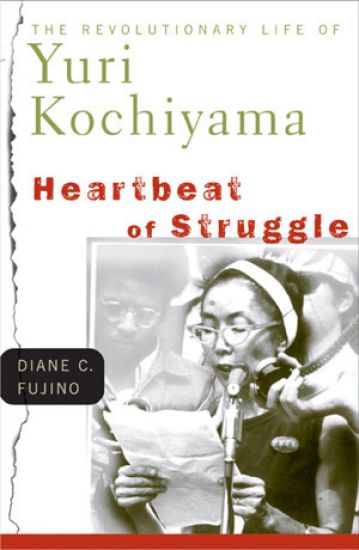
Heartbeat of Struggle

Heartbeat of Struggle

Diane C. Fujino

University of Minnesota Press
2005
nidottu
On February 12, 1965, in the Audubon Ballroom, Yuri Kochiyama cradled Malcolm X in her arms as he died, but her role as a public servant and activist began much earlier than this pivotal public moment. Heartbeat of Struggle is the first biography of this courageous woman, the most prominent Asian American activist to emerge during the 1960s. Based on extensive archival research and interviews with Kochiyama's family, friends, and the subject herself, Diane C. Fujino traces Kochiyama's life from an "all-American" childhood to her achievements as a tireless defender of - and fighter for - human rights. Raised by a Japanese immigrant family in California during the 1920s and 1930s, Kochiyama was active in sports, school, and church. She was both unquestioningly patriotic and largely unconscious of race and racism in the United States. After Pearl Harbor, however, Kochiyama's family was among the thousands of Japanese Americans forcibly removed to internment camps for the duration of the war, a traumatic experience that opened her eyes to the existence of social injustice. After the war, Kochiyama moved to New York. It was in the context of the vibrant Black movement in Harlem in the 1960s that she began her activist career. There, she met Malcolm X, who inspired her radical political development and the ensuing four decades of incessant work for Black liberation, Asian American equality, Puerto Rican independence, and political prisoner defense. Kochiyama is widely respected for her work in forging unity among diverse communities, especially between Asian and African Americans. Fujino, a scholar and activist, offers an in-depth examination of Kochiyama's political awakening, rich life, and impressive achievements with particular attention to how her public role so often defied gender, racial, and cultural norms. Heartbeat of Struggle is a source of inspiration and guidance for anyone committed to social change.