Kirjojen hintavertailu. Mukana 12 390 323 kirjaa ja 12 kauppaa.

Kirjailija

Dianne L. Durante

Kirjat ja teokset yhdessä paikassa: 18 kirjaa, julkaisuja vuosilta 2007-2023, suosituimpien joukossa Sunny Sundays. Vertaile teosten hintoja ja tarkista saatavuus suomalaisista kirjakaupoista.

Mukana myös kirjoitusasut: Dianne L Durante, Dianne L> Durante

18 kirjaa

Kirjojen julkaisuhaarukka 2007-2023.

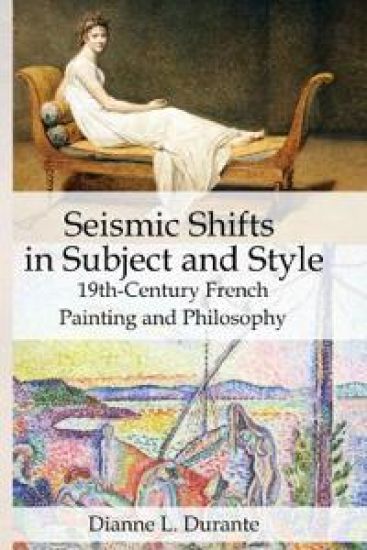
Seismic Shifts in Subject and Style

Seismic Shifts in Subject and Style

Dianne L Durante

IngramSpark
2023
pokkari
Why did subject and style in art change so dramatically over the course of the 19th century - from Madame Recamier, by Jacques-Louis David (1800) to Luxe, Calme et Volupte by Matisse (1904)? We'll look for an explanation through a combination of art analysis and philosophical detection.Artistic trends are not the result of a collective consciousness working its will. Such trends are simply the styles that a majority of artists chooses to embrace. Each of those artists, in turn, makes his own choice of style. Over the 19th century, France was the epicenter of artistic change. We briefly survey the works of 18 French artists, including Neoclassicists, Romantics, Naturalists, Impressionists, Post-Impressionists, Pointillists, Symbolists, and Academics. Then we look at what these artists (as well as a few influential art critics) have to say about four crucial issues: the role of training; the role of reason vs. emotion in creating art; the importance of style vs. subject; and qualifications for judging art. Finally we see how these statements relate to the philosophical context of the time.
Getting More Enjoyment from Sculpture You Love
A favorite artwork can provide you with enjoyment and inspiration, help you recall important events of the past, and help you project a course into the future. Get even more enjoyment from a work of art you love by approaching it with an active mind.This book sets out a method for getting from the visual to the verbal - from looking at an artwork to thinking and talking about it. With examples that progress from simple to complex, it demonstrates how to study a sculpture in detail to determine its theme, and how to evaluate it in emotional, esthetic, philosophical, and art-historical terms. The goal: to allow you to luxuriate in spending more time with your own favorite sculptures. The bonus: knowing explicitly which aspect of a favorite work appeals to you will help you find new favorites. May this book give you hours of enjoyment as you read it ... and decades of enjoyment as you look with new eyes at your current and future favorite works of art
From Portraits to Puddles: New York Memorails from the Civil War to the World Trade Center Memorial (Reflecting Absence)
Surely we can offer the victims of 9/11 a better tribute than Reflecting Absence, a gloomy piece of landscape architecture with lists of names. But what makes an effective tribute? What makes a memorable memorial? The sculptures in nearby Battery Park provide excellent examples of memorials dedicated over the past hundred years. This essay points out lessons from half a dozen of them that can be applied to a memorial for the World Trade Center - and explains how our memorials declined from portraits to puddles. Read it in the comfort of your armchair (about 250 photos are included) or go on a walking tour. Also included: an illustrated and annotated list of 30 memorials in Manhattan that are dedicated to people whose job is to keep us safe: soldiers, policemen, firemen, and so on.
Sunny Sundays

Sunny Sundays

Dianne L Durante

IngramSpark
2023
pokkari
For five years, I've been sending out a Sunday email with brief comments on art that's inspiring, thought-provoking, skillfully executed, and/or beautiful. Ayn Rand described art as emotional fuel. My goal-and my selfish pleasure -is to help you find more of that fuel and use it more efficiently. How? By showing you wonderful art and provoking you to think about why you enjoy a particular piece ... or don't. This volume offers 172 recommendations, of which 54 were originally sent only to paid supporters. Among them are paintings, sculptures, architecture, decorative arts, music, film, TV shows, novels, dramas, short stories, poetry, and select works from museums and exhibitions.
Starry Solitudes, a collection of inspiring and thought-provoking poetry
For five years, I've been sending out a Sunday email with brief comments on art that's inspiring, thought-provoking, skillfully executed, and/or beautiful. Ayn Rand described art as emotional fuel. My goal-and my selfish pleasure -is to help you find more of that fuel and use it more efficiently. How? By showing you wonderful art and provoking you to think about why you enjoy a particular piece ... or don't. This volume includes ninety-eight of the poems I've recommended, sorted loosely by topic: Inspiration, Art & Beauty, Work & Leisure, Courage & Perseverance, Family, Country, Nature, Travel, Truth & Knowledge, and Love, Loss, & Recovery.
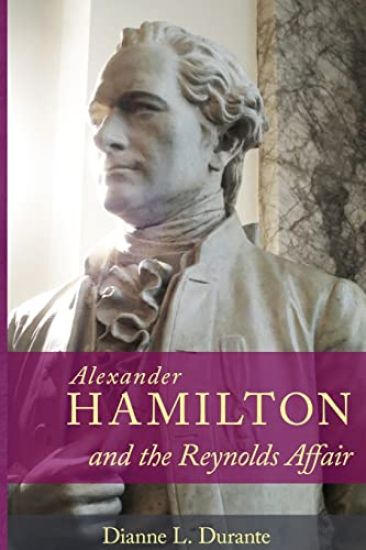
Alexander Hamilton and the Reynolds Affair

Alexander Hamilton and the Reynolds Affair

Dianne L. Durante

Dianne L. Durante
2019
nidottu
Given that he loved his wife and family, why did Alexander Hamilton choose to have an affair with Maria Reynolds? And why did he publish a pamphlet five years later telling the whole world about it? Via dozens of primary sources and contemporary images, this book puts all three phases of the Reynolds Affair into their historical, social, and political context. Combined, these factors make Hamilton's actions more comprehensible, though still a personal failing.
Central Park, the Early Years

Central Park, the Early Years

Dianne L. Durante

Dianne L. Durante
2018
nidottu
It's difficult to imagine Manhattan without the glorious oasis that is Central Park. But the Park's existence was not inevitable, and its design was very much a product of its time. *Central Park: The Early Years* looks at why and how Central Park was created in the 1850s and its history during the formative decades of the 1860s and 1870s. With full-color images from the period.
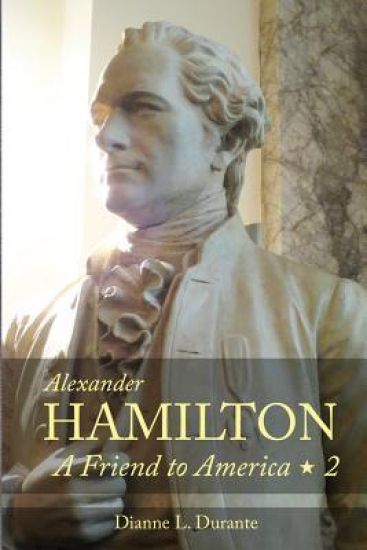
Alexander Hamilton: A Friend to America: Volume 2

Alexander Hamilton: A Friend to America: Volume 2

Dianne L. Durante

Dianne L. Durante
2018
nidottu
The two volumes of *Alexander Hamilton: A Friend to America* are unique in their emphasis on primary sources. Using writings by Hamilton, Washington, Burr, Eliza, Angelica, and others, they stitch together an image of Hamilton's life, his times, and the ideas that drove him. If you love *Hamilton: An American Musical* and want to know more about Hamilton the man, this is a perfect place to start If you already love Hamilton the man and want to spend more time with him and the other Founding Fathers, you'll find new material here, too. These essays originally appeared as a series of weekly blog posts on intriguing topics such as: * Alexander's "death wish" what's the evidence for it? * Alexander and Angelica: yes, no, maybe? * What made Hamilton's first political essay so attention-grabbing? * Do we know the recipe for Alexander and Eliza's wedding cake? * Was Hamilton a laissez-faire capitalist, a proponent of Big Government, or ...? Where did he draw the line between economics and politics? * Maria Reynolds: What the hell was he thinking? * What's the difference between history and art, and why do we need both? The order of the essays was inspired by the Hamilton musical. If you prefer to read them in chronological order, *Alexander Hamilton: A Brief Biography* (a stand-alone work) serves as a cross-reference. With full-color images.
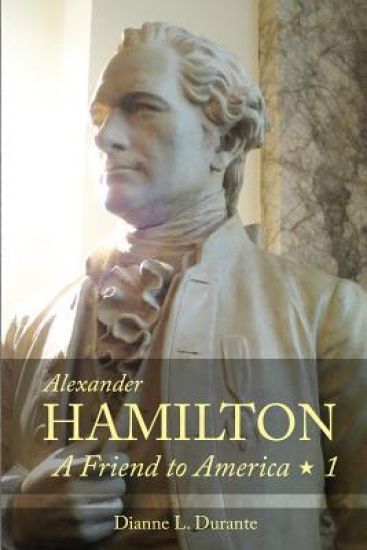
Alexander Hamilton: A Friend to America: Volume 1

Alexander Hamilton: A Friend to America: Volume 1

Dianne L. Durante

Dianne L. Durante
2018
nidottu
The two volumes of *Alexander Hamilton: A Friend to America* are unique in their emphasis on primary sources. Using writings by Hamilton, Washington, Burr, Eliza, Angelica, and others, they stitch together an image of Hamilton's life, his times, and the ideas that drove him. If you love *Hamilton: An American Musical* and want to know more about Hamilton the man, this is a perfect place to start If you already love Hamilton the man and want to spend more time with him and the other Founding Fathers, you'll find new material here, too. These essays originally appeared as a series of weekly blog posts on intriguing topics such as: * Alexander's "death wish" what's the evidence for it? * Alexander and Angelica: yes, no, maybe? * What made Hamilton's first political essay so attention-grabbing? * Do we know the recipe for Alexander and Eliza's wedding cake? * Was Hamilton a laissez-faire capitalist, a proponent of Big Government, or ...? Where did he draw the line between economics and politics? * Maria Reynolds: What the hell was he thinking? * What's the difference between history and art, and why do we need both? The order of the essays was inspired by the Hamilton musical. If you prefer to read them in chronological order, *Alexander Hamilton: A Brief Biography* (a stand-alone work) serves as a cross-reference. With full-color images.
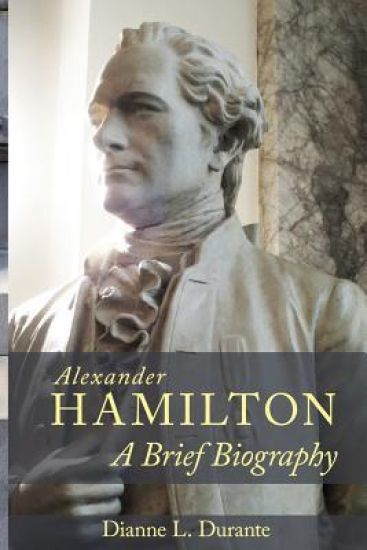
Alexander Hamilton: A Brief Biography

Alexander Hamilton: A Brief Biography

Dianne L. Durante

Dianne L. Durante
2018
nidottu
What were the important events of Hamilton's life? What were the ideas that drove him? This brief biography includes substantial quotes from Hamilton's writings, dozens of full-color images of Hamilton and his times, and a timeline setting Hamilton's life in the context of events in Europe and the United States. If you're a fan of *Hamilton: An American Musical, * this bio will give you more reasons to love the man and the musical. If you're a history geek or a fan of Hamilton, it will serve as a gateway to *Alexander Hamilton: A Friend to America, * a two-volume set with extensive excerpts from writings by Hamilton and his contemporaries.
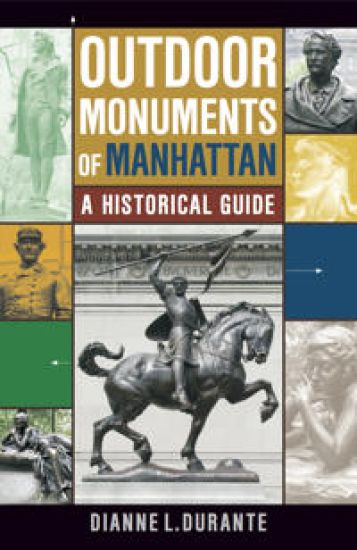
Outdoor Monuments of Manhattan

Outdoor Monuments of Manhattan

Dianne L. Durante

New York University Press
2007
pokkari
Stop, look, and discover—the streets and parks of Manhattan are filled with beautiful historic monuments that will entertain, stimulate, and inspire you. Among the 54 monuments in this volume are major figures in American history: Washington, Lincoln, Lafayette, Horace Greeley, and Gertrude Stein; more obscure figures: Daniel Butterfield, J. Marion Sims, and King Jagiello; as well as the icons of New York: Atlas, Prometheus, and the Firemen's Memorial. The monuments represent the work of some of America's best sculptors: Augustus Saint Gaudens' Farragut and Sherman, Daniel Chester French's Four Continents, and Anna Hyatt Huntington's José Martí and Joan of Arc. Each monument, illustrated with black-and-white photographs, is located on a map of Manhattan and includes easy-to-follow directions. All the sculptures are considered both as historical mementos and as art. We learn of furious General Sherman court-martialing a civilian journalist, and also of exasperated Saint Gaudens' proposing a hook-and-spring device for improving his assistants' artistic acuity as they help model Sherman. We discover how Lincoln dealt with a vociferous Confederate politician from Ohio, and why the Lincoln in Union Square doesn't rank as a top-notch Lincoln portrait. Sidebars reveal other aspects of the figure or event commemorated, using personal quotes, poems, excerpts from nineteenth-century periodicals (New York Times, Harper's Weekly), and writers ranging from Aeschylus, Washington Irving, and Frederic-Auguste Bartholdi to Mark Twain and Henryk Sienkiewicz. As a historical account, Outdoor Monuments of Manhattan: A Historical Guide is a fascinating look at figures and events that changed New York, the United States and the world. As an aesthetic handbook it provides a compact method for studying sculpture, inspired by Ayn Rand's writings on art. For residents and tourists, and historians and students, who want to spend more time viewing and appreciating sculpture and New York history, this is the start of a unique voyage of discovery.
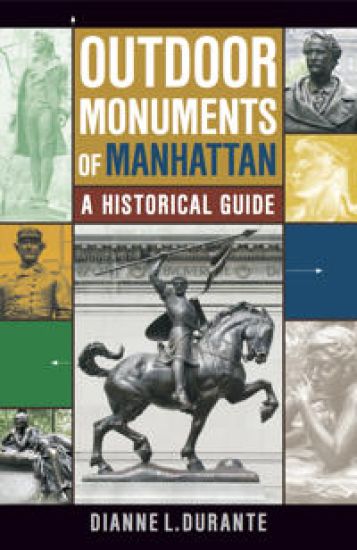
Outdoor Monuments of Manhattan

Outdoor Monuments of Manhattan

Dianne L. Durante

New York University Press
2007
sidottu
Stop, look, and discover—the streets and parks of Manhattan are filled with beautiful historic monuments that will entertain, stimulate, and inspire you. Among the 54 monuments in this volume are major figures in American history: Washington, Lincoln, Lafayette, Horace Greeley, and Gertrude Stein; more obscure figures: Daniel Butterfield, J. Marion Sims, and King Jagiello; as well as the icons of New York: Atlas, Prometheus, and the Firemen's Memorial. The monuments represent the work of some of America's best sculptors: Augustus Saint Gaudens' Farragut and Sherman, Daniel Chester French's Four Continents, and Anna Hyatt Huntington's José Martí and Joan of Arc. Each monument, illustrated with black-and-white photographs, is located on a map of Manhattan and includes easy-to-follow directions. All the sculptures are considered both as historical mementos and as art. We learn of furious General Sherman court-martialing a civilian journalist, and also of exasperated Saint Gaudens' proposing a hook-and-spring device for improving his assistants' artistic acuity as they help model Sherman. We discover how Lincoln dealt with a vociferous Confederate politician from Ohio, and why the Lincoln in Union Square doesn't rank as a top-notch Lincoln portrait. Sidebars reveal other aspects of the figure or event commemorated, using personal quotes, poems, excerpts from nineteenth-century periodicals (New York Times, Harper's Weekly), and writers ranging from Aeschylus, Washington Irving, and Frederic-Auguste Bartholdi to Mark Twain and Henryk Sienkiewicz. As a historical account, Outdoor Monuments of Manhattan: A Historical Guide is a fascinating look at figures and events that changed New York, the United States and the world. As an aesthetic handbook it provides a compact method for studying sculpture, inspired by Ayn Rand's writings on art. For residents and tourists, and historians and students, who want to spend more time viewing and appreciating sculpture and New York history, this is the start of a unique voyage of discovery.