Kirjojen hintavertailu. Mukana 12 595 353 kirjaa ja 12 kauppaa.

Kirjailija

Didier Fassin

Kirjat ja teokset yhdessä paikassa: 25 kirjaa, julkaisuja vuosilta 2007-2025, suosituimpien joukossa Four Lectures on Ethics – Anthropological Perspectives. Vertaile teosten hintoja ja tarkista saatavuus suomalaisista kirjakaupoista.

25 kirjaa

Kirjojen julkaisuhaarukka 2007-2025.

Enforcing Order

Enforcing Order

Didier Fassin

Polity Press
2013
sidottu
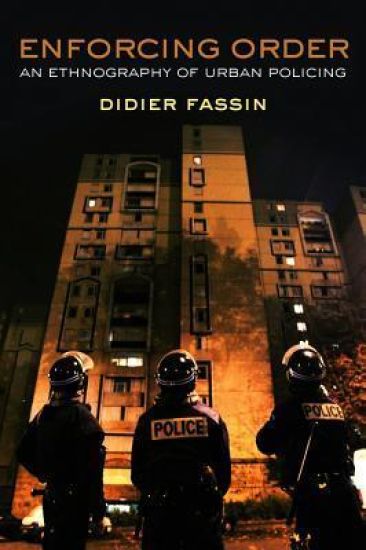
Most incidents of urban unrest in recent decades - including the riots in France, Britain and other Western countries - have followed lethal interactions between the youth and the police. Usually these take place in disadvantaged neighborhoods composed of working-class families of immigrant origin or belonging to ethnic minorities. These tragic events have received a great deal of media coverage, but we know very little about the everyday activities of urban policing that lie behind them. Over the course of 15 months, at the time of the 2005 riots, Didier Fassin carried out an ethnographic study in one of the largest precincts in the Paris region, sharing the life of a police station and cruising with the patrols, in particular the dreaded anti-crime squads. Far from the imaginary worlds created by television series and action movies, he uncovers the ordinary aspects of law enforcement, characterized by inactivity and boredom, by eventless days and nights where minor infractions give rise to spectacular displays of force and where officers express doubts about the significance and value of their own jobs. Describing the invisible manifestations of violence and unrecognized forms of discrimination against minority youngsters, undocumented immigrants and Roma people, he analyses the conditions that make them possible and tolerable, including entrenched policies of segregation and stigmatization, economic marginalization and racial discrimination. Richly documented and compellingly told, this unique account of contemporary urban policing shows that, instead of enforcing the law, the police are engaged in the task of enforcing an unequal social order in the name of public security.
Enforcing Order

Enforcing Order

Didier Fassin

Polity Press
2013
nidottu
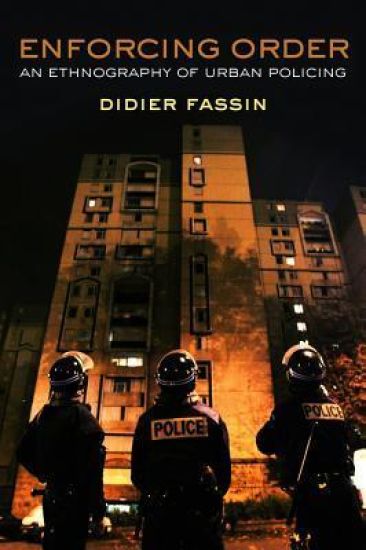
Most incidents of urban unrest in recent decades - including the riots in France, Britain and other Western countries - have followed lethal interactions between the youth and the police. Usually these take place in disadvantaged neighborhoods composed of working-class families of immigrant origin or belonging to ethnic minorities. These tragic events have received a great deal of media coverage, but we know very little about the everyday activities of urban policing that lie behind them. Over the course of 15 months, at the time of the 2005 riots, Didier Fassin carried out an ethnographic study in one of the largest precincts in the Paris region, sharing the life of a police station and cruising with the patrols, in particular the dreaded anti-crime squads. Far from the imaginary worlds created by television series and action movies, he uncovers the ordinary aspects of law enforcement, characterized by inactivity and boredom, by eventless days and nights where minor infractions give rise to spectacular displays of force and where officers express doubts about the significance and value of their own jobs. Describing the invisible manifestations of violence and unrecognized forms of discrimination against minority youngsters, undocumented immigrants and Roma people, he analyses the conditions that make them possible and tolerable, including entrenched policies of segregation and stigmatization, economic marginalization and racial discrimination. Richly documented and compellingly told, this unique account of contemporary urban policing shows that, instead of enforcing the law, the police are engaged in the task of enforcing an unequal social order in the name of public security.
Humanitarian Reason

Humanitarian Reason

Didier Fassin

University of California Press
2011
pokkari
In the face of the world's disorders, moral concerns have provided a powerful ground for developing international as well as local policies. Didier Fassin draws on case materials from France, South Africa, Venezuela, and Palestine to explore the meaning of humanitarianism in the contexts of immigration and asylum, disease and poverty, disaster and war. He traces and analyzes recent shifts in moral and political discourse and practices - what he terms "humanitarian reason" - and shows in vivid examples how humanitarianism is confronted by inequality and violence. Deftly illuminating the tensions and contradictions in humanitarian government, he reveals the ambiguities confronting states and organizations as they struggle to deal with the intolerable. His critique of humanitarian reason, respectful of the participants involved but lucid about the stakes they disregard, offers theoretical and empirical foundations for a political and moral anthropology.
The Empire of Trauma

The Empire of Trauma

Didier Fassin; Richard Rechtman

Princeton University Press
2009
pokkari
Today we are accustomed to psychiatrists being summoned to scenes of terrorist attacks, natural disasters, war, and other tragic events to care for the psychic trauma of victims--yet it has not always been so. The very idea of psychic trauma came into being only at the end of the nineteenth century and for a long time was treated with suspicion. The Empire of Trauma tells the story of how the traumatic victim became culturally and politically respectable, and how trauma itself became an unassailable moral category. Basing their analysis on a wide-ranging ethnography, Didier Fassin and Richard Rechtman examine the politics of reparation, testimony, and proof made possible by the recognition of trauma. They study the application of psychiatric victimology to victims of the 1995 terrorist bombings in Paris and the 2001 industrial disaster in Toulouse; the involvement of humanitarian psychiatry with both Palestinians and Israelis during the second Intifada; and the application of the psychotraumatology of exile to asylum seekers victimized by persecution and torture. Revealing how trauma has come to authenticate the suffering of victims, The Empire of Trauma provides critical perspective on some of the moral and political issues at stake in the contemporary world.
When Bodies Remember

When Bodies Remember

Didier Fassin

University of California Press
2007
pokkari
In this book, France's leading medical anthropologist takes on one of the most tragic stories of the global AIDS crisis - the failure of the ANC government to stem the tide of the AIDS epidemic in South Africa. Didier Fassin traces the deep roots of the AIDS crisis to apartheid and, before that, to the colonial period. One person in ten is infected with HIV in South Africa, and President Thabo Mbeki has initiated a global controversy by funding questionable medical research, casting doubt on the benefits of preventing mother-to-child transmission, and embracing dissidents who challenge the viral theory of AIDS. Fassin contextualizes Mbeki's position by sensitively exploring issues of race and genocide that surround this controversy. Basing his discussion on vivid ethnographical data collected in the townships of Johannesburg, he passionately demonstrates that the unprecedented epidemiological crisis in South Africa is a demographic catastrophe as well as a human tragedy, one that cannot be understood without reference to the social history of the country, in particular to institutionalized racial inequality as the fundamental principle of government during the past century.