Kirjojen hintavertailu. Mukana 12 595 353 kirjaa ja 12 kauppaa.

Kirjailija

Diego Oliva

Kirjat ja teokset yhdessä paikassa: 9 kirjaa, julkaisuja vuosilta 2016-2026, suosituimpien joukossa Initialization and Diversity in Optimization Algorithms. Vertaile teosten hintoja ja tarkista saatavuus suomalaisista kirjakaupoista.

9 kirjaa

Kirjojen julkaisuhaarukka 2016-2026.

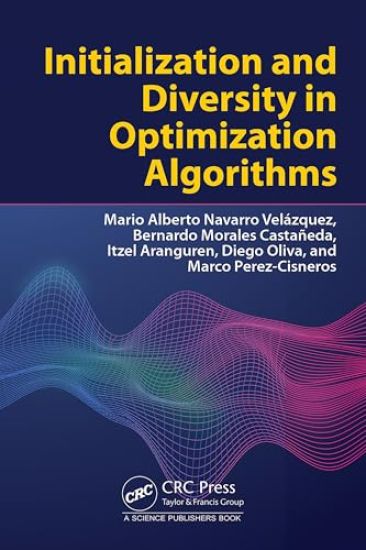
Initialization and Diversity in Optimization Algorithms

Initialization and Diversity in Optimization Algorithms

Diego Oliva; Marco Antonio Perez Cisneros; Bernardo Morales-Castañeda; Mario A. Navarro Velázquez

TAYLOR FRANCIS LTD
2026
sidottu
Designing new algorithms in swarm intelligence is a complex undertaking. Two critical factors have been seen to have a direct correlation with positive results. First is initialization, which serves as the initial step for all swarm intelligence techniques. Candidate solutions are generated to form the initial population, which are subsequently modified during the iterative process. A well-initialized population increases the algorithm's chances of avoiding local optima and finding the global optimum in fewer iterations. Although random distributions are commonly used for initialization, there are various ways to initialize the population elements. Maintaining diversity among the population elements throughout the iterative process is also essential. This diversity facilitates a more thorough and efficient exploration of the search space. In swarm intelligence algorithms, there are multiple methods to measure diversity, each with its own advantages and disadvantages. This book presents the theory behind the initialization process and the different mechanisms. Additionally, it includes a comparative study of various diversity indicators. It explores different methodologies to compute its value and explains how it can be incorporated as a mechanism for deciding when to apply operators during the optimization process. Multiple examples are provided in the book using two classical algorithms: Differential Evolution and Particle Swarm Optimization. It includes MATLAB® code and offers several exercises that readers can use for experimentation and design purposes.
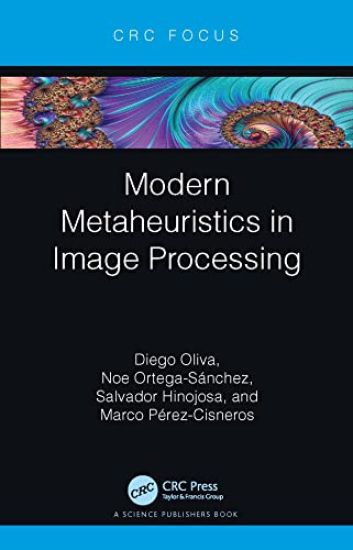
Modern Metaheuristics in Image Processing

Modern Metaheuristics in Image Processing

Diego Oliva; Noe Ortega-Sánchez; Salvador Hinojosa; Marco Pérez-Cisneros

TAYLOR FRANCIS LTD
2024
nidottu
The use of metaheuristic algorithms (MA) has been increasing in recent years, and the image processing field is not the exempted of their application. In the last two years a big amount of MA has been introduced as alternatives for solving complex optimization problems. This book collects the most prominent MA of the 2019 and 2020 and verifies its use in image processing tasks. In addition, literature review of both MA and digital image processing is presented as part of the introductory information. Each algorithm is detailed explained with special focus in the tuning parameters and the proper implementation for the image processing tasks. Besides several examples permits to the reader explore and confirm the use of this kind of intelligent methods. Since image processing is widely used in different domains, this book considers different kinds of datasets that includes, magnetic resonance images, thermal images, agriculture images, among others. The reader then can have some ideas of implementation that complement the theory exposed of each optimization mechanism. Regarding the image processing problems this book consider the segmentation by using different metrics based on entropies or variances. In the same way, the identification of different shapes and the detection of objects are also covered in the corresponding chapters. Each chapter is complemented with a wide range of experiments and statistical analysis that permits the reader to judge about the performance of the MA. Finally, there is included a section that includes some discussion and conclusions. This section also provides some open questions and research opportunities for the audience.
Modern Metaheuristics in Image Processing

Modern Metaheuristics in Image Processing

Diego Oliva; Noe Ortega-Sánchez; Salvador Hinojosa; Marco Pérez-Cisneros

TAYLOR FRANCIS LTD
2022
sidottu
The use of metaheuristic algorithms (MA) has been increasing in recent years, and the image processing field is not the exempted of their application. In the last two years a big amount of MA has been introduced as alternatives for solving complex optimization problems. This book collects the most prominent MA of the 2019 and 2020 and verifies its use in image processing tasks. In addition, literature review of both MA and digital image processing is presented as part of the introductory information. Each algorithm is detailed explained with special focus in the tuning parameters and the proper implementation for the image processing tasks. Besides several examples permits to the reader explore and confirm the use of this kind of intelligent methods. Since image processing is widely used in different domains, this book considers different kinds of datasets that includes, magnetic resonance images, thermal images, agriculture images, among others. The reader then can have some ideas of implementation that complement the theory exposed of each optimization mechanism. Regarding the image processing problems this book consider the segmentation by using different metrics based on entropies or variances. In the same way, the identification of different shapes and the detection of objects are also covered in the corresponding chapters. Each chapter is complemented with a wide range of experiments and statistical analysis that permits the reader to judge about the performance of the MA. Finally, there is included a section that includes some discussion and conclusions. This section also provides some open questions and research opportunities for the audience.
Metaheuristic Algorithms for Image Segmentation: Theory and Applications

Metaheuristic Algorithms for Image Segmentation: Theory and Applications

Diego Oliva; Mohamed Abd Elaziz; Salvador Hinojosa

Springer Nature Switzerland AG
2020
nidottu
This book presents a study of the most important methods of image segmentation and how they are extended and improved using metaheuristic algorithms. The segmentation approaches selected have been extensively applied to the task of segmentation (especially in thresholding), and have also been implemented using various metaheuristics and hybridization techniques leading to a broader understanding of how image segmentation problems can be solved from an optimization perspective. The field of image processing is constantly changing due to the extensive integration of cameras in devices; for example, smart phones and cars now have embedded cameras. The images have to be accurately analyzed, and crucial pre-processing steps, like image segmentation, and artificial intelligence, including metaheuristics, are applied in the automatic analysis of digital images. Metaheuristic algorithms have also been used in various fields of science and technology as the demand for new methods designedto solve complex optimization problems increases. This didactic book is primarily intended for undergraduate and postgraduate students of science, engineering, and computational mathematics. It is also suitable for courses such as artificial intelligence, advanced image processing, and computational intelligence. The material is also useful for researches in the fields of evolutionary computation, artificial intelligence, and image processing.
Metaheuristic Algorithms for Image Segmentation: Theory and Applications

Metaheuristic Algorithms for Image Segmentation: Theory and Applications

Diego Oliva; Mohamed Abd Elaziz; Salvador Hinojosa

Springer Nature Switzerland AG
2019
sidottu
This book presents a study of the most important methods of image segmentation and how they are extended and improved using metaheuristic algorithms. The segmentation approaches selected have been extensively applied to the task of segmentation (especially in thresholding), and have also been implemented using various metaheuristics and hybridization techniques leading to a broader understanding of how image segmentation problems can be solved from an optimization perspective. The field of image processing is constantly changing due to the extensive integration of cameras in devices; for example, smart phones and cars now have embedded cameras. The images have to be accurately analyzed, and crucial pre-processing steps, like image segmentation, and artificial intelligence, including metaheuristics, are applied in the automatic analysis of digital images. Metaheuristic algorithms have also been used in various fields of science and technology as the demand for new methods designedto solve complex optimization problems increases. This didactic book is primarily intended for undergraduate and postgraduate students of science, engineering, and computational mathematics. It is also suitable for courses such as artificial intelligence, advanced image processing, and computational intelligence. The material is also useful for researches in the fields of evolutionary computation, artificial intelligence, and image processing.
Evolutionary Computation Techniques: A Comparative Perspective

Evolutionary Computation Techniques: A Comparative Perspective

Erik Cuevas; Valentín Osuna; Diego Oliva

Springer International Publishing AG
2018
nidottu
This book compares the performance of various evolutionary computation (EC) techniques when they are faced with complex optimization problems extracted from different engineering domains. Particularly focusing on recently developed algorithms, it is designed so that each chapter can be read independently. Several comparisons among EC techniques have been reported in the literature, however, they all suffer from one limitation: their conclusions are based on the performance of popular evolutionary approaches over a set of synthetic functions with exact solutions and well-known behaviors, without considering the application context or including recent developments. In each chapter, a complex engineering optimization problem is posed, and then a particular EC technique is presented as the best choice, according to its search characteristics. Lastly, a set of experiments is conducted in order to compare its performance to other popular EC methods.
Advances and Applications of Optimised Algorithms in Image Processing

Advances and Applications of Optimised Algorithms in Image Processing

Diego Oliva; Erik Cuevas

Springer International Publishing AG
2018
nidottu
This book presents a study of the use of optimization algorithms in complex image processing problems. The problems selected explore areas ranging from the theory of image segmentation to the detection of complex objects in medical images. Furthermore, the concepts of machine learning and optimization are analyzed to provide an overview of the application of these tools in image processing. The material has been compiled from a teaching perspective. Accordingly, the book is primarily intended for undergraduate and postgraduate students of Science, Engineering, and Computational Mathematics, and can be used for courses on Artificial Intelligence, Advanced Image Processing, Computational Intelligence, etc. Likewise, the material can be useful for research from the evolutionary computation, artificial intelligence and image processing communities.
Evolutionary Computation Techniques: A Comparative Perspective

Evolutionary Computation Techniques: A Comparative Perspective

Erik Cuevas; Valentín Osuna; Diego Oliva

Springer International Publishing AG
2017
sidottu
This book compares the performance of various evolutionary computation (EC) techniques when they are faced with complex optimization problems extracted from different engineering domains. Particularly focusing on recently developed algorithms, it is designed so that each chapter can be read independently. Several comparisons among EC techniques have been reported in the literature, however, they all suffer from one limitation: their conclusions are based on the performance of popular evolutionary approaches over a set of synthetic functions with exact solutions and well-known behaviors, without considering the application context or including recent developments. In each chapter, a complex engineering optimization problem is posed, and then a particular EC technique is presented as the best choice, according to its search characteristics. Lastly, a set of experiments is conducted in order to compare its performance to other popular EC methods.
Advances and Applications of Optimised Algorithms in Image Processing

Advances and Applications of Optimised Algorithms in Image Processing

Diego Oliva; Erik Cuevas

Springer International Publishing AG
2016
sidottu
This book presents a study of the use of optimization algorithms in complex image processing problems. The problems selected explore areas ranging from the theory of image segmentation to the detection of complex objects in medical images. Furthermore, the concepts of machine learning and optimization are analyzed to provide an overview of the application of these tools in image processing. The material has been compiled from a teaching perspective. Accordingly, the book is primarily intended for undergraduate and postgraduate students of Science, Engineering, and Computational Mathematics, and can be used for courses on Artificial Intelligence, Advanced Image Processing, Computational Intelligence, etc. Likewise, the material can be useful for research from the evolutionary computation, artificial intelligence and image processing communities.