Kirjojen hintavertailu. Mukana 12 501 277 kirjaa ja 12 kauppaa.
Kirjailija
Dierk Hagedorn
Kirjat ja teokset yhdessä paikassa: 8 kirjaa, julkaisuja vuosilta 2018-2025, suosituimpien joukossa Bauman's Fight Book. Vertaile teosten hintoja ja tarkista saatavuus suomalaisista kirjakaupoista.
This is a companion volume to the Bauman's Fight Book facsimile. In its pages, you will find articles from some of the leading scholars in the field of historical European martial arts studies that highlight various aspects of the manuscript and the world it came from.It begins with a detailed description of the manuscript and its history by Michael Chidester, followed by a transcription by Dierk Hagedorn and a full translation by Christian Henry Tobler and Jessica Finley.In the discussion section, Finley and Tobler also introduce the contents of parts A and B in a paper that discusses the various teachings and explores relationships with the tradition of Johannes Liechtenauer. Bartlomiej Walczak discusses the dagger section and uses it as a lens through which to examine the origins and structure of the Augsburg tradition as a whole. Lucien Lee discusses the Messer fencing and proposes connections to other pre-Leck chner texts. Elias Flatscher evaluates the wrestling teachings and compares them to modern wrestling traditions. Charles Lin and Marlene Hurst present a discussion of the historical context of the fighting teachings of parts A and B and some advice on training them in ways that reflect that context. Finally, Dierk Hagedorn shows connections between the illustrations in part C and Gladiatoria. An appendix contains an edition of another manuscript with similar artwork by Reinier van Noort and Oskar ter Mors.Apart from the facsimile, the manuscript scans are also published in a paperback volume under ISBN 978-1-953683-29-8.
This is a companion volume to the Bauman's Fight Book facsimile. In its pages, you will find articles from some of the leading scholars in the field of historical European martial arts studies that highlight various aspects of the manuscript and the world it came from. It begins with a detailed description of the manuscript and its history by Michael Chidester, followed by a transcription by Dierk Hagedorn and a full translation by Christian Henry Tobler and Jessica Finley.In the discussion section, Finley and Tobler also introduce the contents of parts A and B in a paper that discusses the various teachings and explores relationships with the tradition of Johannes Liechtenauer. Bartlomiej Walczak discusses the dagger section and uses it as a lens through which to examine the origins and structure of the Augsburg tradition as a whole. Lucien Lee discusses the Messer fencing and proposes connections to other pre-Leck chner texts. Elias Flatscher evaluates the wrestling teachings and compares them to modern wrestling traditions. Charles Lin and Marlene Hurst present a discussion of the historical context of the fighting teachings of parts A and B and some advice on training them in ways that reflect that context. Finally, Dierk Hagedorn shows connections between the illustrations in part C and Gladiatoria. An appendix contains an edition of another manuscript with similar artwork by Reinier van Noort and Oskar ter Mors.Apart from the facsimile, the manuscript scans are also published in a paperback volume under ISBN 978-1-953683-29-8.
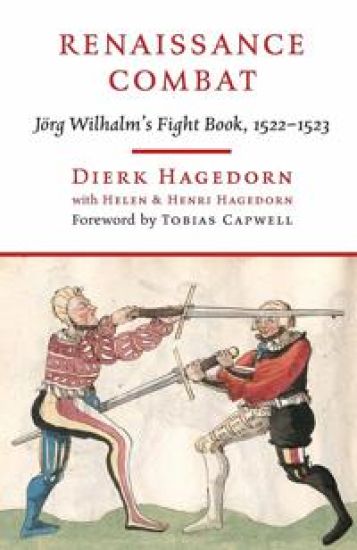
_"Dierk Hagedorn continues to solidify his reputation as one of today's most talented authorities on German Fechtbucher with another superlative volume Highly recommended for students of history, historical reenactors, and today's fighting practitioners."_ - Christian Henry Tobler Longsword instructor Dierk Hagedorn brings the work of one of the most prolific authors of 16th century fight books to a modern audience for the first time. Jorg Wilhalm's teachings feature fighting techniques with the long sword, in armour and on horseback and combines the teachings of the famous fighting master Johannes Liechtenauer with those of his successors. Vividly illustrated throughout, each technique is rendered in detail that even modern practitioners will be able to easily follow. This book will appeal to enthusiasts of historical European martial arts, re-enactors, jousters, as well as art historians - particularly those with an interest in the armour and clothing of the 16th century. Comprehensive in its scope, it is a striking and fascinating insight into the ancient art of swordplay.
Noted medieval combat authorities Dierk Hagedorn and Christian Henry Tobler join forces to present a transcription, translation and analysis of the Peter von Danzig Fight Book, one of the finest manuscripts of the 15th century devoted to the fencing tradition of German grandmaster Johannes Liechtenauer. The codex features anonymous commentaries on Liechtenauer's own mnemonic verses, as well as treatises by other masters of his circle: Masters Lignitzer, Huntfelt, Ott and Peter von Danzig himself. A compendium of teachings for how to fight with the long sword, spear, sword and buckler, dagger, as well as unarmed grappling, both in and out of armour, this volume is a valuable resource for historical martial artists, historians and medieval re-enactors.
The long sword gloss in GNM ms. 3227a is one of the most important texts in the Liechtenauer corpus. It presents a teaching that is unique in the tradition, more focused on ideas and concepts than on individual plays or techniques. In this way, it is the perfect companion to the more action-oriented glosses of other masters like Sigmund ain Ringeck, Pseudo-Peter von Danzig, and Jud Lew. This book seeks to present these teachings in a new light, with an original English translation that is easier to read and understand than existing offerings. In this way, it will hopefully reveal this important text to a wider audience. Included are color scans, revised transcription by Dierk Hagedorn, English translation by Michael Chidester, introductory material, and a few notes along the way.
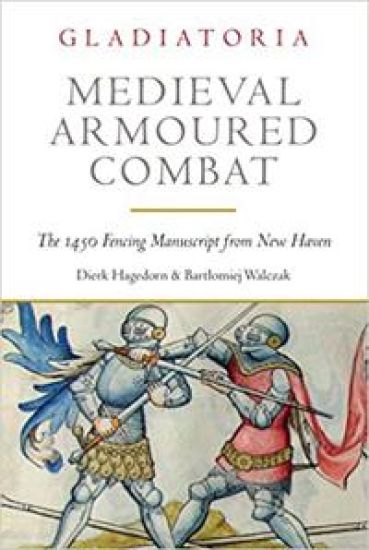
The "Gladiatoria" group of German fencing manuscripts are several editions of a treatise on armoured foot combat, specifically aimed at duel fighting. Gloriously-illustrated, and replete with substantial commentary, these works are some of the greatest achievements in the corpus of late medieval fight books. These works have both tremendous artistic merit and incalculable historical value. In this remarkable full colour volume, authors Dierk Hagedorn and Bart?omiej Walczak elegantly present their work on the copy of this treatise now in the Yale Center for British Art, including a reproduction of the manuscript, a full transcription, and translations into English. The work includes a foreword by Sydney Anglo which explains how the work shows a highly sophisticated pedagogical system of movement and applauds the editors for presenting the material in a clear and practical way. Additional essays discuss other aspects of the manuscript - including a tale of Dierk Hagedorn's adventures tracking down the manuscript.