

Kirjailija
Dieter Mersch
Kirjat ja teokset yhdessä paikassa: 7 kirjaa, julkaisuja vuosilta 2002-2024, suosituimpien joukossa Humanismen und Antihumanismen. Vertaile teosten hintoja ja tarkista saatavuus suomalaisista kirjakaupoista.
7 kirjaa
Kirjojen julkaisuhaarukka 2002-2024.
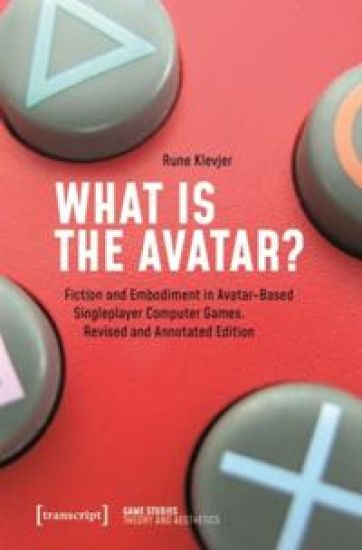
What is the Avatar?
Rune Klevjer; Stephan Gunzel; Jorg Sternagel; Dieter Mersch
TRANSCRIPT VERLAG
2022
nidottu
What are the characteristic features of avatar-based singleplayer videogames, from Super Mario Bros. to Grand Theft Auto? Rune Klevjer examines this question with a particular focus on issues of fictionality and realism, and their relation to cinema and Virtual Reality. Through close-up analysis and philosophical discussion, Klevjer argues that avatar-based gaming is a distinctive and dominant form of virtual self-embodiment in digital culture. This book is a revised edition of Rune Klevjer's pioneering work from 2007, featuring a new introduction by the author and afterword by Stephan Günzel, Jörg Sternagel, and Dieter Mersch.

Manifesto of Artistic Research
Dieter Mersch; Silvia Henke; Thomas Strässle; Jörg Wiesel; Nicolaj Van Der Meulen
Diaphanes AG
2020
nidottu
Since its beginnings in the 1990s, artistic research has become established as a new format in the areas of educational and institutional policy, aesthetics, and art theory. It has now diffused into almost all artistic fields, from installation to experimental formats to contemporary music, literature, dance, or performance art. But from its beginnings—under labels like “art and science” or “scienceart” or “artscience” that mention both disciplines in one breath—it has been in competition with academic research, without its own concept of research having been adequately clarified. This manifesto attempts to resolve the problem and to defend the term. Further, this manifesto defends the radical potential of artistic research against those who toy all too carefully with university formats, wishing to ally their work with scientific principles. Its aim is to emphasize the autonomy and particular intellectuality of artistic research, without seeking to justify its legitimacy or adopt alien standards.
Theodor Adorno’s famous aesthetic theory was not merely a theory of the aesthetic; it also made a wider claim about the aesthetic implications of all theory. At the same time we have to deal with aesthetic objects and events in which an aesthetic theory is inherent, which show themselves as art. From both sides—theory and aesthetics—a link can be made to the etymological meaning of theoria, which understands the theoretical as a seeing or perspective. Featuring lucid essays by major thinkers, the book examines this link, focusing equally on the aesthetic implications of theory and the theoretical implications of aesthetic events.

On Obliteration – An Interview with Françoise Armengaud Concerning the Work of Sacha Sosno
Emmanuel Levinas; Richard A. Cohen; Dieter Mersch; Johannes Bennke
Diaphanes AG
2019
nidottu
Emmanuel Levinas’s interview with Françoise Armengaud in 1988 is one of the only statements we have from the philosopher, who became influential in various disciplines through his ethics that focuses on the fine arts specifically. Presented in English for the first time here, this interview brings us Levinas’s understanding of “obliteration” as an uncanny, disruptive, and even “unavailable” concept. Discussing the work of the French sculptor Sacha Sosno, Levinas parses the complex relationship between ethics and aesthetics, examining how they play out in artistic operations and practices. In doing so, he turns away from the “ease and lighthearted casualness of the beautiful” to shed light instead on the processes of material wear and tear and the traces of repair that go into the creation and maintenance of works of art, and which ultimately give them a profound uniqueness of presence. This evocative interview uncovers a hidden thread of aesthetic thinking in Levinas’s work and introduces a new way of looking at artistic practices in general.
Schmerzen, korperliche Erschopfung, Erosionen oder Spuren zeitlichen Verfalls und ahnliches verweisen auf Erfahrungen, die sich diskursiver Einholung nicht ohne weiteres fugen. Mit dem Formlosen, der blossen Materialitat oder dem Chaos assoziiert, widersetzen sie sich den generellen Begriffen des Textes und des Verstehens. Zudem verweigern sie sich ihrer Entschlusselung als Konstruktion im Sinne ihrer begrifflichen Bezeichnung und Unterscheidung wie auch ihrer Inszenierung als einer asthetischen Praxis, weil sie in allen ihren Hervorbringungen als eine nicht aufgehende Heterogenitat immer schon mitschwingen. Denn es gibt keine Arbeit ohne den Rest, keinen Diskurs ohne das Nichteinholbare oder Undarstellbare, keine Technik ohne Versagen, kein Denken ohne die Widerstandigkeit der Dinge, worin sie ebenso sehr verwickelt sind, wie sie diese verleugnen. Posthermeneutik ist der Versuch, diese andere, negative Seite neu zu denken und damit das mit einzubeziehen, was nicht Verstehen ist, aber ins Verstehen eingeht, was nicht Zeichen ist, aber notwendige Voraussetzung aller Zeichenprozesse bleibt, was nicht Sinn ist, aber die Bedeutungen stort, was nicht Medium ist, aber alle Medialitat mitpragt."
