Kirjojen hintavertailu. Mukana 12 275 642 kirjaa ja 12 kauppaa.

Kirjailija

Dilip Sarkar

Kirjat ja teokset yhdessä paikassa: 34 kirjaa, julkaisuja vuosilta 2009-2025, suosituimpien joukossa Spitfire. Vertaile teosten hintoja ja tarkista saatavuus suomalaisista kirjakaupoista.

34 kirjaa

Kirjojen julkaisuhaarukka 2009-2025.

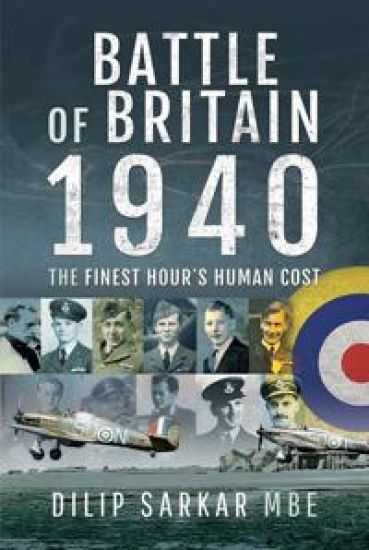
Battle of Britain 1940

Battle of Britain 1940

Dilip Sarkar

Air World
2025
nidottu
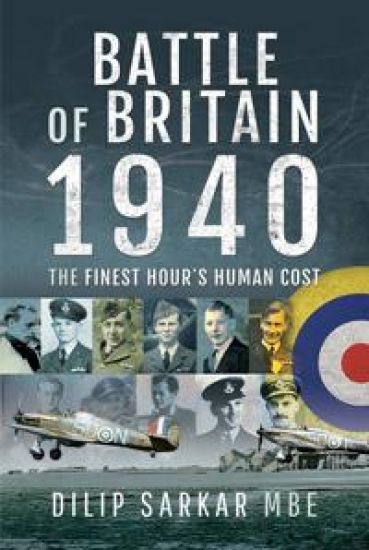
The summer of 1940 remains a pivotal moment in modern British history - still inspiring immense national pride and a global fascination. The Fall of France was catastrophic. Britain stood alone and within range of German air attack. America, with its vast resources was neutral, Hitler's forces unbeaten, the outlook for Britain bleak. As Britain's wartime leader, Winston Churchill, rightly predicted, 'the Battle of Britain is about to begin'. Famously, Churchill mobilised the English language, emboldening the nation with rousing rhetoric. In this darkest of hours, Churchill told the people that this was, in fact, their 'Finest Hour', a time of unprecedented courage and defiance which defined the British people. Connecting the crucial battle with Shakespeare's heroic Henry V and Agincourt, Churchill also immortalised Fighter Command's young aircrew as the 'Few' - to whom so many owed everything. The Few comprised nearly 3,000 aircrew, 544 of which gave their lives during the Battle of Britain's sixteen weeks of high drama. Arguably, however, the official dates of 10 July - 31 October 1940 are arbitrary, the fighting actually ongoing before and afterwards. Many gave their lives whose names are not included among the Few, as, of course, did civilians, seamen and ground staff - which is not overlooked in this ground-breaking book. In this unique study, veteran historian and author Dilip Sarkar explores the individual stories of a wide selection of those who lost their lives during the 'Finest Hour', examining their all-too brief lives and sharing these tragic stories - told here, in full, for the first time. Also included is the story of a German fighter pilot, indicating the breadth of investigation involved. Researched with the full cooperation of the families concerned, this work is a crucial contribution to the Battle of Britain's bibliography.
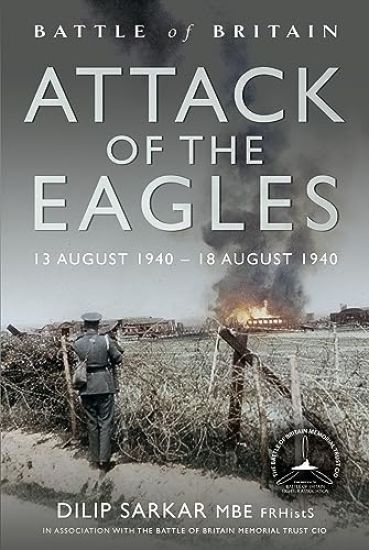
Battle of Britain Attack of the Eagles

Battle of Britain Attack of the Eagles

Dilip Sarkar

PEN SWORD BOOKS LTD
2024
sidottu
In this unprecedented series exploring the big story of the Battle of Britain, renowned historian Dilip Sarkar investigates the wider context and intimate details of the epic aerial conflict in the summer of 1940 from all sides. In so doing, he gives due acknowledgement to the roles of Bomber and Coastal Commands in addition to the fabled Few of Fighter Command. This unique narrative draws upon a lifetime of research, the author having enjoyed a long relationship with survivors and the relatives of casualties; his innumerable interviews and first-hand accounts collated, in addition to privileged access to personal papers, providing essential human interest to this inspirational story. In this the third volume, Battle of Britain: Attack of the Eagles, Dilip continues to examine the fighting on a day-by-day, combat-by-combat basis between 13 and 18 August 1940. This period began on ‘Eagle Day’ and the start of the Luftwaffe’s ‘Eagle Attack’ on Fighter Command. This period of intense fighting saw the defeat of the much-vaunted Stuka dive-bomber and the great attack on north-east England on 15 August 1940. It was during the aerial combats the following day that Flight Lieutenant James Brindley Nicolson’s Victoria Cross winning action took place over Southampton. All of these actions, and many others, are critically analysed. Through diligent research, combined with crucial official primary sources and personal papers, Dilip unravels many myths, often challenging the accepted narrative. This is not simply another dull record of combat losses and claims – far from it. Drawing upon unique first-hand accounts from a wide-range of combatants and eyewitnesses, along with Daily Home Intelligence Reports and numerous other primary sources, this book forms part of what is likely to be the first and last such comprehensively woven account of this epic air battle.
'Sailor' Malan   Freedom Fighter

'Sailor' Malan Freedom Fighter

Dilip Sarkar

PEN SWORD BOOKS LTD
2024
nidottu
Adolph Gysbert Malan was born in Wellington, South Africa. A natural leader and driven individual with a totally positive outlook, aged fourteen Malan became an officer cadet in the South African Merchant Navy, before being commissioned into the Royal Navy Reserve. Well-travelled and worldly-wise, aged twenty-five the intrepid adventurer applied for a Short Service Commission in the RAF. Universally known as Sailor' in the RAF, Malan became a fighter pilot. Shortly after war was declared, Malan was involved in the infamous Battle of Barking Creek', in which 74 Squadron mistakenly destroyed friendly Hurricanes. Then, over Dunkirk in May 1940, Malan's exceptional ability was immediately demonstrated in combat and a string of confirmed aerial victories rapidly accumulated. The following month, Malan scored the Spitfire's first nocturnal kill. By August 1940 he was commanding 74 Squadron, which he led with great distinction during the Battle of Britain. In March 1941, Malan was promoted and became the first Wing Commander (Flying) at Biggin Hill, leading the three-squadron-strong Spitfire wing during operations over northern France. After a break from operations, Malan went on to command a succession of fighter training units, passing on his tactical genius and experience, and producing his famous Ten Rules of Air Fighting' which are still cited today. By the war's end, Group Captain Malan was the RAF's tenth top-scoring fighter pilot. Leaving the RAF in 1945 and returning to South Africa, he was disgusted by Apartheid and founded the Torch Commando' of ex-servicemen against this appalling racist policy. This part of Malan's life is equally as inspirational, in fact, as his wartime service, and actually tells us more about the man than just his RAF record. Tragically, in 1963, he died, prematurely, aged just fifty-two, of Parkinson's. Written with the support of the Malan family, this biography is the full story of a remarkable airman and politician.
Faces of HMS Royal Oak

Faces of HMS Royal Oak

Dilip Sarkar

PEN SWORD BOOKS LTD
2023
sidottu
On 14 October each year, a White Ensign is placed on the stern of an upturned warship by Royal Navy divers. This act commemorates the 835 men of HMS Royal Oak who died in 1939 when the battleship was sunk at anchor in Scapa Flow by the German U-boat U-47. The sinking of the veteran First World War Revenge-class Royal Oak shocked not only the Admiralty, but the whole nation. Though Scapa Flow was far from being impregnable as a base for the Royal Navy's Home Fleet, it was surrounded by a ring of islands separated by shallow channels subject to fast-racing tides. While it was recognised that it was not impervious to enemy submarines, measures had been put in place to minimise any such threat. Blockships had been sunk at potentially vulnerable points and anti-submarine booms deployed across the wider channels. The outbreak of war in September 1939 saw additional anti-submarine measures put in hand. Despite these increased precautions, German aerial reconnaissance had spotted weaknesses which were exploited on the night of 13/14 October 1939, by Kapit nleutnant G nther Prien in U-47. The German submarine was able to slip into Scapa Flow undetected and fire three torpedoes towards Royal Oak. Only one torpedo found its mark. A second salvo was fired and this time all three hit the battleship, igniting a magazine causing massive damage. Within thirteen minutes, HMS Royal Oak had turned over and sank. In Faces of HMS Royal Oak, Dilip Sarkar not only reveals the tragic and moving stories of many of those who died, but also some of the 399 who survived the sinking of the first Royal Navy battleship lost in the Second World War. Through their photographs, and in some cases words, the horrors of those fateful few minutes as Royal Oak rolled and slid into the cold, dark waters of Scapa Flow, are relived in startling clarity.
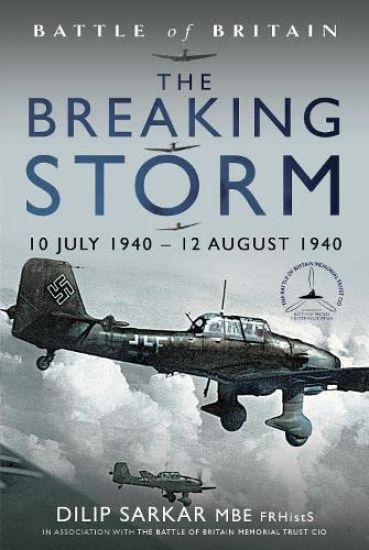
Battle of Britain The Breaking Storm

Battle of Britain The Breaking Storm

Dilip Sarkar

PEN SWORD BOOKS LTD
2023
sidottu
In Battle of Britain: The Gathering Storm, the first of Dilip Sarkar's unprecedented eight-volume series exploring the Battle of Britain, the events that led up to the outbreak of war in 1939, and which set the scene for the epic aerial conflict of summer 1940, were fully explored. Continuing his examination of the events of the Spitfire Summer, in Battle of Britain: The Breaking Storm Dilip provides a day-by-day chronicle of the Battle of Britain's first phase - the so-called Kanalkampf - which was fought over the Channel-bound convoys between 10 July and 12 August 1940. This account, though, does not simply concern RAF Fighter Command, as the author recognises the operations and efforts of the RAF's Bomber and Coastal commands, the Royal Navy and mercantile marine - making this book part of what he calls 'the Big story'. Hitler's actual policies and intentions towards the ongoing war with Britain are also explored. If the Battle of Britain was fought to deny Germany the aerial superiority required to launch a seaborne invasion of southern England, then, the author argues, the conflict could surely only have begun when the Germans committed to Operation Seeloewe - which was not, in fact, until 21 July 1940. It has previously been accepted that Hitler's War Directive of 16 July 1940 signalled the intention to invade, but the author proves that this was no more than another example of the 'brinkmanship' that Hitler was renowned for, and the air attacks at that time little more than 'Air Fleet Diplomacy', all of which was intended to frighten Britain into accepting the Fuhrer's 'last appeal to reason' of 19 July 1940. In his broadcast of 22 July 1940, Lord Halifax made the nation's unbowed position quite clear. He called Hitler's bluff: previously reluctant to fight Britain, Hitler's preferred policy in the ongoing war had been blockade and diplomacy - but now he had no choice but to unleash the Luftwaffe against Britain. All of this is investigated in detail, aligning these wider events and high decisions with action in the air. Through diligent research, combined with crucial official primary sources and personal papers, Dilip unravels many myths, often challenging the accepted narrative. This is not simply another dull record of combat losses and claims - far from it. Drawing upon unique first-hand accounts from a wide-range of combatants and eyewitnesses, along with Daily Home Intelligence Reports and numerous other primary sources, this book forms part of what is likely to be the first and last such comprehensively woven account of this epic air battle.
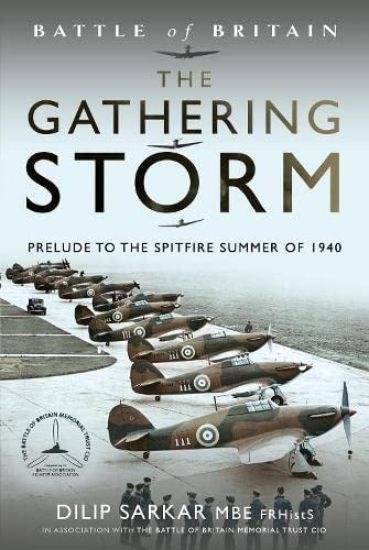
Battle of Britain The Gathering Storm

Battle of Britain The Gathering Storm

Dilip Sarkar

PEN SWORD BOOKS LTD
2023
sidottu
Dilip Sarkar has studied the Battle of Britain period for a lifetime and is renowned for his meticulous research and evidence-based approach, setting events within the broadest possible context. In doing so, he has helped enrich our appreciation and understanding of the past. In this, the first of a new eight volume series on the Battle of Britain, we have the background to the aerial conflict of the summer of 1940 revealed in great detail and told comprehensively as never before. No stone has been left unturned, no angle unexplored. This meticulous approach the research, combined with the human stories and events, many revealed for the first time, tells what Dilip calls 'the Big Story'. The development of air power, the creation of Britain's defences, the German side, the Home Front and political events are all covered - and much more. After considering the background threads prior to the outbreak of war in 1939, this book then describes the developing conflict on land, sea and in the air. The German invasion of Norway, the Fall of France and the air fighting over Dunkirk are all explored, along with Hitler's actual preferred policy towards Britain, which at first was one of blockade - not invasion. The author, with justification, questions the validity of the Battle of Britain's official start-date being 10 July 1940, evidencing the fact that the fighting actually began eight days earlier. From that date onwards, a day-by-day, hour-by-hour, account of the fighting is provided, giving due recognition to those aircrew lost or wounded before 10 July 1940, and whose names are not, therefore, found amongst 'The Few'. Due accord is also given to the Royal Navy, and efforts of both Bomber and Coastal commands, emphasising just what a 'big' story this actually is - far from simply concerning a handful of Spitfire and Hurricane pilots. Through diligent research with crucial official primary sources and personal papers, Dilip unravels many myths, often challenging the accepted narrative. This is not, however, simply another dull record of combat losses and claims, far from it. Drawing upon unique first-hand accounts from a wide-range of combatants and eyewitnesses, along with the daily Home Intelligence Reports and the papers of politicians such as Italian Foreign Minister Count Ciano, this really is an unprecedented approach to understanding the build-up to and times of the Battle of Britain.
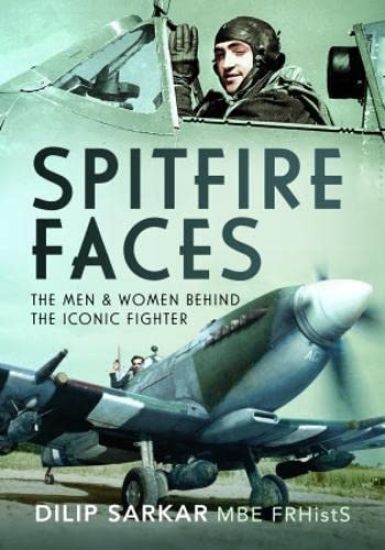
Spitfire Faces

Spitfire Faces

Dilip Sarkar

PEN SWORD BOOKS LTD
2023
sidottu
The Supermarine Spitfire arguably remains the most iconic fighter aircraft ever produced. Unsurprisingly, it has become a symbol of British excellence and national pride. Interest in the Spitfire remains undiminished as time goes on, and its bibliography is virtually infinite. Whilst many of these books feature the technical and operational history of the Spitfire, this book features the human element of the story, concentrating on the stories of not only those who flew the Spitfire into battle, but also the men and women who maintained and built it. By the summer of 1941, the Spitfire had replaced the Hurricane as the RAF's front-line fighter, seeing service in every theatre of war, from north-west Europe to the Far East, and operating in many roles never envisaged by its gifted, yet tragic, designer, R.J. Mitchell. Although intended as a short-range daylight interceptor, Spitfires became dive-bombers, offensive escort fighters, night-fighters, photographic reconnaissance mounts - and more. R.J. Mitchell, however, was always very conscious that a human being would risk his or her life flying his creation - and this book concentrates on that human story. Covering the Spitfire's design, development and wartime operational history, Spitfire Faces features photographs from the personal collections of survivors, collated as the result of the author's close personal relationships and friendships with so many of them.
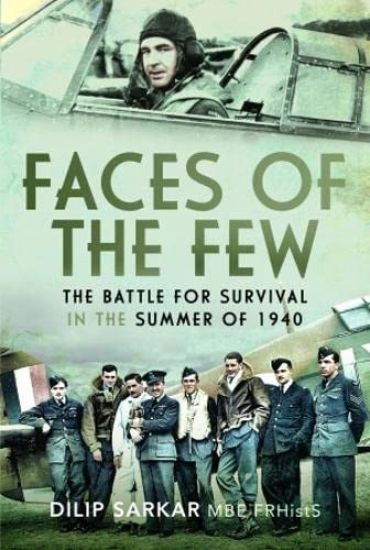
Faces of the Few

Faces of the Few

Dilip Sarkar

PEN SWORD BOOKS LTD
2023
sidottu
There remains an enduring fascination with the Battle of Britain, and the RAF aircrew who fought and won this unprecedented aerial conflict, immortalised by Churchill in August 1940 as The Few'. Unlike today, when photography is a huge part of people's daily lives, not least because of mobile phone cameras and the sharing of images via social media, back then photography involved comparatively primitive and expensive items of equipment and was not, therefore, as accessible as it is today. Furthermore, unofficial photography on service installations in Britain was strictly prohibited for security reasons, and consequently such photographs, often taken surreptitiously, are comparatively rare (although, interestingly, amateur photography was much more popular in Germany, and German servicemen took countless photographs, especially during the Blitzkrieg years). The author's personal relationships and friendships with many of The Few, however, enabled him to unlock their personal archives, photograph albums and personal snapshots. The result of this research represents a substantial and unique archive. These photographs are not, in the main, posed official pictures, but those snapped by air and groundcrews who were keen amateur photographers, their images often shared around their squadron mates. The photographs presented here, some for the first time, provide the reader with a fascinating window on the past, through which we get an authentic glimpse of the summer of 1940 and The Few themselves. Indeed, in some cases, these are the only known images of certain individuals, whilst the likeness of others has been lost to history. That fact, therefore, emphasises the importance of this photographic record.
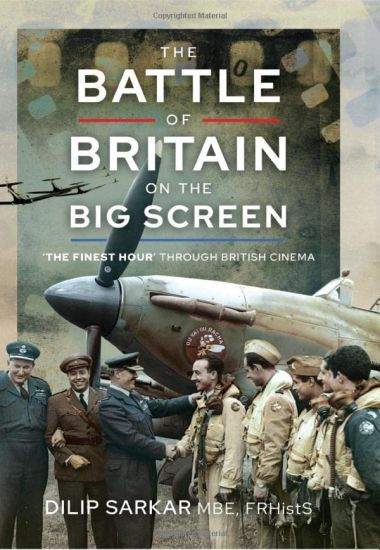
The Battle of Britain on the Big Screen

The Battle of Britain on the Big Screen

Dilip Sarkar

PEN SWORD BOOKS LTD
2022
sidottu
During the Second World War, the British movie industry produced a number of films concerning the war, all of which were, by necessity, heavily myth-laden and propagandised. Foremost among these productions was The First of the Few, which was the biggest grossing film of 1942. In the immediate post-war period, to start with there were no British aviation war films. The first to be released was Angels One Five in 1952. It was well-received, confirming that the Battle of Britain was a commercial commodity. Over the next few years, many famous war heroes published their memoirs, or had books written about them, including the legless Group Captain Douglas Bader, whose story, Reach for the Sky, told by Paul Brickhill, became a best-seller in 1956. It was followed a year later by the film of the same name, which, starring Kenneth More, dominated that year's box office. The early Battle of Britain films had tended to focus upon the story of individuals, not the bigger picture. That changed with the release of the star-studded epic Battle of Britain in 1969. Using real aircraft, the film, produced in colour and on a far larger scale than had been seen on film before, was notable for its spectacular flying sequences. Between the release of Reach for the Sky and Battle of Britain, however, much had changed for modern Britain. For a variety of reasons many felt that the story of the nation's pivotal moment in the Second World War was something best buried and forgotten. Indeed, the overall box office reaction to Battle of Britain reinforced this view - all of which might explain why it was the last big screen treatment of this topic for many years. It was during the Battle of Britain's seventieth anniversary year that the subject returned to the nation's screens when Matthew Wightman's docudrama First Light was first broadcast. Essentially a serialisation of Spitfire pilot Geoffrey Wellum's best-selling memoir of the same title, Wightman cleverly combined clips of Wellum as an old man talking about the past with his new drama footage. The series is, in the opinion of the author, the best portrayal of an individual's Battle of Britain experience to have been made. In this fascinating exploration of the Battle of Britain on the big screen, renowned historian and author Dilip Sarkar examines the popular memory and myths of each of these productions and delves into the arguments between historians and the filmmakers. Just how true to the events of the summer of 1940 are they, and how much have they added to the historical record of The Finest Hour'?
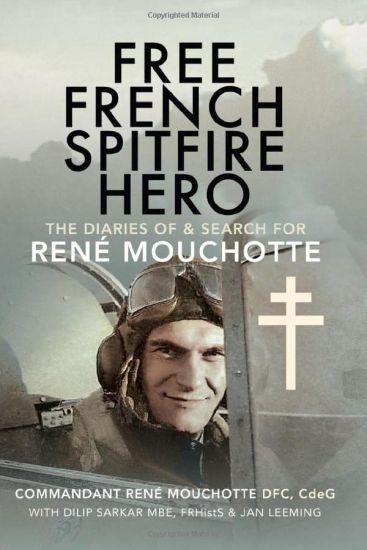
Free French Spitfire Hero

Free French Spitfire Hero

Dilip Sarkar; Jan Leeming

PEN SWORD BOOKS LTD
2022
sidottu
Ren Mouchotte was born on 21 August 1914, at Saint Mande, Paris. He joined the Arm e de l'Air for his period of military service in 1934, obtaining his flying brevet. Though Mouchotte returned to civilian life, he was called up at the outbreak of war in 1939, becoming a Sergeant-Pilot instructor in North Africa. When France capitulated in June 1940, Mouchotte and fellow pilot Charles Guerin decided to make their way to the United Kingdom. Along with four other French pilots, Mouchotte made the short flight to Gibraltar on the morning of 30 June. From there he travelled on to Britain, being accepted into the RAF soon after their arrival. The Battle of Britain was already several weeks old when Mouchotte was posted to 245 Squadron, then based at Aldergrove, on 11 September 1940. A week later he transferred to 615 (County of Surrey) Squadron at Prestwick. Flying Hurricanes, it was with 615 Squadron that Mouchotte became a flight commander, shot down a Junkers Ju 88, and earned a Croix de Guerre. He moved to Turnhouse as Deputy A' Flight Commander with 340 (Free French) Squadron. He was promoted to captain in March 1942 and awarded the DFC. On 18 January 1943, Mouchotte returned to Turnhouse to form and command 341 Squadron, which transferred to Biggin Hill. On 15 May 1943, Mouchette and Squadron Leader E.F.J Charles shared the sector's 1000th victory. Two days later, Mouchotte destroyed a Me 109. Mouchotte failed to return from a bomber escort to the proposed V2 launch site at Eperlecques, near St. Omer, on 27 August 1943. He was reported Missing'. Later evidence emerged that his body had been washed up on the beach at Middelkerke, Belgium, on 3 September and that he was buried in the town's cemetery. Commandant Ren Gaston Octave Jean Mouchotte DFC, CdeG - one of The Few' of the Battle of Britain - became one of the most famous Free French pilots of the Second World War, during which he served alongside such notables as the legendary Group Captain Sailor' Malan and the Wing Commander Al Deere. It is Commandant Mouchotte's diaries, written between 1940 and 1943, that form the basis of this book. The diaries are introduced and contextualized by the renowned aviation historian Dilip Sarkar, who also forensically examines the story behind Biggin Hill's 1000th kill' and the circumstances of Ren 's last flight, adding new detail to both events. The TV presenter and newsreader Jan Leeming also reveals her journey into Mouchotte's courageous and inspirational story - one that began with leaving a letter in the Mouchotte Family Tomb in the famous P re Lachaise Cemetery in Paris; a meeting with Ren 's 101 year old Sister Jacqueline; the realisation that his Battle of Britain Medals had never been forwarded to his family - an omission which was happily rectified. Jacqueline lived long enough to receive the medals which, after her death were presented to the Mouchotte family by the British Ambassador Sir (Lord) Peter Ricketts at the Ambassador's Residence in Paris. Finally after many years of research and perseverance, Jan had a documentary about her Search for Ren Mouchotte broadcast in 2013 on BBC South East; BBC South and BBC North. Later that year she was invited to Gibraltar where the RAF HQ was renamed Mouchotte Buildings.
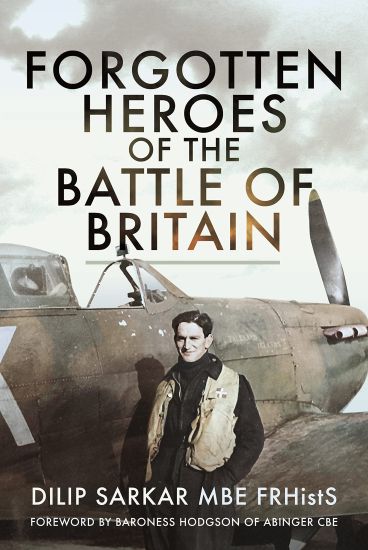
Forgotten Heroes of the Battle of Britain

Forgotten Heroes of the Battle of Britain

Dilip Sarkar

PEN SWORD BOOKS LTD
2022
sidottu
Lasting sixteen weeks during the momentous year of 1940, the Battle of Britain ended with the Luftwaffe having failed to achieve the decisive victory that Hitler had demanded. Whilst the technical details of the aircraft and weapons involved are, of course, crucial to our understanding of the events that summer, the Battle was fought by human beings - and it is that human experience and contribution, to this author, is the most important thing to acknowledge, record and share. Nearly 3,000 Fighter Command aircrew fought in the Battle of Britain, immortalised by Churchill as The Few'. Of these, 544 lost their lives that blood-stained summer, and 700 more would die before the Second World War ended - a victory very likely impossible had The Few not held out in 1940. The names of some of these young men, aces such as Douglas Bader, Sailor' Malan and Eric Lock, were well-known to the free world at the time - and certainly the legless Group Captain Sir Douglas Bader remains, even today, the best-known British fighter pilot of the war. However, the vast majority of The Few remained anonymous, owing partially to Air Ministry policy and equally a desire to play down their august achievements. Since the Second World War, the memoirs of a number of the Few have been published, privately and commercially, and books have been written about others. The record is a rich legacy, overall - and yet, if we investigate the Battle of Britain further, we find many forgotten heroes, no less-deserving of recognition. This book, therefore, seeks to explore the lives and contribution made by certain of these men, to give currency back to their brave deeds. In truth, the list of deserving subjects is virtually endless; those included in this book are individuals whose stories have crossed the author's path at some stage during his long career - and which he feels are truly Forgotten Heroes'. Clearly, then the list is not definitive, and could never be, but these men at least now have their stories told.
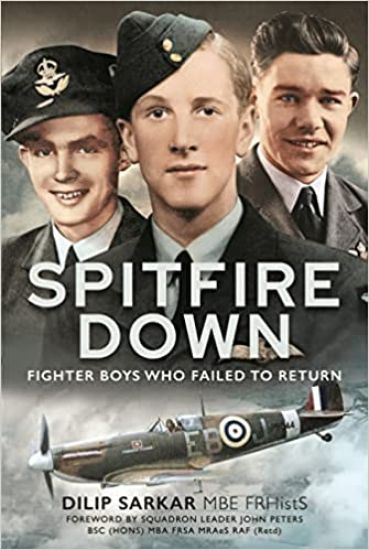
Spitfire Down

Spitfire Down

Dilip Sarkar

PEN SWORD BOOKS LTD
2022
sidottu
Profoundly moved by the stories of wartime casualties as a child, Dilip Sarkar has since spent a lifetime reconstructing the lives of many of the fallen and is passionate about recording and sharing this very personal hidden history. In Spitfire Down he explores the stories of thirteen pilots who failed to return, all killed, either in action or flying accidents, whilst a fourteenth, Flying Officer Buck Casson, was brought down by a German ace over France and captured. There is, for example, the virtually unknown story of The Baby of the RAF', Sergeant Geoffrey Painting. Posted to fly Spitfires with 118 Squadron at RAF Ibsley in Hampshire, Painting was hit by flak during an attack on enemy shipping off Cherbourg on 30 September 1941. Still listed as missing, at just 17, he is believed to have been the youngest RAF pilot killed during the Second World War. The author has reconstructed Painting's short life with help from his family, and forensically deconstructed that last flight with the help of the now late Wing Commander Peter Howard-Williams DFC, who was flying with the teenage pilot that day. The author also explores the heart-rending story of an American trainee fighter pilot, Pilot Officer Jim Bob' Lee, whose Spitfire collided with a Wellington bomber over Gloucestershire - resulting in the loss of all airmen involved. Two Canadian pilots perished on Pen-y-Fan, the highest peak in South Wales. The multi-national effort that defeated Hitler is further emphasised, in fact, through the stories of both Wing Commander Piotr Laguna and Flying Officer Franek Surma. But perhaps most tragic of all is how lightning struck Joan Welch twice: her first fianc e, Flight Lieutenant Lester Sanders DFC, was killed test-flying Spitfires in 1942, and her second, Pilot Officer Ian Smith, was killed flying in Palestine in 1945. Using correspondence, diaries and other personal papers of the pilots concerned, the author has reconstructed their all-too brief lives and provided a lasting and profusely illustrated record of these sacrifices.
Bader's Spitfire Wing: Tangmere 1941

Bader's Spitfire Wing: Tangmere 1941

Dilip Sarkar

PEN SWORD BOOKS LTD
2022
sidottu
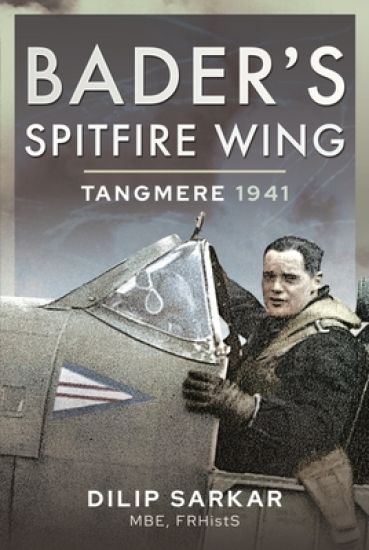
On 30 August 1940, at the height of the Battle of Britain, the pilots of RAF Fighter Command's No.12 Group were requested to reinforce 11 Group and intercept a Luftwaffe raid on an aircraft factory at Hatfield. The events that day led the swashbuckling, legless, fighter pilot Douglas Bader to submit a report arguing that the more fighters he had at his disposal, the greater would be the execution of the enemy that could be achieved. It was a concept that received support from 12 Group's Air Officer Commanding, Air Vice-Marshal Leigh-Mallory. In Bader's proposal, Leigh-Mallory saw an opportunity for 12 Group to play a greater part in what was clearly an historic battle. Leigh-Mallory authorised Bader to lead three, then five, squadrons - a controversial formation that came to be known as the 'Duxford Wing' or 'Big Wing'. For the rest of 1940, Bader and the 'Big Wing', then based at Duxford, played its part in the defence of Britain's skies. Then, in March 1941, the role of 'Wing Commander (Flying)' was created. This was the fighter pilot's dream appointment because the Wing Leader's sole responsibility was leading his wing in action, unfettered by tedious administration and logistical matters. Needless to say, Douglas Bader was amongst the first wing leaders. He was even given the choice of which Wing he preferred. He chose to take command of that based at Tangmere on the South Coast - right at the fore of the RAF's battle against the Luftwaffe. In Bader's Spitfire Wing, Dilip Sarkar not only explores the full story of the men and machines of the Tangmere Wing in 1941, as well as the controversy that surrounds their use, he also fully investigates the part that they played in the RAF's efforts to take the offensive to the Luftwaffe on the opposite side of the English Channel. It was in one such sortie in August 1941 that the Tangmere Wing lost its famous leader. Bader went on to spend the rest of the war in captivity. AUTHOR: A prolific author, DILIP SARKAR has been obsessed with the Second World War for a lifetime. An MBE for 'services to aviation history', and Fellow of the Royal Historical Society, unsurprisingly, for a retired police detective with a First in Modern History, his work has always been evidence-based - often challenging long-accepted myths. Firmly focussed on the 'human' experience of war, his many previous works include the authorized biographies of Group Captain Sir Douglas Bader and Air Vice-Marshal 'Johnnie' Johnson, the best-selling Spitfire Manual and The Few. Dilip has presented at such prestigious venues as Oxford University, the Imperial War and RAF Museums, and National Memorial Arboretum; he works on TV documentaries, both on and off screen. 32 b/w illustrations
Letters from the Few

Letters from the Few

Dilip Sarkar

Air World
2020
sidottu
Fascinated by the Battle of Britain from an early age, as a young man Dilip Sarkar realised that recording and sharing the Few's memories was of paramount importance. At the time, back in the mid-1980s, membership of the Battle of Britain Fighter Association was well populated and the then Honorary Secretary, the now late Wing Commander Pat Hancock DFC, OBE, supported Dilip's research by forwarding letters to individual pilots of interest. Those members of the Few included a wide-range of personalities, from famous airmen like Group Captain Peter Townsend and Air Marshal Sir Denis Crowley-Milling, to the also rans', as Battle of Britain Hurricane pilot Peter Fox famously described himself and peers. Indeed, it was Peter's also rans' that were of the greatest interest to Dilip, who recognised that whilst many famous and distinguished pilots had either published personal memoirs or had biographies written about them, lesser-lights had no platform to record and share their experiences. This Dilip became dedicated to resolving. For many years, Dilip enjoyed prolific correspondence with the Few. These letters - hundreds of them - now represent a unique primary source, confirming the incredibly close relationship the author enjoyed with his heroes and high esteem in which they likewise held him. Over the years, Dilip's published work has enormously benefited from his unique knowledge of the people involved through this very personal association, the memories collated providing his books a real human' touch. As the Few sadly fade away, it is only now that the significance of Dilip's correspondence, industry and archive arising are becoming truly apparent. In _Letters From The Few_, Dilip shares with us, for the first time, a small selection of his correspondence with Battle of Britain fighter pilots, providing us an inspirational insight into the immeasurable value of this research and personalities involved.
Battle of Britain, 1940

Battle of Britain, 1940

Dilip Sarkar

Air World
2020
sidottu
The summer of 1940 remains a pivotal moment in modern British history - still inspiring immense national pride and a global fascination. The Fall of France was catastrophic. Britain stood alone and within range of German air attack. America, with its vast resources was neutral, Hitler's forces unbeaten, the outlook for Britain bleak. As Britain's wartime leader, Winston Churchill, rightly predicted, the Battle of Britain is about to begin'. Famously, Churchill mobilised the English language, emboldening the nation with rousing rhetoric. In this darkest of hours, Churchill told the people that this was, in fact, their Finest Hour', a time of unprecedented courage and defiance which defined the British people. Connecting the crucial battle with Shakespeare's heroic Henry V and Agincourt, Churchill also immortalised Fighter Command's young aircrew as the Few' - to whom so many owed everything. The Few comprised nearly 3,000 aircrew, 544 of which gave their lives during the Battle of Britain's sixteen weeks of high drama. Arguably, however, the official dates of 10 July - 31 October 1940 are arbitrary, the fighting actually ongoing before and afterwards. Many gave their lives whose names are not included among the Few, as, of course, did civilians, seamen and ground staff - which is not overlooked in this ground-breaking book. In this unique study, veteran historian and author Dilip Sarkar explores the individual stories of a wide selection of those who lost their lives during the Finest Hour', examining their all-too brief lives and sharing these tragic stories - told here, in full, for the first time. Also included is the story of a German fighter pilot, indicating the breadth of investigation involved. Researched with the full cooperation of the families concerned, this work is a crucial contribution to the Battle of Britain's bibliography.
Spitfire!

Spitfire!

Dilip Sarkar

Air World
2019
sidottu
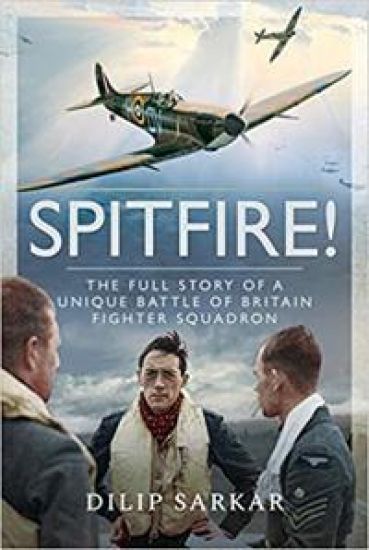
As a child, Dilip Sarkar was fascinated by the haunting image of an anonymous RAF Spitfire pilot. Taken minutes after landing from a Battle of Britain combat, this was Squadron Leader Brian Lane DFC, the commander of 19 Squadron, based at Fowlmere - and author of the stirring first-hand account _Spitfire! The Experiences of a Fighter Pilot_, published under the pseudonym B.J. Ellan. Deeply moving was the discovery that in 1942 Brian was reported missing after a futile nuisance raid over the Dutch coast. During the mid-1980s, Dilip began researching the life and times of both Brian Lane and 19 Squadron, forging close friendships with many of the unit's surviving Battle of Britain pilots and support staff. This enabled identification of the wartime censor's blanks regarding people and places in Brian's book, and the publication in 1990 of Dilip's first ever book, _Spitfire Squadron: 19 Squadron at War 1939-41_. Nearly thirty years later, sadly all of the survivors are now deceased, but Dilip's close relationship has provided a huge archive of correspondence and interviews in addition to a unique photographic collection. Furthermore, the author, a retired police detective, has thoroughly investigated the life - and death - of Squadron Leader Lane. This completely new _Spitfire Squadron_ covers everything we would ever need to know about such a unit during the critical pre and early war period: the social, political, aviation and military history all in one volume - emphasising the human experience involved and the stories of casualties. With an immense photographic collection - many published here for the first time - this book is destined to become a classic. So, strap yourself in, turn gun button to fire', and join 19 Squadron's Spitfire pilots during our Darkest and Finest Hours the ultimate Band of Brothers'?
Arnhem 1944

Arnhem 1944

Dilip Sarkar

Frontline Books
2019
sidottu
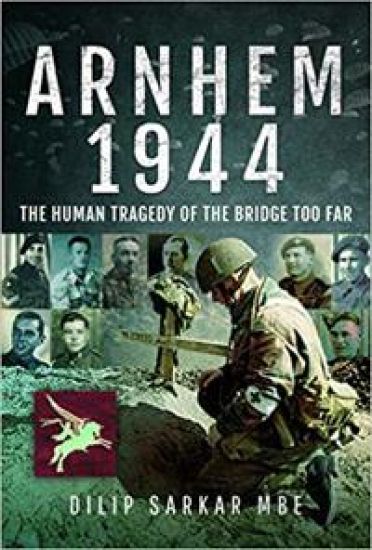
The airborne battle for the bridges across the Rhine at Arnhem ranks amongst the Second World War's most famous actions - inspiring innumerable books and the star-studded 1977 movie. This book, however, is unique: deeply moved, the author provides a fresh narrative and approach - concentrating on the tragic stories of individual casualties. These men were killed at different junctures in the fighting, often requiring forensic analysis to ascertain their fates. Wider events contextualise the author's primary focus - effectively 'resurrecting' casualties through describing their backgrounds, previous experience, and tragic effect on their families. In particular, the emotive and unresolved issue of the many still 'missing' is explored. During the course of his research, the author made numerous trips to Arnhem and Oosterbeek, travelled miles around the UK, and spent countless hours communicating with the relatives of casualties - achieving their enthusiastic support. This detailed work, conducted sensitively and with dignity, ensures that these moving stories are now recorded for posterity. Included are the stories of Private Albert Willingham, who sacrificed his life to save civilians; Major Frank Tate, machine-gunned against the backdrop of blazing buildings around Arnhem Bridge; family man Sergeant George Thomas, whose anti-tank gun is displayed today outside the Airborne Museum 'Hartenstein', and Squadron Leader John Gilliard DFC, father of a baby son who perished flying his Stirling through a hail of shot and shell during an essential re-supply drop. Is Private Gilbert Anderson, who remains 'missing', actually buried as an 'unknown', the author asks? Representing the Poles is Lance-Corporal Czeslaw Gajewnik, who drowned whilst escaping the hell of Oosterbeek, and accounts by Dutch civilians emphasise the shared suffering - sharply focussed by the tragedy of Luuk Buist, killed protecting his family. The sensitivity still surrounding German casualties is also explained. This raw, personal, side of war, the hopes and fears of ordinary men thrust into extraordinary circumstances, is both deeply moving and revealing: no longer are these just names carved on headstones or memorials in a distant land. Through this thorough investigative work, supported by those who remember them, the casualties live again, their silent voices heard through friends, relatives, comrades and unpublished letters. So, let us return to the fateful autumn of 1944, and meet those fighting in the skies, on the landing grounds, in the streets and woods of Oosterbeek, and on the 'bridge too far' at Arnhem. Now, the casualties can tell their own stories - as we join this remarkable journey of discovery.
The Final Few

The Final Few

Dilip Sarkar

Amberley Publishing
2017
pokkari
During the summer of 1940, Britain stood alone, defying the Luftwaffe’s aerial assault – the prelude to a proposed seaborne invasion. Fighter Command faced this challenge against overwhelming odds with immeasurable courage and tenacity, the Prime Minister, Winston Churchill, immortalising these young Spitfire and Hurricane pilots as ‘The Few’. Some 2,927 aircrew comprised the ‘Few’, 544 of whom made the ultimate sacrifice that fateful summer, now known as the Battle of Britain. A further 791 would perish before the war’s end. Today, precious few indeed remain alive worldwide. Veteran aviation historian Dilip Sarkar, however, has spent a lifetime recording the stories of casualties and the memories of survivors. In this important book, Dilip brings us more original research and new interviews with ‘The Final Few’. This is likely to be the last such work produced, as sadly but inevitably Churchill’s ‘Few’ fade from living memory.
The Final Few

The Final Few

Dilip Sarkar

Amberley Publishing
2015
sidottu
During the summer of 1940, Britain stood alone, defying the Luftwaffe’s aerial assault – the prelude to a proposed seaborne invasion. Fighter Command faced this challenge against overwhelming odds with immeasurable courage and tenacity, the Prime Minister, Winston Churchill, immortalising these young Spitfire and Hurricane pilots as ‘The Few’. Some 2,927 aircrew comprised the ‘Few’, 544 of whom made the ultimate sacrifice that fateful summer, now known as the Battle of Britain. A further 791 would perish before the war’s end. Today, precious few indeed remain alive worldwide, the Battle of Britain Fighter Association now numbering twenty-seven. Veteran aviation historian Dilip Sarkar, however, has spent a lifetime recording the stories of casualties and the memories of survivors. In this important book commemorating the Battle of Britain’s seventy-fifth anniversary, he brings us more original work and new interviews with ‘The Final Few’. This is likely to be the last such work produced, as sadly but inevitably Churchill’s ‘Few’ fade from living memory.