Kirjailija
Dimitris N. Chorafas
Kirjat ja teokset yhdessä paikassa: 40 kirjaa, julkaisuja vuosilta 1972-2025, suosituimpien joukossa Cloud Computing Strategies. Vertaile teosten hintoja ja tarkista saatavuus suomalaisista kirjakaupoista.
Mukana myös kirjoitusasut: Dimitris N Chorafas
40 kirjaa
Kirjojen julkaisuhaarukka 1972-2025.
It is no secret that Europe is currently undergoing a major economic and social crisis, so it is essential says Dimitris Chorafas that leaders of industry and finance within the EU, or doing business with the EU, know what is going on. What is it that threatens competitiveness and produces obstacles to providing a vibrant business landscape in the European Union? This book offers insight into the particular nature of the European cocktail of business and politics, explaining how that bears on trade and relations between, for example, continental Europe and the UK, across the Atlantic with the US, with Russia and with Asia. Dr Chorafas explains and critiques Europe's conflicting aims and what he describes as its wanting business plan. Case studies to illustrate the consequences for business of the deficiencies identified are included. With its mix of rigorously researched background and forthright argument, this timely book will satisfy those academics with an interest in the issues addressed and will also serve as a planning tool for business leaders and government executives trying to determine what they can do at enterprise level. The challenge is to survive and prosper in an environment where 'business is politics'.
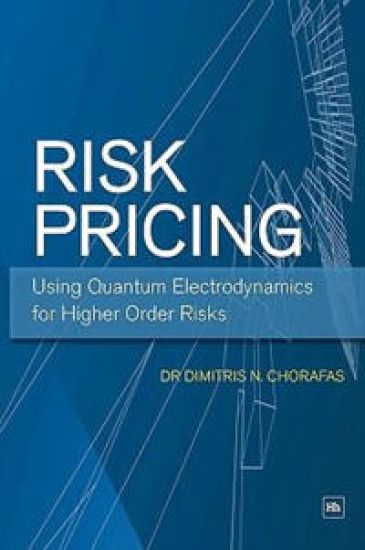
Every industry experiences strategic inflection points which offer promises as well as threats. The crisis of 2007-2009 was one of strategic inflection for the banking industry, and a significant part of the danger came from the fact that risk pricing was found desperately wanting. The flaws in the existing risk pricing system were exposed, but this could also be the starting point of a new, innovative and more accurate risk regime – indeed, if the global economy is to recover with any long-term strength, it must be.Deconstructing the failures of the past, and introducing some of the best techniques and disciplines for the future, 'Risk Pricing' is an essential guide to how the financial world got risk so badly wrong – and how it might avoid doing so again.Bringing much needed sunlight on the workings of modern financial risk, and the inadequacies of past attempts to price it, amongst numerous topics the author covers are:- Why the response of governments to the 2007-2009 crisis was seriously flawed- How risk complexity makes pricing in the 21st century particularly difficult, and what can be done about it- The application of Feynman diagrams in risk management- Why the top methodology of physicists – quantum electrodynamics (QED) – offer a potential solution with the qualities and capacity necessary for this complex taskThis is a book about managing risk through the correct pricing of exposure embedded in financial products. A high level risk control plan is necessary because, in many banks and other financial institutions, even CEOs and senior managers have often lacked the timely and detailed information they require to watch over exposures building up in warehoused positions. Regulators, too, have struggled to monitor risk, which means there is no time to lose in implementing a better risk pricing method. Another global economic crisis could take place if changes are not made.
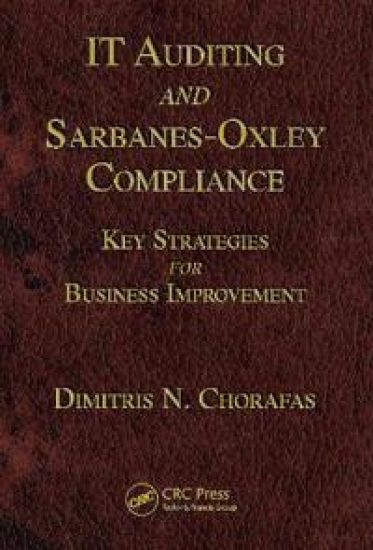
IT Auditing and Sarbanes-Oxley Compliance
Dimitris N. Chorafas
Auerbach Publishers Inc.
2008
sidottu
Information technology auditing and Sarbanes-Oxley compliance have several overlapping characteristics. They both require ethical accounting practices, focused auditing activities, a functioning system of internal control, and a close watch by the board’s audit committee and CEO. Written as a contribution to the accounting and auditing professions as well as to IT practitioners, IT Auditing and Sarbanes-Oxley Compliance: Key Strategies for Business Improvement links these two key business strategies and explains how to perform IT auditing in a comprehensive and strategic manner.Based on 46 years of experience as a consultant to the boards of major corporations in manufacturing and banking, the author addresses objectives, practices, and business opportunities expected from auditing information systems. Topics discussed include the concept of internal control, auditing functions, internal and external auditors, and the responsibilities of the board of directors. The book uses several case studies to illustrate and clarify the material. Its chapters analyze the underlying reasons for failures in IT projects and how they can be avoided, examine critical technical questions concerning information technology, discuss problems related to system reliability and response time, and explore issues of compliance.The book concludes by presenting readers with a "what if" scenario. If Sarbannes-Oxley legislation had passed the U.S. Congress in the late 1990s or even 2000, how might this have influenced the financial statements of Enron and Worldcom? We can never truly know the answer, but if companies make use of the procedures in this book, debacles such as these – and those which led to the 2007-2008 credit and banking crisis – will remain a distant memory.
Risk Accounting and Risk Management for Accountants
Dimitris N. Chorafas
CIMA Publishing
2007
nidottu
Both Accountants and Auditors are confronted daily with challenges associated with the evaluation of credit risk, market risk, and other exposures. The book provides up-to-date information on the most significant developments in risk management policies and practices. Accountants whose work under International Financial Reporting Standards increasingly involves risk control in their job will find this book of practical value with the inclusion of material on "how to" successfully design, implementation and use risk control measures. Designed specifically for accountants the book starts with the fundamental factors underpinning risk: volatility and uncertainty, and then shows how and why accounting, auditing, and risk control correlate. The themes covered in the book include: credit risk, market risk, liquidity risk, investment risk, and event risk.
IFRS, Fair Value and Corporate Governance
Dimitris N. Chorafas
Butterworth-Heinemann Ltd
2006
nidottu
Written for managers and professionals in business and industry, this book helps the reader in: * Understanding what is and is not IFRS * Learning the complexities of IFRS implementation * Appreciating the contribution of IFRS to corporate governance The changeover from the mosaic of different heterogeneous national accounting standards to the International Financial Reporting Standards has not been easy. For many companies IFRS, and most particularly the concept of fair value in IAS 39, has amounted to a phase shift – which is prerequisite to achieving compliant financial reporting. The research conducted by Dr. Chorafas for this book, documented that the process of meeting IFRS requirements presents opportunities and challenges to all enterprises. As many companies have found out, abandoning the classical accruals accounting for marking-to-market their transactions and portfolio positions, has not been easy. The conversion process has affected several functions within the organization including balance sheets, P&L statements, auditing, risk control, information systems, and management accounting. This book is in made up of four parts: * Part One focuses on business competition, standards boards, corporate accounting, and IAS 39 * The theme of Part Two, is the implementation of IFRS, exemplified through case studies on task forces and practical applications * Part Three brings together IFRS and management accounting requirements, with emphasis on fair value. * Part Four addresses itself to the contribution IFRS can make to better corporate governance, and to rebuilding the balance sheet The book has many case studies based on actual experiences. These range from the implementation of IFRS directives such as hedge accounting, to developing practices of real-time balance sheets; the help provided by sophisticated accounting solutions help in stress testing; and a comprehensive definition of the role of the audit committee.
Wealth Management has two themes: Private Banking and investment decisions regarding Structural Financial Products. Dr. Dimitris Chorafas examines in a rigorous way whether structured financial products are advisable investments for retail and institutional investors and, if yes, which risks they entail. As our society becomes increasingly affluent, and state-supported pension schemes find it difficult to survive, a growing number of high net-worth individuals, and families, have become retail investors – looking for ways and means to optimize wealth management, and Private Banking deals with these sorts of clients. Private banking also deals with clients that are institutional investors, such as pension funds, mutual funds, and insurance companies, as well as not-for-profits, foundations and companies explicitly set up for wealth management. Both institutional and retail investors are being offered by the banks they work with structured products. Typically, these are securities that provide them with a redemption amount, with may be either with full or partial capital protection, and some type of return. The book examines structured financial products, their polyvalent nature, and the results which could be expected from them. Return on structural instruments, which are essentially derivatives, is paid in function of a specific investment strategy on selected underlying asset(s). This essentially means on the performance of the underlyings, obtained by asset managers, which may be banks or hedge funds, through purchase or sale of embedded options. But there are risks. Both risk and return from structured products are related to three main issues: the volatility of future value of an underlying, the uncertainty of future events, and the exposure of the product. Every type of investment is subject to market forces, and the more leveraged a portfolio is, the greater will probably be both the assumed risk and the expected reward. The fact that structured financial products appeal, or at least are being marketed, to both retail investors and institutional investors makes the dual approach deliberately chosen in this book most advisable. This book addresses all these issues in a practical manner with numerous case studies and real-world examples drawn from the author’s intensive research.
Successful management teams can identify the cost and return derived from the implementation of new technology, and they can properly apply the technology toward gaining a competitive advantage. IT and business managers alike need a resource that enables them to prepare for future operating conditions, identify beneficial solutions, and use high technology to achieve organizational goals. The Real-Time Enterprise analyzes the forward-looking implementation of IT within a business, focusing on how careful planning can improve efficiency while reducing costs. The book includes case studies that emphasize how the most profitable uses of technology are now the real-time response to customer requirements, and the accumulation of knowledge about markets and business partners. Divided into four parts, the text begins by explaining how advanced information technology is a moving target, and why companies that want to benefit from it must set priorities and move quickly. Part II covers many recent developments in IT and its implementation, including smart dust and straight through processing (STP). Part III is made up of case studies that address specific application areas, including credit institutions, treasury operations, risk management, and approaches to replace office automation. The book concludes by exploring a series of prerequisites made necessary by advanced applications. The Real-Time Enterprise provides a perspective on the deployment of strategic information technology, covering guidelines, advanced applications, and practical examples. It delivers a much-needed upgrade of knowledge and skills for IT professionals seeking to progress beyond traditional implementations.
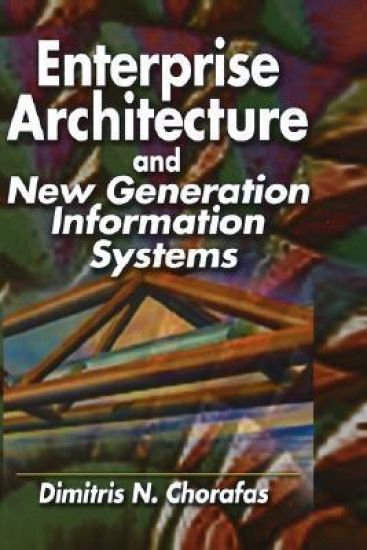
Enterprise Architecture and New Generation Information Systems
Dimitris N. Chorafas
CRC Press Inc
2001
sidottu
Based on an extensive research project done by the author in the United States, Britain, Germany, France, Switzerland, Sweden, and Austria from December 1999 to June 2001, Enterprise Architecture and New Generation Information Systems focuses on four main themes: Next Generation Information Technology The Likely Technologies of this Decade Enterprise Computing The Internet as the 21st Century's Answer to MerchandisingWhile the majority of books presently available on information systems are written from the viewpoint of system analysis, programming, or common applications, this text: Brings to the reader's attention the importance of organization and infrastructure Presents a wealth of case studies to explain the need for reengineering and restructuring Details the latest advances which influence the implementation of advanced technologyWritten in a simple, comprehensive manner without specific prerequisites and data processing jargon, with concepts and case studies properly explained, this book addresses itself to practitioners in computer technology, telecommunications and software development, who are interested in acquiring skills through knowledge of the most advanced applications, tools, and methods, both present and coming. Enterprise Architecture and New Generation Information Systems will prove appealing to every person charged with planning, developing, applying, and delivering advanced information systems, architectural solutions, and programming products.
Integrating ERP, CRM, Supply Chain Management, and Smart Materials
Dimitris N. Chorafas
Auerbach Publishers Inc.
2001
nidottu
Organizations enjoy two kinds of strategic advantages. One is transitory: being in the right place with the right products at the right time. The other comes from having first class management and instituting processes that mobilize an organization, keeping in ahead of the competition. Which would you like to count on for your organization's success?Integrating ERP, CRM, Supply Chain Management, and Smart Materials explores how to create business opportunities and reap savings by:Restructuring and updating of ERP and CRM software as it integrates supply chain management and delivers new killer applications Evolving opportunities that will develop from the implementation of smart materials, automatic identification, classification systems, and quality assurance projects Auditing the implementation, operation, and maintenance of ERP and CRM software as well as the corrective action taken on the basis of resultsInternet commerce, online supply chain, and advances in technology - all available at increasingly lower costs - make systems of the past obsolete. However, just as new technology creates new opportunities, it can also create unforeseen consequences. By binding a wealth of interdependent issues between the covers of one book, Integrating ERP, CRM, Supply Chain Management, and Smart Materials gives you the tools you need to create proprietary, high value-added solutions.
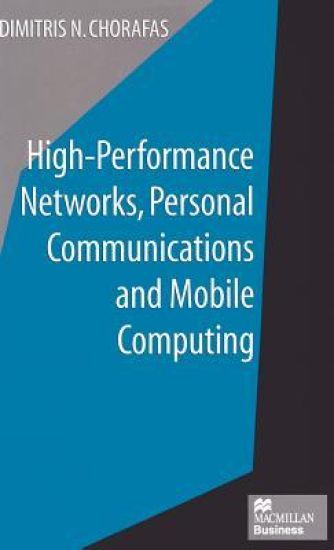
High-Performance Networks, Personal Communications and Mobile Computing
Dimitris N. Chorafas
Palgrave Macmillan
1997
nidottu
Many professionals in the technology industry are seeking new solutions beyond the confines of the more traditional type software tools, network design solutions and distributed systems applications. The aim of this book is to provide for them a much needed upgrade of knowledge and skills by addressing the developing technical and business perspectives which have emerged from the deregulation of telecommunications, including issues connected to costs and tariffs. It also addresses a comprehensible introduction to the research, development and implementation of agents. Based on thorough research undertaken from 1993-96 in the United States, Europe and Japan, much practical material is included, with both comprehensive examples and case studies.
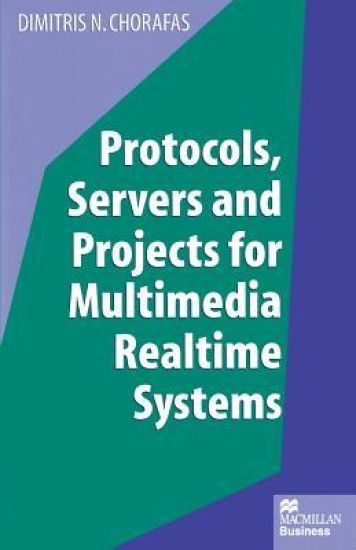
Protocols, Servers and Projects for Multimedia Realtime Systems
Dimitris N. Chorafas
Palgrave Macmillan
1997
nidottu
This book addresses the changing role of networks and the evolving structure of an Infrastructure Superhighway. The requirements for leadership in telecommunications are reviewed from different viewpoints: Network operators, equipment manufacturers, software developers and user organizations. Emphasis is placed on multimedia and what multimedia solutions would mean to telephone utilities and endusers. Based on extensive research undertaken in Europe, US and Japan, Dimitris Chorafas identifies new domains of applications, presents the breakthroughs which have currently been achieved and outlines the systems solutions necessary to fruitfully exploit new technology.
High-Performance Networks, Personal Communications and Mobile Computing
Dimitris N. Chorafas
Palgrave Macmillan
1996
sidottu
Many professionals in the technology industry are seeking new solutions beyond the confines of the more traditional type software tools, network design solutions and distributed systems applications. The aim of this book is to provide for them a much needed upgrade of knowledge and skills by addressing the developing technical and business perspectives which have emerged from the deregulation of telecommunications, including issues connected to costs and tariffs. It also addresses a comprehensible introduction to the research, development and implementation of agents. Based on thorough research undertaken from 1993-96 in the United States, Europe and Japan, much practical material is included, with both comprehensive examples and case studies.
Manufacturing Databases and Computer Integrated Systems
Dimitris N. Chorafas
CRC Press Inc
1993
sidottu
Manufacturing Databases and Computer Integrated Systems is the first book to probe the problems and solutions presented by the diversity of databases within the manufacturing industry. The author examines these heterogeneous databases at both the macro (national/international) level and micro (intracompany and intercompany) level. This book is the result of an extensive international research project that involved 87 leading organizations. Manufacturing Databases and Computer Integrated Systems presents the compelling argument for using computers as database integrators, a concept beyond the obvious applications of number crunching and data storage. The book addresses several different areas of manufacturing technology, including product policies in manufacturing, fuzzy controls in plant operations, concurrent engineering, practical applications for expert systems, organizational prerequisites in manufacturing, heterogenous database environments, the benefits of object-oriented databases, and the requirements for virtual database integration. Manufacturing Databases and Computer Integrated Systems also presents case studies, including the TRW solution applied in Operation Desert Storm, Project CRONUS by BBN, the Intelligent Database Assistant (IDA) by GTE, General Motor's DATAPLEX solution, and Project Carnot by the Microelectronics and Computer Development Corporation (MCC). The book is a "must" for computer and database technologists, engineers, and senior management at most companies worldwide.
Treasury Operations and the Foreign Exchange Challenge
Dimitris N. Chorafas
John Wiley Sons Inc
1992
sidottu
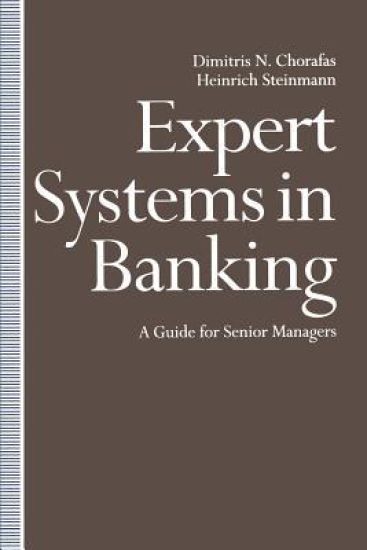
This book presents the reader with a complete and comprehensive picture of what is happening today in banks and other financial institutions in terms of expert systems implementation. In addition it helps in refining the reader's thoughts on how to build an environment for the successful implementation of expert systems in banking - and how to sell this concept to management including risks and opportunities.
Implementing Networks in Banking and Financial Services
Dimitris N Chorafas; Heinrich Steinmann
Palgrave Macmillan
1989
sidottu
The objective of this book is to provide banks and the financial industry at large with an analysis of what is and what is not a network at their service. The background to the book is electronic banking, and the foreground brings into perspective what has been done by forward-looking financial industries and the benefits they have achieved. While banking is today an industry, it cannot be satisfactorily compared to other industries as it operates too much by its own rules. Examples in the text have therefore been restricted to banking only and, more precisely, to the four generations of online financial networks which have evolved over the past twenty years in Japan. This book is a study addressed to the management of financial institutions. Computers and communications technologists will also gain from it both insight and foresight.
5.2 Organisation und Vorbereitung auf Geschaftsstellenniveau . . . . . . . . . 89 . . 5.3 Durch Elektronik von Arbeitsstunden zu -sekunden ................. 92 5.4 Drei Generationen von Online-Systemen . . . . . . . . . . . . . . . . . . . . 96 . . . . . . . 5.5 Kunden- und managementorientierte Ansatze ........, . . . . . . . . . . 100 . . . . 5.6 Werkzeuge zu unserer VerfUgung . . . . . . . . . . .. . . . . . . . . . . . . . . . . . 104 . . . . 5.7 Eine Entscheidung steht bevor - ProblembewuBtsein des Management ist notig . . . . . . . . . . . . . . . . . . . . . . . . . . . . . 108 . . . . . . . . . . . . . . 6. Bank-Engineering. . . . . . . . . . . . . . . . . . . . . . . . . . . . . . . . III . . . . . . . . . . . . . . 6.1 Einfuhrung.................................................... III 6.2 Wozu Bank-Engineering? . . . . . . . . . . . . . . . . .. . . . . . . . . . . . . . . . . .. . . 112 . 6.3 Informationssysteme im Bankgeschaft. . . . . . . . . . . . . . . . . . . . . 116 . . . . . . . . 6.4 Organisation und Kontrolle . . . . . . . . . . . . . . . . . . . . . . . . . . 121 . . . . . . . . . . . . 6.5 Ein Finanzplanungssystem . . . . . . . . . . . . . . . . . . . . . . . . .. . . . 125 . . . . . . . . . . 6.6 Zielorientierte UnternehmensfUhrung ............................. 128 7. Bankstrategie . . . . . . . . . . . . . . . . . . . . . . . . . . . . . . . . . . 135 . . . . . . . . . . . . . . . . 7.1 Einfuhrung . . . . . . . . . . . . . . . . . . . . . . . . . . . . . . . . . . . 135 . . . . . . . . . . . . . . . . . 7.2 Ein wirklichkeitsnaher strategischer Plan .......................... 136 7.3 Kundenloyalitat................................................ 139 7.4 Die Auswirkunden strategischer Entscheidungen . . . . . . . . . . . . . . . 143 . . . . . 7.5 Management des Wandels ....................................... 145 7.6 Obergangsplane................................................ 150 7.7 Zeiten der U nruhe . . . . . . . . . . . . . . . . . . . . . . . . . . . . . . . 154 . . . . . . . . . . . . . . . 7.8 Planung fur eine anspruchsvolle Kundschaft. . . . . . . . . . . . . . . . . . 156 . . . . . . 8. Die Bank als Profit-Center. . . . . . . . . . . . . . . . . . . . . . . . . .. . . 161 . . . . . . . . . . 8.1 Einfuhrung.................................................... 161 8.2 Die Bedeutung von Gewinnen . . . . . . . . . . . .. . . . . . . . . . . . . . . . . .. . . . 162 . . 8.3 Auswirkungen der Inflation. . . . . . . . . . . . . . . . . . . . . . . . . . . 166 . . . . . . . . . . . 8.4 Die Eindammung der Personalkosten in der Bankindustrie ........... 169 8.5 Neue Finanzierungsregeln ....................................... 174 8.6 Ein Planungsbeispiel aus dem Dariehensgeschaft . . . . . . . . . . . . .. . . . 179 . . . 9. Entscheidungshilfen fUr das Management - ihre Infrastruktur . . . . .. . . 183 9.1 Einfuhrung . . . . . . . . . . . . . . . . . . . . . . . . . . . . . . . . . .. . . 183 . . . . . . . . . . . . . . . 9.2 Das Entscheidungsumfeld ....................................... 184 9.3 Online zu den Computer-Ressourcen . . . . . . . . . . . . . . . . . . . .. . . 187 . . . . . . . 9.4 Die Entscheidung fur eine SystemlOsung . . . . . . . . . . . . . . . . . .. . . 193 . . . . . . VIII 9.5 Praktische Anwendungsbeispiele. . . . . . . . . . . . . . . . . . . . . . . . 196 . . . . . . . . . .
Implementing Networks in Banking and Financial Services
Dimitris N Chorafas; Heinrich Steinmann
Palgrave Macmillan
1988
nidottu
The objective of this book is to provide banks and the financial industry at large with an analysis of what is and what is not a network at their service. The background to the book is electronic banking, and the foreground brings into perspective what has been done by forward-looking financial industries and the benefits they have achieved. While banking is today an industry, it cannot be satisfactorily compared to other industries as it operates too much by its own rules. Examples in the text have therefore been restricted to banking only and, more precisely, to the four generations of online financial networks which have evolved over the past twenty years in Japan. This book is a study addressed to the management of financial institutions. Computers and communications technologists will also gain from it both insight and foresight.