Kirjojen hintavertailu. Mukana 12 390 323 kirjaa ja 12 kauppaa.

Kirjailija

Dmitri N. Smirnov

Kirjat ja teokset yhdessä paikassa: 29 kirjaa, julkaisuja vuosilta 2017-2020, suosituimpien joukossa Ophelia Songs: For Soprano and String Trio, Full Score. Vertaile teosten hintoja ja tarkista saatavuus suomalaisista kirjakaupoista.

29 kirjaa

Kirjojen julkaisuhaarukka 2017-2020.

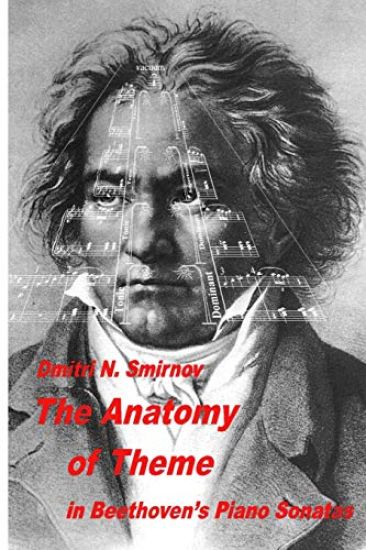
The Anatomy of Theme in Beethoven's Piano Sonatas

The Anatomy of Theme in Beethoven's Piano Sonatas

Dmitri N. Smirnov

Independently Published
2020
nidottu
"It is impossible to fully understand any composition that belongs to any epoch, either before or after Beethoven, if you do not proceed from Beethoven. ...] Only at the level that form had reached in the music of Beethoven could this form ...] reveal something which would unite the music before Beethoven with the music of today." This quote from Philip Herschkowitz (student of Alban Berg and Anton Webern and teacher of Dmitri Smirnov) forms the basis of Smirnov's study "The anatomy of theme in Beethoven's piano sonatas", Smirnov, himself a composer and musicologist from Russia, presents a "strong and clear definition" of the subject term based on this outdated and reserved for lovers of Beethoven, which in his opinion has so far been characterized by misunderstandings and contradictions. As with Berg, Webern and Herschkowitz, Smirnov's analytical methodology is based on Schoenberg. (Jan Wedekind ) This book investigates the anatomy of Theme-the foremost part of a musical organism, aiming to set out the principles of a strong and clear definition of this basic music term, and also to develop a detailed theory of its wider implications. It presents examination of Beethoven's piano sonatas based on the post-Webernian approach to musical form and in particular on the principles of the teaching of Philip Herschkowitz (1906-1989), one of the most important pupils of Alban Berg and Anton Webern. It includes a lot of references to Herschkowitz's works as well as a translation of his important essay to this particular subject: "Webern and His Teaching". It also uses some new methods of analysis, and includes a complete catalog of every theme found within the sonatas, with classification of more than 500 themes according to their intervallic typology.
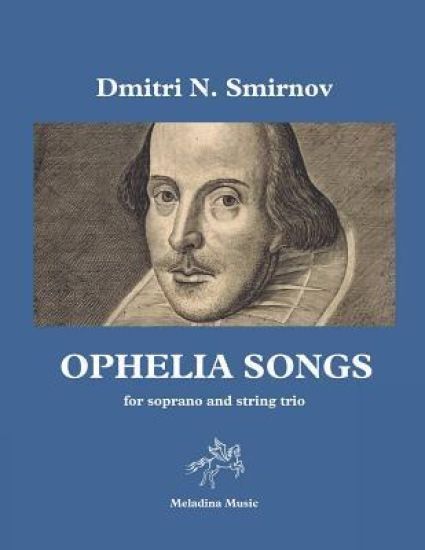
Ophelia Songs: For Soprano and String Trio, Full Score

Ophelia Songs: For Soprano and String Trio, Full Score

Dmitri N. Smirnov

Independently Published
2019
nidottu
Five Ophelia's Mad Songs by William Shakespeare from his tragedy "Hamlet" were set to music by Russian/British composer Dmitri N. Smirnov in January 2019. The soprano is accompanied here by string trio (violin, viola and cello). In this edition the full score and parts are provided. If a singer for some reason would prefer to perform these songs in Russian instead of the original English, there is a Russian singable translation provided (see page 4). The soprano and piano version of these songs is also available (see op. 197a in a separate edition: Meladina Music series No. 30). Dmitri Nikolayevich Smirnov is a composer with an international reputation who graduated from Moscow Conservatoire and studied in with composers Edison Denisov and Philip Herschkowitz (a student of both Alban Berg and Anton Webern). He wrote near 200 compositions in all possible genres of contemporary classical music. Since 1991 he lives and works in England.
Eternal Refuge for voice and piano trio: Text by Mikhail Bulgakov from the novel The Master and Margarita score & parts
ETERNAL REFUGE for voice (mezzo-soprano or baritone) and piano trio, text in Russian by Mikhail Bulgakov from the novel "The Master and Margarita" (the openning of the chapter No. 32 "Mercy and Eternal Refuge"), Op. 10a (Version 3 May 2002, St Albans, UK), 9'. Premiere: 14 Jan 2003, Musikverein, Brahms Hall, Vienna, Wolfgang Holzmair (baritone) & Altenberg Trio Re-reading the novel "The Master and Margarita" by Mikhail Bulgakov I suddenly discovered for myself an astonishing fragment of prose that sounded as greatest poetry (here in my translation): "Gods, o my Gods How sad is the evening earth How mysterious are the mists over the swamps He who wandered in those mists, who greatly suffered before dying, who soared over this earth, carrying an unbearable burden-he knows this. The tired man knows this well. And he without regret leaves the mists of the earth, its swamps and rivers. He, with an unburdened heart, gives himself into the hands of death, knowing that death alone will comfort him." I completed my setting of these words for voice percussion, organ and string orchestra in a couple of days, 15 May 1972, and presented the score to Elena Firsova, my colleague and future wife to whom I dedicated it. Since that time I returned to the piece quite a few times, rearranging and re-orchestrating it for different casts of players. The version of 1981 was premiered 31 January 1982, Philharmonic Hall in Tula, with Irina Muratova (soprano), Yuri Nikolajevski (conductor) and the next evening repeated in Moscow at the House of composers. The vocal score printed by Sovetsky Kompozitor Publishers, Moscow, 1990 in the collection "Vocal Symphonic Works" Vol. 2. Here is another version: for voice and piano trio completed 3 May 2002 in St Albans, UK.
Duets for Viola & Harp: Score and Part

Duets for Viola & Harp: Score and Part

Dmitri N. Smirnov

Independently Published
2019
nidottu
Dmitri N. Smirnov: DUETS FOR VIOLA & HARP. FAREWELL SONG for viola and harp Op. 37 (1982), 7'. The piece was written for my friends, violist Sergey Rakitchenkov and his wife harpist Olga Ortenberg-Rakitchenkov, immediately after I learned that they decided to leave Russia forever. It was a feeling that everybody is going away, all our close friends and all excellent musicians, leaving us in a desert. The feeling of loss dominates the character of the piece. I used also the "musical letters" of their names in their parts, saying by this a symbolical farewell to them. The premiere performance took place on 4th of October 1982 at the Union of Composers in Moscow. SHADOWS IN LIGHT for viola and harp Op. 122 (1999), 5'30''. Two friends of mine who emigrated and settled in California were continued play my music, asking me from time to time to write a new piece for them. That time I was reading the book by Vassily Kandinsky on the light and shadows in painting, and it was influenced the title and character of the piece. Sergey Rakitchenkov and Olga Ortenberg-Rakitchenkov premiered the piece on 20th of April 2001 at the Old First Church in San Francisco (USA). Scores and parts are available from Meladina Music: [email protected]
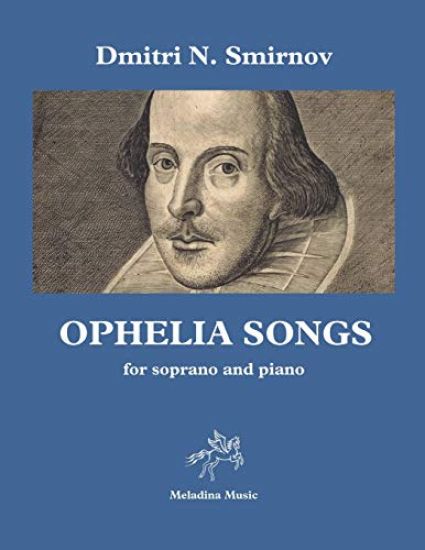
Ophelia Songs: For Soprano and Piano

Ophelia Songs: For Soprano and Piano

Dmitri N. Smirnov

Independently Published
2019
nidottu
Five Ophelia's Mad Songs by William Shakespeare from his tragedy "Hamlet" were set to music by Russian/British composer Dmitri N. Smirnov in January 2019. The soprano is accompanied here by piano. If a singer for some reason would prefer to perform these songs in Russian instead of the original English, there is a Russian singable translation provided (see page 4). The soprano and string trio version of these songs is also available (see op. 197 in a separate edition: Meladina Music series No. 29). Dmitri Nikolayevich Smirnov is a composer with an international reputation who graduated from Moscow Conservatoire and studied in with composers Edison Denisov and Philip Herschkowitz (a student of both Alban Berg and Anton Webern). He wrote near 200 compositions in all possible genres of contemporary classical music. Since 1991 he lives and works in England.
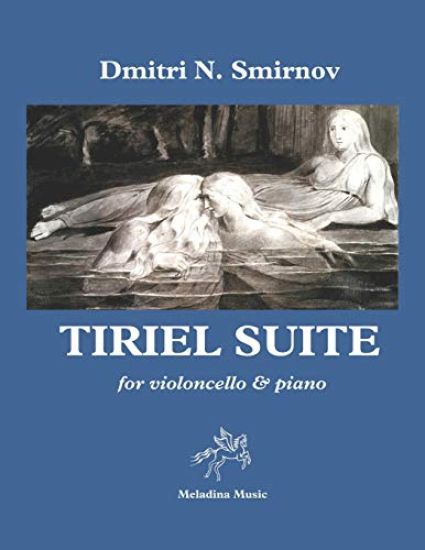
Tiriel Suite: For Violoncello & Piano

Tiriel Suite: For Violoncello & Piano

Dmitri N. Smirnov

Independently Published
2019
nidottu
TIRIEL-SUITE for cello and piano, op. 41c bis, 1983/2019, 17' . Opera "Tiriel" op. 41, after William Blake's first prophetic poem, was written by Dmitry N. Smirnov in 1985 in Moscow and staged in 1989 in Freiburg, Germany. This is a dark apocalyptic parable, which action occurs at the dawn of human history. The old blind Tiriel, a former tyrant removed from power and filled with the thirst for revenge, sends devastating, malicious curses to all destined to cross his path-to his sons, daughters, brothers, dear old parents Har and Heva, and, finally, to himself, and by this he brings death to all humanity. In the epilogue of the opera, the goddess Mnetha sings a lullaby to mankind, which had already passed away, saying that the evil, which led to this catastrophe, is inherent in human nature itself. The symphonic prologue to the opera is based on the motifs of this lullaby. Author's transcription of the prologue: "Tiriel," op. 41c, for cello and piano, has long been included in the repertoire of quite a few distinguished cellists. The same piece opens the "Tiriel Suite," which is created by the composer in February 2019. The four movement cycle also contains: 2. The Dance of Har and Heva (from the 2nd scene), 3. Arioso of Har (from the 3rd scene) and 4. The Tyger, a song setting of Blake's the most famous poem, which in the opera sounds at the beginning of the 4th scene singing by Ijim, the wild brother of Tiriel. The edition is provided with cello part attached to the score.
Piano Trio No.2: Score and Parts

Piano Trio No.2: Score and Parts

Dmitri N. Smirnov

Independently Published
2019
nidottu
Trio No. 2 for piano, violin & violoncello, Op. 69, 1992, 13'. Piano Trio No. 2 by Russian/British composer Dmitri N. Smirnov was commissioned by the Beethovenfest Bonn and written for the Tchaikovsky Trio. It was completed on 6th of May 1992. It consists of three movements: 1. Andantino 2. Allegretto scherzando 3. Feroce / Andantino The total duration is about 13 minutes. The work was premiered on 23th of October 1992 at the Beethoven House, Bonn, by the Tchaikovsky Trio: Konstantin Bogino, piano, Alexander Brusilovsky, violin, & Anatole Liebermann, cello.
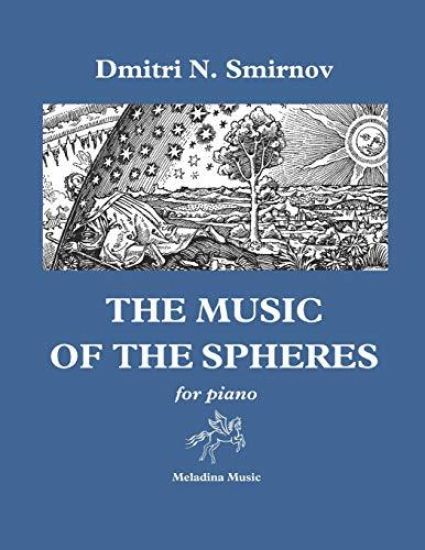
The Music of the Spheres: For Piano

The Music of the Spheres: For Piano

Dmitri N. Smirnov

Independently Published
2019
nidottu
THE MUSIC OF THE SPHERES for piano, Op. 86, ca 13-15'. The cycle was written in June and July 1995 in Keele, Staffordshire. This is a kind of musical study of the geometric aspect of the circle. Melodic and harmonic materials are obtained by equal division of the radiuses of circles of different diameters by perpendicular lines dividing the circumference into segments of different lengths. The musical modes produced in this way form the sound spectrum of each piece. Three movements: 1. Circles, 2. Wheels, and 3. The Music of the Spheres, are three different ways of musical treatment of the geometry of a circle. The first and last parts have the same sound spectrum, forming a kind of multi-coloured "musical rainbow." The second movement is based on the musical modes created by the rotational movement of circles of different sizes. (See examples at the end of the score). The premiere of the work took place on April 11, 1996 at the Union of Composers in Moscow, played by Ivan Sokolov. In England, it was first performed in 1997 at the Keele University by Michaela Connolly.
String Quartet No. 3: Full Score & Parts

String Quartet No. 3: Full Score & Parts

Dmitri N. Smirnov

Independently Published
2018
nidottu
In 1992 at the Dartington Summer School I have listened to almost a complete cycle of Dmitry Shostakovich's String Quartets in the impressive performance by the Brodsky Quartet. This is why I decided to compose my own new piece in that genre. Very soon, by a happy coincidence, I received from the South Bank Festival the commission to write a new string quartet. I was in the middle of my work, when I was told that it will be played by the Brodsky. My Third String Quartet was completed on 19th March 1993 at Keele, Staffordshire, UK, and dedicated to the Brodsky Quartet. This is one-movement piece in tempo Andante with some features of a sonata and cyclic forms. It is based on a thematic pattern combined of two very expressive intervals: the minor sixth and the minor second.The piece begins with a solo cello and concludes with solo violin, supported by the chorale of the rest three instruments. It was premiered by the Brodsky Quartet, on 14th April 1994, at the Purcell Room, London. Dmitri N. Smirnov
Opus 111: for Clarinet, Violoncello and Piano. Full score and parts

Opus 111: for Clarinet, Violoncello and Piano. Full score and parts

Dmitri N. Smirnov

Createspace Independent Publishing Platform
2018
nidottu
OPUS 111 for Clarinet, Violoncello & Piano is a two movement composition written in July 1998. It was timed to coincide with 50th birthday of the composer and regarded as his musical self-portrait. A short slow introduction, based on sounds corresponding to the letters of the composer's name, is followed by a fast movement, which presents a brief history of his life, where three instruments quote the initial fragments of the themes of all his major works, mixing them into one polyphonic parti-coloured fabric. The citations from the works written in England are accompanied by the British National Anthem. After 110 opuses are quoted the clarinet and cello play the music of Smirnov's very first piece, written in 1963. The work ends with a slow mysterious chime of bells. Total duration is approx. 8-9 minutes. The composition was first performed by the "Meladina Ensemble" on 7th of November, 1998 in the church of St. Cyprian in London. The piece also was played in Germany and USA.
Tri-o-Tri (Piano Trio No. 3): Full score and parts

Tri-o-Tri (Piano Trio No. 3): Full score and parts

Dmitri N. Smirnov

Createspace Independent Publishing Platform
2018
nidottu
Commissioned by the Cheltenham Festival, "TRI-O-TRI" (Trio No.3 for violin, cello and piano) by Dmitri Smirnov was written in 2004 and premiered by the "Florestan Trio" on 7th July 2005. There are 3 movements: 1. Lento, 2. Andante (Passacaglia), 3. Sostenuto. The duration of the composition is about 17 minutes. Dmitri Nikolaevich Smirnov (pen names Dmitri N. Smirnov and D. Smirnov-Sadovsky) is a Russian and British composer. He was born in 1948 in Minsk into a family of opera singers Nikolay Senkin-Sadovsky and Eugenia Smirnova. He studied at the Moscow Conservatory 1967-1972 under Nikolai Sidelnikov, Yuri Kholopov and Edison Denisov. He also studied privately with Philip Herschkowitz, a pupil of both Berg and Webern. Since 1991 Smirnov has been resident of England. He was a Fellow at University of Cambridge, St John's College, a Composer-in-Residence in Dartington, and Visiting Professor at Keele University (1993-8). In 1998 Smirnov and his family settled in St Albans. From 2003 he has taught at the Goldsmiths College, University of London. He is married to the composer Elena Firsova. Their children are Philip Firsov (an artist and sculptor), and Alissa Firsova (a composer, pianist and conductor).
Piano Trio No. 1: Full score and parts

Piano Trio No. 1: Full score and parts

Dmitri N. Smirnov

Createspace Independent Publishing Platform
2018
nidottu
Dmitri Smirnov wrote his Trio No. 1 for violin, cello and piano in 1977, five years after his graduating from the Moscow Conservatoire. It is dedicated to his teacher Edison Denisov. The three movements of the work correspond with three different states of musical sound, which symbolically represent the life of a human spirit: 1. Adagio molto-the birth of the sound; 2. Allegro-the active and expressive life of the sound; 3. Lento ("Dies Irae" theme with variations)-the ageing of the sound and its dying away. The Trio was recorded for Megadisc MDC 7818, "An Introduction to Dmitri Smirnov", by Patricia Kopatchinskaja, violin, Alexander Ivashkin, cello, and Ivan Sokolov, piano. Dmitri Nikolaevich Smirnov (pen names Dmitri N. Smirnov and D. Smirnov-Sadovsky) is a Russian and British composer. He was born in 1948 in Minsk into a family of opera singers Nikolay Senkin-Sadovsky and Eugenia Smirnova. He studied at the Moscow Conservatory 1967-1972 under Nikolai Sidelnikov, Yuri Kholopov and Edison Denisov. He also studied privately with Philip Herschkowitz, a pupil of both Berg and Webern. Since 1991 Smirnov has been resident of England. He was a Fellow at University of Cambridge, St John's College, a Composer-in-Residence in Dartington, and Visiting Professor at Keele University (1993-8). In 1998 Smirnov and his family settled in St Albans. From 2003 he has taught at the Goldsmiths College, University of London. He is married to the composer Elena Firsova. Their children are Philip Firsov (an artist and sculptor), and Alissa Firsova (a composer, pianist and conductor).
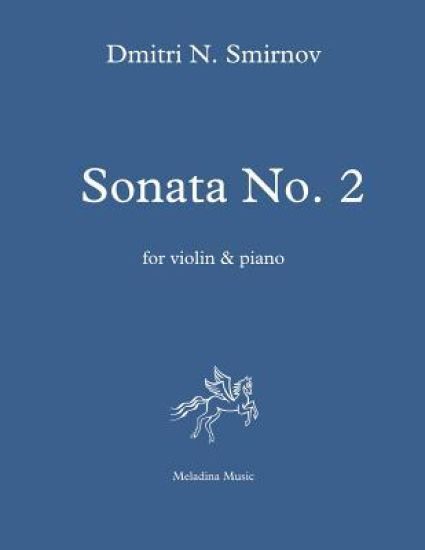
Sonata No. 2 for Violin and Piano: Score and Part

Sonata No. 2 for Violin and Piano: Score and Part

Dmitri N. Smirnov

Createspace Independent Publishing Platform
2018
nidottu
The 2nd Sonata for violin and piano by Dmitri Smirnov is a short lyrical but virtuoso concert piece written seven years after the composer graduated from the Moscow Conservatoire. The composition is written as a birthday present and dedication to his wife, a composer Elena Firsova. After the first performance of the Sonata given in December of the same year in Moscoiw, it was played repeatedly in chamber concerts in Russia, England and USA.
Sonata No. 4 for violin and piano: Down Memory Lane... Score and part

Sonata No. 4 for violin and piano: Down Memory Lane... Score and part

Dmitri N. Smirnov

Createspace Independent Publishing Platform
2018
nidottu
Dmitri Smirnov's Violin Sonata No. 4 subtitled "Down Memory Lane..." is written in August 2005, in St Albans. This is a one-movement composition, built as a series of musical memories, reflecting the relationship of two contrasting musical ideas. They change their appearance almost beyond recognition. The form of the work is a free fantasy, combining the features of the sonata, rondo and variations. It is premiered on the 22nd of January 2009 in London by Darragh Morgan, violin, and Mary Dullea, piano.
Es ist... (Sonata No. 3): for violin and piano

Es ist... (Sonata No. 3): for violin and piano

Dmitri N. Smirnov

Createspace Independent Publishing Platform
2017
nidottu
The first edition of the score of "Es ist..." (Sonata No. 3) for violin and piano Op.109, 1998. The violin part is provided. All additional performing materials are available from Meladina Music: [email protected] Sonata was completed on 21st of June 1998 in St Albans, but its idea came to me a few years earlier, when my family and I lived at the campus of the Keele University in Staffordshire. That time I tried to develop the idea of so-called "complete chords" (combined of all different unrepeated intervals). With the series of such chords I made my own harmonisation of the choral "Es ist genug", the final movement of Cantata BWV 60 "O Ewigkeit, du Donnerwort" by J. S. Bach's. Later returning to that idea I expanded it into 17 minutes long three-movement sonata for violin and piano. Some themes of it are based on the musical spelling of the name of J. S. Bach. The piece is dedicated to the memory of my father-in-law, the eminent physicist-theorist Oleg Borisovich Firsov, who was born on the 13th of June 1915 in Saint Petersburg and died on the 2nd of April 1998 in Moscow. The work was played for the first time by Patricia Kopachinskaia (violin) and Ivan Sokolov (piano) on 20th of August 2002 at the recording session in the studio No. 1 of the Moscow Radio. The recording was included into the CD album "An Introduction to Dmitri Smirnov", Megadisc Classics, MDC7818, Belgium. Dmitri N. Smirnov
Triple Concerto No. 1: for Alto Saxophone, Piano and Contrabass with Strings and Percussion. Full Score
Dmitri N. Smirnov Triple Concerto No. 1, Op. 21 (1977) for alto saxophone, piano, double bass, strings and percussion. To the 5th anniversary of my and my wife's wedding I wrote a little piece for alto saxophone on musical letters D-(e)S-E-F (for Dmitri Smirnov and Elena Firsova). But it was too short to be a completed and independent piece, and thinking how to develop it, I found myself working on a 3-movement concerto for 3 soloists, strings and percussion, with the lyrical First Movement (Lento), 3 cadenzas as the Second Movement (Risoiluto), and fast Finale (Allegro). It was premiered on 26th December 1977 at the Union of Composers in Moscow with Lev Mikhailov (saxophone), Alexander Bakhchiev (piano), Ivan Kotov (double bass) and Moscow Chamber Orchestra conducted by Lev Markiz.