Kirjojen hintavertailu. Mukana 12 595 353 kirjaa ja 12 kauppaa.
Kirjailija
Dmitry A. Novikov
Kirjat ja teokset yhdessä paikassa: 15 kirjaa, julkaisuja vuosilta 2013-2023, suosituimpien joukossa Mob Control: Models of Threshold Collective Behavior. Vertaile teosten hintoja ja tarkista saatavuus suomalaisista kirjakaupoista.
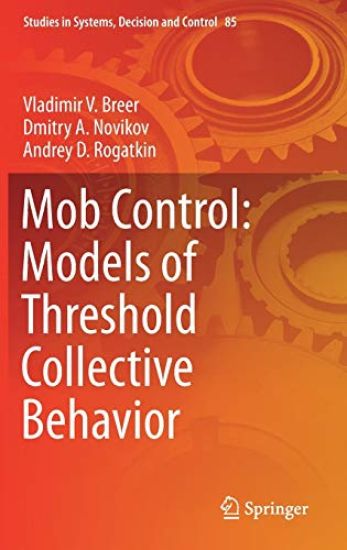
This book presents mathematical models of mob control with threshold (conformity) collective decision-making of the agents. Based on the results of analysis of the interconnection between the micro- and macromodels of active network structures, it considers the static (deterministic, stochastic and game-theoretic) and dynamic (discrete- and continuous-time) models of mob control, and highlights models of informational confrontation. Many of the results are applicable not only to mob control problems, but also to control problems arising in social groups, online social networks, etc. Aimed at researchers and practitioners, it is also a valuable resource for undergraduate and postgraduate students as well as doctoral candidates specializing in the field of collective behavior modeling.
This monograph presents and analyzes the optimization, game-theoretic and simulation models of control mechanisms for ecological-economic systems.It is devoted to integrated assessment mechanisms for total risks and losses, penalty mechanisms, risk payment mechanisms, financing and costs compensation mechanisms for risk level reduction, sales mechanisms for risk level quotas, audit mechanisms, mechanisms for expected losses reduction, economic motivation mechanisms, optimization mechanisms for regional environmental (risk level reduction) programs, and mechanisms for authorities' interests coordination.The book is aiming at undergraduate and postgraduate students, as well as at experts in mathematical modeling and control of ecological economic, socioeconomic and organizational systems.
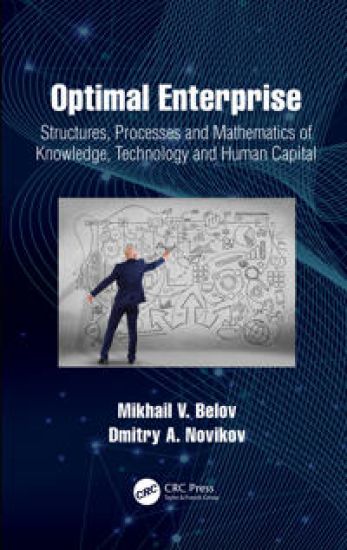
In the modern world, most gross product is created within Enterprise firms, project programs, state agencies, transnational corporations and their divisions, as well as various associations and compositions of the above entities. Enterprises, being, on the one hand, complex, and, on the other hand, widespread systems, are the subject matter of cybernetics, system theory, operations research, management sciences and many other fields of knowledge.However, the complexity of the system obstructs the development of mathematically rigorous foundations for Enterprise control. Moreover, methods of operations research and related sciences, which are widely used in practice, provide optimization of the constituents of an Enterprise, without modeling it as a whole system. But the optimization of parts does not lead to the optimality of the whole, and, also, the absence of top-down and holistic mathematical models of Enterprise contradicts the principle of holism and the system approach.The approach in this book looks first at Enterprise Systems and their essential aspects as complex sociotechnical systems composed of integrated sets of structural and process models (Chapters 1 and 2). A uniform description of all the heterogeneous fields of the modern Enterprise (marketing, sales, manufacturing, HR, finance, etc.) is then made, and the Enterprise Control Problem is posed as a top-down and holistic mathematical optimization problem (Chapter 3). Original models and methods of contract theory (Chapter 4), technology management (Chapter 5), human behavior and human capital (Chapter 6) and complex activity and resource planning (Chapter 7) are developed to solve the problem. Structural processes and mathematical models constitute an Optimal Enterprise Control Framework (Chapter 8) that provides a practical solution to the Enterprise Control Problem.This book is a resource for postgraduate and doctoral students, postdoctoral researchers and professors with research interests in the following fields of science: Fundamental Complex Systems study, Complex Systems Engineering, Enterprise Systems Engineering Applications of Operations Research, Optimization, Probability and Stochastic processes to Management Science, Economics and Business Theory of the Firm Business and Management – general, strategy/leadership, organization management, operations management and management information systems Theory of Business Processes, Business Processes Improvement and Reengineering
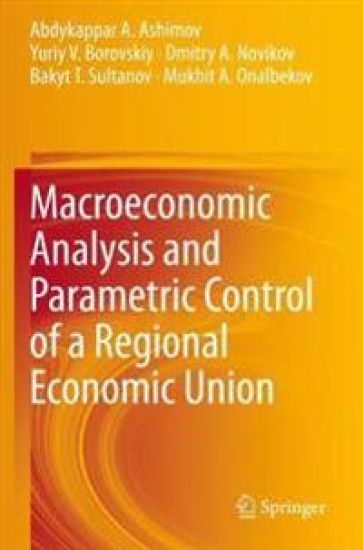
This book is a further development of the theory of parametric control. It includes: numerical methods of testing (verification) of software implementation of mathematical models by assessing the stability of mappings defined by the model; sufficient conditions for the existence of the solutions of some types of problems of dynamic optimization; the existence of continuous dependence of optimal values of criteria on exogenous functions and parameters; and the existence of points of bifurcation of extremals of such problems. It demonstrates that this theory offers a constructive methodology for middle-term forecasting, macroeconomic analysis and estimation of optimal values of economic characteristics on the basis of advanced global mathematical models, namely Computable General Equilibrium (CGE) Model, Dynamic Stochastic General Equilibrium (DSGE) Model, and Hybrid Econometric model. In addition, it includes conditions for the applicability of the computational experiments’ results, into practice.
In the modern world, most gross product is created within Enterprise firms, project programs, state agencies, transnational corporations and their divisions, as well as various associations and compositions of the above entities. Enterprises, being, on the one hand, complex, and, on the other hand, widespread systems, are the subject matter of cybernetics, system theory, operations research, management sciences and many other fields of knowledge.However, the complexity of the system obstructs the development of mathematically rigorous foundations for Enterprise control. Moreover, methods of operations research and related sciences, which are widely used in practice, provide optimization of the constituents of an Enterprise, without modeling it as a whole system. But the optimization of parts does not lead to the optimality of the whole, and, also, the absence of top-down and holistic mathematical models of Enterprise contradicts the principle of holism and the system approach.The approach in this book looks first at Enterprise Systems and their essential aspects as complex sociotechnical systems composed of integrated sets of structural and process models (Chapters 1 and 2). A uniform description of all the heterogeneous fields of the modern Enterprise (marketing, sales, manufacturing, HR, finance, etc.) is then made, and the Enterprise Control Problem is posed as a top-down and holistic mathematical optimization problem (Chapter 3). Original models and methods of contract theory (Chapter 4), technology management (Chapter 5), human behavior and human capital (Chapter 6) and complex activity and resource planning (Chapter 7) are developed to solve the problem. Structural processes and mathematical models constitute an Optimal Enterprise Control Framework (Chapter 8) that provides a practical solution to the Enterprise Control Problem.This book is a resource for postgraduate and doctoral students, postdoctoral researchers and professors with research interests in the following fields of science: Fundamental Complex Systems study, Complex Systems Engineering, Enterprise Systems Engineering Applications of Operations Research, Optimization, Probability and Stochastic processes to Management Science, Economics and Business Theory of the Firm Business and Management – general, strategy/leadership, organization management, operations management and management information systems Theory of Business Processes, Business Processes Improvement and Reengineering
This book develops and describes a general methodology that can be applied to any complex human activity (activity with a non-trivial, multi-level internal structure).The structural components of complex activities are considered, and their logical, cause-and-effect, and process structures are functionally described. Considerable attention is paid to organization and management, uncertainties, and the lifecycles of activities, as well as the actors, subject matter, resources, knowledge, and methods involved. Several typical examples are used throughout the text to illustrate the implementation of common approaches involving the functioning of work groups, organizational units, projects, and organizations in general: a retail bank, an aircraft manufacturer, a fire department, and a nuclear power plant. In addition, the book employs a system of connected technical models, in order to ensure that the results are of practical applicability for both experts on the ground and scholars engaged in research on the general principles of how activities (practical, scientific, etc.) are organized or on the management of socio-technical systems.
This book develops and describes a general methodology that can be applied to any complex human activity (activity with a non-trivial, multi-level internal structure).The structural components of complex activities are considered, and their logical, cause-and-effect, and process structures are functionally described. Considerable attention is paid to organization and management, uncertainties, and the lifecycles of activities, as well as the actors, subject matter, resources, knowledge, and methods involved. Several typical examples are used throughout the text to illustrate the implementation of common approaches involving the functioning of work groups, organizational units, projects, and organizations in general: a retail bank, an aircraft manufacturer, a fire department, and a nuclear power plant. In addition, the book employs a system of connected technical models, in order to ensure that the results are of practical applicability for both experts on the ground and scholars engaged in research on the general principles of how activities (practical, scientific, etc.) are organized or on the management of socio-technical systems.
This book is a further development of the theory of parametric control. It includes: numerical methods of testing (verification) of software implementation of mathematical models by assessing the stability of mappings defined by the model; sufficient conditions for the existence of the solutions of some types of problems of dynamic optimization; the existence of continuous dependence of optimal values of criteria on exogenous functions and parameters; and the existence of points of bifurcation of extremals of such problems. It demonstrates that this theory offers a constructive methodology for middle-term forecasting, macroeconomic analysis and estimation of optimal values of economic characteristics on the basis of advanced global mathematical models, namely Computable General Equilibrium (CGE) Model, Dynamic Stochastic General Equilibrium (DSGE) Model, and Hybrid Econometric model. In addition, it includes conditions for the applicability of the computational experiments’ results, into practice.
Research Methodology: From Philosophy of Science to Research Design distinguishes itself from many other works devoted to research methodology and the philosophy of science in its integrated approach towards scientific research, which is regarded as the scientific project on all levels–from philosophy of science to research design. This work studies the basics of the methodology of scientific research and the organization of scientific activity from the viewpoint of systems science and system analysis. The book discusses the basics of the methodology including philosophical, psychological, epistemological and ethical/aesthetical foundations, the characteristics of scientific activity, including principles of scientific cognition, the means and methods of scientific research, the organization of a research implementation process and its chronological structure and finally, the organization of a collective scientific research design.The work should be of interest to researchers, students and professionals in the fields of systems science, cybernetics, systems engineering, philosophy of science and project management, as well as to specialists of applied activity in the fields of operations research, programming, mathematical modeling of decision-making in organizations and economics.
This book presents the methodology of complex activity with a set of interconnected mathematical models that describe the processes of technology design, adoption and use.It first discusses the technology of complex activity and its general models. The second chapter then introduces models of the processes of technology design and adoption, while Chapter 3 focuses on technology management models are presented in. Lastly, Chapter 4 examines analytical complexity and errors in solving technology design/optimization problems. This book is intended for experts and researchers interested in the general principles of activity organization and control of complex organizational and technical systems.
This book surveys the well-known results and also presents a series of original results on the mathematical modeling of social networks, focusing on models of informational influence, control and confrontation. Online social networks are intended for communication, opinion exchange and information acquisition for their members, but recently, online social networks have been intensively used as the objects and means of informational control and an arena of informational confrontation. They have become a powerful informational influence tool, particularly for the manipulation of individuals, social groups and society as a whole, as well as a battlefield of information warfare (cyberwars). This book aimed at under- and postgraduate university students as well as experts in information technology and modeling of social systems and processes.
This book presents mathematical models of mob control with threshold (conformity) collective decision-making of the agents. Based on the results of analysis of the interconnection between the micro- and macromodels of active network structures, it considers the static (deterministic, stochastic and game-theoretic) and dynamic (discrete- and continuous-time) models of mob control, and highlights models of informational confrontation. Many of the results are applicable not only to mob control problems, but also to control problems arising in social groups, online social networks, etc. Aimed at researchers and practitioners, it is also a valuable resource for undergraduate and postgraduate students as well as doctoral candidates specializing in the field of collective behavior modeling.
This monograph presents and analyzes the optimization, game-theoretic and simulation models of control mechanisms for ecological-economic systems.It is devoted to integrated assessment mechanisms for total risks and losses, penalty mechanisms, risk payment mechanisms, financing and costs compensation mechanisms for risk level reduction, sales mechanisms for risk level quotas, audit mechanisms, mechanisms for expected losses reduction, economic motivation mechanisms, optimization mechanisms for regional environmental (risk level reduction) programs, and mechanisms for authorities' interests coordination.The book is aiming at undergraduate and postgraduate students, as well as at experts in mathematical modeling and control of ecological economic, socioeconomic and organizational systems.
This book is dedicated to modern approaches to mathematical modeling of reflexive processes in control. The authors consider reflexive games that describe the gametheoretical interaction of agents making decisions based on a hierarchy of beliefs regarding (1) essential parameters (informational reflexion), (2) decision principles used by opponents (strategic reflexion), (3) beliefs about beliefs, and so on. Informational and reflexive equilibria in reflexive games generalize a series of well-known equilibrium concepts in noncooperative games and models of collective behavior. These models allow posing and solving the problems of informational and reflexive control in organizational, economic, social and other systems, in military applications, etc. (the interested reader will find in the book over 30 examples of possible applications in these fields) and describing uniformly many psychological/sociological phenomena connected with reflexion, viz., implicit control, informational control via the mass media, reflexion in chess, art works, etc. The present book is intended for experts in decision making and control of systems of an interdisciplinary nature, as well as for undergraduates and postgraduates.
Research Methodology: From Philosophy of Science to Research Design distinguishes itself from many other works devoted to research methodology and the philosophy of science in its integrated approach towards scientific research, which is regarded as the scientific project on all levels–from philosophy of science to research design. This work studies the basics of the methodology of scientific research and the organization of scientific activity from the viewpoint of systems science and system analysis. The book discusses the basics of the methodology including philosophical, psychological, epistemological and ethical/aesthetical foundations, the characteristics of scientific activity, including principles of scientific cognition, the means and methods of scientific research, the organization of a research implementation process and its chronological structure and finally, the organization of a collective scientific research design.The work should be of interest to researchers, students and professionals in the fields of systems science, cybernetics, systems engineering, philosophy of science and project management, as well as to specialists of applied activity in the fields of operations research, programming, mathematical modeling of decision-making in organizations and economics.