Kirjojen hintavertailu. Mukana 12 390 323 kirjaa ja 12 kauppaa.

Kirjailija

Domenico Losurdo

Kirjat ja teokset yhdessä paikassa: 23 kirjaa, julkaisuja vuosilta 1991-2024, suosituimpien joukossa Eine Welt ohne Krieg. Vertaile teosten hintoja ja tarkista saatavuus suomalaisista kirjakaupoista.

23 kirjaa

Kirjojen julkaisuhaarukka 1991-2024.

Western Marxism

Western Marxism

Domenico Losurdo

MONTHLY REVIEW PRESS,U.S.
2024
sidottu
A stinging critique of Western Marxism, counterposing its complicity with imperialist logic against a resurgent anti-imperialism Western Marxism: How It Was Born, How It Died, How It Can Be Reborn is a paradigm-shifting book that provides a trenchant critique of the Western left intelligentsia. It reveals how its dominant ideological orientation--characterized by defeatism, utopianism, and anti-communism--is rooted in the political economy of imperialism. Internationally acclaimed theorist Domenico Losurdo thus provides a fresh and challenging perspective on purportedly radical thinkers who have been widely promoted in the imperial core, including those affiliated with the Frankfurt School, French Theory, and operaismo, as well as Hannah Arendt, Giorgio Agamben, Michael Hardt, and Slavoj Zizek, among others. His critique also has wide-reaching implications for trend-setting discourses inspired by this coterie of intellectuals, from postcolonial and decolonial theory to subaltern studies and beyond. Far from being a negative undertaking, however, this book is grounded in the positive project of reigniting anti-imperialist Marxism. As a complement to the Italian edition of Western Marxism, this first-ever English translation also features the unprecedented publication of a major lecture that demystifies "Western Marxism" and its role in imperialists' efforts to denigrate the achievements of actually existing socialism. Raising the stakes of what it means to produce critical theory, Western Marxism will surely provoke wide debate and a reevaluation of hallowed canons.
Western Marxism

Western Marxism

Domenico Losurdo

MONTHLY REVIEW PRESS,U.S.
2024
pokkari
A stinging critique of Western Marxism, counterposing its complicity with imperialist logic against a resurgent anti-imperialism Western Marxism: How It Was Born, How It Died, How It Can Be Reborn is a paradigm-shifting book that provides a trenchant critique of the Western left intelligentsia. It reveals how its dominant ideological orientation--characterized by defeatism, utopianism, and anti-communism--is rooted in the political economy of imperialism. Internationally acclaimed theorist Domenico Losurdo thus provides a fresh and challenging perspective on purportedly radical thinkers who have been widely promoted in the imperial core, including those affiliated with the Frankfurt School, French Theory, and operaismo, as well as Hannah Arendt, Giorgio Agamben, Michael Hardt, and Slavoj Zizek, among others. His critique also has wide-reaching implications for trend-setting discourses inspired by this coterie of intellectuals, from postcolonial and decolonial theory to subaltern studies and beyond. Far from being a negative undertaking, however, this book is grounded in the positive project of reigniting anti-imperialist Marxism. As a complement to the Italian edition of Western Marxism, this first-ever English translation also features the unprecedented publication of a major lecture that demystifies "Western Marxism" and its role in imperialists' efforts to denigrate the achievements of actually existing socialism. Raising the stakes of what it means to produce critical theory, Western Marxism will surely provoke wide debate and a reevaluation of hallowed canons.
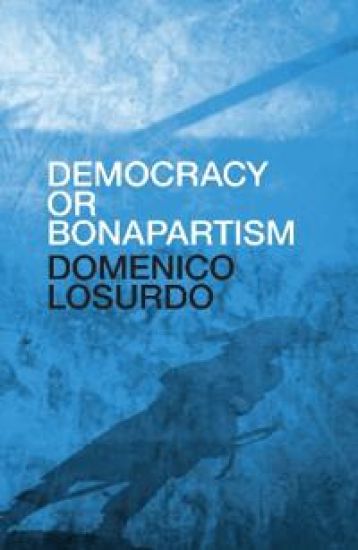
Democracy or Bonapartism

Democracy or Bonapartism

Domenico Losurdo; Luciano Canfora

Verso Books
2024
sidottu
The history of universal suffrage is best understood as a conflict between liberal elites and democractic workers' movements, according to Domenico Losurdo. John Stuart Mill, for example, argued that electoral influence should be more pronounced among the educated - and wealthy - than among those working with their hands. Every vote ought not to be counted the same. Countries with deep liberal roots have historically been quick to restrain the spread of the franchise, persisting in discrimination based on property, race, and gender. In this context, the rise of popular presidents and premiers, vested with extraordinary powers, has served to stimy attempts to associate politically and mobilize for meaningful change.This is modern Bonapartism, a soft authoritarianism in which popularity, stirred up by a news media dominated by the interests of the rich, replaces true democratic expression. As alternatives to this system drift toward the horizon, Bonapartism is set to become the dominant political regime of our era. Understanding the history of its development and the contradictory forces behind it may permit us to move towards true democracy.Praise for LIBERALISM: A COUNTER-HISTORY'Losurdo is almost unbelievably well-read'- JACOBIN'A brilliant exercise in unmasking liberal pretensions, surveying over three centuries with magisterial command of the sources'- FINANCIAL TIMES'Stimulatingly uncovers the contradictions of an ideology that is much too self-righteously invoked'- PANKAJ MISHRA, GUARDIAN'A book of wide reference and real erudition'- TIMES LITERARY SUPPLEMENT'The book is a historically grounded, very accessible critique of liberalism, complementing a growing literature critical of liberalism'- CHOICEPraise for WAR AND REVOLUTION: RETHINKING THE TWENTIETH CENTURY'War and Revolution is a relentless document. It is dense and disconcerting. This is precisely why it should be considered one of the most important history books written since 9/11'- RON JACOBS, COUNTERPUNCH
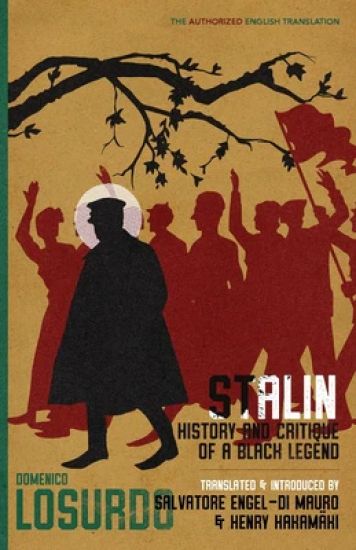
Stalin

Stalin

Domenico Losurdo

IngramSpark
2023
pokkari
Iskra Books is proud to publish the first authorized English edition of Domenico Losurdo's now-mythic text, Stalin: History and Critique of a Black Legend-translated for the first time from the original Italian. Operating under the assumption that the prevalent rejection of, or dismissiveness about, Josef Stalin as a historical figure merits closer and critical inspection, Losurdo encourages readers to make up their own mind on Stalin, rather than to uncritically accept received, popular notions. In fact, it is precisely the now-widespread caricatures of Stalin as personified evil-rife in liberal democracies and uncritically accepted by most Western leftists-that Losurdo shows to be more related to contingent ruling class preoccupations than actual evidence. Even pointing out such problems with conventional representations of Stalin brought a shower of accusations of "Stalinism" or "neo-Stalinism" upon Losurdo, who made it clear that the text of Stalin was not a rehabilitation but a contribution to contextualizing and ending the demonization of Stalin, who was even, in 1946, praised by Gandhi.Losurdo's work on the historical representations of Stalin, as well as other works like it, is perhaps more vital today than it ever has been. With the passage of time, we become further removed from the contemporary voices challenging the construction of what has become the hegemonic view of Stalin. Losurdo teaches us, among other things, that historical contextualization and coeval comparisons are crucial to testing one's political philosophy and principles, to deepening our knowledge of socialist history, and, at the same time, a key to dismantling bourgeois ideologies."Domenico Losurdo's Stalin: History and Critique of a Black Legend recaptures the distorted personal and political narrative proffered by western historians for over 75 years. This magisterial work convincingly counters the biased distortions of both establishment and left historians through a balanced historiographic and philosophical exegesis of Stalin's complex life and leadership, as well as his contribution to socialism and the defeat of fascism. Losurdo's heretical counter-hegemonic history authentically counters the mythical, demonic figure into a true-to-life biography of the most significant political figure of the 20th century. Fifteen years after its publication in Italian, Henry Hakam ki and Salvatore Engel-Di Mauro's superb translation brings Losurdo's compelling corrective of Stalin to English readers."Immanuel Ness, Author of Southern Insurgency: The Coming of the Global Working Class"In this intrepid and rigorous study, Domenico Losurdo takes on the myth of the monster by shedding much-needed light on the monstrous situation in which Joseph Stalin found himself: that of building the world's first socialist state under conditions of incessant imperialist assault, civil war, subversive plots, fascist invasion, and the risks of nuclear annihilation. Losurdo's dialectical assessment of the commendable as well as the deplorable decisions made by Soviet leadership, given the circumstances, provides the reader with an extraordinary opportunity to learn practical and difficult lessons from concrete history. This book is thus an essential antidote to the terrifying tales whose purpose is to produce fear-induced ignorance, and thus benighted ideological alignment against 'the monster.'"Gabriel Rockhill, Founding Director of the Critical Theory Workshop / Atelier de Th orie Critique, Professor of Philosophy at Villanova University
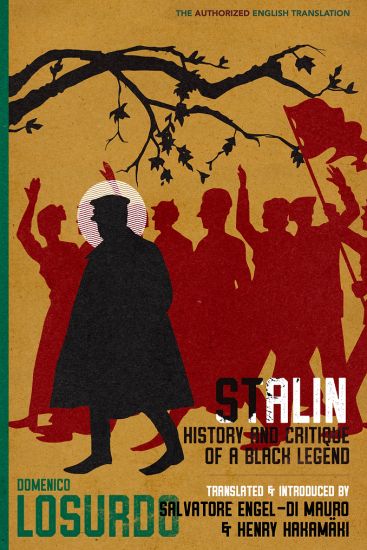
Stalin

Stalin

Domenico Losurdo

IngramSpark
2023
sidottu
Iskra Books is proud to publish the first authorized English edition of Domenico Losurdo's now-mythic text, Stalin: History and Critique of a Black Legend-translated for the first time from the original Italian. Operating under the assumption that the prevalent rejection of, or dismissiveness about, Josef Stalin as a historical figure merits closer and critical inspection, Losurdo encourages readers to make up their own mind on Stalin, rather than to uncritically accept received, popular notions. In fact, it is precisely the now-widespread caricatures of Stalin as personified evil-rife in liberal democracies and uncritically accepted by most Western leftists-that Losurdo shows to be more related to contingent ruling class preoccupations than actual evidence. Even pointing out such problems with conventional representations of Stalin brought a shower of accusations of "Stalinism" or "neo-Stalinism" upon Losurdo, who made it clear that the text of Stalin was not a rehabilitation but a contribution to contextualizing and ending the demonization of Stalin, who was even, in 1946, praised by Gandhi.Losurdo's work on the historical representations of Stalin, as well as other works like it, is perhaps more vital today than it ever has been. With the passage of time, we become further removed from the contemporary voices challenging the construction of what has become the hegemonic view of Stalin. Losurdo teaches us, among other things, that historical contextualization and coeval comparisons are crucial to testing one's political philosophy and principles, to deepening our knowledge of socialist history, and, at the same time, a key to dismantling bourgeois ideologies."Domenico Losurdo's Stalin: History and Critique of a Black Legend recaptures the distorted personal and political narrative proffered by western historians for over 75 years. This magisterial work convincingly counters the biased distortions of both establishment and left historians through a balanced historiographic and philosophical exegesis of Stalin's complex life and leadership, as well as his contribution to socialism and the defeat of fascism. Losurdo's heretical counter-hegemonic history authentically counters the mythical, demonic figure into a true-to-life biography of the most significant political figure of the 20th century. Fifteen years after its publication in Italian, Henry Hakam ki and Salvatore Engel-Di Mauro's superb translation brings Losurdo's compelling corrective of Stalin to English readers."Immanuel Ness, Author of Southern Insurgency: The Coming of the Global Working Class"In this intrepid and rigorous study, Domenico Losurdo takes on the myth of the monster by shedding much-needed light on the monstrous situation in which Joseph Stalin found himself: that of building the world's first socialist state under conditions of incessant imperialist assault, civil war, subversive plots, fascist invasion, and the risks of nuclear annihilation. Losurdo's dialectical assessment of the commendable as well as the deplorable decisions made by Soviet leadership, given the circumstances, provides the reader with an extraordinary opportunity to learn practical and difficult lessons from concrete history. This book is thus an essential antidote to the terrifying tales whose purpose is to produce fear-induced ignorance, and thus benighted ideological alignment against 'the monster.'"Gabriel Rockhill, Founding Director of the Critical Theory Workshop / Atelier de Th orie Critique, Professor of Philosophy at Villanova University
Liberalismen : en kontrahistoria

Liberalismen : en kontrahistoria

Domenico Losurdo

Gerundium
2022
sidottu
Boken har fått starka recensioner internationellt: ”Losurdos mothistoria om liberalismen avslöjar, utan att dölja liberalismens förtjänst fulla sidor, hela omfattningen av skönmålningen av dess mörka sidor. När man t ex läser att den store liberale filosofen John Locke var aktieägare i Royal African Company som var störst inom slavhandeln, lär man sig att se vår moderna tid med andra ögon. Det är väl något som alla känner till kanske någon säger, och ändå består envist legenden om liberalismens guldålder.” - Lucien Sève i Le Monde Diplomatique ”En lysande uppvisning I avslöjande av liberala pretentioner, en kartläggning av drygt tre århundraden med suverän källkontroll.” - Peter Clark, Financial Times Domenico Losurdo var en Italiensk publicist och professor | filosofi vid universitetet I Urbino, där han var verksam som professor i filosofihistoria och dekanus för filosofiska fakulteten. Losurdo var även bland mycket annat ordförande för International Hegel-Marx Society for Dialectical Thinking och medlem av Leibniz Society of Sciences i Berlin. Han har skrivit ett femtiotal böcker om bl a Kant, Hegel och Marx: mest känd för sin kritik av kolonialism, imperialism och den europeiska liberala traditionens förhållande till rasism, slaveri och kolonialism. Detta är den första bok av honom som översatts till svenska.
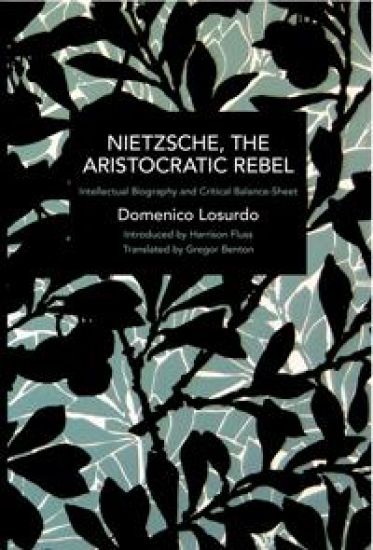
Nietzsche, the Aristocratic Rebel

Nietzsche, the Aristocratic Rebel

Domenico Losurdo

Haymarket Books
2021
pokkari
Perhaps no philosopher is more of a conundrum than Nietzsche, the solitary rebel, poet, wayfarer, anti-revolutionary Aufklärer and theorist of aristocratic radicalism. His accusers identify in his 'superman' the origins of Nazism, and thus issue an irrevocable condemnation; his defenders pursue a hermeneutics of innocence founded ultimately in allegory. In a work widely regarded as the most important contribution to Nietzschean studies in recent decades, Domenico Losurdo instead pursues a less reductive strategy. Taking literally the ruthless implications of Nietzsche's anti-democratic thinking—his celebration of slavery, of war and colonial expansion, and eugenics—he nevertheless refuses to treat these from the perspective of the mid-twentieth century. In doing so, he restores Nietzsche's works to their complex nineteenth-century context, and presents a more compelling account of the importance of Nietzsche as philosopher than can be expected from his many contemporary apologists. Originally published in Italian by Bollati Boringhieri Editore as Domenico Losurdo, Nietzsche, il ribelle aristocratico: Biografia intellettuale e bilancio critico, Turin, 2002.
War and Revolution

War and Revolution

Domenico Losurdo

Verso Books
2020
nidottu
War and Revolution identifies and takes to task a reactionary trend among contemporary historians. It is a revisionist tendency discernible in the work of authors such as Ernst Nolte, who traces the impetus behind the Holocaust to the excesses of the Russian Revolution; or François Furet, who links the Stalinist purges to an "illness" originating with the French Revolution.In this vigorous riposte to those who would denigrate the history of emancipatory struggle, Losurdo captivates the reader with a tour de force account of modern revolt, providing a new perspective on the English, American, French and twentieth-century revolutions.
Class Struggle

Class Struggle

Domenico Losurdo

Palgrave Macmillan
2018
nidottu
Available for the first time in English, this book examines and reinterprets class struggle within Marx and Engels’ thought. As Losurdo argues, class struggle is often misunderstood as exclusively the struggle of the poor against the rich, of the humble against the powerful. It is an interpretation that is dear to populism, one that supposes a binary logic that closes its eyes to complexity and inclines towards the celebration of poverty as a place of moral excellence. This book, however, shows the theory of class struggle is a general theory of social conflict. Each time, the most adverse social conflicts are intertwined in different ways. A historical situation always emerges with specific and unique characteristics that necessitate serious examination, free of schematic and biased analysis. Only if it breaks away from populism can Marxism develop the ability to interpret and change the world.
Non-Violence

Non-Violence

Domenico Losurdo

Lexington Books
2017
nidottu
We know of the blood and tears provoked by the projects of transformation of the world through war or revolution. Starting from the essay published in 1921 by Walter Benjamin, twentieth century philosophy has been committed to the criticism of violence, even when it has claimed to follow noble ends. But what do we know of the dilemmas, of the “betrayals,” of the disappointments and tragedies which the movement of non-violence has suffered? This book tells a fascinating history: from the American Christian organizations in the first decades of the nineteenth century who wanted to eliminate slavery and war in a non-violent way, to the protagonists of movements—Thoreau, Tolstoy, Gandhi, Capitini, M. L. King, the Dalai Lama—who either for idealism or for political calculation flew the flag of non-violence, up to the leaders of today’s “color revolutions.”
Non-Violence

Non-Violence

Domenico Losurdo

Lexington Books
2015
sidottu
We know of the blood and tears provoked by the projects of transformation of the world through war or revolution. Starting from the essay published in 1921 by Walter Benjamin, twentieth century philosophy has been committed to the criticism of violence, even when it has claimed to follow noble ends. But what do we know of the dilemmas, of the “betrayals,” of the disappointments and tragedies which the movement of non-violence has suffered? This book tells a fascinating history: from the American Christian organizations in the first decades of the nineteenth century who wanted to eliminate slavery and war in a non-violent way, to the protagonists of movements—Thoreau, Tolstoy, Gandhi, Capitini, M. L. King, the Dalai Lama—who either for idealism or for political calculation flew the flag of non-violence, up to the leaders of today’s “color revolutions.”
Liberalism

Liberalism

Domenico Losurdo

Verso Books
2014
nidottu
In this definitive historical investigation, Italian author and philosopher Domenico Losurdo argues that from the outset liberalism, as a philosophical position and ideology, has been bound up with the most illiberal of policies: slavery, colonialism, genocide, racism and snobbery. Narrating an intellectual history running from the eighteenth through to the twentieth centuries, Losurdo examines the thought of preeminent liberal writers such as Locke, Burke, Tocqueville, Constant, Bentham, and Sieyès, revealing the inner contradictions of an intellectual position that has exercised a formative influence on today's politics. Among the dominant strains of liberalism, he discerns the counter-currents of more radical positions, lost in the constitution of the modern world order.
Hegel and the Freedom of Moderns

Hegel and the Freedom of Moderns

Domenico Losurdo

Duke University Press
2004
pokkari
Available in English for the first time, Hegel and the Freedom of Moderns revives discussion of the major political and philosophical tenets underlying contemporary liberalism through a revolutionary interpretation of G. W. F. Hegel’s thought. Domenico Losurdo, one of the world’s leading Hegelians, reveals that the philosopher was fully engaged with the political controversies of his time. In so doing, he shows how the issues addressed by Hegel in the nineteenth century resonate with many of the central political concerns of today, among them questions of community, nation, liberalism, and freedom. Based on an examination of Hegel’s entire corpus-including manuscripts, lecture notes, different versions of texts, and letters-Losurdo locates the philosopher’s works within the historical contexts and political situations in which they were composed. Hegel and the Freedom of Moderns persuasively argues that the tug of war between “conservative” and “liberal” interpretations of Hegel has obscured and distorted the most important aspects of his political thought. Losurdo unravels this misleading dualism and provides an illuminating discussion of the relation between Hegel’s political philosophy and the thinking of Karl Marx and Friedrich Engels. He also discusses Hegel’s ideas in relation to the pertinent writings of other major figures of modern political philosophy such as Jean-Jacques Rousseau, John Locke, Edmund Burke, John Stuart Mill, Jeremy Bentham, Karl Popper, Norberto Bobbio, and Friedrich Hayek.