Kirjailija
Domenico Quaranta
Kirjat ja teokset yhdessä paikassa: 14 kirjaa, julkaisuja vuosilta 2011-2021, suosituimpien joukossa Ubermorgen.Com. Vertaile teosten hintoja ja tarkista saatavuus suomalaisista kirjakaupoista.
14 kirjaa
Kirjojen julkaisuhaarukka 2011-2021.
Originally published in 2009, this book collects the work made between 1999 and 2009 by Austrian duo UBERMORGEN (lizvlx and Hans Bernhard). Along that decade, UBERMORGEN developed a consistent oeuvre, focused on the ability of media to infiltrate reality to the point of completely altering the perception of it or even its social, biological or human infrastructure; and on the potential of art to engage a dialogue with economic, bureaucratic and informational systems. All these works are presented extensively through pictures and introductory texts, and discussed in depth in two essays by Domenico Quaranta and Dr. Inke Arns. The book also features a visual tribute by artists JODI.ORG. UBERMORGEN have exhibited in museums and galleries internationally since 1999, including HKW, Berlin; MUMOK, Vienna; MACBA, Barcelona; Ars Electronica, Linz; SFMOMA, San Francisco; Witte de With, Rotterdam; Centre Pompidou, Paris; New Museum, New York; Sydney and Gwangju biennales.
All'inizio del 2021, il boom del mercato degli NFT (Non Fungible Token, certificati digitali di autenticit ) ha aperto nel mondo dell'arte il dibattito sulla blockchain, il registro pubblico decentralizzato su cui questi certificati convivono con le criptovalute, promettendo "scarsit digitale verificabile." In realt la blockchain, sorta all'inizio della crisi finanziaria del 2008 e vista da molti come il fondamento di un nuovo Web 3.0 pi privato e sicuro, ha gi cambiato l'economia mondiale e sta ridisegnando l'ambiente digitale in cui, sempre pi , anche l'arte si trova a essere creata, distribuita e scambiata. Nato nel tumulto di un hype tecnologico e di una bolla speculativa, questo volume colloca le promesse del mercato degli NFT in una prospettiva storica che approfondisce e analizza sia gli sviluppi delle tecnologie su cui si fonda, sia il ruolo di certificati e contratti nell'arte contemporanea, sia le vicende del mercato della media art nel corso degli ultimi trent'anni. Cavalcando l'onda di un dibattito in corso, Surfing con Satoshi affronta una serie di domande ancora aperte, come: cosa ha a che fare l'arte con la blockchain? Ha senso parlare di "Crypto Art"? Che cosa la definisce, a parte il modo in cui viene scambiata? Che cosa c' in questo mondo, oltre alla speculazione? Come possibile attribuire il carattere dell'unicit a un file digitale infinitamente riproducibile? La promessa di disintermediazione della blockchain distrugger il mondo dell'arte come siamo abituati a conoscerlo? Come sta reagendo quest'ultimo? Gli NFT sono un'opportunit o una truffa ai danni degli artisti? Chi sono i collezionisti disposti a pagare milioni per un certificato di autenticit , e perch lo fanno? Perch le arti visive sembrano aver acquisito un ruolo tanto centrale nell'economia delle criptovalute? -- Contenuti: _ Utopia e distopia della blockchain _ La crisi della fiducia e la nascita del Bitcoin _ Bitcoin, Ethereum e le altre criptovalute _ Scarsit digitale verificabile: gli NFT _ Arte e blockchain _ Valute d'artista _ La riproducibilit , il valore e il mercato della media art _ Opere allografiche _ Zone di sensibilit immateriale _ Certificati, contratti e opere-registro _ Crypto Art _ Immagini monetizzate e contratti concettuali _ L'avvento dei marketplace e la community della Crypto Art _ La "Crypto Art" non esiste _ La moda degli NFT _ La propriet come allucinazione consensuale _ I collezionisti _ La bolla speculativa _ I modelli alternativi: le gallerie sulla blockchain
Artist and game designer, Eddo Stern explores the uneasy and otherwise unconscious connections between physical existence and electronic simulation, surrounding the subject matters of violence, memory and identification. A game manual, a catalogue, a making of and an archive, How to Play Eddo Stern revolves around a selected body of works developed with di(erent media that can be understood as OgamesO. Featuring an essay by Matteo Bittanti, the book is a deep dive into the massive amount of small bits and pieces that make up the folders of SternOs game projects: 3D models, texture maps and atlases, backdrops, animation frame sequences, code snippets, circuit diagrams, as well as emails, design documents, meeting notes, and installation diagrams. Co-produced with Haus der elektronischen KYnste Basel.
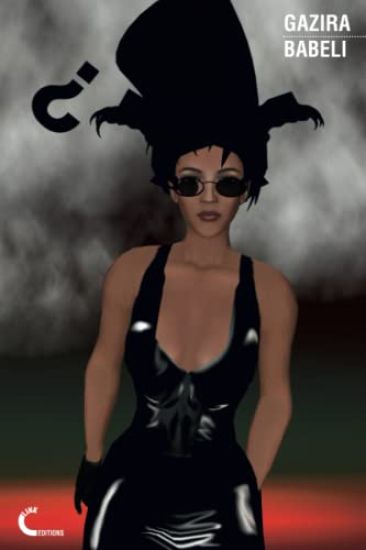
AFK features twelve texts about eleven artists and an artist duo: Rosa Menkman, Jon Rafman, Gazira Babeli, Martin Kohout, Maurizio Cattelan, Enrico Boccioletti, Constant Dullaart, Jill Magid, Aram Bartholl, Emilie Brout & Maxime Marion, Evan Roth and Addie Wagenknecht. These artists experienced the impact of digital means of production and dissemination, they experimented with them, they thought about them, and all this is reflected in their work. As Peter Sunde, the co-founder of the Pirate Bay, they think the internet is real, and they spend a lot of time in this real space of life, communication, love, hate, surveillance, sharing, and copying. Most of the works discussed here are made to be experienced in a brick and mortar space, away of keyboard; but reflect the current way of living, communicating, loving, hating, spying, sharing, copying, on and away of keyboard.
The Black Chamber. Surveillance, Paranoia, Invisibility & the Internet
Domenico Quaranta; Bani Brusadin; Eva Mattes; Franco Mattes
Lulu.com
2016
nidottu
How did the internet go from the utopian free-for-all, open source heaven, libertarian last frontier to the current state of permanent surveillance, exhibitionism and paranoia? This duplicity is the underlying thread that links the artists, activists, and researchers in The Black Chamber, an exhibition, a symposium, an urban intervention and a publication. The Black Chamber aims at discussing the delicate and often awkward role of art and imagination in the age of mass surveillance, stressing the multiple connections between post-studio art and independent research, grassroots reverse engineering, and new forms of political activism in the age of networks. Not just an exhibition catalogue, this book is also an attempt to show the exhibited works as part of larger research processes. With works and original contributions by Jacob Appelbaum & Ai Weiwei, Laura Poitras, Metahaven, Zach Blas, James Bridle, Emilie Brout & Maxime Marion, Simon Denny, Jill Magid, !Mediengruppe Bitnik and Evan Roth.
Eternal September. the Rise of Amateur Culture
Domenico Quaranta; Valentina Tanni
Lulu Press Inc
2014
nidottu
Eternal September. The Rise of Amateur Culture is a group exhibition that explores the relationship between professional art making and the rising of amateur cultural movements through the web, an historical event that is triggering a big and fascinating shift in every field of culture, especially visual culture. This catalogue features a curatorial text by Valentina Tanni, together with an interview with artist Matthias Fritsch, the man beyond the Teknoviking meme, an essay by artist group Smetnjak on practicing critical theory in the form of internet memes, and visual documentation of Tanni's ongoing curatorial project The Great Wall of Memes. Featured artists: Mauro Ceolin, Paolo Cirio, Electroboutique, Paul Destieu, Matthias Fritsch, Colin Guillemet, David Horvitz, Maskull Lasserre, Aled Lewis, Dennis Logan (Spatula007), Valeria Mancinelli and Roberto Fassone, Mark McEvoy, Casey Pugh, Steve Roggenbuck, Helmut Smits, Pawel Sysiak & Tymek Borowski, TheGamePro, Phil Thompson, Wendy Vainity.
Kaj je novomedijska umetnost? Kaj v resnici opisuje ta izraz? Kaj je povzročilo razkol med tem izrazom in umetnostno sceno, ki naj bi jo opisoval? In končno, kaj lahko pojasni omejeno navzočnost te umetniske prakse - za katero se zdi, da ima vse, kar je potrebno, da bi veljala za reprezentativno prakso obdobja, v katerem digitalni mediji odločno spreminjajo politično, ekonomsko, druzbeno in kulturno organiziranost sveta, v katerem zivimo - v kritiskih razpravah? Onkraj novomedijske umetnosti je poskus analize trenutnega umesčanja tako imenovane novomedijske umetnosti v sirse polje sodobnih umetnosti in poskus raziskave zgodovinskih, socioloskih in konceptualnih razlogov za njen obroben polozaj in omejeno prepoznavnost v sodobni umetnostni zgodovini. Po drugi strani je ta knjiga tudi poskus uvedbe novih kritiskih in kuratorskih strategij, ki bi to marginalizacijo potisnile v preteklost, in osvetlitve aktualnosti umetnosti, ki se loteva medijev in problematike informacijske dobe.
"Beyond New Media Art" is the revised, updated version of a book first published in Italian with the title "Media, New Media, Postmedia" in 2010. Through the circulation of excerpts, reviews and interviews, the book produced some debate outside of Italy, which persuaded the author to release, three years later, this English translation. "Beyond New Media Art" is an attempt to analyze the current positioning of so-called New Media Art in the wider field of contemporary arts, and to explore the historical, sociological and conceptual reasons for its marginal position and under-recognition in recent art history. On the other hand, this book is also an attempt to suggest new critical and curatorial strategies to turn this marginalization into a thing of the past, and to stress the topicality of art addressing the media and the issues of the information age. Domenico Quaranta (http://domenicoquaranta.com) is an art critic, teacher and curator. He regularly writes for Flash Art and Artpulse.
Collect the WWWorld. The Artist as Archivist in the Internet Age (Black and White Edition)
Domenico Quaranta; Gene McHugh; Joanne McNeil; Josephine Bosma
Lulu.com
2011
pokkari
The last decade has seen an incredible growth in the production and distribution of images and other cultural artefacts. The internet is the place where all these cultural products are stored, classified, voted, collected and trashed. What is the impact of this process on art making and on the artist? Which kind of dialogue is going on between amateur practices and codified languages? How does art respond to the society of information? This is a book about endless archives, image collections, bees plundering from flower to flower and hunters crawling through the online wilderness. Alterazioni Video, Kari Altmann, Cory Arcangel, Gazira Babeli, Kevin Bewersdorf, Luca Bolognesi, Natalie Bookchin, Petra Cortright, Aleksandra Domanovic, Harm van den Dorpel, Constant Dullaart, Hans-Peter Feldmann, Elisa Giardina Papa, Travis Hallenbeck, Jodi, Oliver Laric, Olia Lialina & Dragan Espenshied, Guthrie Lonergan, Eva and Franco Mattes, Seth Price, Jon Rafman, Claudia Rossini, Evan Roth, Travess Smalley, Ryan Trecartin.
Collect the WWWorld. The Artist as Archivist in the Internet Age
Domenico Quaranta; Gene McHugh; Joanne McNeil; Josephine Bosma
Lulu.com
2011
nidottu
There is this hacker slogan: "We love your computer." We also get inside people's computers. And we are honored to be in somebody's computer. You are very close to a person when you are on his desktop. Jodi, 1997 This book is a collection of texts written by Domenico Quaranta between 2005 and 2010 for exhibition catalogues, printed magazines and online reviews: a pocket version of what the author would save from the universal flood, in a world without computers. Most of the fields of research he has developed are represented: from Net Art to Software Art and videogames, from biotechnologies to the debate around curating and the positioning of New Media Art in the contemporary landscape, and back to Net Art again.