Kirjojen hintavertailu. Mukana 12 368 797 kirjaa ja 12 kauppaa.

Kirjailija

Dominic Boyer

Kirjat ja teokset yhdessä paikassa: 10 kirjaa, julkaisuja vuosilta 2005-2023, suosituimpien joukossa Energopolitics. Vertaile teosten hintoja ja tarkista saatavuus suomalaisista kirjakaupoista.

10 kirjaa

Kirjojen julkaisuhaarukka 2005-2023.

No More Fossils

No More Fossils

Dominic Boyer

UNIVERSITY OF MINNESOTA PRESS
2023
nidottu
Explores ecological impasses and opportunities of our fossil-fueled civilization It is more and more obvious that our fossilized civilization has no sustainable future. It is an ecological Ponzi scheme stealing away the lives of countless species and the wellbeing of future generations in exchange for contemporary conveniences and the luxuries of a small subset of the human population. Yet a civilization wholly beyond fossils still seems difficult to grasp. In No More Fossils, Dominic Boyer tells the story of the rise of fossil civilization through successive phases of sucropolitics (plantation sugar), carbopolitics (industrial coal), and petropolitics (oily automobility and plasticity), showing what tethers us to the ecocidal trajectory of petroculture today and what it will take to overcome the forces that mire us in place. He also looks ahead toward the world that the rapid electrification of vehicles, buildings, and power is creating. What can we do to make electroculture more just and sustainable than the petroculture we are leaving behind?
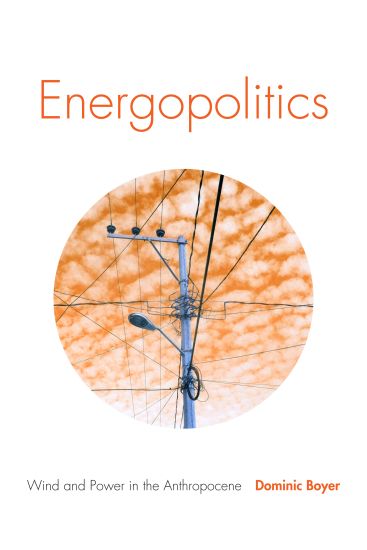
Energopolitics

Energopolitics

Dominic Boyer

Duke University Press
2019
sidottu
Between 2009 and 2013 Cymene Howe and Dominic Boyer conducted fieldwork in Mexico's Isthmus of Tehuantepec to examine the political, social, and ecological dimensions of moving from fossil fuels to wind power. Their work manifested itself as a new ethnographic form: the duograph-a combination of two single-authored books that draw on shared fieldsites, archives, and encounters that can be productively read together, yet can also stand alone in their analytic ambitions. In his volume, Energopolitics, Boyer examines the politics of wind power and how it is shaped by myriad factors, from the legacies of settler colonialism and indigenous resistance to state bureaucracy and corporate investment. Drawing on interviews with activists, campesinos, engineers, bureaucrats, politicians, and bankers, Boyer outlines the fundamental impact of energy and fuel on political power. Boyer also demonstrates how large conceptual frameworks cannot adequately explain the fraught and uniquely complicated conditions on the isthmus, illustrating the need to resist narratives of anthropocenic universalism and to attend to local particularities.
Energopolitics

Energopolitics

Dominic Boyer

Duke University Press
2019
pokkari
Between 2009 and 2013 Cymene Howe and Dominic Boyer conducted fieldwork in Mexico's Isthmus of Tehuantepec to examine the political, social, and ecological dimensions of moving from fossil fuels to wind power. Their work manifested itself as a new ethnographic form: the duograph-a combination of two single-authored books that draw on shared fieldsites, archives, and encounters that can be productively read together, yet can also stand alone in their analytic ambitions. In his volume, Energopolitics, Boyer examines the politics of wind power and how it is shaped by myriad factors, from the legacies of settler colonialism and indigenous resistance to state bureaucracy and corporate investment. Drawing on interviews with activists, campesinos, engineers, bureaucrats, politicians, and bankers, Boyer outlines the fundamental impact of energy and fuel on political power. Boyer also demonstrates how large conceptual frameworks cannot adequately explain the fraught and uniquely complicated conditions on the isthmus, illustrating the need to resist narratives of anthropocenic universalism and to attend to local particularities.
Wind and Power in the Anthropocene

Wind and Power in the Anthropocene

Dominic Boyer; Cymene Howe

Duke University Press
2019
pokkari
Between 2009 and 2013 Cymene Howe and Dominic Boyer conducted fieldwork in Mexico's Isthmus of Tehuantepec to examine the political, social, and ecological dimensions of moving from fossil fuels to wind power. Their work manifested itself as a new ethnographic form: the duograph-a combination of two single-authored books that draw on shared field sites, archives, and encounters that can be productively read together, yet also stand alone in their analytic ambitions. In his volume, Energopolitics, Boyer examines the politics of wind power and how it is shaped by myriad factors, from the legacies of settler colonialism and indigenous resistance to state bureaucracy and corporate investment. Drawing on interviews with activists, campesinos, engineers, bureaucrats, politicians, and bankers, Boyer outlines the fundamental impact of energy and fuel on political power. Boyer also demonstrates how large conceptual frameworks cannot adequately explain the fraught and uniquely complicated conditions on the Isthmus, illustrating the need to resist narratives of Anthropocenic universalism and to attend to local particularities. In her volume, Ecologics, Howe narrates how an antidote to the Anthropocene became both failure and success. Tracking the development of what would have been Latin America's largest wind park, Howe documents indigenous people's resistance to the project and the political and corporate climate that derailed its renewable energy potential. Using feminist and more-than-human theories, Howe demonstrates how the dynamics of energy and environment cannot be captured without understanding how human aspirations for energy articulate with nonhuman beings, technomaterial objects, and the geophysical forces that are at the heart of wind and power.
The Life Informatic

The Life Informatic

Dominic Boyer

Cornell University Press
2013
pokkari
News journalism is in the midst of radical transformation brought about by the spread of digital information and communication technology and the rise of neoliberalism. What does it look like, however, from the inside of a news organization? In The Life Informatic, Dominic Boyer offers the first anthropological ethnography of contemporary office-based news journalism. The result is a fascinating account of journalists struggling to maintain their expertise and authority, even as they find their principles and skills profoundly challenged by ever more complex and fast-moving streams of information. Boyer conducted his fieldwork inside three news organizations in Germany (a world leader in digital journalism) supplemented by extensive interviews in the United States. His findings challenge popular and scholarly images of journalists as roving truth-seekers, showing instead the extent to which sedentary office-based "screenwork" (such as gathering and processing information online) has come to dominate news journalism. To explain this phenomenon Boyer puts forth the notion of "digital liberalism"—a powerful convergence of technological and ideological forces over the past two decades that has rebalanced electronic mediation from the radial (or broadcast) tendencies of the mid-twentieth century to the lateral (or peer-to-peer) tendencies that dominate in the era of the Internet and social media. Under digital liberalism an entire regime of media, knowledge, and authority has become integrated around liberal principles of individuality and publicity, both unmaking and remaking news institutions of the broadcast era. Finally, Boyer offers some scenarios for how news journalism will develop in the future and discusses how other intellectual professionals, such as ethnographers, have also become more screenworkers than fieldworkers.
The Life Informatic

The Life Informatic

Dominic Boyer

Cornell University Press
2013
sidottu
News journalism is in the midst of radical transformation brought about by the spread of digital information and communication technology and the rise of neoliberalism. What does it look like, however, from the inside of a news organization? In The Life Informatic, Dominic Boyer offers the first anthropological ethnography of contemporary office-based news journalism. The result is a fascinating account of journalists struggling to maintain their expertise and authority, even as they find their principles and skills profoundly challenged by ever more complex and fast-moving streams of information. Boyer conducted his fieldwork inside three news organizations in Germany (a world leader in digital journalism) supplemented by extensive interviews in the United States. His findings challenge popular and scholarly images of journalists as roving truth-seekers, showing instead the extent to which sedentary office-based "screenwork" (such as gathering and processing information online) has come to dominate news journalism. To explain this phenomenon Boyer puts forth the notion of "digital liberalism"—a powerful convergence of technological and ideological forces over the past two decades that has rebalanced electronic mediation from the radial (or broadcast) tendencies of the mid-twentieth century to the lateral (or peer-to-peer) tendencies that dominate in the era of the Internet and social media. Under digital liberalism an entire regime of media, knowledge, and authority has become integrated around liberal principles of individuality and publicity, both unmaking and remaking news institutions of the broadcast era. Finally, Boyer offers some scenarios for how news journalism will develop in the future and discusses how other intellectual professionals, such as ethnographers, have also become more screenworkers than fieldworkers.
Understanding Media

Understanding Media

Dominic Boyer

Prickly Paradigm Press, LLC
2007
nidottu
Why do we understand media the way we do? In their simplest forms, media are means of communication and instruments of human creativity. But on another level, news outlets are powerful entities that govern how we think and act in the world, and they can even take on a sinister character, with conglomerates working in opposition to freedom of information. Dominic Boyer grapples with these complexities in "Understanding Media", where he questions what our different ways of engaging media actually tell us about ourselves, communication, and how we relate to information. "Understanding Media" explores, in a serious yet entertaining way, our common habits of thinking about the presence and significance of the channels of information in our lives. Offering analysis of the philosophical and social foundations of contemporary media theory as well as everyday strategies of knowing media, it addresses the advantages and limitations of different ways of understanding it. Finally, Boyer reflects on how we can know media better than we do.
Spirit and System

Spirit and System

Dominic Boyer

University of Chicago Press
2005
nidottu
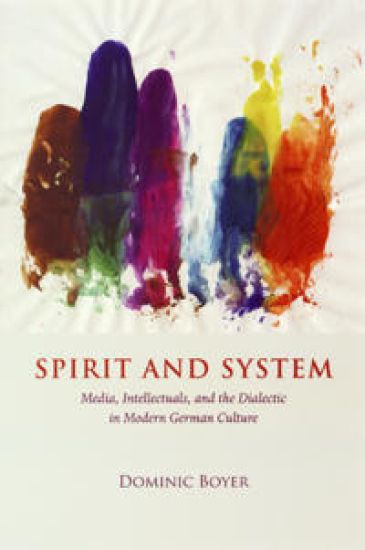
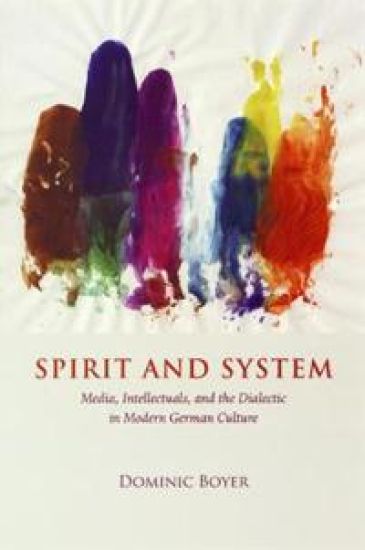
Combining ethnography, history, and social theory, Dominic Boyer's "Spirit and System" exposes how the shifting fortunes and social perceptions of German intellectuals in the nineteenth and twentieth centuries influenced German's conceptions of modernity and national culture. Boyer analyzes the creation and mediation of the social knowledge of "German-ness" from nineteenth-century university culture and its philosophies of history, to the media systems and redemptive public cultures of the Third Reich and the German Democratic Republic, to the present-day experiences of former East German journalists seeking to explain life in post-unification Germany. Throughout this study, Boyer reveals how dialectical knowledge of "German-ness" - that is, knowledge that emphasizes a cultural tension between an inner "spirit" and an external "system" of social life - is modeled unconsciously upon intellectuals' self-knowledge as it tracks their fluctuation between alienation and utopianism in their interpretations of nation and modernity.
Spirit and System

Spirit and System

Dominic Boyer

University of Chicago Press
2005
sidottu
Combining ethnography, history, and social theory, Dominic Boyer's "Spirit and System" exposes how the shifting fortunes and social perceptions of German intellectuals in the nineteenth and twentieth centuries influenced German's conceptions of modernity and national culture. Boyer analyzes the creation and mediation of the social knowledge of "German-ness" from nineteenth-century university culture and its philosophies of history, to the media systems and redemptive public cultures of the Third Reich and the German Democratic Republic, to the present-day experiences of former East German journalists seeking to explain life in post-unification Germany. Throughout this study, Boyer reveals how dialectical knowledge of "German-ness" - that is, knowledge that emphasizes a cultural tension between an inner "spirit" and an external "system" of social life - is modeled unconsciously upon intellectuals' self-knowledge as it tracks their fluctuation between alienation and utopianism in their interpretations of nation and modernity.