Kirjojen hintavertailu. Mukana 12 494 044 kirjaa ja 12 kauppaa.

Kirjailija

Dominic O'Sullivan

Kirjat ja teokset yhdessä paikassa: 12 kirjaa, julkaisuja vuosilta 2010-2026, suosituimpien joukossa Post Registration Qualifications for Dental Care Professionals. Vertaile teosten hintoja ja tarkista saatavuus suomalaisista kirjakaupoista.

Mukana myös kirjoitusasut: Dominic O’Sullivan

12 kirjaa

Kirjojen julkaisuhaarukka 2010-2026.

Post Registration Qualifications for Dental Care Professionals

Post Registration Qualifications for Dental Care Professionals

Nicola Rogers; Rebecca Davies; Wendy Lee; Dominic O'Sullivan; Frances Marriott

John Wiley Sons Inc
2015
nidottu
Post Registration Qualifications for Dental Care Professionals: Questions and Answers is a comprehensive revision aid for dental nurses seeking to gain post-registration certification for professional development. Chapters cover qualifications in special care dental nursing, oral health education, dental sedation nursing, dental implant nursing, dental radiography and orthodontic dental nursingQuestions are accompanied by clear explanations of the correct answers, reflecting the latest standards and practicesSupported by a companion website which features sample questions mirroring each exam formatAn essential resource for dental care professionals who are looking to further advance their careers
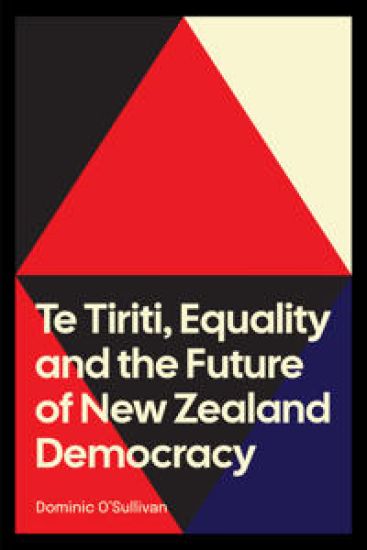
Te Tiriti, Equality and the Future of New Zealand Democracy

Te Tiriti, Equality and the Future of New Zealand Democracy

Dominic O'Sullivan

AUCKLAND UNIVERSITY PRESS
2026
nidottu
In this major work, the leading Maori political scientist Dominic O’Sullivan draws on theories of republicanism and the commonwealth to challenge understandings of Te Tiriti as a partnership between races, or between Maori people and the Crown. O’Sullivan also critiques the idea that Te Tiriti created one people, assimilating Maori into colonial ways of governing. Instead, he proposes a new politics where Maori self-determination and liberal democracy, rangatiratanga and kawanatanga, complement one another to promote meaningful and culturally grounded political equality. O’Sullivan enables us to see a future for Aotearoa in which political authority and responsibility belong to everyone and should therefore work equally well for all; a country where Maori people, as much as anyone else, bring their tikanga to public life; and a society where the Crown is no longer the word we use to describe government. For scholars, policymakers and political leaders, for Maori and Pakeha, for all of us imagining a respectful and inclusive future for our island democracy, this is essential reading.
Indigeneity, Culture and the UN Sustainable Development Goals

Indigeneity, Culture and the UN Sustainable Development Goals

Dominic O’Sullivan

SPRINGER VERLAG, SINGAPORE
2024
nidottu
This is the first scholarly book to examine the UN Sustainable Development Goals from an indigenous perspective and, specifically, with reference to the right to self-determination. It refers to the UN Declaration on the Rights of Indigenous Peoples and domestic instruments such as New Zealand’s Tiriti o Waitangi to suggest how the goals could be revised to support self-determination as a more far-reaching and ambitious project than the goals imagine in their current form. The book primarily draws its material from Australia, Canada, and New Zealand to support analysing the goals’ policy relevance to wealthy states and the political claims that indigenous peoples make in established liberal democracies.
Indigeneity, Culture and the UN Sustainable Development Goals

Indigeneity, Culture and the UN Sustainable Development Goals

Dominic O’Sullivan

SPRINGER VERLAG, SINGAPORE
2023
sidottu
This is the first scholarly book to examine the UN Sustainable Development Goals from an indigenous perspective and, specifically, with reference to the right to self-determination. It refers to the UN Declaration on the Rights of Indigenous Peoples and domestic instruments such as New Zealand’s Tiriti o Waitangi to suggest how the goals could be revised to support self-determination as a more far-reaching and ambitious project than the goals imagine in their current form. The book primarily draws its material from Australia, Canada, and New Zealand to support analysing the goals’ policy relevance to wealthy states and the political claims that indigenous peoples make in established liberal democracies.
Sharing the Sovereign: Indigenous Peoples, Recognition, Treaties and the State
This book explains how recognition theory contributes to non-colonial and enduring political relationships between Indigenous nations and the state. It refers to Indigenous Australian arguments for a Voice to Parliament and treaties to show what recognition may mean for practical politics and policy-making. It considers critiques of recognition theory by Canadian First Nations’ scholars who make strong arguments for its assimilationist effect, but shows that ultimately, recognition is a theory and practice of transformative potential, requiring fundamentally different ways of thinking about citizenship and sovereignty. This book draws extensively on New Zealand’s Treaty of Waitangi and measures to support Maori political participation, to show what treaties and a Voice to Parliament could mean in practical terms. It responds to liberal democratic objections to show how institutionalised means of indigenous participation may, in fact, make democracy work better.
Sharing the Sovereign: Indigenous Peoples, Recognition, Treaties and the State
This book explains how recognition theory contributes to non-colonial and enduring political relationships between Indigenous nations and the state. It refers to Indigenous Australian arguments for a Voice to Parliament and treaties to show what recognition may mean for practical politics and policy-making. It considers critiques of recognition theory by Canadian First Nations’ scholars who make strong arguments for its assimilationist effect, but shows that ultimately, recognition is a theory and practice of transformative potential, requiring fundamentally different ways of thinking about citizenship and sovereignty. This book draws extensively on New Zealand’s Treaty of Waitangi and measures to support Maori political participation, to show what treaties and a Voice to Parliament could mean in practical terms. It responds to liberal democratic objections to show how institutionalised means of indigenous participation may, in fact, make democracy work better.
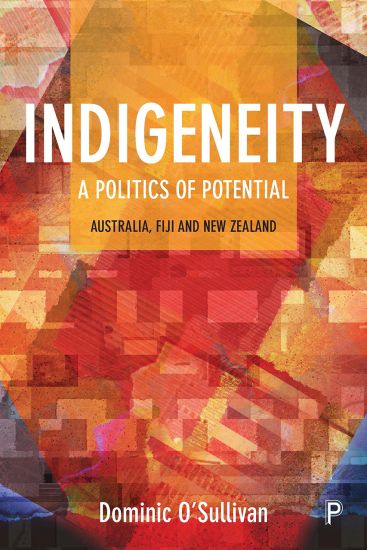
Indigeneity: A Politics of Potential

Indigeneity: A Politics of Potential

Dominic O'Sullivan

Policy Press
2017
sidottu
This original book is the first comprehensive integration of political theory to explain indigenous politics. It assesses the ways in which indigenous and liberal political theories interact to consider the practical policy implications of the indigenous right to self-determination. Providing opportunities for indigenous peoples to pursue culturally framed understandings of liberal democratic citizenship, the author reveals indigeneity’s concern for political relationships, agendas and ideas beyond the ethnic minority claim to liberal recognition. The implications for national reconciliation, liberal democracy, citizenship and historical constraints on political authority are explored. He also shows that indigeneity’s local geo-political focus, underpinned by global theoretical developments in law and politics, makes indigeneity a movement of forward looking transformational politics. This innovative, theoretically sophisticated and vibrant work will influence policy and scholarly debates on the politics of indigeneity and indigenous rights and will be of broad international interest to a transcultural, transnational and global phenomenon.